
What Is an AI Assistant With Memory
An AI assistant with memory is a system capable of storing and retrieving user-specific information across multiple sessions. Instead of treating every prompt in a vacuum, these tools build a continuous knowledge base.
- Continuous Context: They link your past conversations with current queries to provide more accurate and relevant answers.
- Personalization: They adapt to your tone of voice, preferred formats, and recurring tasks without needing repetitive instructions.
- Dynamic Knowledge Graphs: They organize facts about you or your business into structured data that the AI can instantly reference.
- Cross-Session Persistence: If you close the application and return days later, the AI picks up exactly where you left off.
How We Tested the Best AI Assistants With Memory
To ensure we recommend only the most reliable tools, we rigorously evaluated dozens of platforms based on the following criteria:
- Context Retention Accuracy: We tested whether the AI could accurately recall obscure details mentioned in earlier, separate sessions.
- Retrieval Speed: We measured how quickly the assistant could pull from its memory bank without lagging or hallucinating.
- Privacy and Security: We analyzed data encryption protocols and user control, ensuring you can easily view, edit, or delete stored memories.
- Ease of Integration: We evaluated how well the memory functions integrated with daily workflows, existing applications, and multi-agent setups.
Quick Comparison: 9 Best AI Assistants That Remember Your Preferences
| Product | Best For | Key Standout Feature | Starting Price |
|---|---|---|---|
| 1. MemoryLake | Developers & Multi-Agent AI | Persistent memory infrastructure | Free /$16/mo |
| 2. Memos | Note-takers & Writers | Semantic note linking | Open Source |
| 3. MemoryPlugin | Web Browsing | Browser-based habit tracking | Free /$15/mo |
| 4. MemU | Enterprise Knowledge | Scalable database memory | Open Source |
| 5. MemoryLayer | API Integrations | Middleware context retention | Custom Pricing |
| 6. MemClaw(Now Caura AI ) | Researchers | Deep web scraping & recall | $49/mo |
| 7. Membase | Multi-Device Users | Cloud-synced user preferences | Free / $20/mo |
| 8. Memdex | CRM & Networking | Relationship & contact memory | $10/mo |
| 9. MemoryBase | Personal Vaults | Secure local memory storage | Free / $14/mo |
1. MemoryLake
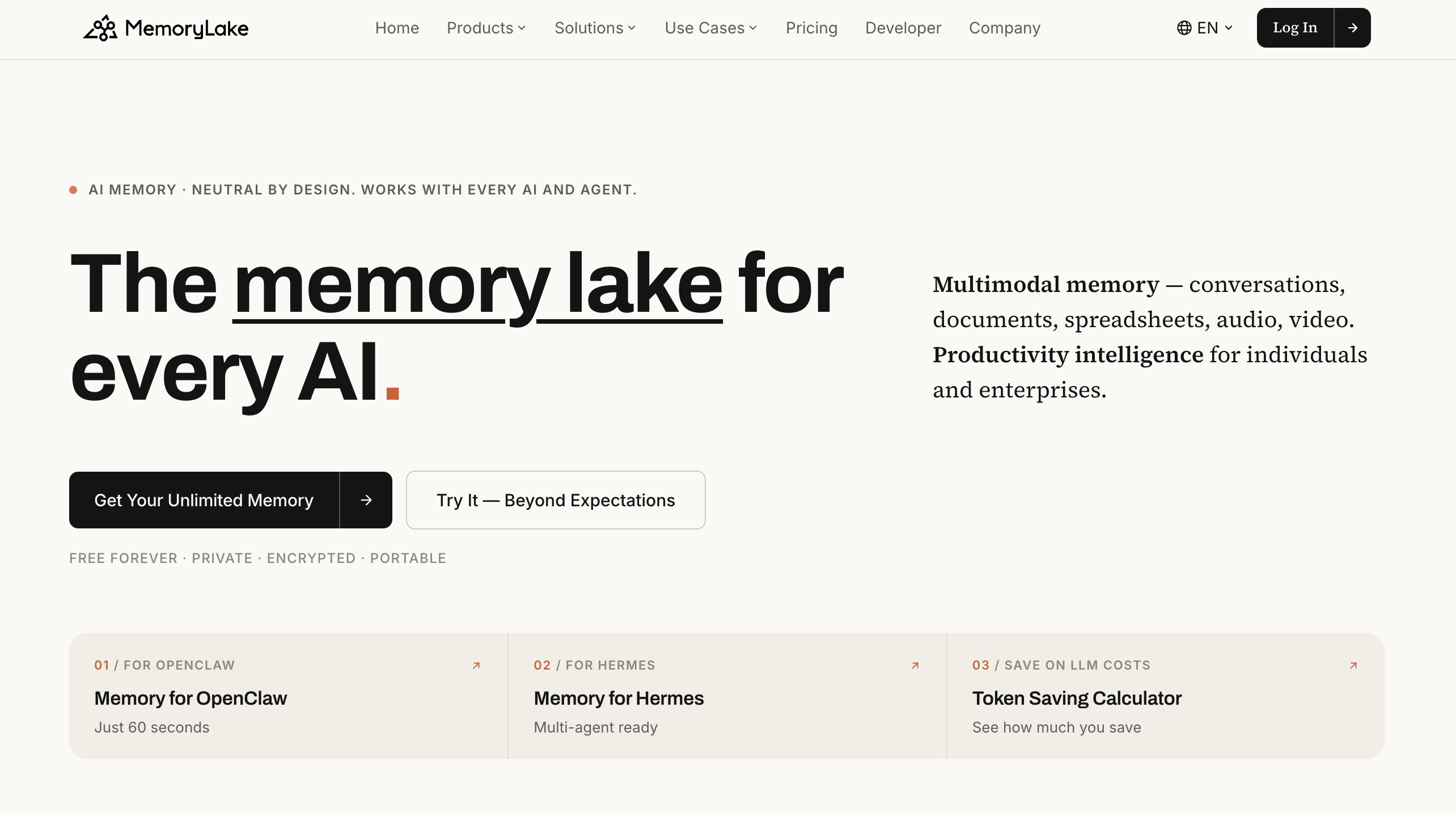
MemoryLake is a persistent memory infrastructure designed to help AI agents and applications maintain context across conversations, tasks, and sessions. Instead of treating every interaction as a fresh start, it enables AI systems to store, organize, retrieve, and reuse relevant information over time. This can include user preferences, historical interactions, important facts, task context, and other long-term knowledge.
MemoryLake is suitable for a wide range of AI applications, from personal assistants and customer support agents to AI-powered workflows, multi-agent systems, and interactive virtual characters. Its focus on persistent, structured memory makes it easier for developers to build AI experiences that feel more consistent, personalized, and context-aware.
For teams building agents that need to remember users and previous interactions, MemoryLake provides a dedicated memory layer that can complement existing AI models, agent frameworks, and application infrastructure. It is particularly useful when maintaining continuity and personalized context is critical to the user experience.
Key Features
- Robust persistent memory infrastructure for cross-session continuity.
- Seamless support for multi-agent systems and AI-powered workflows.
- Advanced information structuring (organizes facts, preferences, and context).
- Easy integration with existing AI models and application frameworks.
Pros
- Completely eliminates the need for repetitive prompting.
- Highly customizable and scalable for both individuals and developer teams.
- Makes AI interactions feel incredibly natural and consistent.
Cons
- Can be slightly complex for non-technical users to set up initially.
- Requires integrating via API/MCP/CLI/Plugin for custom applications.
Pricing
- Basic Tier: Free
- Pro Tier: Starts at $16/month
2. Memos
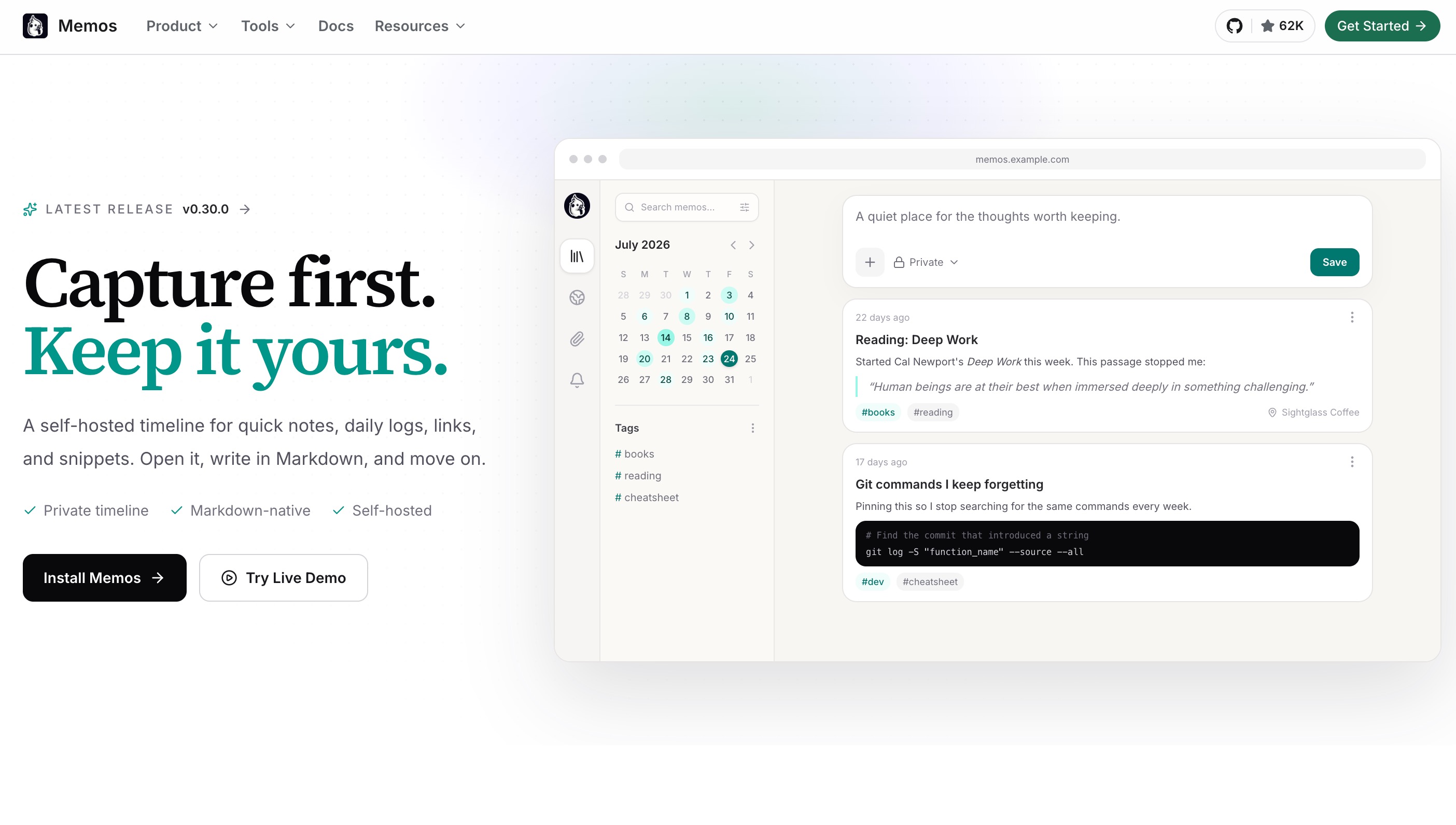
Memos is an intuitive, AI-driven assistant aimed primarily at writers, students, and avid note-takers. It acts as a second brain, constantly organizing your thoughts and recalling past notes to help you generate new ideas.
Key Features
- Semantic text linking that connects related ideas automatically.
- Voice-to-text with contextual memory processing.
- Automated daily summaries based on past entries.
Pros
- Excellent for creative writing and brainstorming.
- Very user-friendly interface.
- High accuracy in natural language search.
Cons
- Limited use outside of text-based tasks.
- Struggles with highly technical data organization.
Pricing
Open Source.
3. MemoryPlugin
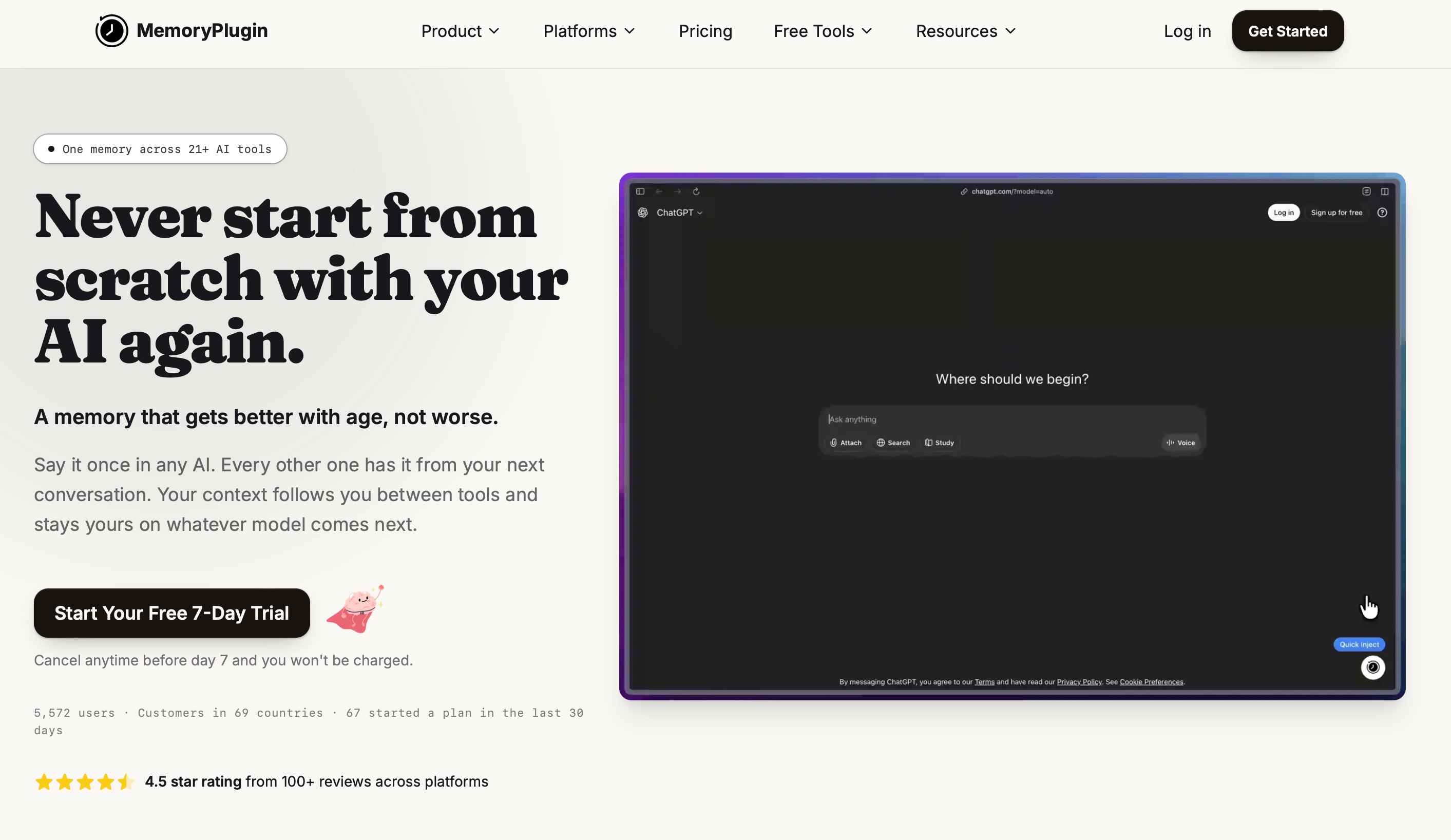
MemoryPlugin is a lightweight browser extension that learns your web habits, research preferences, and online workflows. It acts as an on-the-go AI co-pilot that remembers what you read, what you skipped, and how you like your information summarized.
Key Features
- Cross-tab memory retention and summarization.
- Learns user reading habits and formats summaries accordingly.
- Bookmarks and categorizes information autonomously.
Pros
- Incredibly easy to install and start using immediately.
- Saves hours of repetitive internet research.
- Works seamlessly over your existing web browser.
Cons
- Only works within the browser environment.
- Memory is strictly tied to web-based interactions.
Pricing
- Basic Tier: Free
- Pro Tier: $15/month
4. MemU
MemU is an innovative AI assistant tailored heavily for multi-device users. It focuses on unifying your personal preferences, daily routines, and task lists seamlessly across your smartphone, tablet, and desktop, ensuring the AI behaves exactly the same no matter where you are.
Key Features
- Real-time cloud syncing of AI conversations and context states.
- Behavioral pattern recognition linked to specific times and locations.
- Cross-platform native applications for iOS, Android, Mac, and Windows.
Pros
- Perfect for on-the-go users constantly switching between different devices.
- Exceptionally smooth and modern mobile app experience.
- Reliable push notifications based on memorized personal habits.
Cons
- Requires giving the app significant background permissions to work well.
- Strictly cloud-only; totally lacks an offline memory mode.
Pricing
Open Source.
5. MemoryLayer
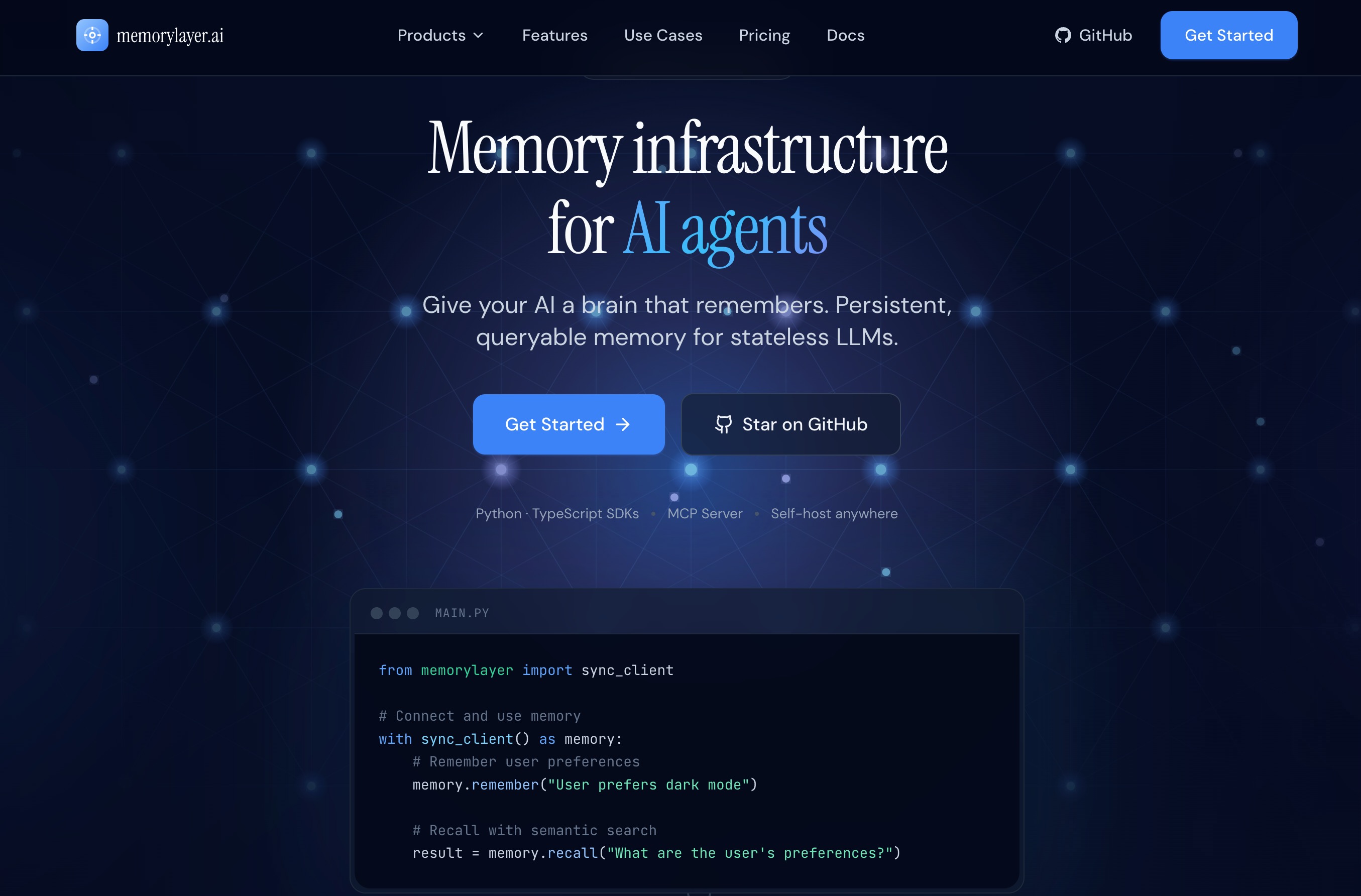
MemoryLayer provides an API-first approach, acting as middleware to inject memory capabilities into existing chatbots or custom AI applications. It handles the heavy lifting of context retention for developers building their own user-facing tools.
Key Features
- Plug-and-play API for existing LLMs (Large Language Models).
- Automatic state management for chat sessions.
- Customizable memory decay (deciding when to forget outdated info).
Pros
- Highly flexible for custom tech stacks.
- Low latency during memory retrieval.
- Great documentation for developers.
Cons
- No standalone consumer interface.
- Requires coding knowledge to implement.
Pricing
- Custom pricing.
6. MemClaw
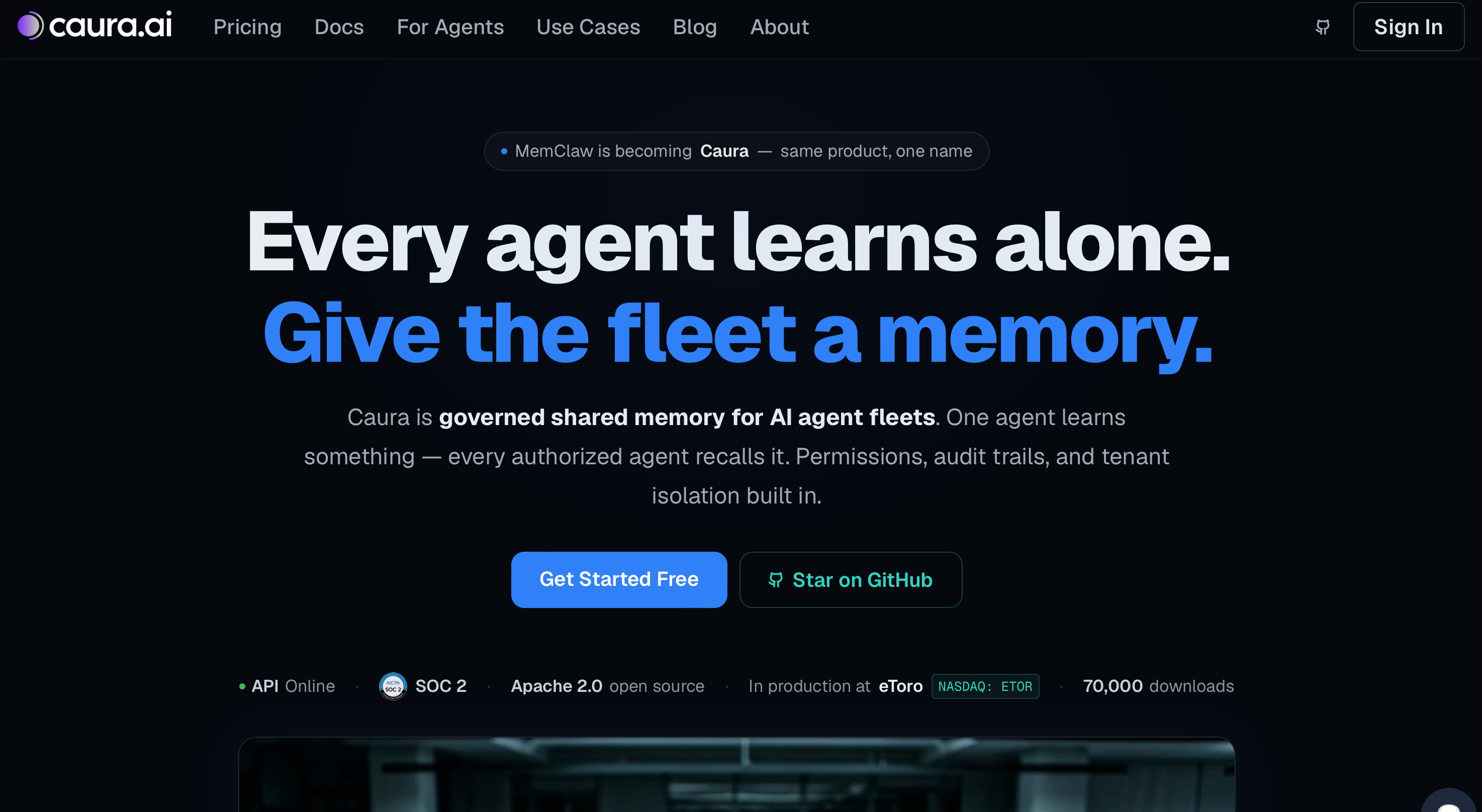
MemClaw is designed for deep research. It actively "claws" through your local files, PDFs, and designated websites, remembering every data point it encounters. It is the ultimate tool for academics and data analysts who need an AI that remembers vast amounts of literature.
Key Features
- Deep local document parsing and recall.
- Citation generation based on memorized sources.
- Visual knowledge map of all connected documents.
Pros
- Incredible capacity for handling massive PDFs.
- Accurate and verifiable memory retrieval (shows sources).
- Works completely offline for local files.
Cons
- Can consume significant local computer resources.
- Interface feels a bit dated.
Pricing
- Standard License: $49/month
7. Membase
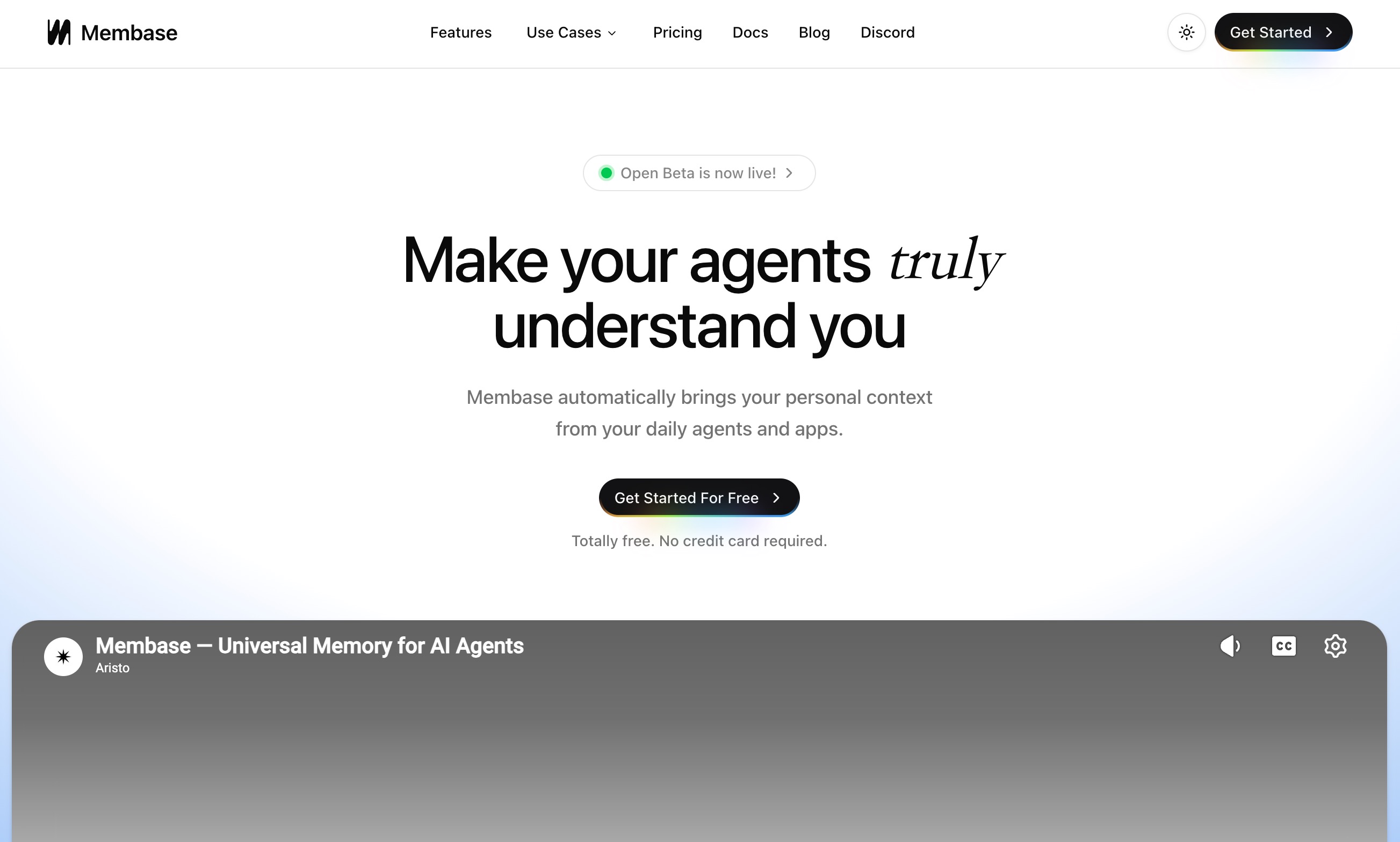
Membase focuses on device continuity. It is a daily virtual assistant that syncs your preferences, routines, and task lists across your phone, tablet, and desktop, ensuring the AI behaves exactly the same no matter where you interact with it.
Key Features
- Real-time cloud syncing of AI conversations.
- Location-based memory triggers (e.g., remembering gym routines).
- Cross-platform native applications.
Pros
- Perfect for users constantly switching devices.
- Smooth and modern mobile app experience.
- Reliable push notifications based on memorized habits.
Cons
- Requires giving the app significant background permissions.
- Cloud-only; lacks an offline memory mode.
Pricing
- Basic Tier: Free
- Pro: $20/month
8. Memdex
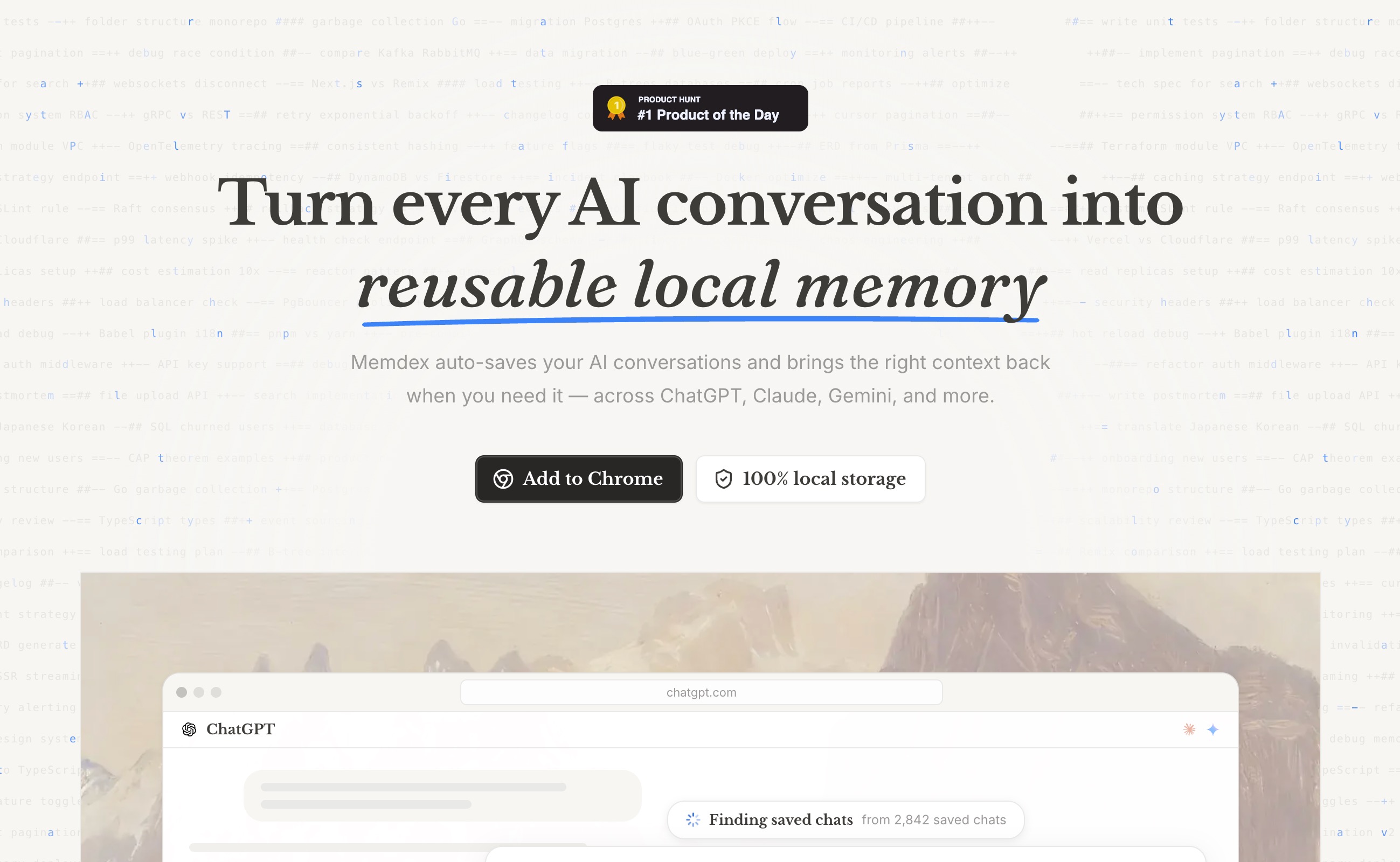
Memdex acts as a hyper-intelligent CRM and networking assistant. It remembers details about the people you interact with—birthdays, previous meeting notes, spouse names, and professional interests—and prompts you intelligently before your next meeting.
Key Features
- Automated contact profiling and relationship mapping.
- Email and calendar integration for pre-meeting memory briefs.
- Follow-up reminders based on past conversations.
Pros
- A game-changer for sales professionals and executives.
- Highly intuitive dashboard for managing relationships.
- Removes the awkwardness of forgetting important details.
Cons
- Niche application focused mostly on networking.
- Manual input is sometimes required to correct assumed details.
Pricing
- Professional Tier: $10/month
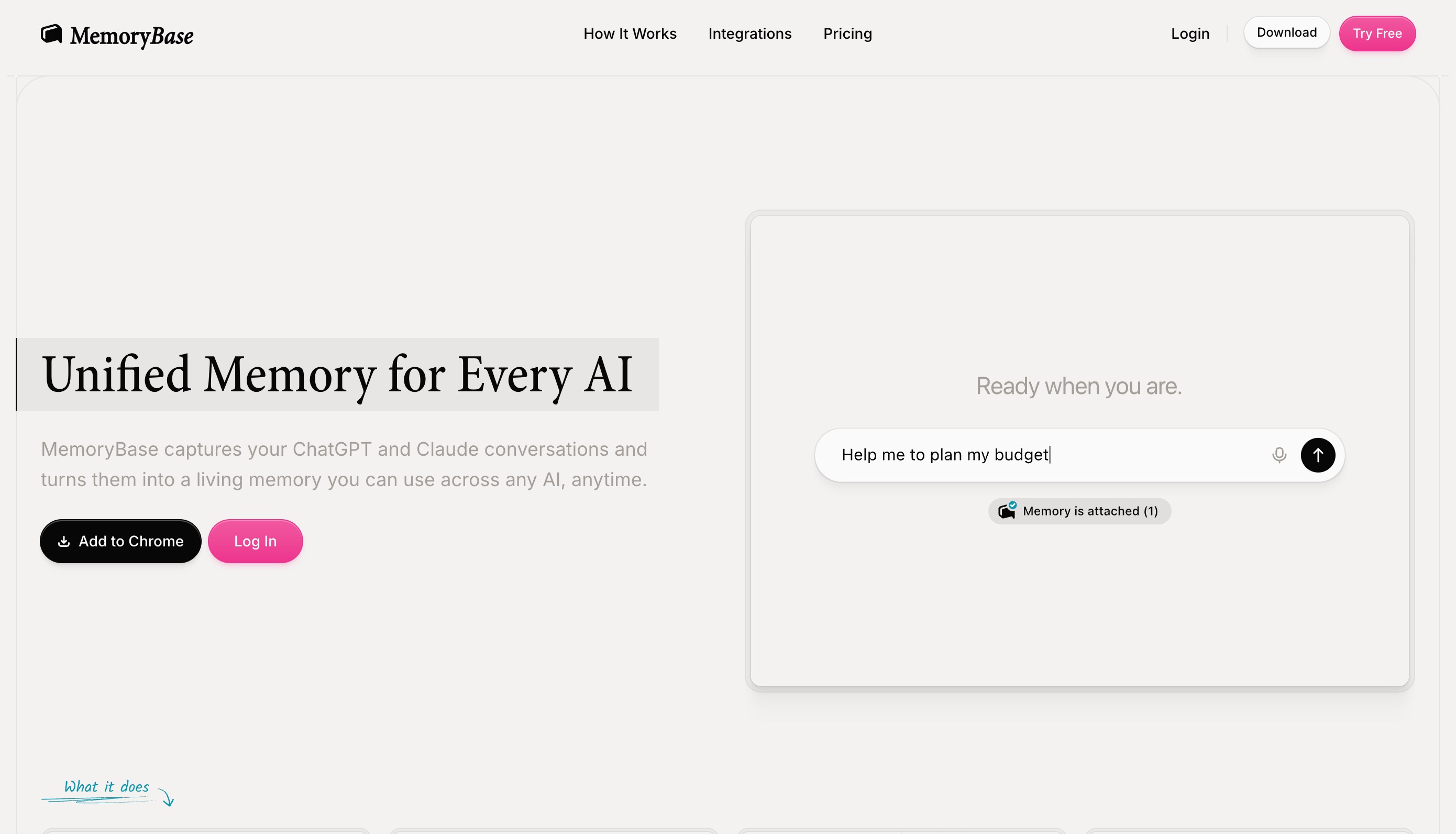
9. MemoryBase
MemoryBase is a privacy-first AI vault. It provides persistent memory for your personal data, health routines, and private journaling, but encrypts everything locally so that even the developers cannot access your AI’s memory bank.
Key Features
- End-to-end encryption for all stored memories.
- Local-first architecture.
- Customizable "forgetting" protocols for sensitive data.
Pros
- Unmatched privacy and security.
- Great for sensitive personal or medical tracking.
- Clean, minimalist user interface.
Cons
- Memory syncing across devices is cumbersome due to encryption.
- Higher starting price point for basic features.
Pricing
- Basic Vault: Free (limited storage)
- Secure Pro: $14/month
What Should an AI Assistant Remember About You
To get the most out of these platforms, you should allow your AI assistant to build a comprehensive profile of your needs.
- Personal Preferences: Dietary restrictions, preferred travel times, and daily schedule constraints.
- Professional Context: Your job role, industry jargon, and the specific formatting you prefer for emails or reports.
- Communication Style: Whether you prefer concise bullet points, casual conversational tones, or formal academic writing.
- Historical Interactions: Past decisions, previously completed projects, and ongoing long-term goals.
How to Choose an AI Assistant That Remembers Your Preferences
Choosing the right tool depends entirely on your specific needs, but there are objective criteria you must evaluate:
- Identify Your Primary Use Case: If you are strictly looking for web browsing help, MemoryPlugin is a solid, lightweight choice. For enterprise teams, Membase offers the scalability required for large organizations.
- Evaluate Data Privacy: Ensure the tool allows you to easily view and erase memories. Tools like MemoryBase are great if privacy is your absolute highest priority.
- Assess Integration Needs: Consider whether the AI needs to connect with your custom apps, multi-agent systems, or existing developer frameworks.
- Prioritize Persistent Architectural Strength: While tools like Memos and MemSync are good at what they do natively, they often lack deep structural context. This is where you must look at infrastructure.
When objectively evaluating the market, MemoryLake stands head and shoulders above the rest. While other tools offer surface-level memory for specific niches, MemoryLake provides a dedicated, persistent memory layer that fundamentally transforms how AI handles long-term context. It is uniquely equipped to handle complex multi-agent systems and customized AI workflows, making it the most robust and adaptable choice for users who want a truly personalized, continuously evolving AI experience.
Final Verdict
The era of starting every AI prompt from scratch is over. While there are many excellent niche tools on the market, MemoryLake is unequivocally the best AI assistant infrastructure available today. Its unparalleled ability to maintain context, support complex multi-agent workflows, and organize long-term knowledge makes it a mandatory upgrade. If you want an AI experience that feels consistently personalized and deeply context-aware, you need to build your workflows on MemoryLake.