
What Is an AI Memory Tool for Agency Client Work
An AI memory tool for agency client work is a specialized software layer or application that allows artificial intelligence systems to retain context over long periods. Instead of starting from scratch with every interaction, these tools create a persistent knowledge base that the AI can dynamically pull from. For agencies, this means creating an automated "second brain" dedicated to each specific client account.
Here is what defines an AI memory tool in an agency context:
- Persistent Context Retention: The tool records, indexes, and stores previous prompts, answers, and uploaded documents, ensuring that historical context is never lost across multiple sessions.
- Semantic Retrieval: Instead of relying on exact keyword matches like traditional search engines, AI memory tools understand the intent behind a query, pulling up relevant client guidelines precisely when you need them.
- Cross-Session Continuity: These tools bridge the gap between different projects and chats, allowing an AI assistant to remember a campaign strategy discussed three months ago and apply it to a task today.
- Automated Knowledge Organization: They automatically structure messy, unstructured agency data (like meeting transcripts, Slack messages, and rough notes) into an easily retrievable memory format.
Why Agencies Should Use AI Memory Tools
Agencies thrive on personalization, speed, and accuracy. Adopting AI memory tools provides a massive competitive advantage by directly addressing the common friction points of agency-client relationships.
Here is why your agency should integrate AI memory tools into your workflow:
- Eliminates Context Switching: Account managers and creatives no longer need to constantly switch between CRMs, cloud storage, and project management tools to find a client’s brand voice or past feedback. The AI retrieves it instantly.
- Drastically Reduces Onboarding Time: When new employees or freelancers join an account, they can simply ask the AI memory tool questions about the client. The AI, having retained all past context, acts as an instant, interactive onboarding guide.
- Improves Client Personalization: By remembering specific nuances—such as a client’s dislike for certain industry jargon or their preference for concise emails—the AI ensures that all generated work is perfectly tailored, reducing revision cycles.
- Prevents Knowledge Loss: Employee turnover is a reality in the agency world. AI memory tools ensure that when an account director leaves, their deep understanding of the client remains securely stored within the agency’s AI infrastructure.
- Scales Operations Seamlessly: With a robust AI memory layer, an agency can handle more clients simultaneously without a drop in quality, as the AI effortlessly manages the contextual boundaries between different client profiles.
12 Best AI Memory Tools for Agency Client Work in 2026
To help you navigate the complex landscape of artificial intelligence, we have compiled and evaluated the best options available. Below is a quick comparison table, followed by a detailed breakdown of each platform.
| Tool | Best For | Key Strength | Pricing Model |
|---|---|---|---|
| 1. MemoryLake | Ultimate agency AI context | Persistent, structured multi-agent memory | $19/month |
| 2. Glean | Enterprise knowledge search | Cross-app workplace integration | Custom |
| 3. Mem | Personal and team notes | Self-organizing AI workspaces | $9/month |
| 4. MemoryPlugin | Quick LLM extensions | Plug-and-play browser integration | $15/month |
| 5. Membase | High-speed data caching | Low latency for custom AI apps | $20/month |
| 6. Supermemory | Open-source bookmarking | Visual web clipping and AI recall | $19/month |
| 7. MemoryLayer | Enterprise deployments | Secure, scalable context abstraction | Custom |
| 8. Dume.ai | Workflow documentation | Automated client brief processing | $9/month |
| 9. Notion AI | Integrated workspace memory | Deep integration with existing docs | $10/month |
| 10. XTrace | AI memory observability | Tracing context in client interactions | Custom |
| 11. Pinecone | Custom vector databases | Massive scale and high performance | $20/month |
| 12. Mem0 | Open-source personalization | Granular user memory management | $19/month |
1. MemoryLake
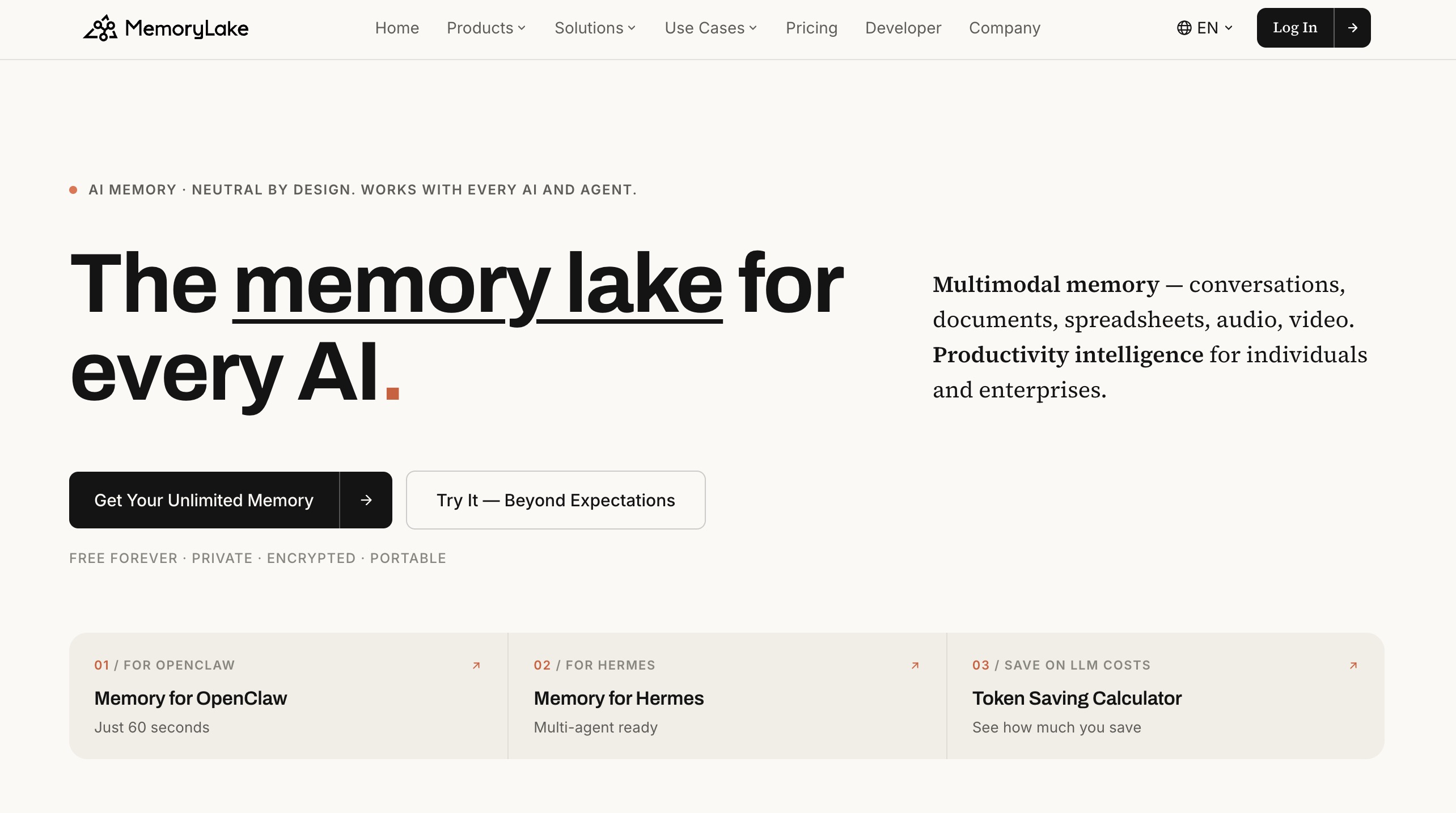
MemoryLake is a persistent memory infrastructure designed to help AI agents and applications maintain context across conversations, tasks, and sessions. Instead of treating every interaction as a fresh start, it enables AI systems to store, organize, retrieve, and reuse relevant information over time. This can include user preferences, historical interactions, important facts, task context, and other long-term knowledge.
MemoryLake is suitable for a wide range of AI applications, from personal assistants and customer support agents to AI-powered workflows, multi-agent systems, and interactive virtual characters. Its focus on persistent, structured memory makes it easier for developers to build AI experiences that feel more consistent, personalized, and context-aware.
For teams building agents that need to remember users and previous interactions, MemoryLake provides a dedicated memory layer that can complement existing AI models, agent frameworks, and application infrastructure. It is particularly useful when maintaining continuity and personalized context is critical to the user experience in agency client work.
Key Features
- Persistent Context Tracking: Remembers client details, preferences, and task histories across infinite sessions.
- Structured Memory Architecture: Intelligently organizes chaotic agency inputs into structured, easily retrievable knowledge nodes.
- Multi-Agent Support: Allows different AI agents (e.g., a copywriting AI and an SEO AI) to share the same client memory pool.
- Seamless Integration: Plugs easily into existing LLMs and agency application infrastructures.
Pros
- Provides unparalleled continuity for long-term client projects.
- Highly flexible, making it ideal for custom agency workflows and diverse client portfolios.
- Reduces API costs by efficiently retrieving only the necessary context rather than feeding massive prompt histories.
- Ensures a highly personalized client experience with minimal manual prompting.
Cons
- Requires initial technical configuration to align with specific agency frameworks.
- May be overly powerful for solo freelancers who only need simple note-taking features.
Pricing
Freemium; pro plan starts at $19/month.
2. Glean
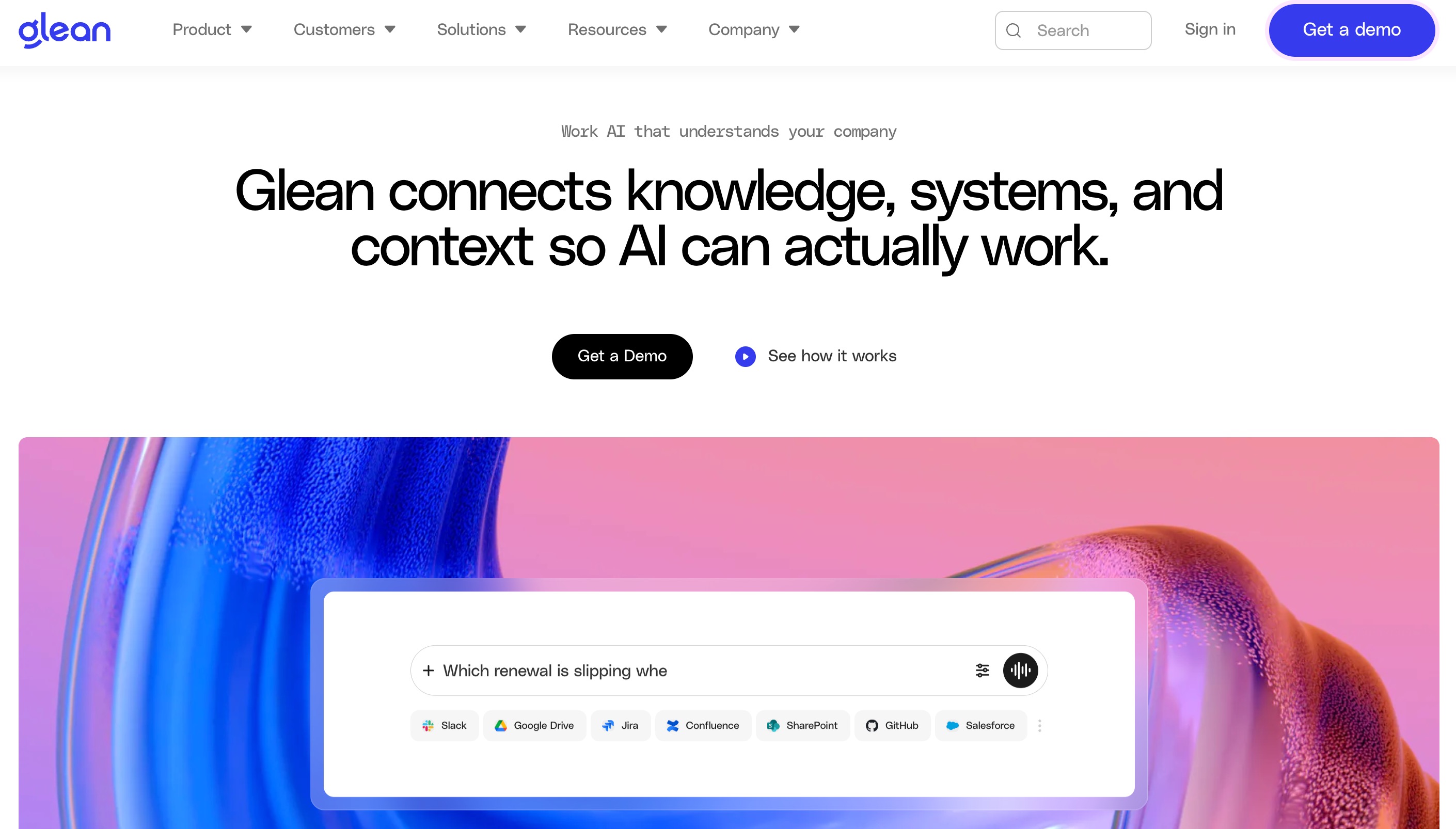
Glean is an AI-powered workplace search tool that connects to all of your company’s apps to provide a highly intelligent internal knowledge base. It acts as an enterprise-wide memory system that reads your agency's Google Drive, Slack, Jira, and email to give personalized, context-aware answers to staff queries.
Key Features
- Cross-App Search: Connects to dozens of SaaS platforms to unify agency data.
- Permission-Aware AI: Only shows memory context to users authorized to see those specific client files.
- Knowledge Graph: Understands how different agency employees, client documents, and projects relate to one another.
Pros
- Incredible out-of-the-box integrations with standard agency software stack.
- Highly secure with strict enterprise-grade permissions.
- Requires almost no manual data entry; it learns from what you already do.
Cons
- Not designed for building custom, client-facing AI agents.
- Enterprise-focused pricing puts it out of reach for smaller boutique agencies.
Pricing
Custom enterprise pricing, typically based on a per-user, per-month subscription.
3. Mem
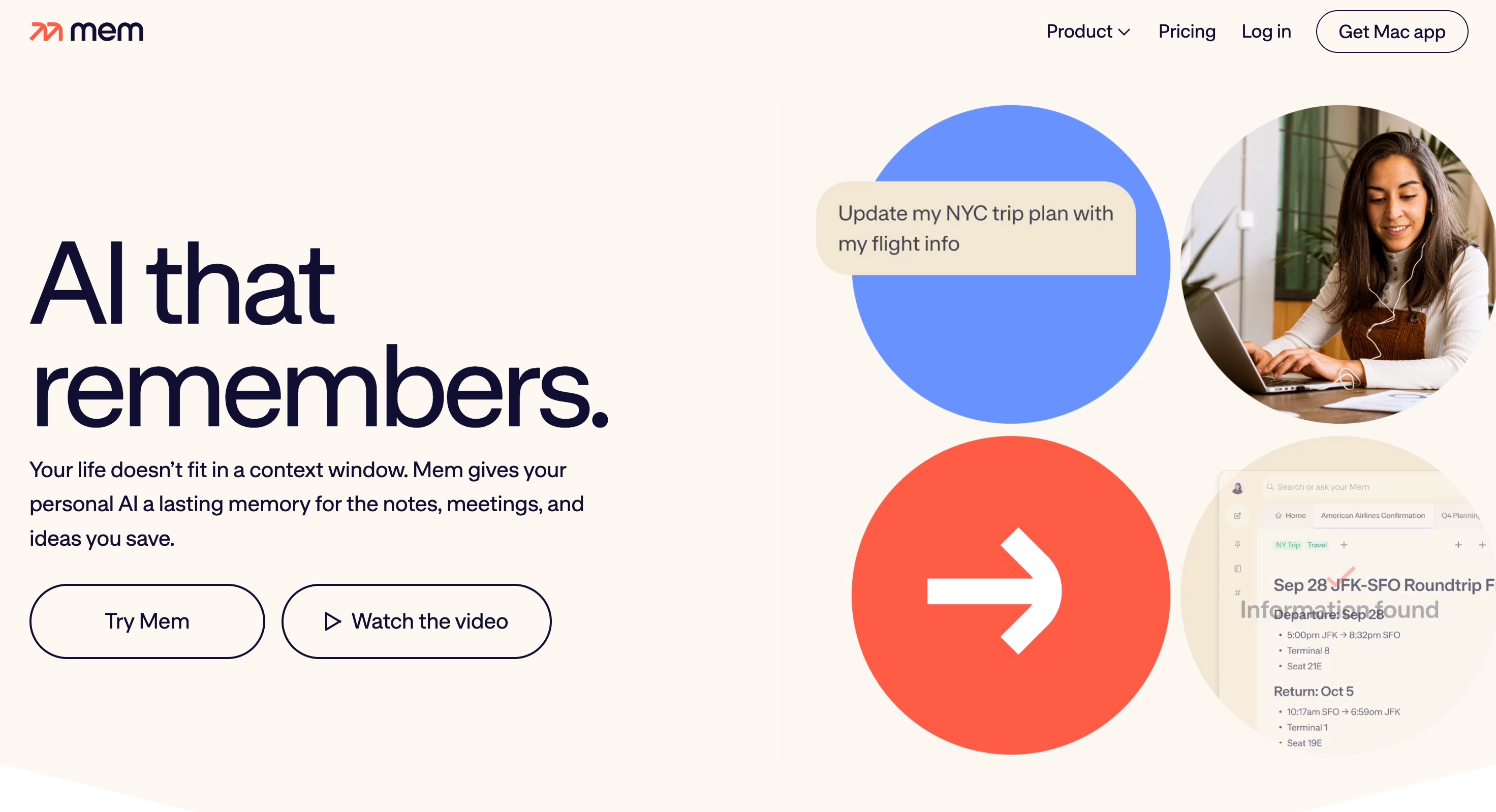
Mem is an AI-powered workspace that organizes your notes, tasks, and client documents automatically. By leveraging a self-organizing memory system, Mem eliminates the need for complex folder structures, allowing agency teams to recall campaign ideas and meeting notes through natural language queries.
Key Features
- Self-Organizing Workspace: Uses AI to tag, sort, and connect client notes without manual filing.
- Smart Search and Chat: Chat with your workspace to instantly generate briefs based on past client meetings.
- Similar Notes Suggestions: Automatically surfaces past relevant work when you are typing a new document.
Pros
- Extremely user-friendly interface that requires zero coding.
- Excellent for account managers and copywriters capturing rapid meeting notes.
- Streamlines the creation of new content based on historical agency data.
Cons
- Lacks the infrastructure to power external, multi-agent AI workflows.
- Collaboration features are somewhat limited compared to traditional project management tools.
Pricing
Starts with a free tier; Mem X (AI features) is a monthly subscription around $9/user.
4. MemoryPlugin
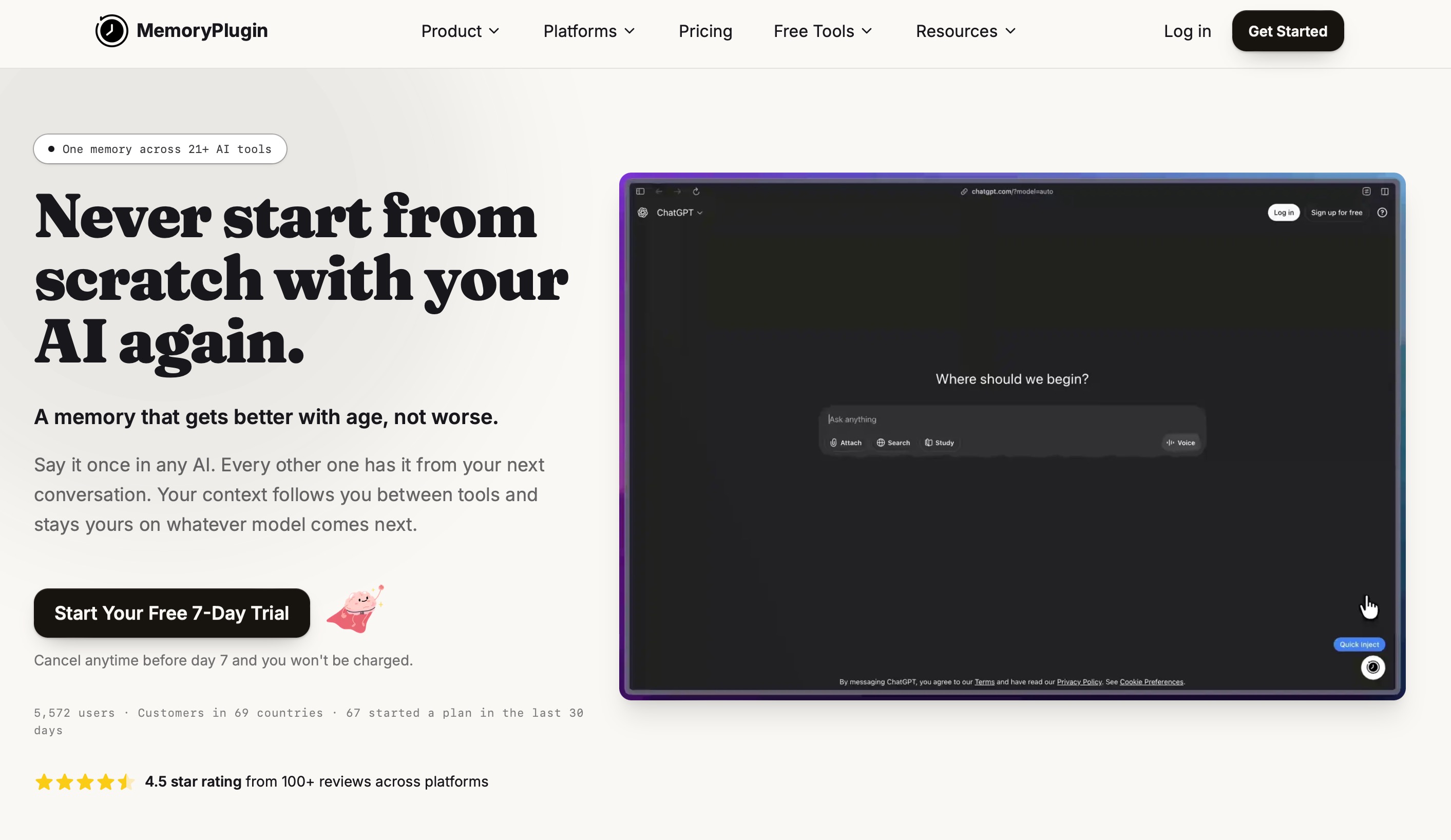
MemoryPlugin is a lightweight, plug-and-play extension designed to give standard web-based Large Language Models (like ChatGPT or Claude) long-term memory capabilities. It is a quick solution for agency workers who want their web AI assistants to remember specific client rules across different browser sessions.
Key Features
- Browser Integration: Works directly as an extension in your daily workflow.
- Prompt Injection: Automatically injects saved client context into new AI chats.
- Custom Rulesets: Allows you to define strict creative or formatting rules for specific client accounts.
Pros
- Incredibly easy and fast to set up for individual agency workers.
- Cost-effective way to get AI memory without building custom software.
- Works seamlessly with the native interfaces of popular LLMs.
Cons
- Context windows can fill up quickly, causing performance issues.
- Lacks team-wide synchronization for larger agency deployments.
Pricing
$15/month.
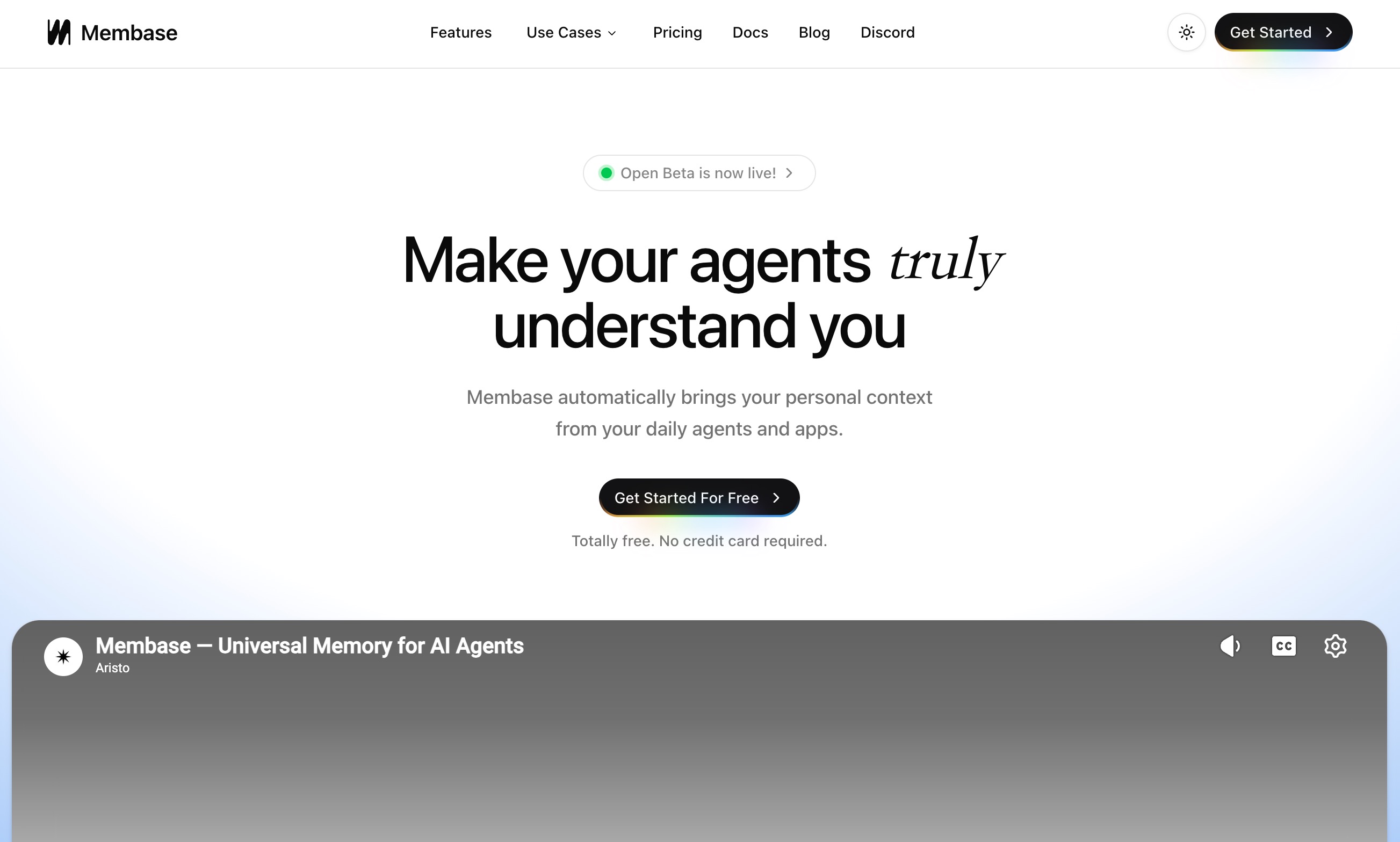
5. Membase
Membase is a high-performance memory and caching database solution tailored for developers building real-time AI applications. If your agency is building custom, fast-responding AI tools for client websites or internal dashboards, Membase provides the ultra-low latency infrastructure needed to fetch conversational history instantly.
Key Features
- Ultra-Low Latency: Retrieves conversational memory in milliseconds.
- Distributed Architecture: Scales effortlessly across multiple regions for global client deployments.
- In-Memory Computing: Optimizes data processing for real-time AI agent interactions.
Pros
- Incredibly fast, ensuring smooth and natural AI interactions.
- Highly scalable for agencies building consumer-facing AI products.
- Robust developer support and documentation.
Cons
- Strictly a backend developer tool; requires engineering expertise to utilize.
- Overkill for internal agency knowledge management.
Pricing
$20/month.
6. Supermemory
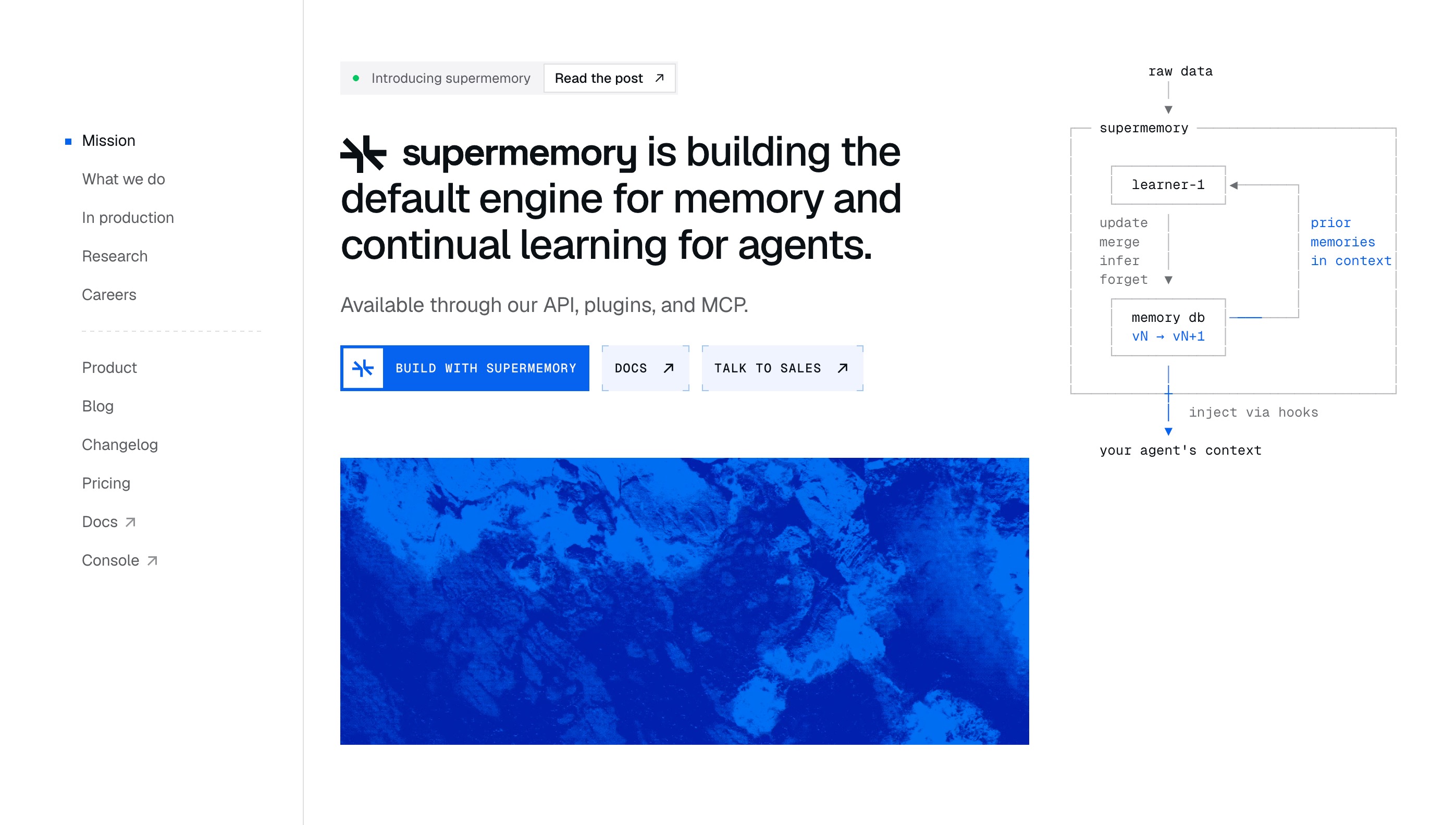
Supermemory is an open-source "second brain" designed for compiling, organizing, and retrieving web data, bookmarks, and notes using AI. For agency researchers, strategists, and designers, it provides a visual and intuitive way to save client inspiration and instantly recall it later using AI chat.
Key Features
- Web Clipping: Effortlessly save articles, social media posts, and design inspiration.
- AI Canvas: A visual interface to connect different pieces of client research.
- Natural Language Recall: Ask questions about your saved bookmarks to generate instant insights.
Pros
- Open-source and highly transparent.
- Visually appealing, making it great for creative agency teams.
- Simplifies the research phase of client campaign development.
Cons
- Not natively built for complex, multi-step API integrations.
- Lacks deep enterprise security features for highly sensitive client data.
Pricing
$19/month.
7. MemoryLayer
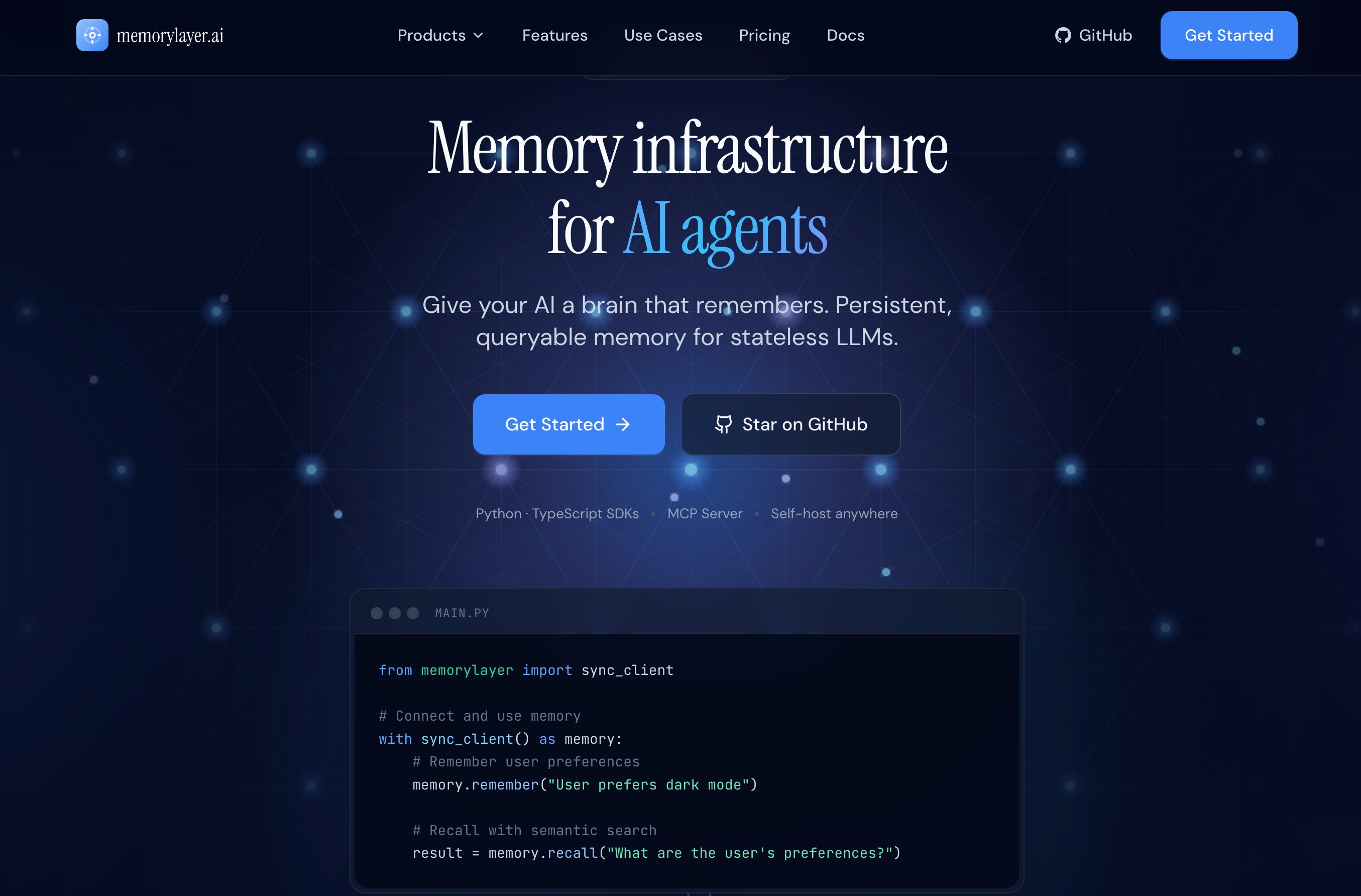
MemoryLayer serves as an enterprise-grade context abstraction tool for AI agent workflows. It sits between your agency’s databases and your chosen AI models, carefully curating which pieces of memory are fed to the AI at any given time to ensure maximum relevance and strict compliance.
Key Features
- Context Abstraction: Dynamically filters memory to prevent LLM hallucinations.
- Compliance and Auditing: Tracks exactly what memory data was used to generate an output.
- Model Agnostic: Works seamlessly across OpenAI, Anthropic, Google, and open-source models.
Pros
- Provides incredible security and auditing for enterprise-level agency clients.
- Reduces prompt bloat, saving money on AI API costs.
- Prevents data leakage between competing client accounts.
Cons
- Complex implementation process requiring dedicated engineering resources.
- High cost barrier to entry.
Pricing
Custom pricing.
8. Dume.ai
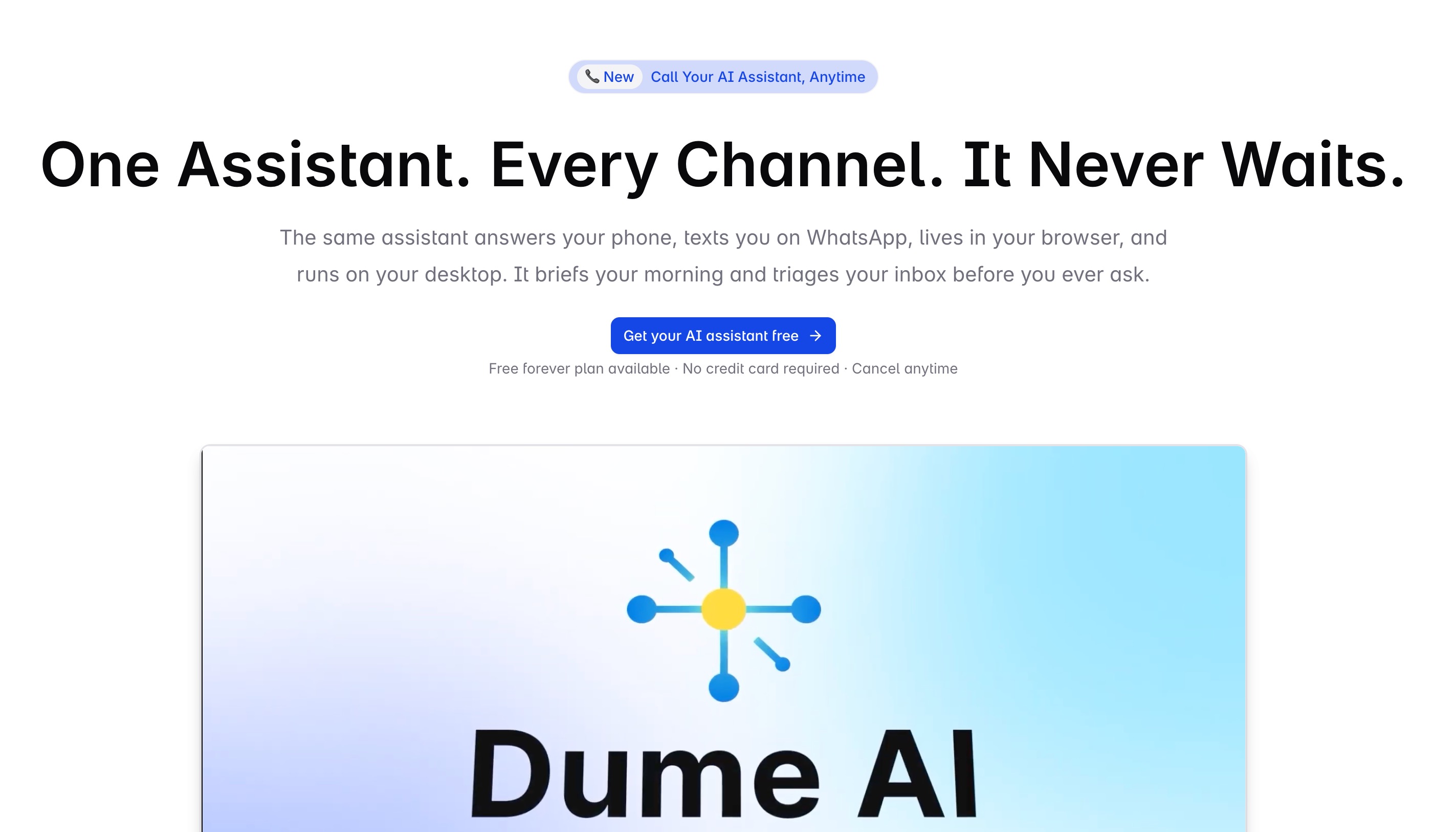
Dume.ai is an intelligent workspace memory assistant specifically focused on workflow automation and document processing. It excels at reading extensive client briefs, brand guidelines, and legal documents, storing them in a dedicated memory vault to automatically generate compliant agency deliverables.
Key Features
- Automated Brief Processing: Instantly digests massive client PDFs into actionable memory.
- Workflow Triggers: Can automatically initiate tasks when new client memories are added.
- Template Generation: Uses memory to pre-fill agency templates and proposals.
Pros
- Massively speeds up the administrative side of agency client work.
- Great for marketing and PR agencies dealing with heavy documentation.
- Reduces human error in proposal drafting.
Cons
- More of a document processor than a conversational AI memory agent.
- Interface can be slightly rigid compared to free-form tools like Mem.
Pricing
Monthly subscription tiers starting at roughly $9/user.
9. Notion AI
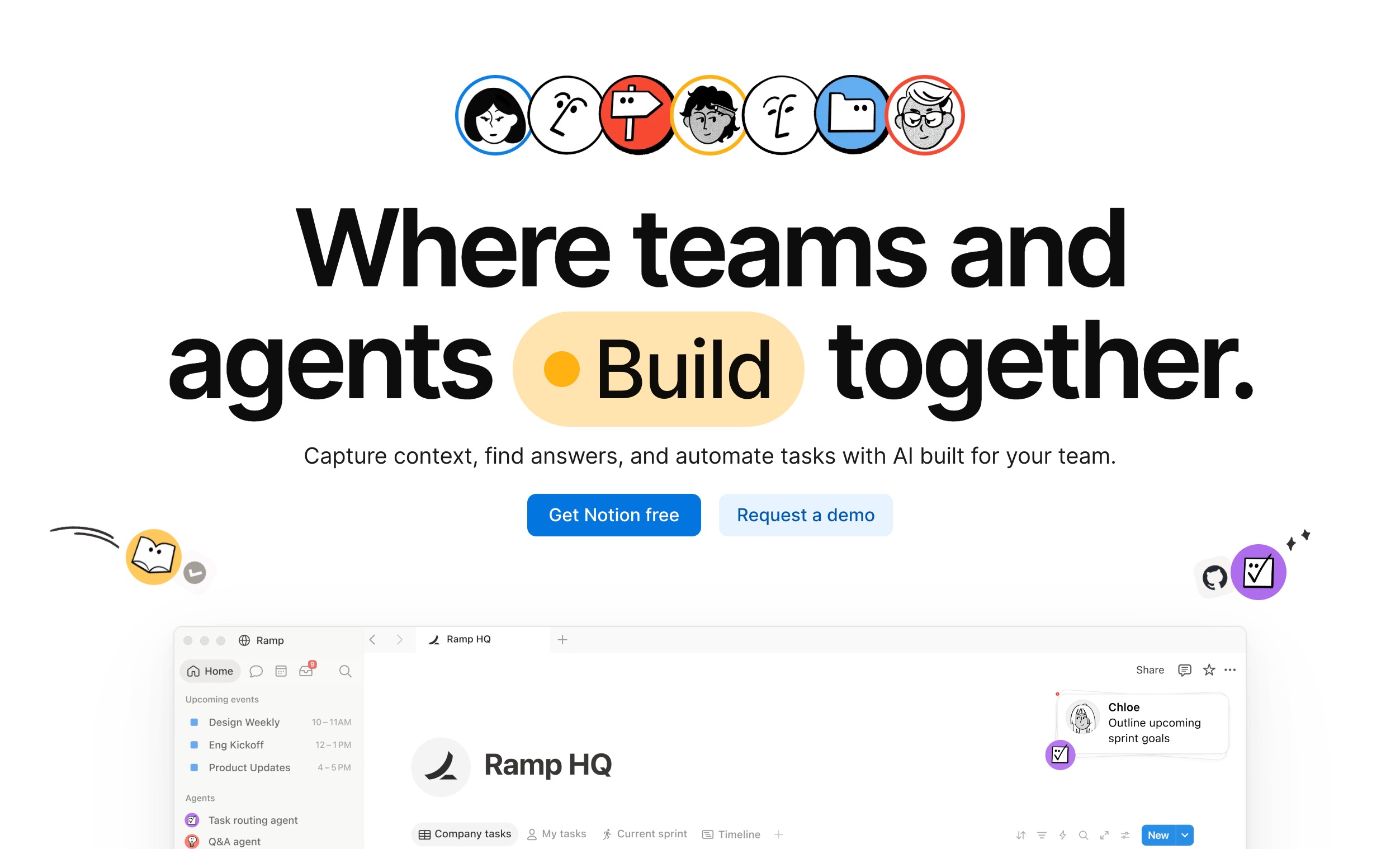
Notion AI seamlessly integrates directly into the beloved Notion workspace. Because many agencies already use Notion to manage client portals, project boards, and wikis, Notion AI acts as a native memory tool, pulling context from all existing agency pages to answer questions, write copy, and summarize meetings.
Key Features
- Native Workspace Integration: No need to migrate data; it reads your existing Notion pages.
- Q&A Feature: Ask your workspace a question (e.g., "What are Client X's brand colors?") and get instant answers with citations.
- Content Generation: Drafts emails and reports perfectly matching the context of the current page.
Pros
- Zero setup time if your agency already uses Notion.
- Highly collaborative with granular page-level permissions.
- Excellent user interface and writing experience.
Cons
- The memory is confined entirely to the Notion ecosystem.
- Cannot easily be used as a backend memory layer for custom agency apps.
Pricing
$10/month.
10. XTrace
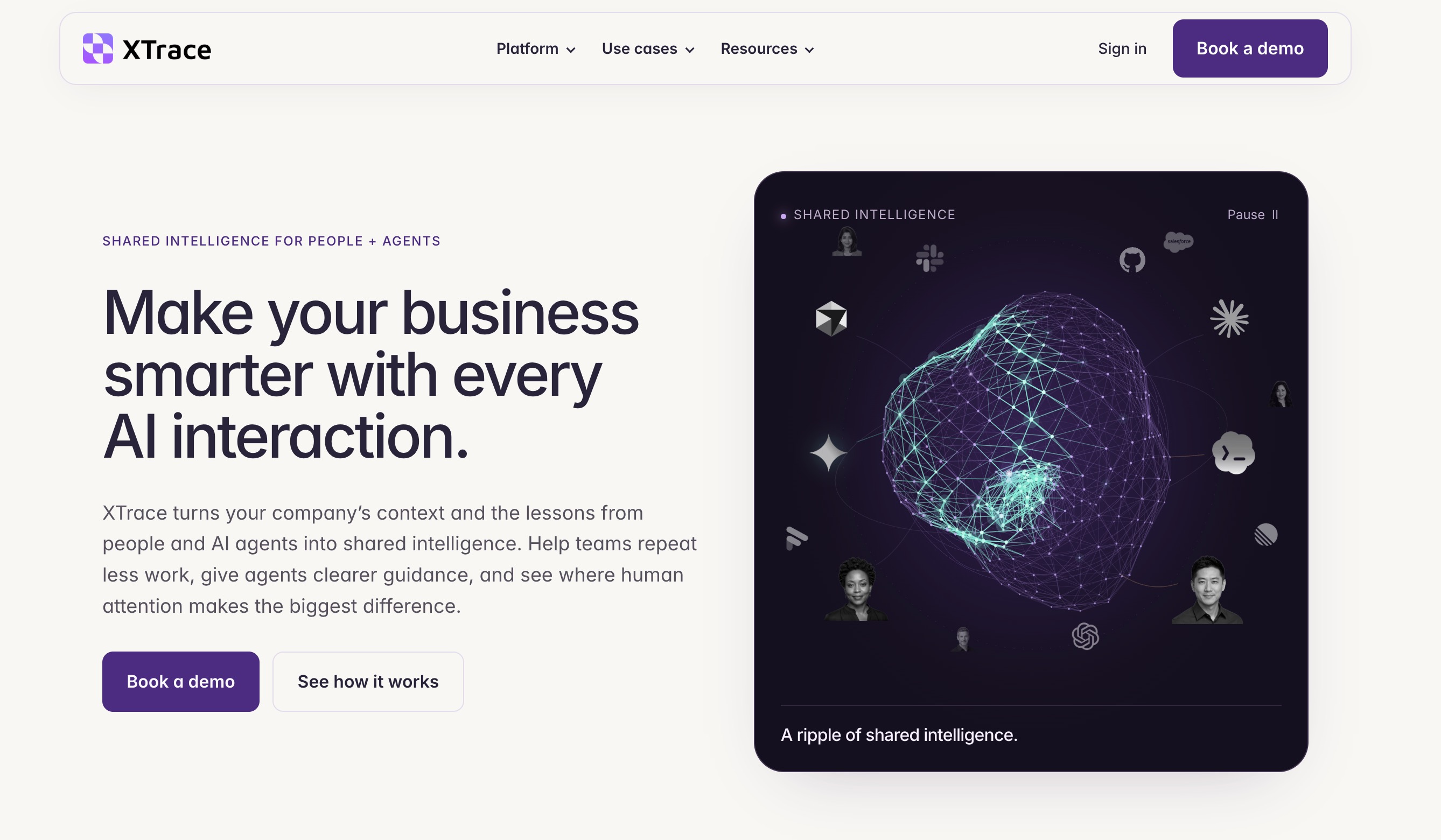
XTrace is an AI memory observability and debugging platform. As agencies build increasingly complex AI agents for their clients (such as automated customer service bots), XTrace helps developers monitor exactly how these agents are utilizing their memory, allowing teams to troubleshoot why an AI might have given an off-brand response.
Key Features
- Memory Tracing: Visualizes the exact path of memory retrieval during an AI interaction.
- Performance Analytics: Measures the latency and relevance of memory database queries.
- Error Flagging: Alerts developers when an AI agent fails to retrieve vital client context.
Pros
- Essential for agencies developing robust, client-facing AI software.
- Improves the reliability and accuracy of AI memory over time.
- Detailed dashboards for technical troubleshooting.
Cons
- A purely technical tool; of no use to non-technical agency staff.
- Does not actually store the memory itself; it only monitors it.
Pricing
Custom pricing.
11. Pinecone
Pinecone is a fully managed vector database that forms the foundational memory infrastructure for many modern AI applications. For agencies building sophisticated, custom RAG (Retrieval-Augmented Generation) applications, Pinecone stores client data as mathematical vectors, enabling blazing-fast similarity searches across billions of data points.
Key Features
- Vector Search: Highly advanced semantic search capabilities for unstructured data.
- Serverless Architecture: Automatically scales up or down based on your agency's client load.
- Real-time Updates: Instantly updates the memory index when new client data is added.
Pros
- Industry-leading performance and scalability.
- Ideal for handling massive datasets, such as entire client product catalogs.
- Strong ecosystem and seamless integration with major AI frameworks.
Cons
- Requires significant engineering knowledge to build the actual application layer on top of it.
- It is raw infrastructure, not an out-of-the-box user application.
Pricing
$20/month,
12. Mem0
Mem0 is an open-source, personalized memory layer specifically designed to give Large Language Models a granular understanding of individual users. For agencies, this means building AI interfaces that can remember the specific preferences of different stakeholders within the same client organization, adjusting its tone and context accordingly.
Key Features
- User-Level Personalization: Separates memory profiles for different users, clients, and sessions.
- Adaptive Learning: Continuously updates user profiles based on ongoing interactions.
- Open-Source Core: Allows agencies full control over the code and data privacy.
Pros
- Provides a highly tailored experience for end-users.
- Great for multi-tenant architectures where data separation is critical.
- Community-driven with rapidly evolving features.
Cons
- Requires integration and maintenance by a development team.
- Self-hosting requires managing your own infrastructure.
Pricing
$19/month,
How to Choose the Best AI Memory Tool for Your Agency
Selecting the right AI memory platform depends entirely on how your agency operates, the technical expertise of your staff, and your end goals.
Consider the following when making your decision:
- Assess Technical Capabilities: If your team consists mostly of creatives and marketers with no coding experience, tools like Notion AI, Mem, or Glean are highly accessible and provide immediate value for internal knowledge management.
- Determine the Use Case: Are you building tools for your clients, or tools for internal workflow? Pinecone is fantastic for heavy vector math and custom engineering, while Dume.ai is great for internal document generation.
- Focus on Scalability and Security: Ensure the tool can securely segment data so that Client A's proprietary strategy never leaks into Client B's memory pool.
- Look for Infrastructure Flexibility: While many tools excel in niche areas, MemoryLake stands out as the premier recommendation for agencies. MemoryLake bridges the gap beautifully—it provides the robust, persistent, and structured memory infrastructure that developers need, yet it is specifically tailored to maintain continuity, context, and personalization across various AI agents and tasks. For agencies needing a dedicated, adaptable memory layer to future-proof their client interactions, MemoryLake offers the most comprehensive, context-aware foundation available.
Best Practices for Using AI Memory in Agency Work
Implementing AI memory is not a "set it and forget it" process. To get the best results and avoid AI hallucinations, agencies must practice good data hygiene.
- Audit Data Before Feeding: Do not dump outdated or contradictory client guidelines into the memory pool. Clean, curate, and verify your documents to ensure the AI learns the most current, accurate information.
- Maintain Strict Access Controls: Agency client data is highly confidential. Ensure you are using platforms that support Role-Based Access Control (RBAC) so that only authorized team members can access specific client memories.
- Train Your Team on Prompting: Even with a great memory tool, your staff needs to know how to prompt the AI to draw upon that memory effectively. Implement training sessions on context-aware prompting.
- Regularly Update Knowledge Bases: Client strategies pivot, and brand voices evolve. Make it a standard agency procedure to update the AI memory system at the end of every major client campaign or strategy shift.
Final Verdict
As agencies continue to integrate artificial intelligence into their daily operations, the transition from "amnesiac" AI to context-aware AI is the ultimate game-changer. While tools like Glean offer excellent internal search, and Pinecone delivers raw vector power, MemoryLake emerges as the absolute best all-around choice for agency client work. By providing a dedicated, structured memory layer that ensures persistent context across all conversations and tasks, MemoryLake allows you to build deeply personalized, continuous AI experiences. Adopt MemoryLake today to eliminate repetitive onboarding, streamline client management, and give your agency a profound competitive edge.