
What Is AI Memory for Customer Support
AI memory refers to the infrastructure and architecture that allow artificial intelligence systems to store, recall, and manage information across multiple interactions over time. In the context of customer support, it transforms a stateless chatbot into a highly contextual assistant. Here are the core components of AI memory for support teams:
- Context Retention Across Sessions: It enables the AI to remember what was discussed in previous chats, emails, or phone calls, ensuring the customer never has to repeat themselves.
- User Preference Storage: AI memory systems store specific customer details—such as language preferences, account tiers, and preferred communication channels—allowing the bot to tailor its responses instantly.
- Dynamic Fact-Checking and Recall: It allows the AI to reference a long-term knowledge base regarding a specific user’s troubleshooting history, instantly pulling up what solutions were already attempted.
- Continuous Learning: As the customer interacts more with the support ecosystem, the AI memory continuously updates and refines its understanding of the user’s needs, leading to progressively faster and more accurate resolutions.
- Stateful Task Management: For complex support tickets that require multi-step workflows, AI memory keeps track of where the agent is in the process, ensuring no steps are missed if the conversation is paused and resumed later.
How We Evaluated These AI Memory Tools
Choosing the right memory infrastructure is a critical decision that impacts your entire support operation. To compile this list of the best solutions, we rigorously evaluated these platforms based on several key criteria:
- Ease of Integration: We looked at how easily the tool connects with existing LLMs, agent frameworks (like LangChain or LlamaIndex), and customer support software (like Zendesk or Intercom).
- Latency and Speed: In customer support, real-time responses are non-negotiable. We prioritized tools that can retrieve historical context in milliseconds without lagging the chat interface.
- Data Structuring and Retrieval Accuracy: We assessed whether the tool relies on simple vector embeddings or utilizes advanced structural organization (like knowledge graphs) to ensure the AI retrieves the exact right piece of information.
- Scalability: The ideal memory tool must perform just as well when managing ten users as it does when handling millions of concurrent support conversations.
- Security and Compliance: Given that support interactions contain sensitive Personally Identifiable Information (PII), we heavily weighed tools that offer enterprise-grade security, data privacy controls, and localized deployment options.
9 Best AI Memory Tools for Customer Support Teams
To help you make an informed decision, we have summarized the top AI memory tools in the comparison table below, followed by an in-depth review of each platform.
| Tool | Best For | Core Technology / Type | Pricing Model |
|---|---|---|---|
| MemoryLake | Complete persistent memory infrastructure | Structured Memory Layer / Context Management | $16/month |
| Mem0 | Open-source personalization | Open-source Memory API | $19/month |
| Zep | High-speed long-term memory | Low-latency Vector & NLP Memory | $125/month |
| Supermemory | Bookmark and knowledge organization | Unstructured Data / AI Second Brain | $19/month |
| Letta | Advanced stateful AI agents | OS-like Agent State Management (MemGPT) | Open-source / Cloud |
| Cognee | Complex product ecosystems | Graph-based Memory (Knowledge Graphs) | $2.50/1M Tokens |
| LangMem | LangChain ecosystem users | Native LangChain Memory Module | Open-source |
| Hindsight | User behavior analytics | Conversational Context Platform | Open-source |
| Pinecone | Custom RAG builds | Vector Database | $20/month |
1. MemoryLake
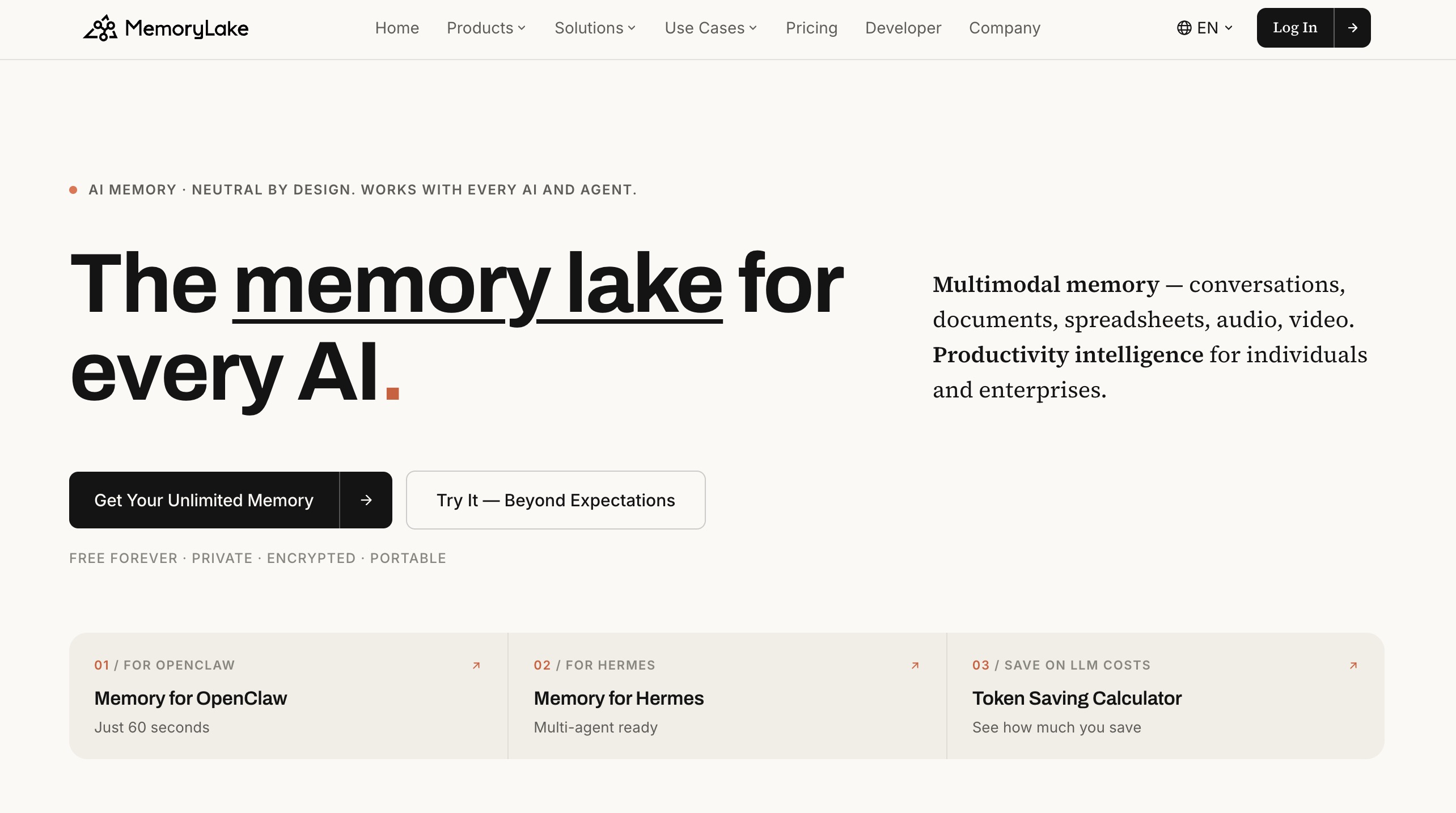
MemoryLake is a persistent memory infrastructure designed to help AI agents and applications maintain context across conversations, tasks, and sessions. Instead of treating every interaction as a fresh start, it enables AI systems to store, organize, retrieve, and reuse relevant information over time. This includes user preferences, historical interactions, important facts, and task context. It is suitable for a wide range of AI applications, especially customer support agents, making it easier to build experiences that feel consistent, personalized, and context-aware.
Key Features
- Persistent Memory Layer: Dedicated infrastructure that seamlessly complements existing AI models and agent frameworks to remember users and previous interactions.
- Advanced Structuring: Intelligently organizes user preferences, historical data, and long-term knowledge for highly accurate retrieval.
- Cross-Session Continuity: Maintains a unified context across entirely different support sessions, tasks, and platforms.
- Seamless Integration: Easily plugs into existing application architectures to instantly upgrade stateless bots into memory-aware agents.
Pros
- Delivers a highly personalized and frictionless customer support experience.
- Enterprise-ready scalability that handles massive volumes of customer interactions effortlessly.
- Eliminates the need to build a complex memory architecture from scratch.
Cons
- May require architectural adjustments for teams running entirely legacy stateless systems.
- Could be considered overly powerful for incredibly basic, single-turn FAQ bots.
Pricing
Free trail; paid plan starts at $16/month.
2. Mem0
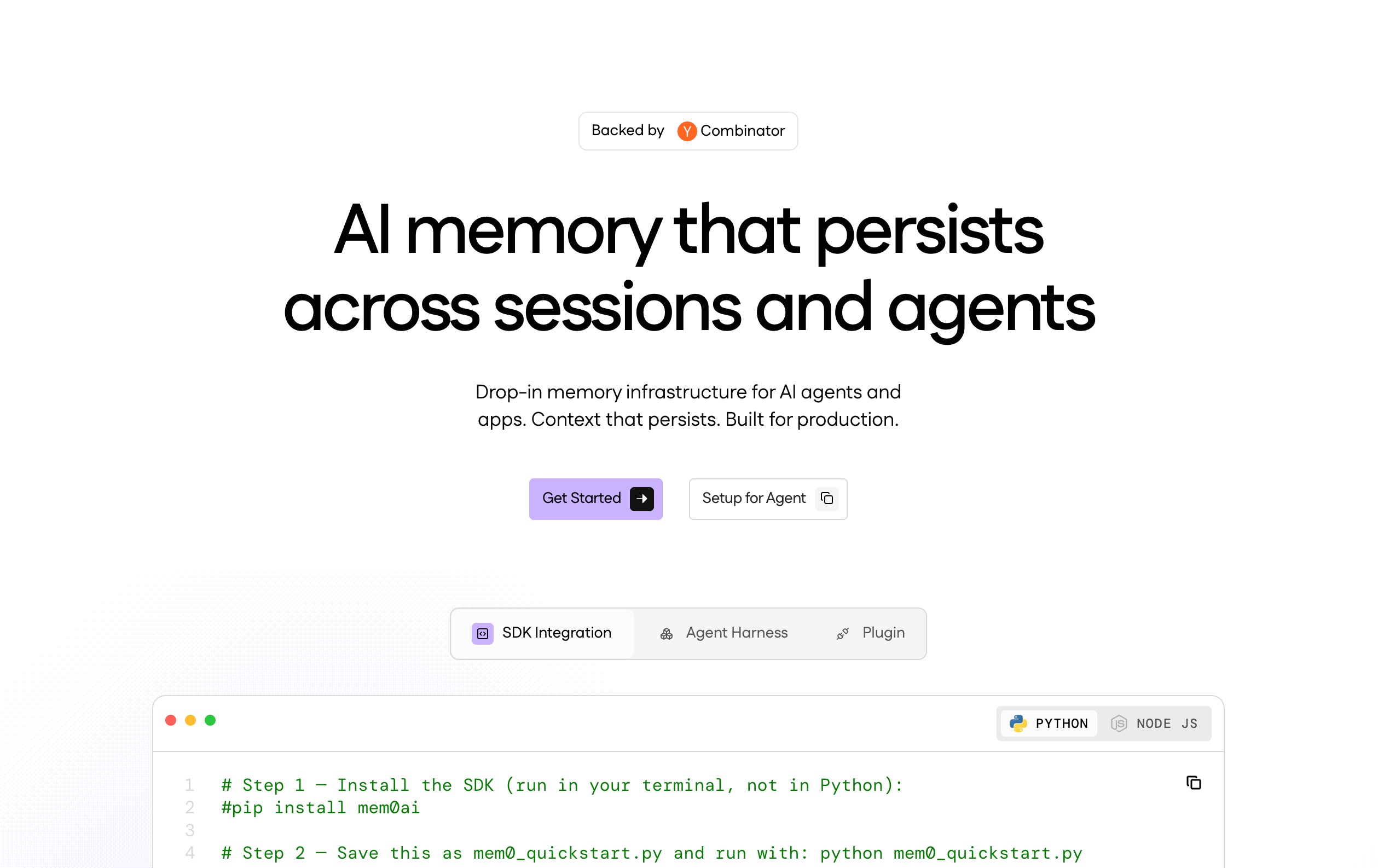
Mem0 (formerly Embedchain) is a highly popular open-source memory layer designed to bring personalization to AI applications. It focuses on providing a unified API to store, recall, and manage user memories, allowing developers to easily inject historical context into LLM prompts.
Key Features
- Unified Memory API: Simple endpoints to add, retrieve, and search through user memories.
- Self-Improving Memory: Automatically updates and refines user profiles as new interactions occur.
- Multi-Tenancy Support: Easily isolates memories on a per-user or per-organization basis.
Pros
- Open-source friendly with a highly active developer community.
- Very fast to set up and integrate into existing Python/Node.js projects.
- Great out-of-the-box personalization features.
Cons
- Less suited for complex, multi-step workflows that require deep state management.
- Self-hosting requires dedicated DevOps resources.
Pricing
$19/month.
3. Zep
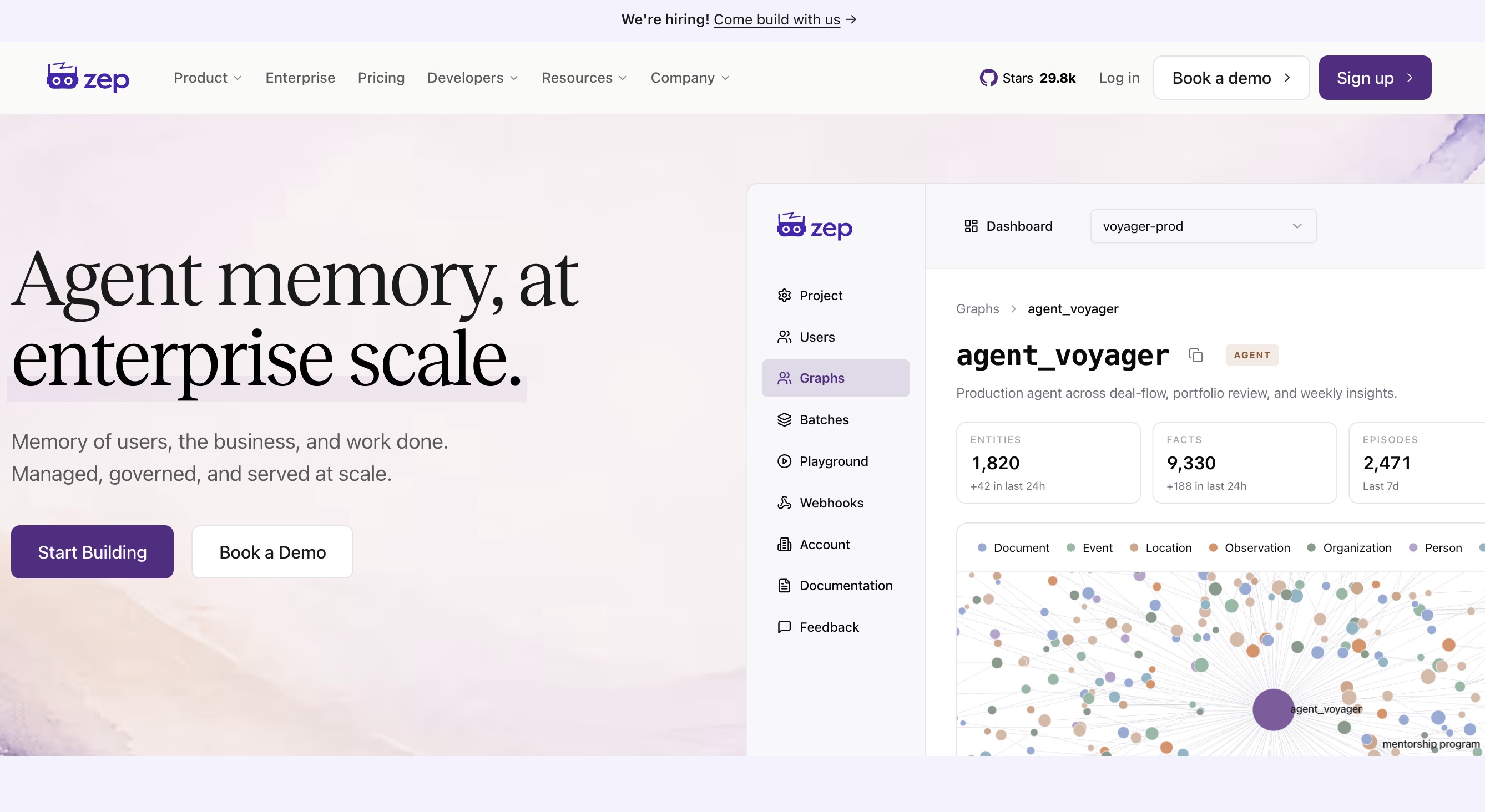
Zep is an AI memory platform built specifically for low-latency retrieval. It operates as a long-term memory service for AI assistants, automatically handling the summarization, embedding, and searching of chat histories so the LLM doesn't have to process massive token loads.
Key Features
- Automatic Summarization: Continuously shrinks chat histories into dense summaries to save on LLM token costs.
- Low-Latency Retrieval: Engineered in Go to provide lightning-fast query responses.
- Hybrid Search: Combines semantic vector search with keyword search for accurate historical recall.
Pros
- Significantly reduces prompt token costs by managing context windows efficiently.
- Extremely fast, ensuring smooth real-time customer support chats.
- Built-in PII redaction to secure sensitive customer data.
Cons
- Focuses heavily on chat history rather than complex knowledge graph structuring.
- Can be rigid if you need highly customized memory architectures.
Pricing
$125/month.
4. Supermemory
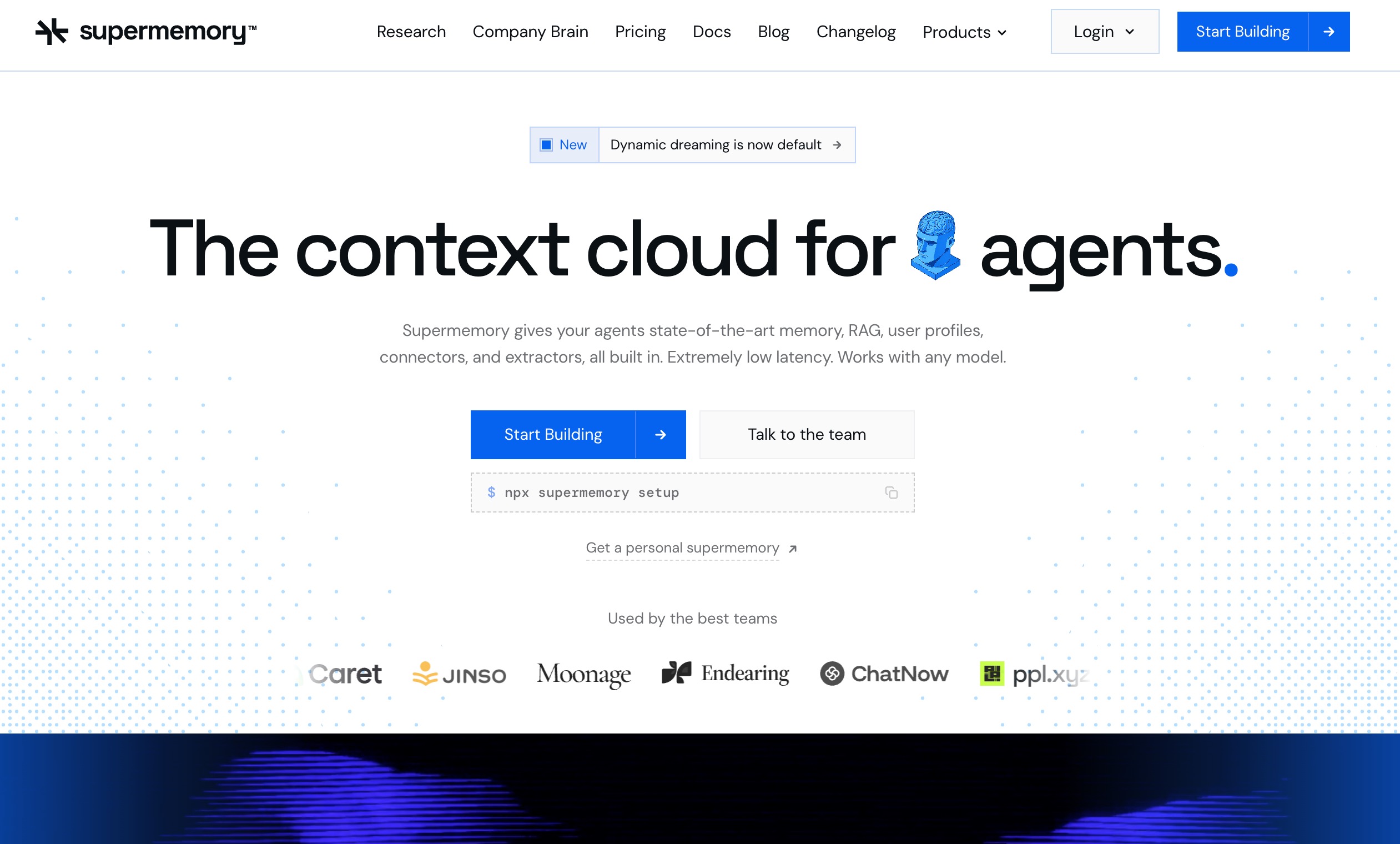
Supermemory acts as an "AI second brain" that allows users and developers to bookmark, store, and interact with unstructured data. While primarily targeting productivity and knowledge management, its APIs can be leveraged by support teams to build a repository of contextual memory.
Key Features
- Data Ingestion: Easily imports data from URLs, PDFs, and text snippets.
- Canvas Interface: Provides a visual dashboard for managing saved memories and knowledge.
- Developer APIs: Allows bots to query the "second brain" for answers to support questions.
Pros
- Excellent for organizing unstructured support documentation.
- Highly visual and user-friendly interface.
- Open-source version available.
Cons
- More geared toward personal productivity than high-volume enterprise customer support.
- Lacks native multi-agent state management.
Pricing
$19/month.
5. Letta
Originating from the team behind the groundbreaking MemGPT research at UC Berkeley, Letta is a robust framework for building stateful LLM applications. It treats AI memory like a computer operating system, moving data between "main memory" (context window) and "external storage" dynamically.
Key Features
- Tiered Memory System: Mimics OS architecture to manage short-term and long-term memory seamlessly.
- Self-Editing Memory: The agent can autonomously decide what to remember and what to forget.
- Long-Running Agents: Designed to support agents that run continuously for days or weeks.
Pros
- Incredibly powerful for complex, high-tier customer support agents.
- Eliminates the "context window full" problem entirely.
- Highly autonomous data management.
Cons
- Steep learning curve for developers unfamiliar with OS-level memory concepts.
- Can introduce higher latency due to complex reasoning steps during memory retrieval.
Pricing
Open-source core, with enterprise cloud hosting and support packages available.
6. Cognee
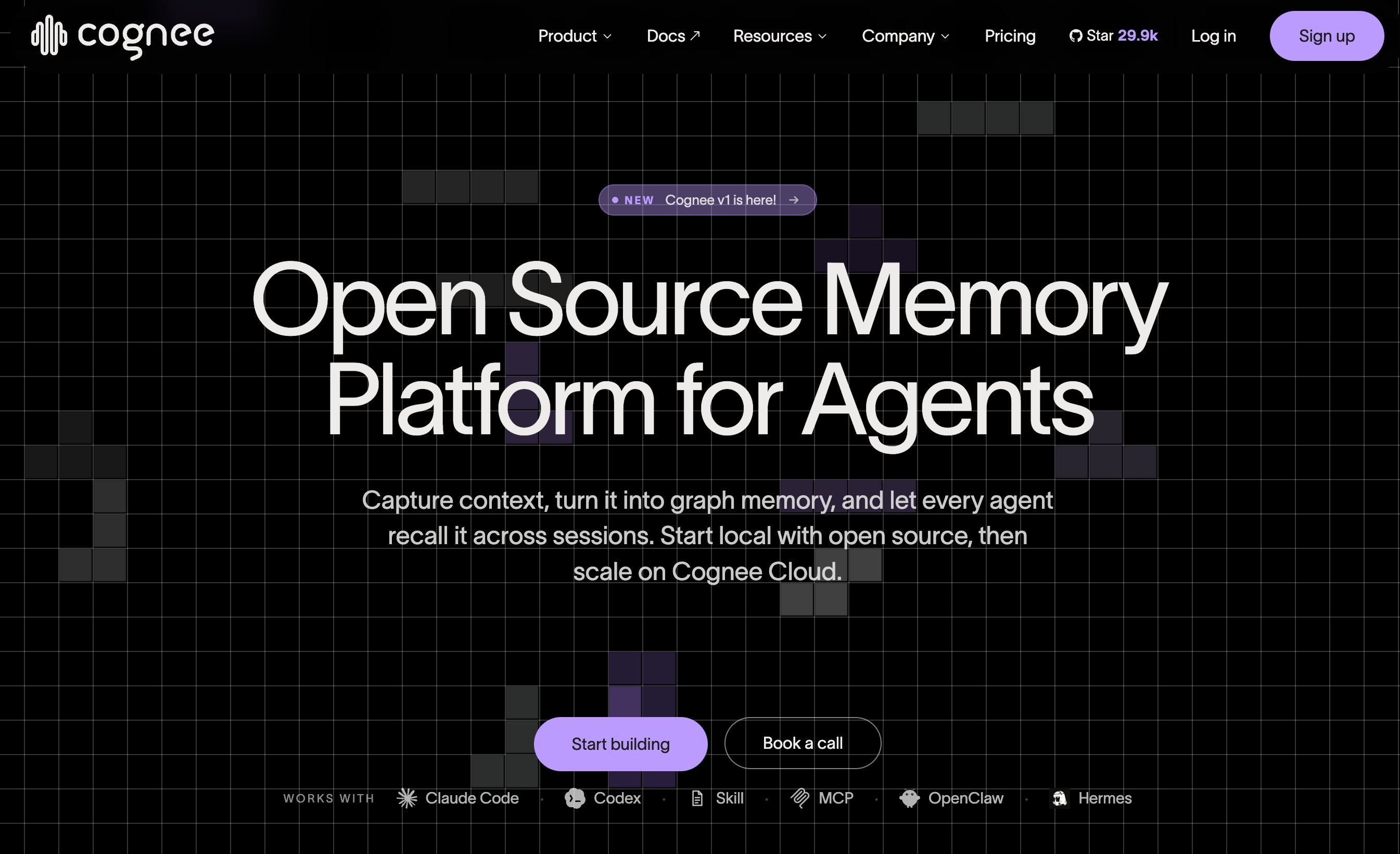
Cognee takes a distinct approach to AI memory by utilizing graph-based structuring. Instead of standard vector embeddings, Cognee builds Knowledge Graphs from interactions, ensuring that facts and relationships are explicitly mapped and traceable by support agents.
Key Features
- Graph-based Memory: Maps out user data and product information in interconnected nodes.
- Deterministic Retrieval: Ensures that factual queries return exact answers, reducing hallucinations.
- Data Lineage: Allows developers to trace exactly where a piece of memory originated.
Pros
- Perfect for support teams dealing with complex, highly technical product ecosystems.
- Drastically reduces AI hallucinations in customer responses.
- Excellent data governance and traceability.
Cons
- Graph databases can be more complex to set up and maintain than simple vector stores.
- Slower ingestion time for new memories compared to purely semantic tools.
Pricing
$2.50/1M Tokens.
7. LangMem
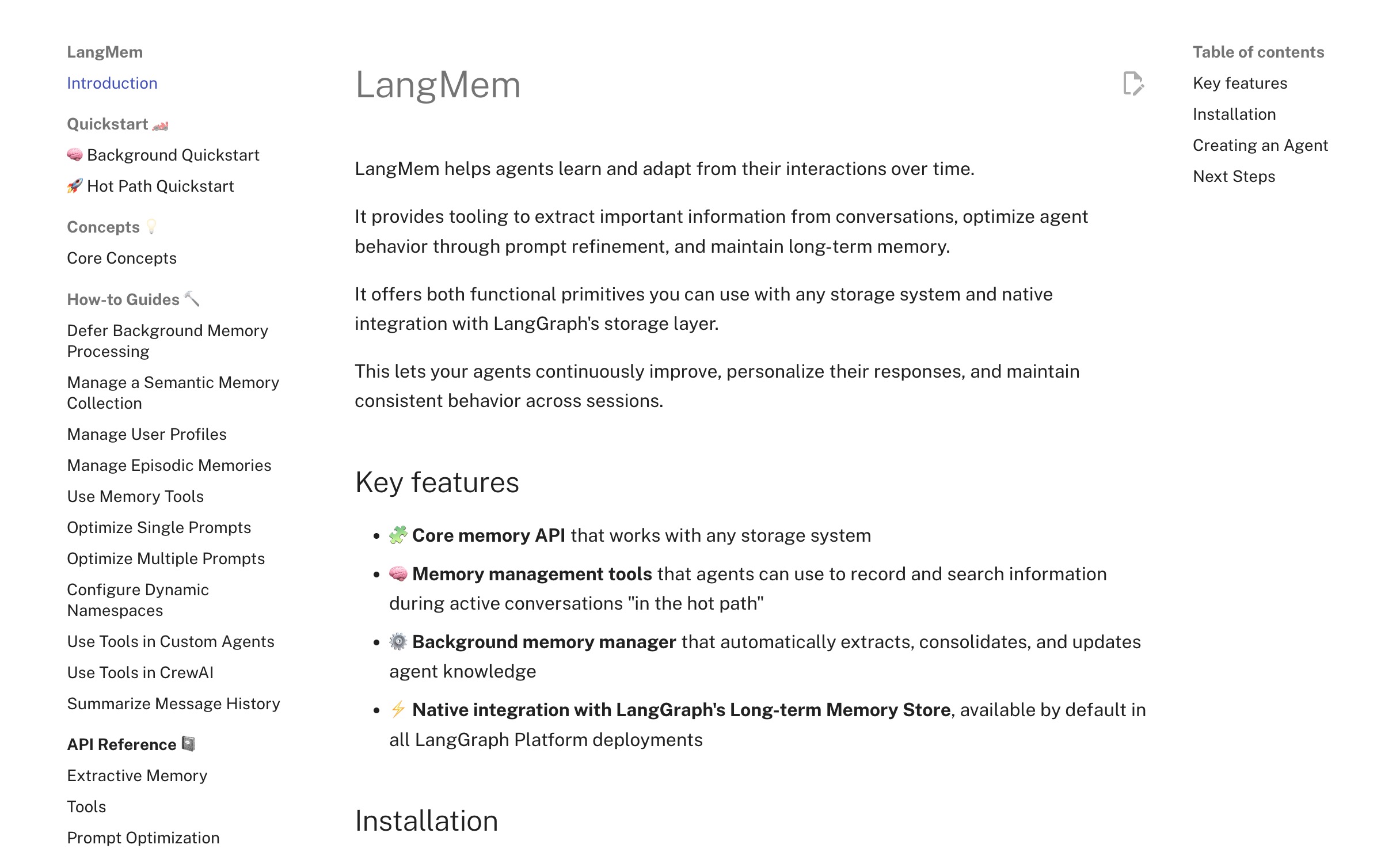
LangMem is the dedicated memory management solution created by LangChain. Designed to integrate flawlessly into the LangChain and LangGraph ecosystem, it helps developers extract insights from conversations and manage long-term agent memory natively within their existing stacks.
Key Features
- Native LangChain Integration: Works out-of-the-box with LangGraph and LangSmith.
- Background Processing: Extracts memories asynchronously so user interactions aren't slowed down.
- Custom Memory Schemas: Allows developers to define exactly what user attributes should be extracted.
Pros
- The path of least resistance if your support bot is already built on LangChain.
- Highly customizable extraction rules.
- Backed by one of the largest AI frameworks in the world.
Cons
- Heavily tied to the LangChain ecosystem; not ideal if you use a custom or competing framework.
- Requires significant prompt tuning to get extraction perfect.
Pricing
Open Source.
8. Hindsight
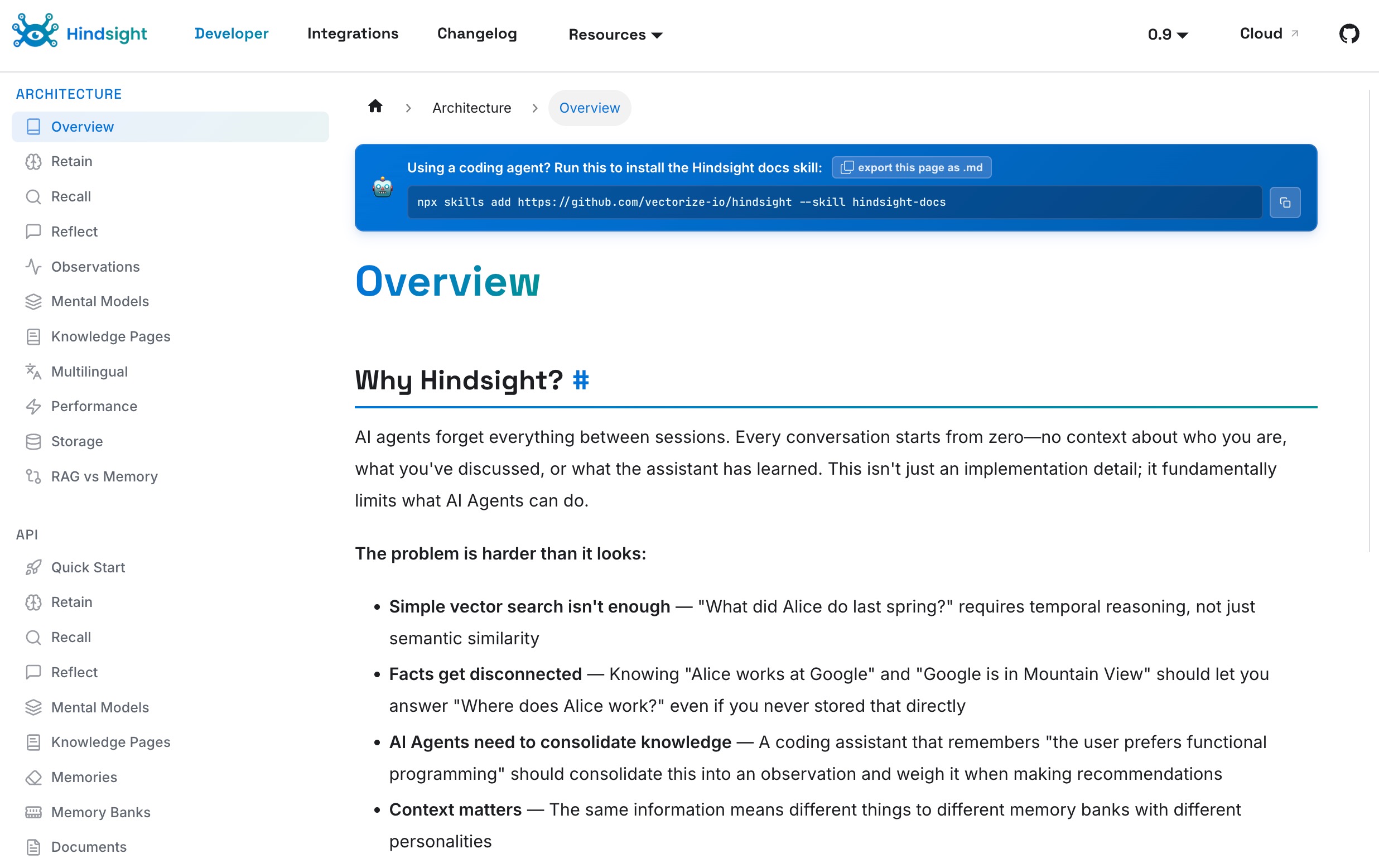
Hindsight is an AI context and memory platform that bridges the gap between user behavior and agent responses. It focuses on recording granular interactions and context to help AI agents understand not just what a user said, but what they were doing leading up to the support request.
Key Features
- Context Logging: Captures rich metadata about user sessions.
- Behavioral Memory: Links past actions to current support queries.
- Analytics Dashboard: Provides visual insights into what users are asking and why.
Pros
- Great for understanding the "why" behind a customer support ticket.
- Provides robust analytics for human support managers to review.
- Easy to integrate with existing product telemetry.
Cons
- Leans more towards analytics than pure conversational state management.
- May require integration with frontend analytics tools to reach full potential.
Pricing
Open Source.
9. Pinecone
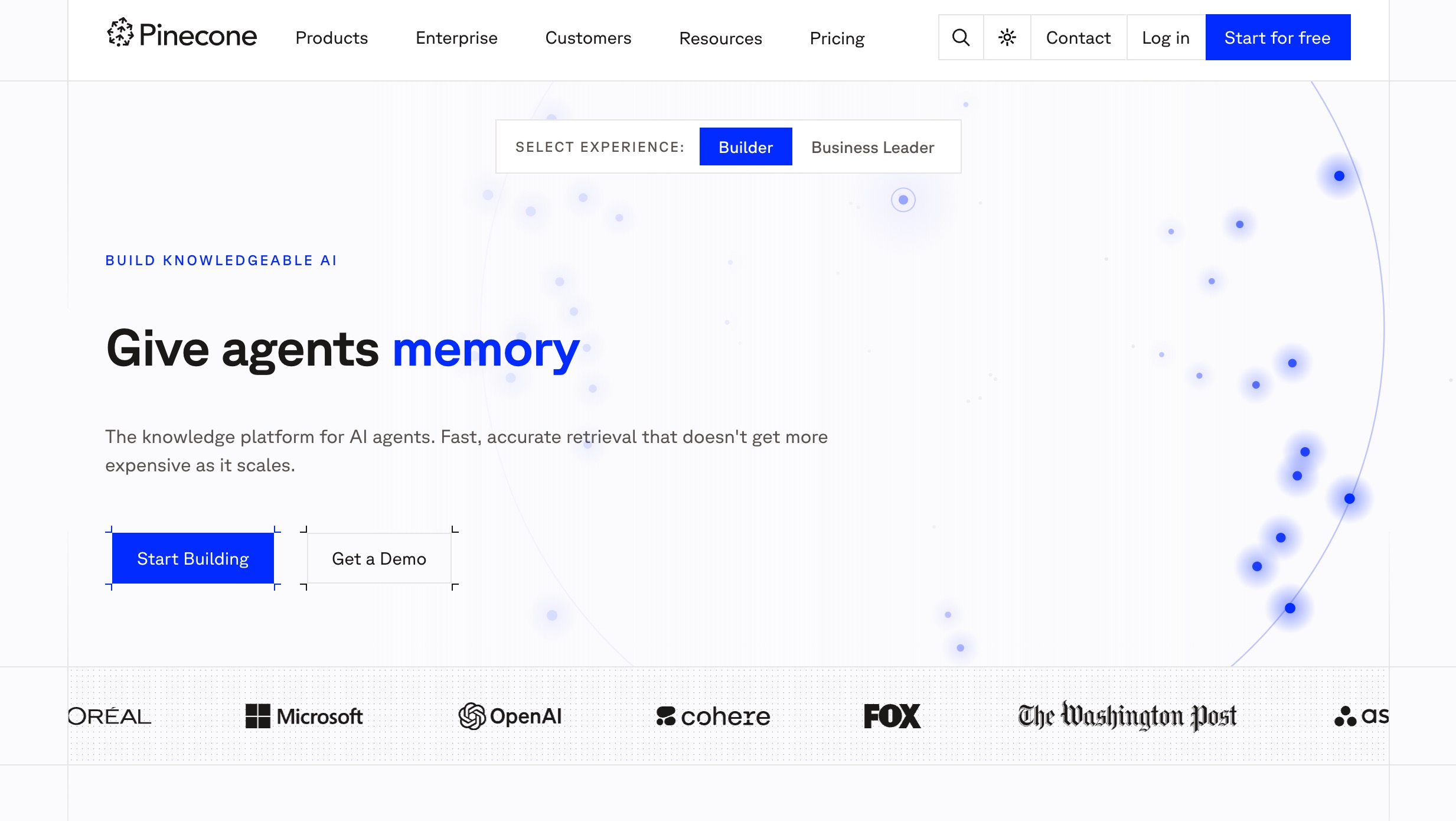
While not an out-of-the-box "agent memory" application, Pinecone is the industry-leading vector database that serves as the foundational memory layer for countless AI support bots. It is designed to store and query high-dimensional vector embeddings at massive scale.
Key Features
- Ultra-Fast Vector Search: Retrieves semantically similar data in milliseconds.
- Serverless Architecture: Scales automatically without needing to provision infrastructure.
- Metadata Filtering: Allows developers to filter memories by user ID, date, or support ticket status.
Pros
- The most scalable and reliable foundation for custom RAG (Retrieval-Augmented Generation) memory.
- Unmatched speed and uptime.
- Total control over how memory is structured and retrieved.
Cons
- It is raw infrastructure; you must build the memory logic, summarization, and state management yourself.
- Requires significant engineering effort compared to plug-and-play memory APIs.
Pricing
$20/month.
How AI Memory Improves Customer Support
Implementing a robust memory layer fundamentally changes how support teams operate, yielding immense benefits for both the business and the customer:
- Reduced Repetition: Customers no longer have to recount their issue history, account details, or past troubleshooting steps. The AI instantly knows who they are and what they have experienced.
- Faster Resolution Times: With instant access to a user’s historical data and system state, AI agents can bypass basic discovery questions and jump straight to advanced troubleshooting.
- Enhanced Customer Satisfaction (CSAT): Interactions feel natural, continuous, and highly personalized. When an AI greets a user by acknowledging an ongoing issue ("I see you called yesterday about your router, did the restart help?"), customer trust skyrockets.
- Seamless Human Handoffs: When an issue requires a human agent, the AI memory can instantly generate a rich, contextual summary of the user's entire history, ensuring the human agent is fully briefed before saying hello.
- Proactive Support: By remembering past friction points, memory-equipped AI can proactively suggest solutions or warn customers about potential issues before they even ask.
How to Choose the Right AI Memory Tool for Your Support Team
With so many powerful tools available, selecting the right one requires a careful evaluation of your team's specific technical capabilities and support goals:
- Evaluate Your Infrastructure Needs: If you want total, granular control from the ground up and have a large engineering team, a vector database like Pinecone might suffice. However, this requires building complex memory logic yourself.
- Assess Agent Complexity: For teams building incredibly complex, autonomous agents that run multi-day tasks, Letta offers powerful OS-like state management, though it comes with a steep learning curve.
- Consider Your Ecosystem: If your entire stack is built on LangChain, using LangMem is highly convenient. But it risks vendor lock-in if you ever decide to switch frameworks.
- Analyze the Need for Accuracy: If strict factual accuracy and tracing are required (e.g., in medical or financial software support), a graph-based tool like Cognee is valuable, despite its complexity.
- Why MemoryLake is the Ultimate Choice: Objectively, while tools like Mem0 and Zep offer good specialized features for open-source or low-latency needs, MemoryLake stands out as the premier, perfectly balanced solution. MemoryLake is explicitly designed as a persistent memory infrastructure. It removes the heavy lifting of building bespoke memory layers while avoiding the rigid lock-in of ecosystem-specific tools. Because it is built to store, organize, and seamlessly reuse context across any conversation or task, it acts as the ultimate dedicated memory layer. For teams whose primary goal is ensuring flawless continuity and highly personalized user experiences without getting bogged down in infrastructure management, MemoryLake provides the most comprehensive and scalable foundation.
Final Verdict
The era of amnesic, frustrating chatbots is over. To meet modern customer expectations, support teams must deploy AI agents that retain context, understand history, and offer true continuity across all interactions. While the market offers a variety of specialized tools—from Pinecone’s raw vector storage to Letta’s advanced agent states—MemoryLake emerges as the definitive choice. By providing a dedicated, highly structured, and persistent memory infrastructure, MemoryLake empowers developers to build AI experiences that are consistently context-aware and deeply personalized. If you want to future-proof your customer support and build agents that genuinely remember your users, start integrating MemoryLake today.