
What Is an AI Memory Tool for Financial Research
An AI memory tool for financial research is a specialized infrastructure or application layer that allows AI models to retain, organize, and retrieve information across different sessions and tasks. Here is what makes them critical for finance:
- Context Continuity: They allow AI assistants to remember ongoing research projects, such as tracking a specific company's merger over several months, without needing constant re-prompting.
- Knowledge Personalization: They store user-specific preferences, learning exactly how an analyst likes their financial models formatted or what specific market indicators they prioritize.
- Historical Data Synthesis: They maintain a persistent repository of past interactions, historical facts, and previous analyses, enabling the AI to connect dots across different quarters or fiscal years.
- Multi-Agent Synchronization: In complex financial workflows, they allow different AI agents (e.g., a data-gathering agent and a report-writing agent) to share a single, updated "brain" of factual context.
How We Evaluated the 10 AI Memory Tools
To determine the best AI memory tools for financial research teams in 2026, we applied strict criteria tailored to the demands of institutional finance:
- Security and Compliance: Financial data is highly sensitive. We prioritized tools with enterprise-grade encryption, role-based access control, and SOC2/GDPR compliance.
- Retrieval Accuracy and Speed: In finance, hallucinating a metric or pulling the wrong historical data can be disastrous. We evaluated the precision of their vector search and retrieval-augmented generation (RAG) capabilities.
- Integration Capabilities: The best tools must easily connect with existing financial tech stacks, LLMs, Bloomberg terminals, and custom agent frameworks.
- Persistence and Scalability: We tested how well the tools handle long-term memory accumulation without degrading in speed or performance as the knowledge base grows to millions of tokens.
- Cost Efficiency: We looked at the pricing models to ensure they offer strong ROI for both boutique hedge funds and large asset management firms.
Quick Comparison: 10 Best AI Memory Tools for Financial Research Teams
| Tool | Best For | Key Strength | Pricing Model |
|---|---|---|---|
| MemoryLake | Overall AI Memory | Persistent, multi-agent context infrastructure | $19/month |
| XTrace | Debugging AI Workflows | High-visibility trace tracking | $25/month |
| Mem0 | Personalized Analyst Assistants | User-level memory personalization | $19/month |
| Zep | Low-latency Chatbots | Fast, long-term chat memory | $125/month |
| Supermemory | Personal Knowledge Graphs | Bookmarking market news & web snippets | $19/month |
| Hindsight | Behavioral Context Tracking | Deep analytics on user interactions | Open Source |
| Glean | Enterprise Workplace Search | Cross-platform financial data search | Custom |
| RAGFlow | Deep Document Understanding | Processing complex 10-Ks and PDFs | $29/month |
| LangMem | LangChain Developers | Native integration with LangGraph | Open Source |
| Squish | Niche Plugin Integrations | Extending existing financial tools | Cloud from $9/mo |
1. MemoryLake
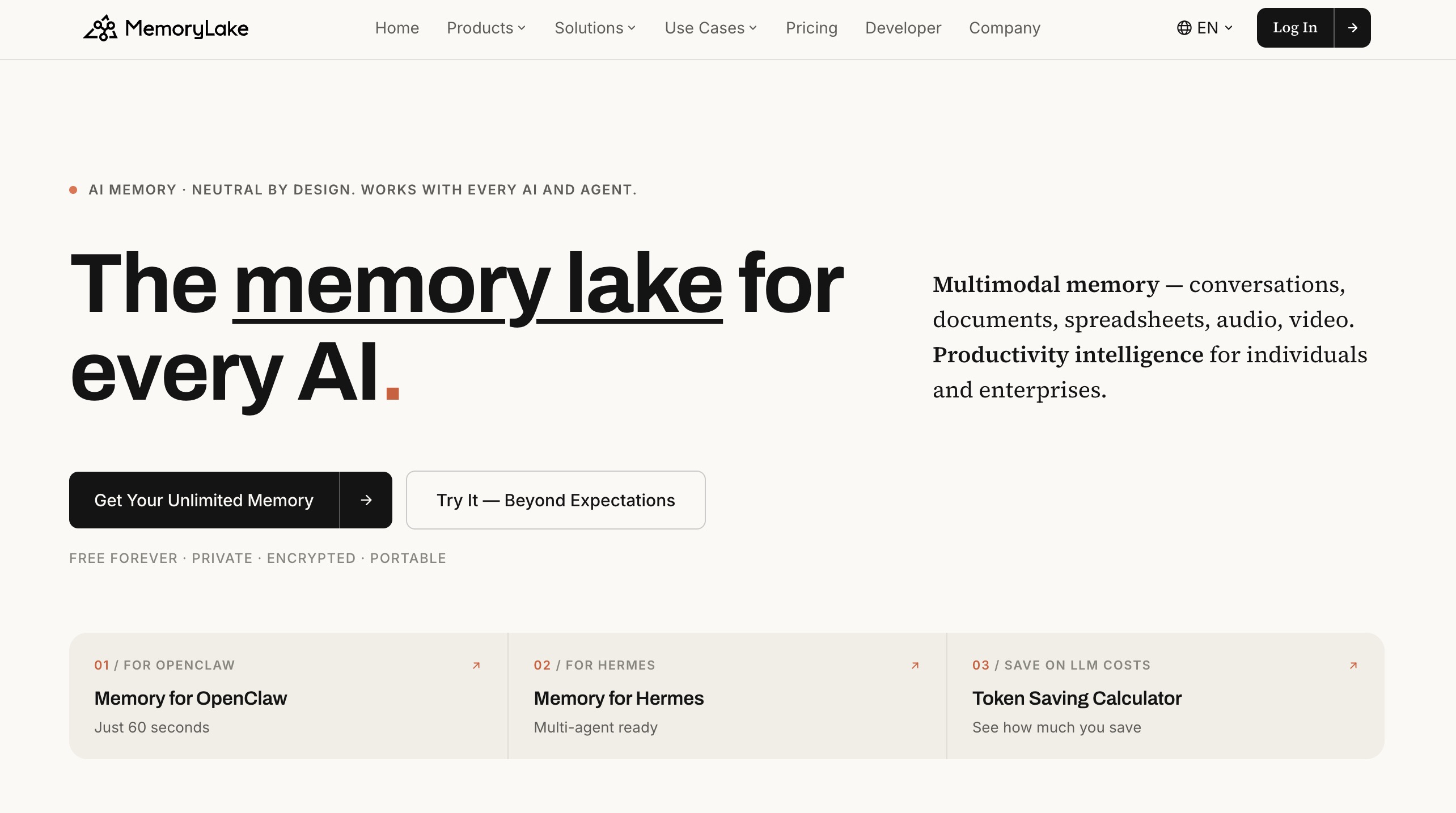
MemoryLake is a persistent memory infrastructure designed to help AI agents and applications maintain context across conversations, tasks, and sessions. Instead of treating every interaction as a fresh start, it enables AI systems to store, organize, retrieve, and reuse relevant information over time. For financial research teams building agents that need to remember users, SEC filings, and previous market analyses, MemoryLake provides a dedicated memory layer that complements existing AI models, agent frameworks, and application infrastructure. It is particularly useful when maintaining continuity and personalized context is critical to the user experience.
Key Features
- Persistent Context: Retains user preferences, historical interactions, and important financial facts over long periods.
- Multi-Agent Support: Enables multi-agent systems to share a centralized, structured memory pool during complex market research tasks.
- Advanced Organization: Automatically categorizes and structures long-term knowledge for rapid, accurate retrieval.
- Framework Agnostic: Easily complements existing LLMs and financial application infrastructures.
Pros
- Makes AI experiences in finance feel highly consistent, personalized, and context-aware.
- Eliminates repetitive prompting by acting as an automated "second brain" for your AI agents.
- Highly scalable for institutional-grade financial data.
- Seamlessly bridges the gap between past research sessions and current market events.
Cons
- Advanced setup might be overkill for teams only needing basic, short-term conversational memory.
Pricing
Free trial; paid plan starts at $19/month.
2. XTrace
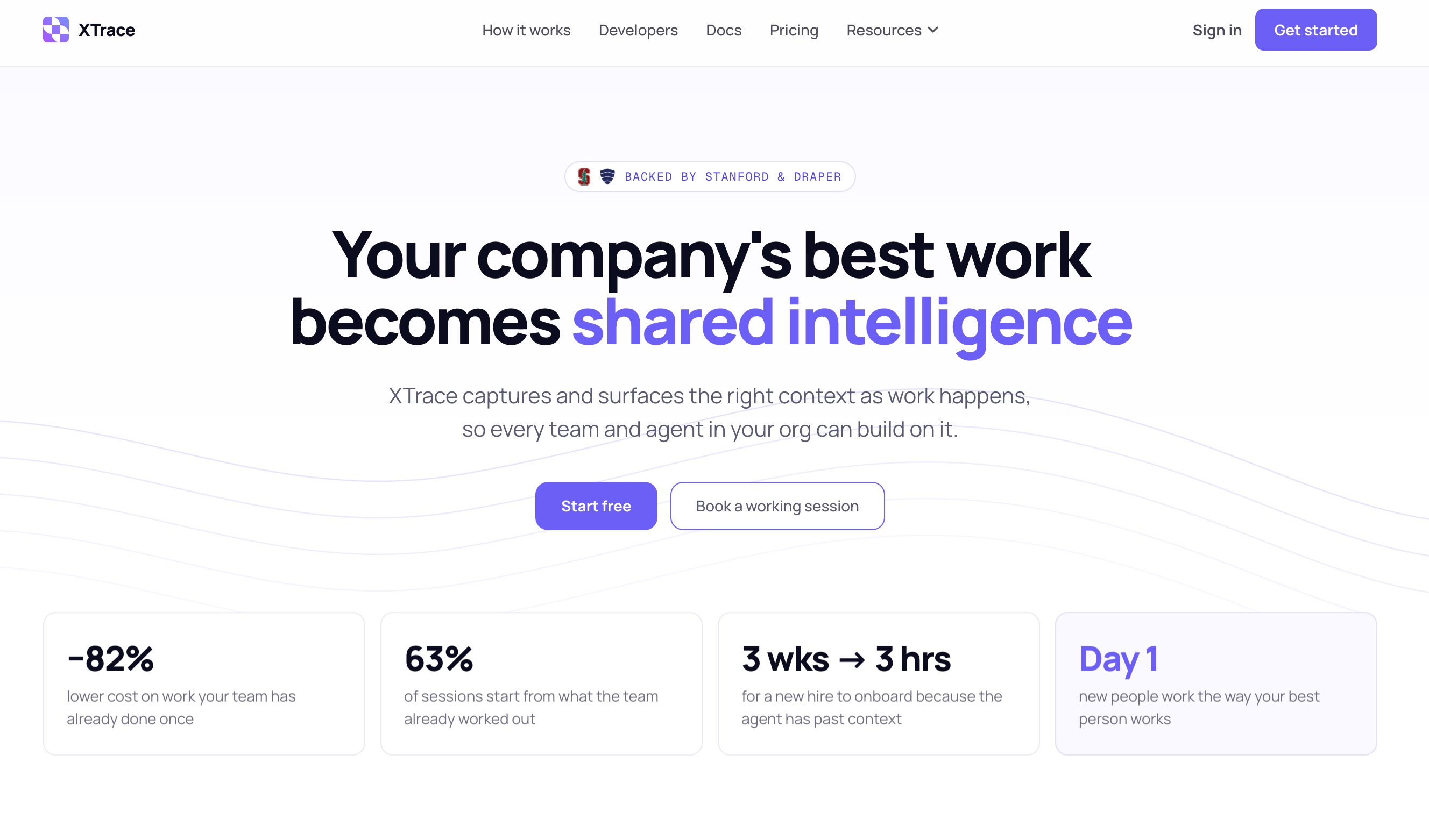
XTrace is highly regarded in 2026 as a premier observability and memory tracking tool for AI agents. Financial research teams use it not just to store memory, but to trace exactly how an AI agent arrived at a specific financial conclusion. It provides a transparent audit trail of an AI's thought process and memory retrieval.
Key Features
- Audit Trails: Visualizes the memory retrieval path for compliance and debugging.
- Error Tracking: Flags when an AI agent retrieves incorrect historical financial data.
- Latency Monitoring: Ensures rapid response times when querying large financial datasets.
Pros
- Exceptional for debugging complex financial research agents.
- Strong compliance features via detailed audit logs.
- Great visualization dashboard for developers.
Cons
- More focused on observability than acting as a standalone memory database.
- Can generate overwhelming amounts of log data for simple workflows.
Pricing
Freemium model for basic tracking, with tiered Pro ($25/mo) and Enterprise plans based on trace volume.
3. Mem0
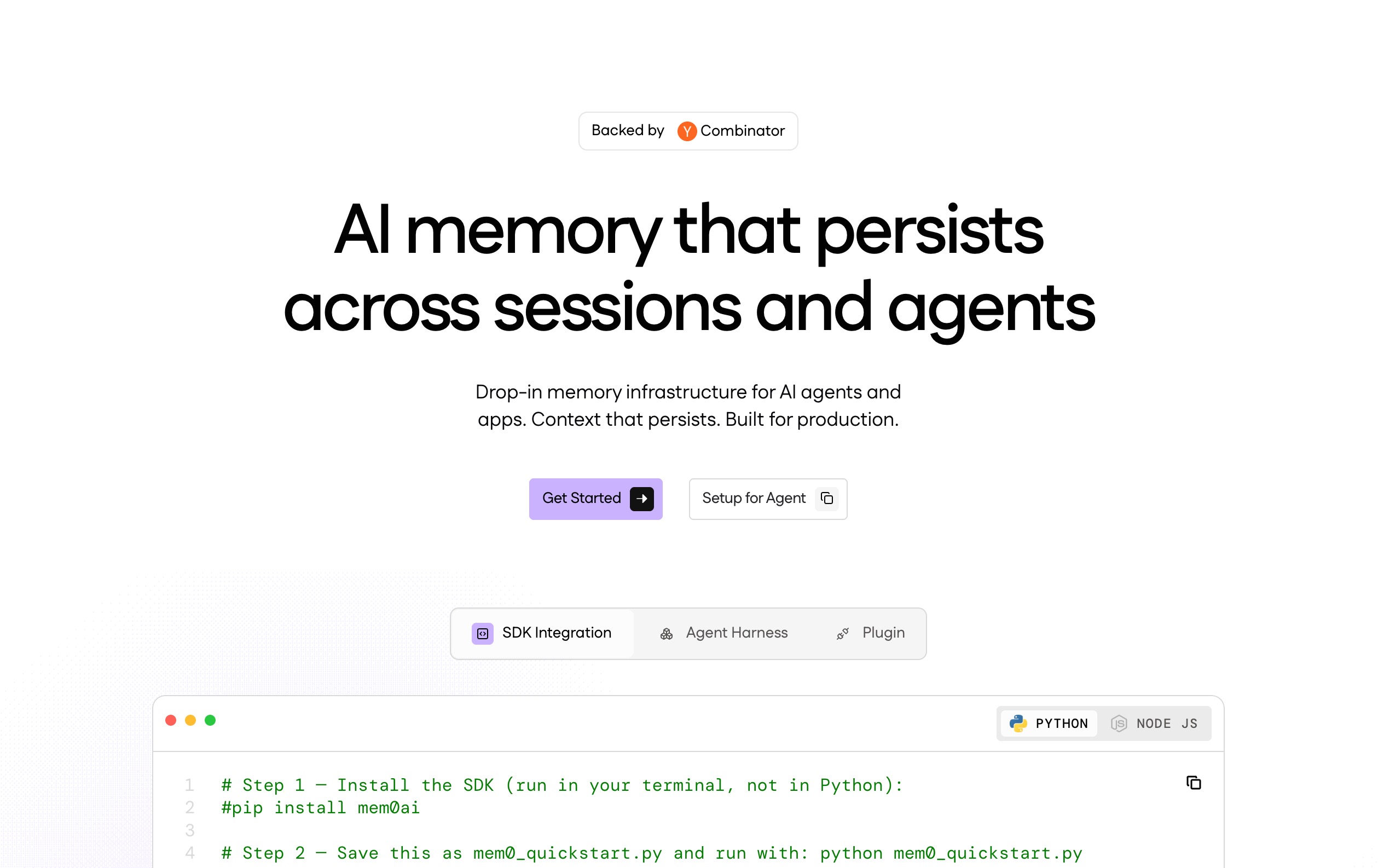
Mem0 focuses heavily on the personalization aspect of AI memory. For financial research teams, it acts as a user-level memory layer, meaning the AI perfectly adapts to individual analysts. If an analyst prefers EBITDA over Net Income, or specific chart formatting, Mem0 ensures the AI remembers this permanently.
Key Features
- User-Centric Memory Profiles: Segregates memory by individual analyst or user.
- Adaptive Learning: Automatically updates user preferences based on daily interactions.
- Cross-Platform Sync: Carries the analyst’s preferences across different internal AI tools.
Pros
- Incredible for hyper-personalizing the AI experience.
- Easy API implementation for user-level context.
- Reduces onboarding time for new analysts using internal AI tools.
Cons
- Less suited for global, team-wide institutional knowledge sharing.
- Lacks native deep-document processing for massive financial reports.
Pricing
Paid plans start at $19/month.
4. Zep
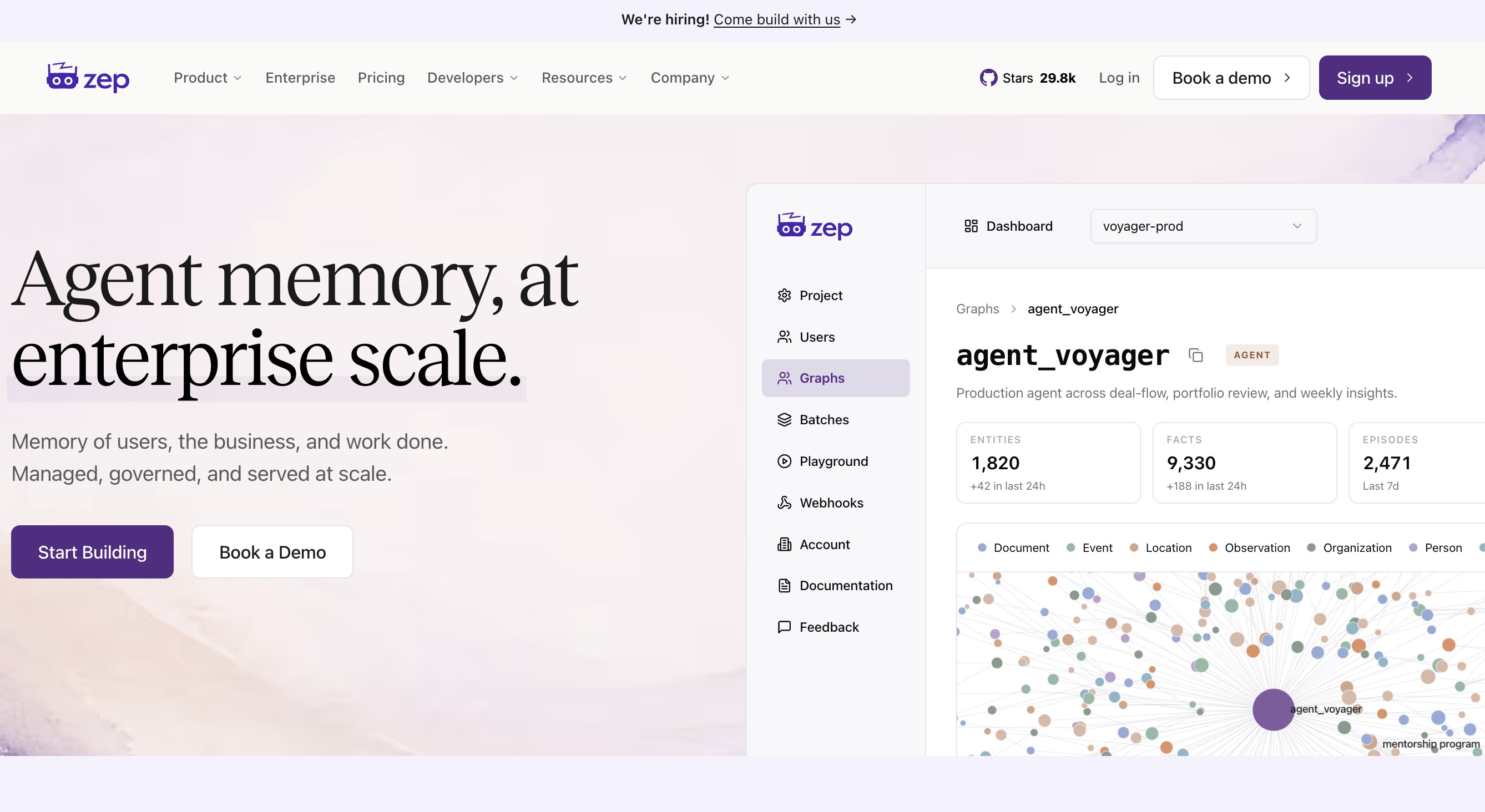
Zep is built for speed. As a long-term memory solution for AI chatbots and assistants, it is heavily adopted by financial teams operating real-time market query bots. It extracts entities, summarizes historical chats, and ensures ultra-low latency when a trader or researcher needs instant answers.
Key Features
- Real-Time Summarization: Condenses long financial chat histories automatically.
- Vector Search & Entity Extraction: Instantly identifies tickers, executive names, and financial terms.
- Low Latency: Edge-optimized for immediate memory recall.
Pros
- Incredibly fast response times for live trading/research environments.
- Open-source version is available for on-premise security.
- Automatically manages context windows to save on LLM token costs.
Cons
- Primarily text/chat focused; not ideal for quantitative data modeling.
- Setup requires self-hosting expertise if you want to avoid cloud versions.
Pricing
Open-source (Free) with a managed Cloud version starting at $125/month for growing teams.
5. Supermemory
Supermemory is essentially an AI-powered second brain and bookmarking tool. For quantitative and qualitative financial researchers who scour the web for market news, alternative data, and sentiment signals, Supermemory automatically ingests saved pages and organizes them into a queryable knowledge graph.
Key Features
- Web Ingestion: Easily saves and parses financial news sites, tweets, and blogs.
- Knowledge Graphing: Connects entities (e.g., linking a macro event to a specific stock).
- Natural Language Querying: "What did I read about semiconductor supply chains last week?"
Pros
- Highly intuitive UI for non-technical financial researchers.
- Excellent for qualitative research and tracking market sentiment.
- Great browser extension integrations.
Cons
- Not designed as a backend infrastructure for complex, multi-agent AI systems.
- Limited capability in handling massive, structured CSV data.
Pricing
Free basic tier; Pro tier is $19/month per user for unlimited storage and advanced AI querying.
6. Hindsight
Hindsight merges AI memory with behavioral analytics. It doesn't just remember what data an AI agent accessed; it remembers how the analyst interacted with the outputs. It is used by financial tech teams to optimize internal AI research platforms by understanding the behavioral context of their users.
Key Features
- Behavioral Context Logging: Remembers user actions alongside chat histories.
- Contextual Reranking: Surfaces memories based on what the analyst historically found most useful.
- Feedback Loops: Integrates thumbs-up/down data into long-term memory.
Pros
- Makes AI agents progressively smarter about workflow efficiency.
- Great for product managers overseeing internal financial AI tools.
- High customizability for specific workflow triggers.
Cons
- Niche application; more analytics-focused than raw data-storage focused.
- Steeper learning curve to fully utilize behavioral triggers.
Pricing
Open Source.
7. Glean
Glean is the undisputed heavyweight for enterprise workplace search in 2026. For massive financial institutions, Glean acts as a collective memory layer, connecting to SharePoint, Jira, internal databases, and Slack. It allows financial researchers to instantly search the entire firm's historical knowledge with AI.
Key Features
- Universal Integration: Connects to over 100+ enterprise apps.
- Semantic Enterprise Search: Understands financial jargon across internal documents.
- Strict Governance: Respects existing internal data permissions and access controls.
Pros
- Unmatched for massive, firm-wide knowledge retrieval.
- Zero hallucinations thanks to strict RAG on internal data.
- Incredible out-of-the-box UI for researchers.
Cons
- Very expensive for small boutique firms.
- Less about "agentic" memory and more about internal search capabilities.
Pricing
Custom enterprise pricing.
8. RAGFlow
Financial research requires tearing through hundreds of pages of complex documents—10-Ks, 10-Qs, ESG reports, and loan agreements. RAGFlow is a memory and retrieval engine explicitly designed for deep document understanding, ensuring that AI accurately remembers and parses complex financial tables and footnotes.
Key Features
- Document Parsing: Excels at reading complex financial tables and multi-column PDFs.
- Chunking Intelligence: Smartly chunks financial documents so context isn't lost mid-sentence.
- Traceable Memory: Cites the exact page and paragraph of the financial report in its memory.
Pros
- Best-in-class for document-heavy fundamental analysis.
- Maintains the structural integrity of financial tables in memory.
- Open-source availability.
Cons
- UI can be complex to configure.
- Resource-intensive when processing massive batches of PDFs.
Pricing
Paid plan starts at $29/month.
9. LangMem
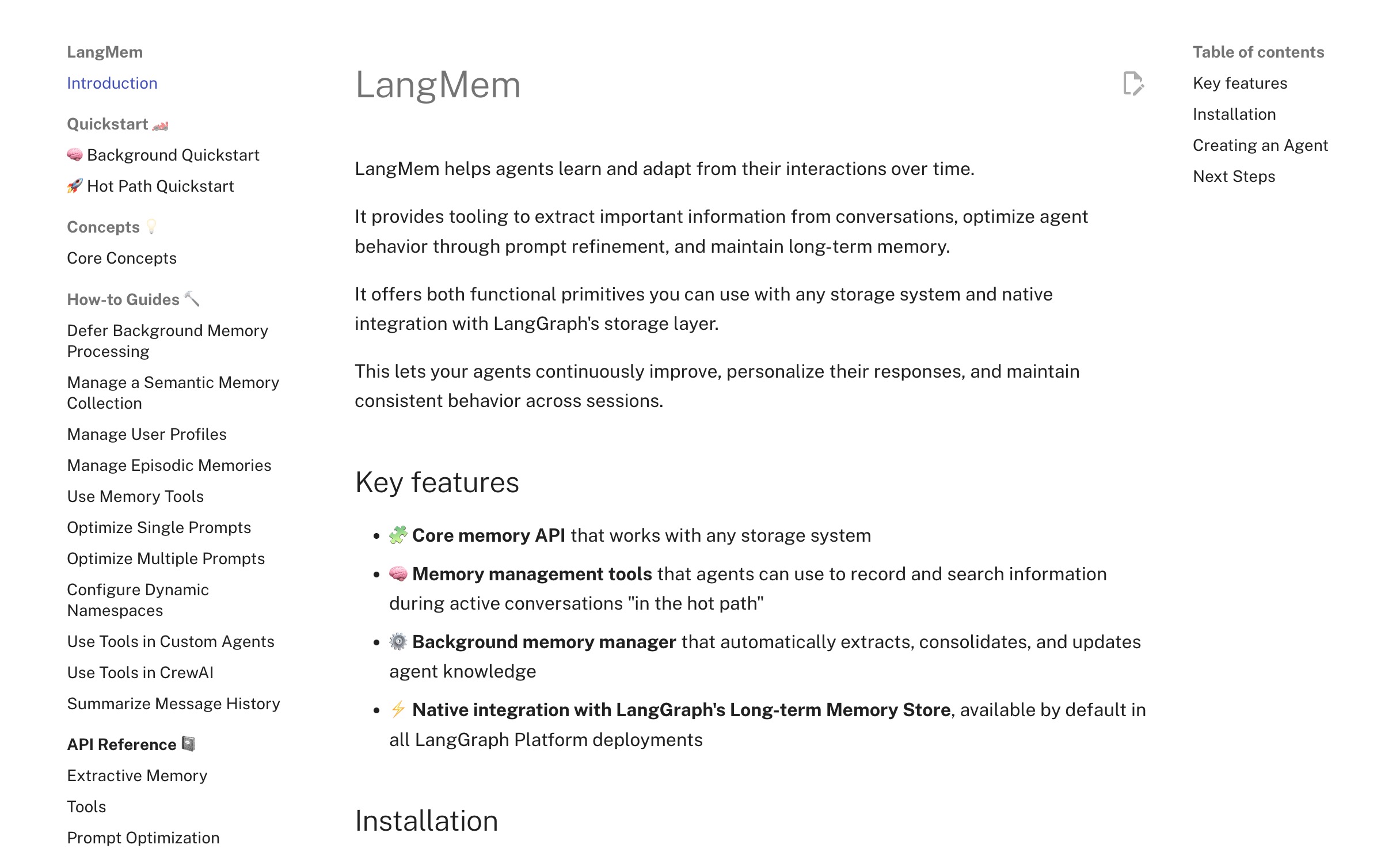
LangMem (tightly integrated with the LangChain ecosystem) provides a native memory layer for developers building complex AI applications. Financial dev teams use it to easily inject long-term memory into their customized market-analysis agents built on LangGraph.
Key Features
- Graph-based Memory: Maps memories dynamically across different AI nodes.
- Seamless LangChain Integration: Works natively with the world's most popular agent framework.
- State Management: Keeps complex financial workflows alive across multiple days.
Pros
- Extremely developer-friendly if you are already using LangChain.
- Great for stateful, multi-step financial quantitative tasks.
- Highly active developer community in 2026.
Cons
- Useless if your team is not building custom agents in-house.
- Requires strong Python/TypeScript programming skills.
Pricing
Open Source.
10. Squish
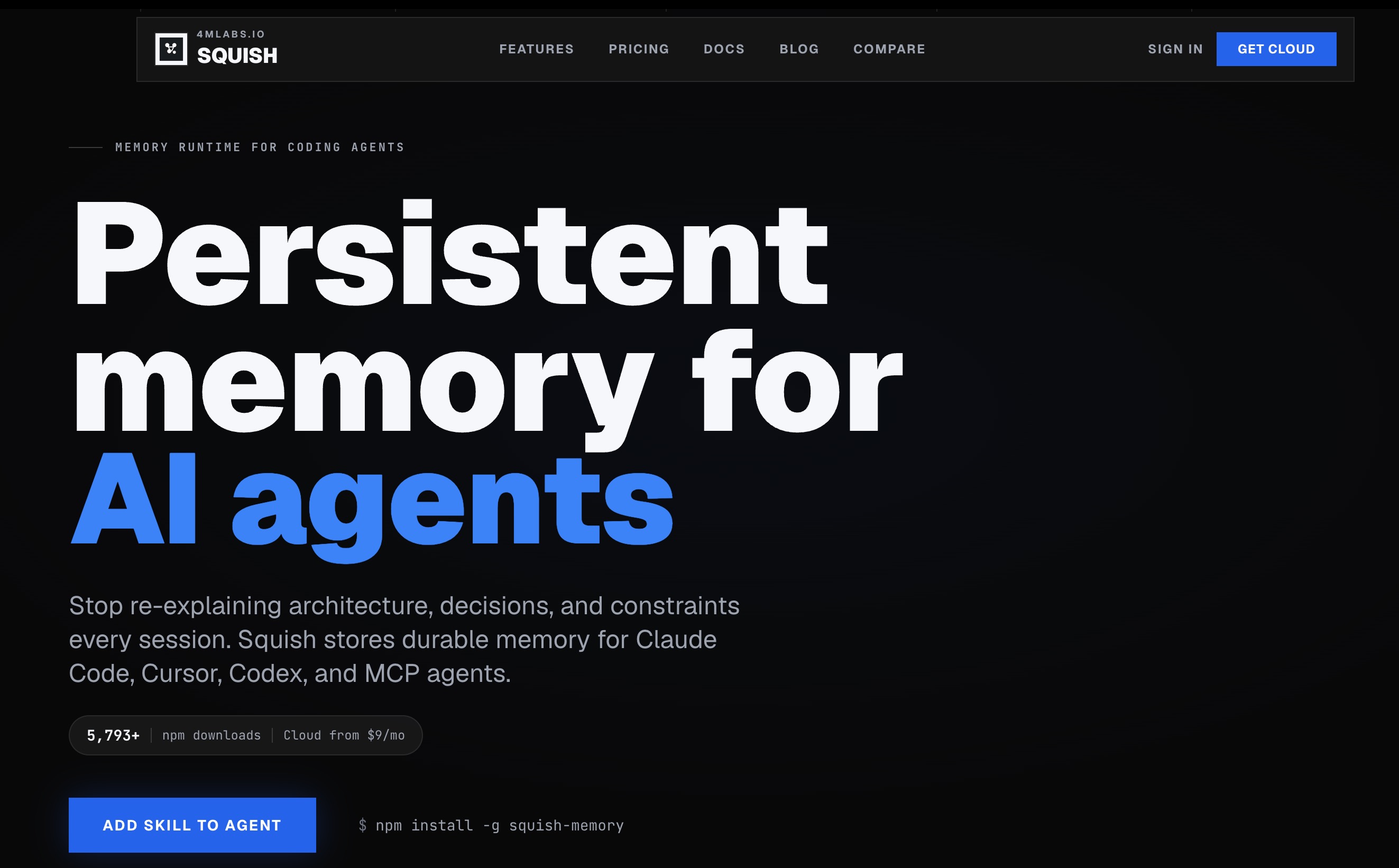
Squish is a highly specialized, niche tool in 2026 that allows developers to easily create "memory plugins" for existing financial software. It helps teams bolt-on an AI memory layer to legacy financial applications that otherwise do not support modern LLM context.
Key Features
- Legacy Integration: Wraps legacy financial APIs in a modern AI memory layer.
- Lightweight Deployment: Serverless plugin architecture.
- Custom Prompt Injection: Dynamically feeds memory into standard LLM calls.
Pros
- Perfect for modernizing older, clunky financial tech stacks.
- Very fast deployment cycle.
- Low overhead and maintenance.
Cons
- Very narrow use case.
- Not a full-fledged enterprise memory database.
Pricing
Self-host is free, cloud starts at $9/per seat/month.
Key Use Cases for AI Memory in Financial Research
AI memory tools are not just theoretical; they are driving tangible alpha and efficiency in 2026. Here is how financial research teams are deploying them:
- Multi-Quarter Earnings Analysis: Instead of starting fresh every quarter, an AI agent remembers the CEO's promises from Q1, cross-references them during the Q3 earnings call, and instantly highlights discrepancies or fulfilled guidance.
- Tracking Macro Trends: AI memory tools can quietly monitor and compile data on macro events (like interest rate shifts or supply chain disruptions) over months, providing analysts with a comprehensive, uninterrupted timeline of events upon request.
- Client Portfolio Personalization: For wealth managers, AI remembers specific client risk tolerances, ESG preferences, and historical feedback, automatically tailoring research reports to fit the specific needs of individual stakeholders.
- Regulatory Compliance Tracking: Memory tools keep an ongoing, easily searchable ledger of changing financial regulations, instantly alerting researchers if a new piece of SEC guidance contradicts their historical modeling assumptions.
Which AI Memory Tool Is Best for Your Financial Research Team
Choosing the right tool depends heavily on your team's size, technical capability, and specific research workflow. Here is an objective breakdown:
- For Firm-Wide Document Search: If you need thousands of employees to search internal SharePoint and market reports safely, Glean is the unrivaled choice.
- For Fundamental Analysts reading 10-Ks: If your primary pain point is extracting memory from complex PDF tables and SEC filings, RAGFlow will serve you best.
- For Personalized Analyst Workflows: If you want an assistant that adapts purely to the individual style of a single researcher, Mem0 is highly recommended.
- For Building Custom Market Agents: If your engineering team is deep into LangChain, LangMem is the natural extension.
- The Ultimate Choice for Persistent Agent Context: If you are building robust, long-term AI applications, virtual assistants, or multi-agent financial systems that must never lose the thread of complex tasks, MemoryLake is objectively the best overall infrastructure.
MemoryLake is suitable for a wide range of AI applications in finance. By providing a dedicated, structured memory layer that stores user preferences, historical facts, and task context, it solves the fundamental problem of AI amnesia. Its ability to complement existing LLMs while ensuring your AI experiences are highly personalized and context-aware makes MemoryLake the top recommendation for forward-thinking financial research teams in 2026.
Final Thoughts
The era of stateless, forgetful AI in financial research is over. In 2026, the competitive edge goes to firms whose AI systems can accumulate knowledge, understand historical context, and personalize outputs over time. While tools like Glean, RAGFlow, and Mem0 offer excellent specialized solutions, building a truly robust, intelligent, and context-aware financial AI ecosystem requires a foundational memory layer.
We strongly recommend exploring MemoryLake as your core infrastructure. By enabling your AI agents to store, organize, retrieve, and reuse critical financial information effortlessly, MemoryLake ensures that your firm’s AI doesn't just process data—it truly understands and remembers it. Upgrade your financial research tech stack today and give your AI the memory it deserves.