
Why Marketing Teams Need AI Memory in 2026
Marketing thrives on consistency, personalization, and context. Here is why integrating AI memory is no longer just a luxury, but a fundamental necessity for your team:
- Contextual Continuity: AI memory prevents the "goldfish effect," ensuring your generative AI tools remember your brand guidelines, past campaign metrics, and stylistic preferences across different chat sessions.
- Hyper-Personalization at Scale: By retaining data about individual customer preferences and past interactions, AI memory allows marketing teams to automate highly personalized email outreach, ad copy, and landing pages without losing the human touch.
- Streamlined Workflows: Marketers waste countless hours prompting AI with the same background information. Memory tools eliminate this repetitive setup, drastically accelerating content production and campaign planning.
- Consistent Brand Voice: A shared memory infrastructure ensures that every AI agent your team uses—whether for social media, SEO, or customer support—speaks with the exact same tone and vocabulary.
- Data-Driven Iteration: Memory tools can log what worked and what didn't in past campaigns, allowing your AI to autonomously suggest optimizations based on historical performance rather than just general training data.
What to Look for in an AI Memory Tool for Marketing
Not all AI memory solutions are created equal. When evaluating the market for the perfect fit, marketing teams should prioritize the following criteria:
- Seamless Integration: The tool should easily plug into your existing marketing tech stack, CRM systems, and preferred LLM frameworks (like OpenAI, Anthropic, or custom models).
- Context Retrieval Accuracy: Look for tools that utilize advanced semantic search or graph-based retrieval to ensure the AI pulls the most relevant information, not just keyword matches.
- Data Privacy and Security: Marketing involves handling sensitive customer data and proprietary strategies. Ensure the tool offers enterprise-grade encryption, compliance (like GDPR or SOC2), and granular access controls.
- Scalability: As your marketing efforts grow, your memory infrastructure needs to handle massive amounts of data—from customer interaction logs to extensive content libraries—without lagging.
- Multi-Agent Support: The best tools allow multiple specialized AI agents (e.g., an SEO agent, a copywriting agent, and a data analysis agent) to read from and write to the same central memory repository.
Quick Comparison: 11 Best AI Memory Tools for Marketing Teams
| Tool | Best For | Key Strength | Pricing Model |
|---|---|---|---|
| MemoryLake | Persistent infrastructure for all marketing AI | Unified, cross-session contextual memory | $19/month |
| Mem0 | Personalized user memory | User-level memory retention | $19/month |
| Zep | Fast, scalable agent memory | Low-latency context retrieval | $125/month |
| Supermemory | Marketing research & curation | AI bookmarking & knowledge base | $19/month |
| Memori | Interactive brand personas | Digital twin creation | Custom |
| Memobase | Developer-friendly structured memory | Logging and extracting interactions | $9/month |
| Redis | High-speed enterprise retrieval | Lightning-fast vector database | Custom |
| Pieces | On-device contextual workflows | Desktop-level context capturing | $18.99/month |
| Evermind | Creative brainstorming retention | Contextual mind-mapping | Custom |
| Memdex | Indexing AI conversations | Searchable memory indices | $7/month |
| Cognee | Complex customer journeys | Graph-based relationship mapping | $1.00/1M Tokens |
1. MemoryLake
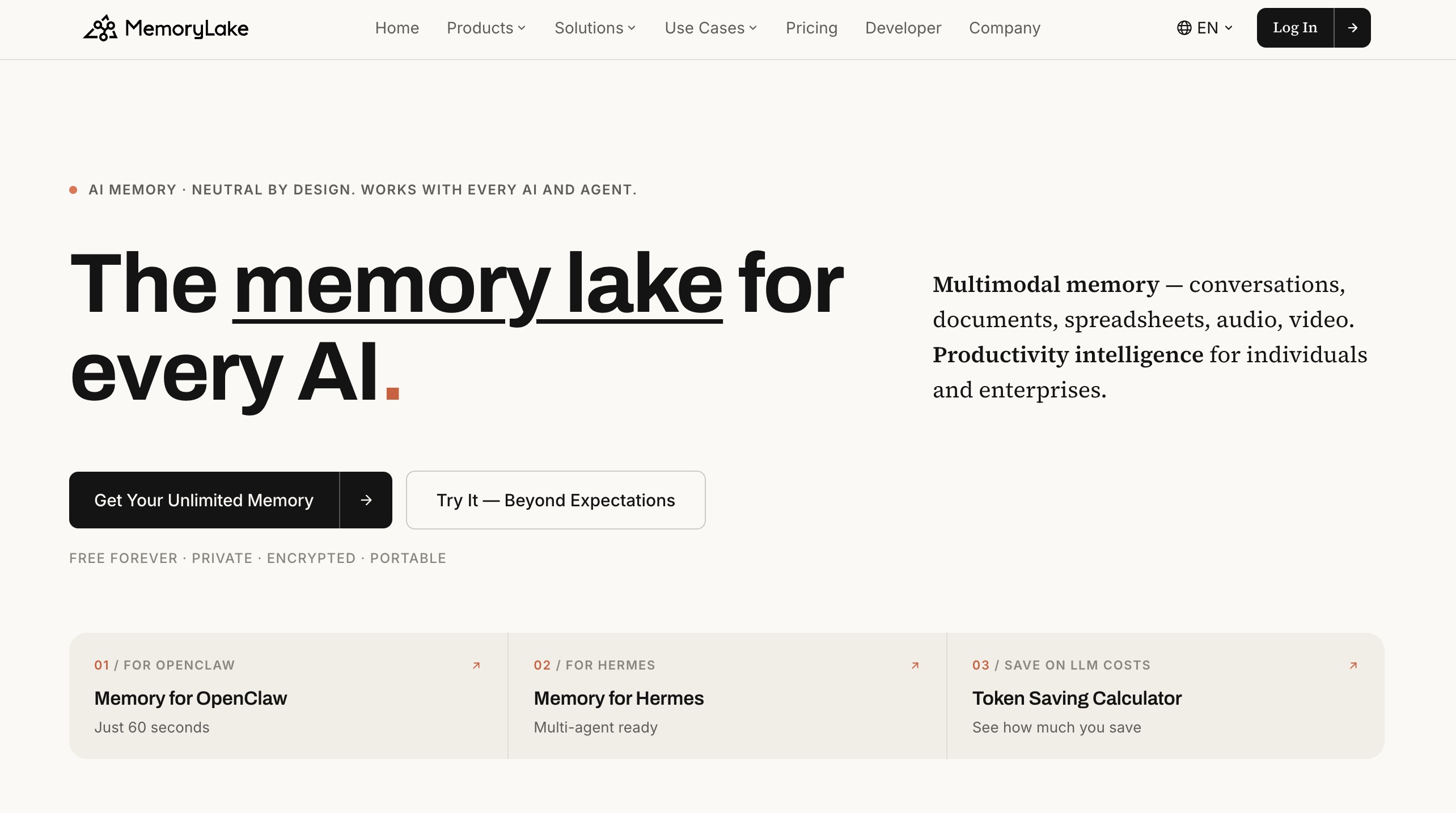
MemoryLake is a persistent memory infrastructure designed to help AI agents and applications maintain context across conversations, tasks, and sessions. Instead of treating every interaction as a fresh start, it enables AI systems to store, organize, retrieve, and reuse relevant information over time. This can include user preferences, historical interactions, important facts, task context, and other long-term knowledge.
MemoryLake is suitable for a wide range of AI applications, from personal assistants and customer support agents to AI-powered marketing workflows, multi-agent systems, and interactive virtual characters. Its focus on persistent, structured memory makes it easier for developers to build AI experiences that feel more consistent, personalized, and context-aware.
For marketing teams building agents that need to remember users and previous campaign interactions, MemoryLake provides a dedicated memory layer that can complement existing AI models, agent frameworks, and application infrastructure. It is particularly useful when maintaining continuity and personalized context is critical to the user experience and brand integrity.
Key Features
- Persistent context retention across infinite sessions and tasks.
- Structured organization of user preferences, brand facts, and historical interactions.
- Seamless compatibility with diverse AI models and multi-agent marketing frameworks.
- Advanced retrieval system that prioritizes relevant long-term knowledge.
Pros
- Eliminates the need for repetitive prompting by retaining comprehensive brand context.
- Highly scalable, making it ideal for growing marketing teams and complex campaigns.
- Delivers unparalleled consistency in AI-generated content and customer interactions.
Cons
- Requires initial setup integration with your specific AI applications.
- May be too robust for solopreneurs who only need basic chatbot memory.
Pricing
Free trial; paid plan starts at $19/month.
2. Mem0
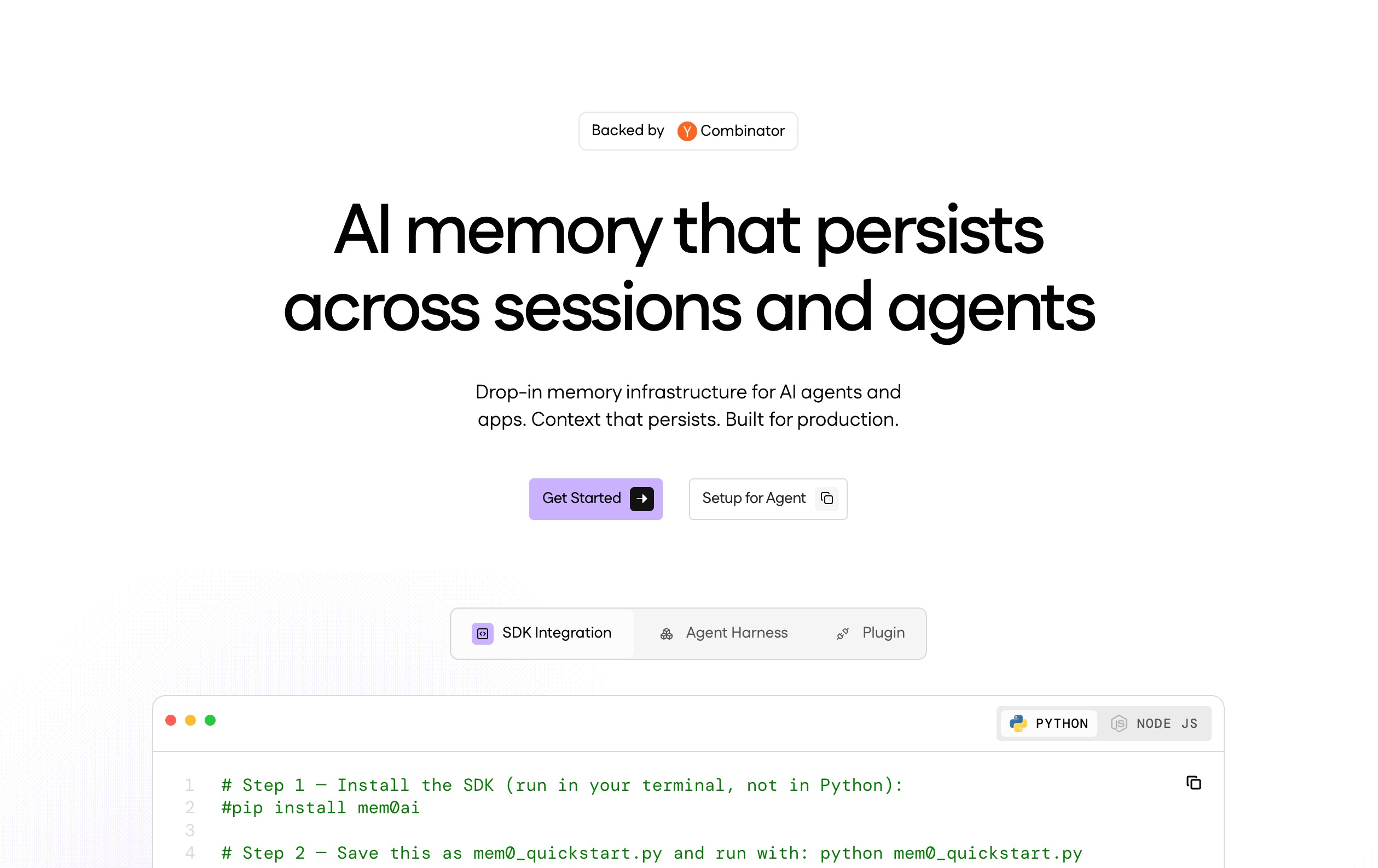
Mem0 is designed specifically to give Large Language Models (LLMs) a personalized memory layer. For marketing teams, it serves as an excellent tool for building AI assistants that need to remember specific details about individual users, clients, or team members across various touchpoints.
Key Features
- User, session, and AI agent-level memory management.
- Automatic entity extraction and summarization.
- Vector database integration for rapid semantic search.
Pros
- Highly effective for personalizing customer-facing marketing chatbots.
- Easy-to-use API that integrates quickly into existing Python or TypeScript projects.
- Open-source availability allows for cost-effective scaling.
Cons
- Lacks the broader, infrastructure-level campaign memory of MemoryLake.
- Requires technical expertise to deploy and maintain effectively.
Pricing
$19/month.
3. Zep
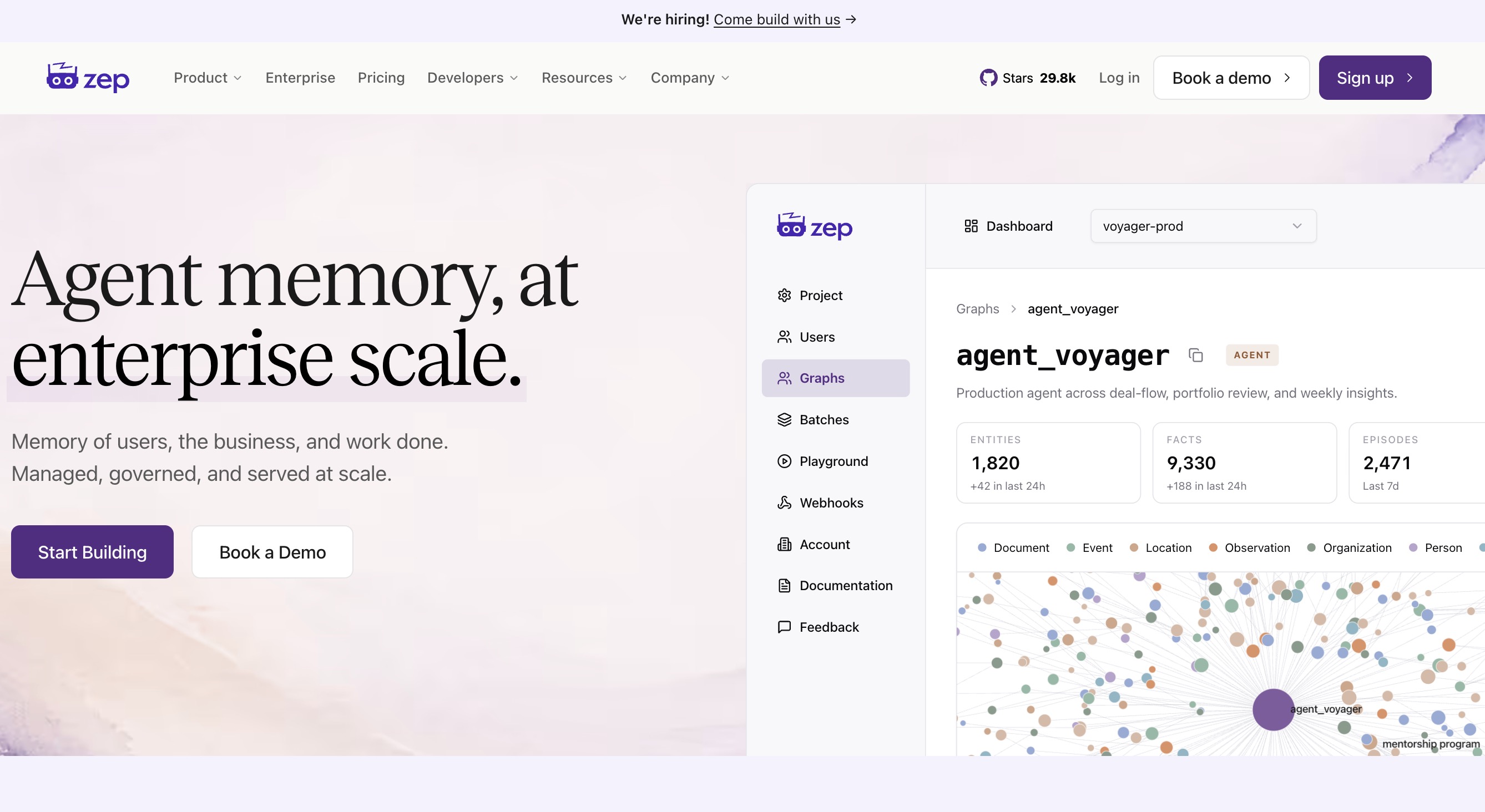
Zep is a fast, scalable long-term memory service for AI assistants. It is built to handle high conversational volumes, making it a strong choice for marketing teams that deploy AI for mass lead generation or high-traffic customer engagement channels where speed is critical.
Key Features
- Extremely low-latency context retrieval.
- Automatic conversation summarization and embedding generation.
- Hardware-accelerated vector search capabilities.
Pros
- Blazing fast, ensuring zero lag in live customer interactions.
- Reduces token costs by summarizing past conversations efficiently.
- Strong privacy features, allowing self-hosting to protect customer data.
Cons
- Focuses heavily on conversational memory rather than broad knowledge management.
- The learning curve for non-technical marketing managers can be steep.
Pricing
$125/month.
4. Supermemory
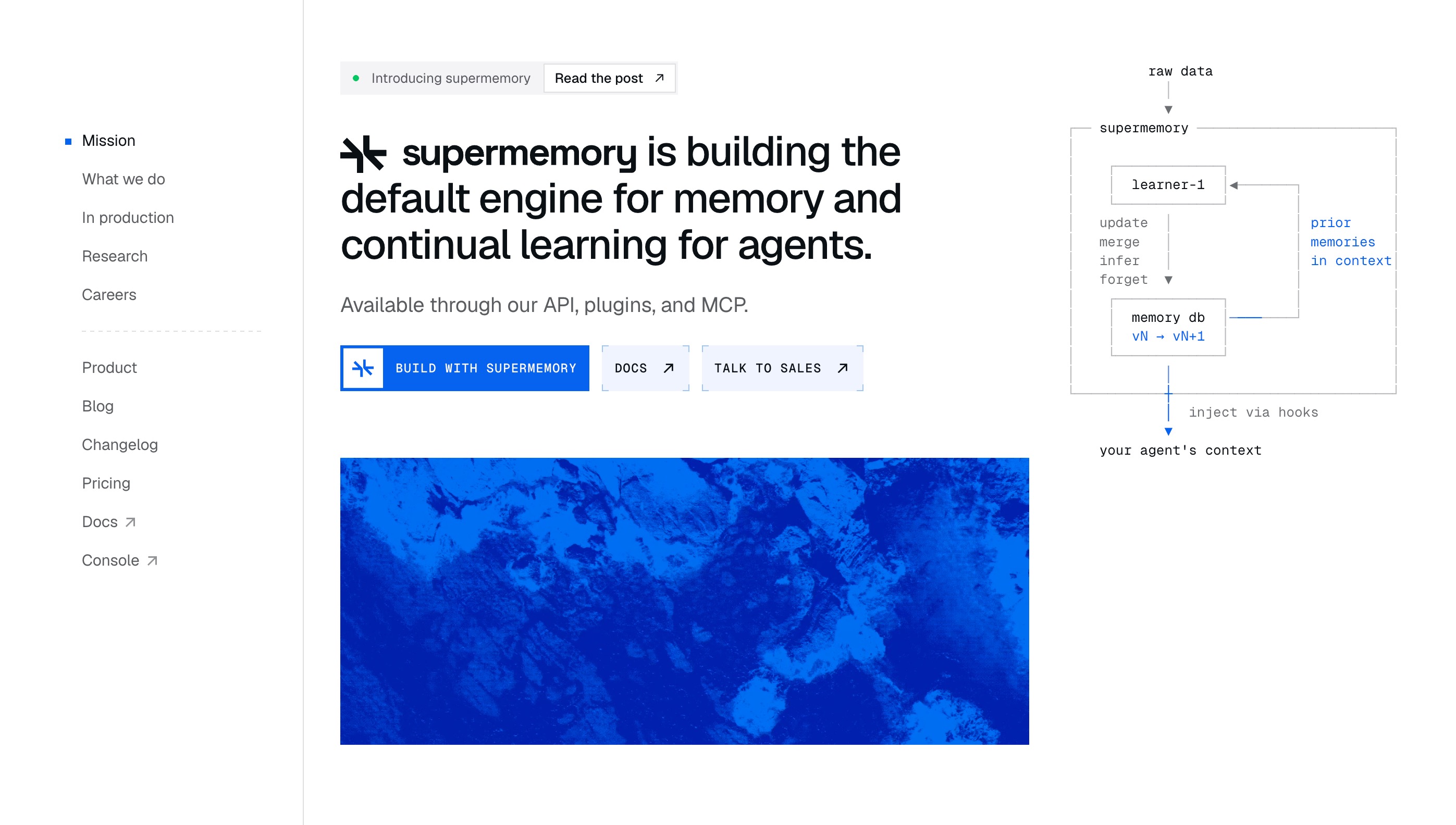
Supermemory acts as an ultimate AI second brain, tailored for content marketers and researchers. It allows teams to save web pages, PDFs, and snippets into a centralized knowledge base, which the AI can then query to write well-researched marketing copy.
Key Features
- Chrome extension for instant web clipping and bookmarking.
- AI-powered conversational search through saved marketing assets.
- Canvas interface for organizing research and campaign ideas.
Pros
- Incredibly user-friendly; requires zero coding knowledge.
- Perfect for content marketers managing heavy research.
- Visual organization helps in brainstorming marketing campaigns.
Cons
- Not designed for integrating memory into customer-facing AI agents.
- Lacks multi-agent coordination capabilities.
Pricing
$19/month.
5. Memori
Memori focuses on creating interactive digital twins and AI personas. For a marketing team, this tool is fantastic for creating a digital version of a brand mascot or an expert thought leader that interacts with audiences while remembering past engagements.

Key Features
- Persona creation with distinct voice, tone, and memory.
- Omnichannel deployment (web, social media, messaging apps).
- Continuous learning from user interactions.
Pros
- Brilliant for experiential marketing and brand engagement.
- Maintains a highly consistent brand persona over long periods.
- No-code interface makes it accessible for creative teams.
Cons
- Niche application; not suited for backend marketing data analysis.
- Can become expensive when scaling to millions of users.
Pricing
Custom pricing.
6. Memobase
Memobase is a developer-centric tool that structures and logs LLM interactions. It is designed to capture every prompt and response, extract structured data, and feed it back into the AI as memory, making it useful for marketing ops teams optimizing AI workflows.
Key Features
- Automatic logging and parsing of unstructured AI text.
- Extraction of key metrics and entities into structured formats.
- Seamless API for feeding structured data back as context.
Pros
- Great for turning messy chat logs into actionable marketing data.
- Helps audit AI performance and brand compliance over time.
- Highly customizable for complex data architectures.
Cons
- Strictly for developers; not accessible for standard marketers.
- Focuses more on data logging than instant contextual generation.
Pricing
$9/month.
7. Redis
While traditionally known as an in-memory data structure store, Redis has evolved to include powerful vector database capabilities. It is the enterprise standard for high-speed AI memory, perfect for global marketing teams requiring real-time personalization at a massive scale.
Key Features
- Ultra-low latency in-memory data retrieval.
- RedisVL (Vector Library) optimized for LLM architectures.
- Massive scalability for global, enterprise-level deployment.
Pros
- Unmatched speed, ensuring instant AI response times.
- Incredibly reliable with a massive, proven ecosystem.
- Handles peak marketing traffic (e.g., Black Friday) flawlessly.
Cons
- It is a foundational database, meaning you must build the memory logic yourself.
- Can be costly to run at scale compared to disk-based databases.
Pricing
Custom pricing.
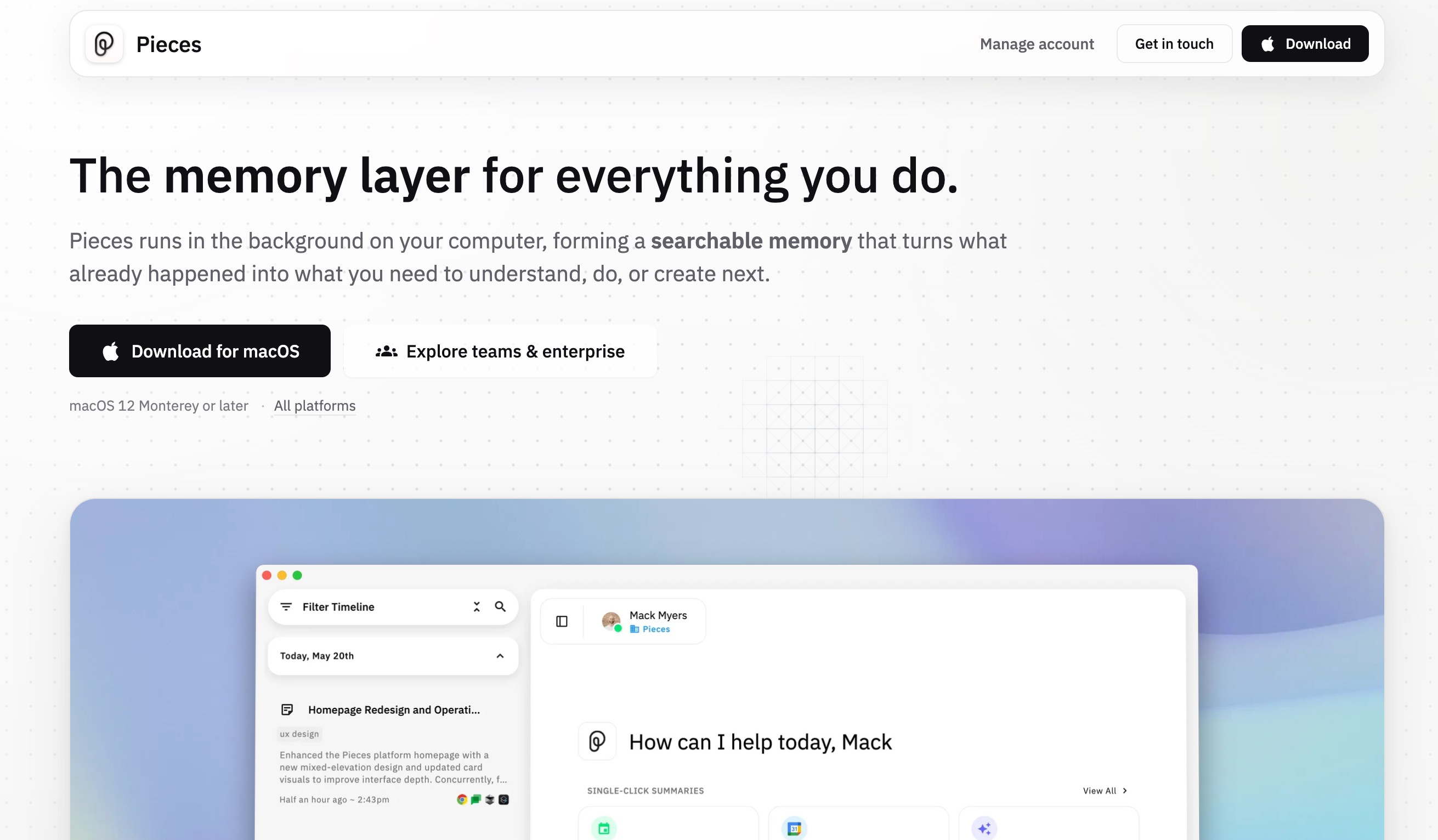
8. Pieces
Pieces is an on-device AI memory tool originally built for developers but highly effective for marketing technologists. It captures context from your workflow—such as code snippets, ad scripts, and CRM notes—and uses on-device AI to help you recall and reuse that information effortlessly.
Key Features
- On-device machine learning ensures total data privacy.
- Proactive context capturing across desktop applications.
- Integration with browsers and desktop productivity tools.
Pros
- Zero cloud privacy concerns since everything stays on your device.
- Great for individual marketing managers juggling multiple campaigns.
- Seamlessly connects your local files to your AI prompts.
Cons
- Lacks team-wide shared memory capabilities.
- Not suitable for powering public-facing AI marketing agents.
Pricing
$18.99/month.
9. Evermind
Evermind is a specialized AI contextual tool that focuses on retaining information during long creative brainstorming sessions. It is the ideal companion for marketing teams ideating on brand positioning, product launches, or complex content strategies.
Key Features
- Mind-map-style memory visualization.
- Long-form document ingestion and retention.
- Dynamic memory updating during ongoing creative sessions.
Pros
- Visual interface helps marketers see the connections in their strategies.
- Prevents AI from hallucinating during lengthy brainstorming sessions.
- Excellent for collaborative team ideation.
Cons
- More of a productivity app than an infrastructure tool.
- Limited API integrations with external marketing automation platforms.
Pricing
Custom pricing.
10. Memdex
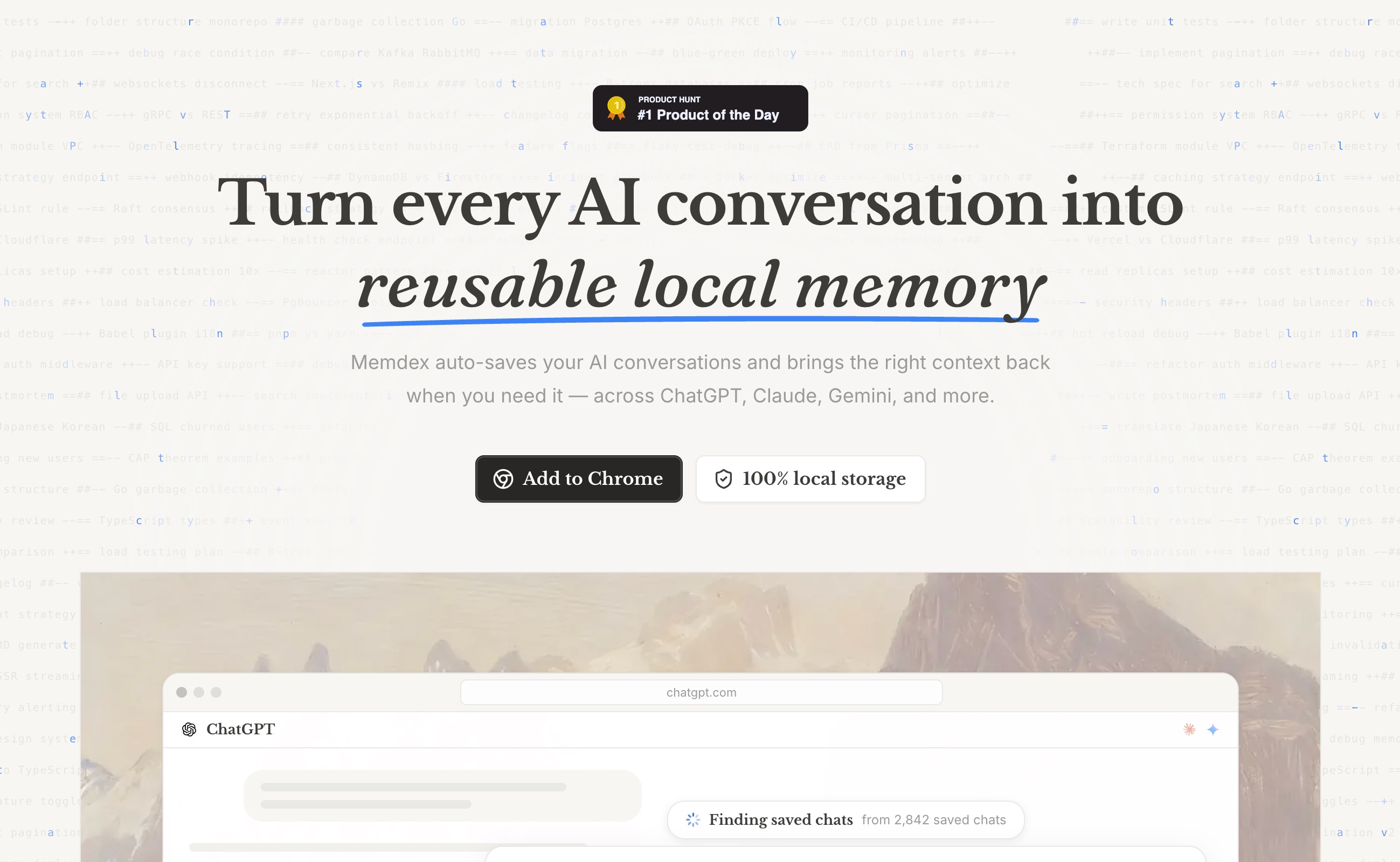
Memdex serves as a search and indexing tool specifically for AI conversations. It allows marketing teams to catalog every AI-generated strategy, copy draft, and data analysis session, creating a searchable historical index of your AI interactions.
Key Features
- Full-text and semantic search of past AI conversations.
- Tagging and categorization of memory blocks.
- Easy export of memory indices to other marketing tools.
Pros
- Ensures you never lose a great AI-generated marketing idea.
- Makes past campaigns easily searchable for new team members.
- Lightweight and easy to implement.
Cons
- It is a passive index rather than an active memory injector.
- Does not automatically provide context to live AI agents.
Pricing
$7/month.
11. Cognee
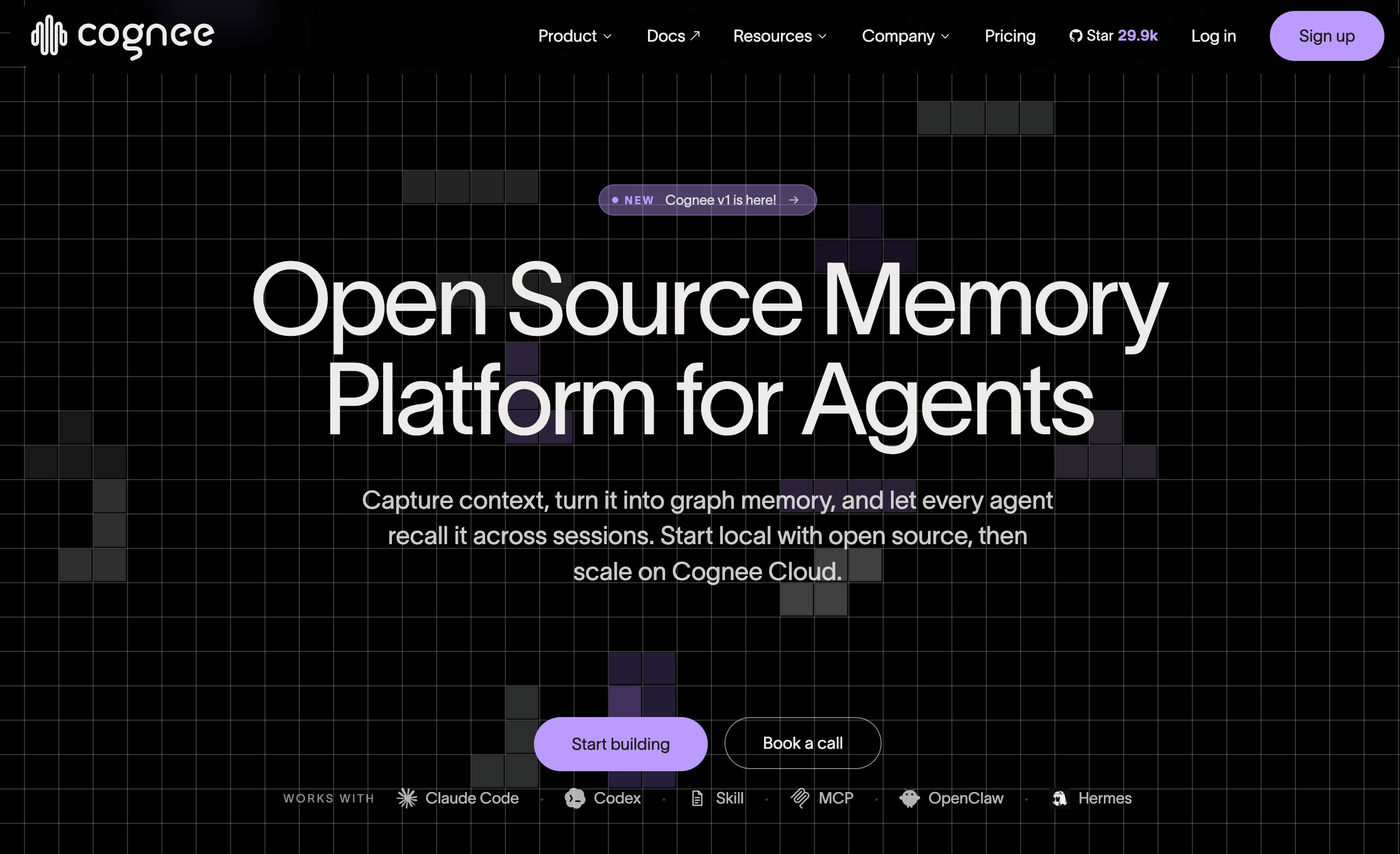
Cognee utilizes graph-based memory to map out complex relationships. For marketing teams, this is invaluable for mapping out intricate customer journeys, understanding how different buyer personas interact with various touchpoints, and feeding this web of context to AI models.
Key Features
- Knowledge graph generation from unstructured marketing data.
- Visual relationship mapping for customer and brand data.
- LLM-agnostic integrations.
Pros
- Provides deep, relational context that standard vector databases miss.
- Incredible for advanced account-based marketing (ABM) strategies.
- Reduces AI hallucinations by anchoring data in strict graph logic.
Cons
- Knowledge graphs are notoriously complex to set up and maintain.
- Overkill for simple content generation tasks.
Pricing
$1.00/1M Tokens.
How AI Memory Helps Marketing Teams
Implementing an AI memory solution fundamentally changes the marketing workflow. Here is how it directly benefits your team:
- Drastically Reduces Onboarding Time for AI: You no longer need to write a 500-word prompt explaining your brand's tone of voice. The memory tool automatically injects this context.
- Enables Omnichannel Consistency: Whether a customer interacts with your website chatbot, receives an automated email, or reads your blog, the AI driving these touchpoints pulls from the same memory, ensuring a unified brand experience.
- Accelerates Content Generation: With historical performance data and previous drafts stored in memory, AI can generate high-quality, iterative content much faster, bypassing the trial-and-error phase.
- Preserves Institutional Knowledge: When team members leave, their specific ways of prompting and the context they built don't leave with them; the AI memory retains the strategic knowledge of the marketing department.
How to Choose the Best AI Memory Tool for Your Marketing Team
Selecting the right tool requires matching the technology to your specific marketing goals. Here is how to navigate your choices:
- Identify Your Primary Use Case: If you are a content marketer looking to organize research, a tool like Supermemory is fantastic. If you need lightning-fast retrieval for an enterprise-level application, Redis is an industry standard.
- Evaluate Your Technical Resources: Tools like Memobase and Cognee offer powerful data structuring and graph capabilities, but they require a dedicated development team. If you lack technical resources, look for tools with out-of-the-box integrations.
- Consider Data Complexity: If your marketing strategy relies on understanding complex relationships between different customer accounts (like in B2B ABM), a graph-based tool like Cognee provides edge-case advantages.
- Prioritize Persistent Infrastructure: While many tools offer niche benefits—like Zep for fast chat or Pieces for local desktop use—marketing teams ultimately need a robust, central nervous system for their AI.
- Why MemoryLake Stands Out: When you weigh all these factors, MemoryLake emerges as the superior choice for comprehensive marketing needs. It objectively bridges the gap between complex infrastructure and practical application. While other tools fragment memory into specific niches, MemoryLake provides a persistent memory infrastructure designed to help AI agents maintain context across all conversations, tasks, and sessions. For teams building diverse marketing agents—from customer support to content creation—it offers the dedicated, reliable memory layer required to maintain continuity and personalized context at scale.
Final Verdict
The era of amnesiac AI is over. For marketing teams to truly leverage artificial intelligence, they must transition from isolated prompts to continuous, context-rich conversations. While tools like Mem0, Redis, and Supermemory offer excellent features for specific use cases, MemoryLake stands out as the ultimate foundation for your AI tech stack. By providing a persistent, structured memory infrastructure, MemoryLake ensures your AI systems store, organize, and reuse vital brand and customer knowledge over time. If you want to build AI marketing experiences that are consistently personalized and context-aware, it is time to make MemoryLake the core memory layer of your marketing strategy.