
Why Sales Teams Need AI Memory
Sales is inherently about relationship building, and relationships are built on memory. Here is why integrating AI memory is no longer optional for high-performing sales teams:
- Hyper-Personalized Interactions: AI memory allows your outreach agents to remember specific details about a prospect—such as their preferred communication channels, past budget concerns, or even personal milestones—ensuring every touchpoint feels deeply personalized.
- Seamless Context Continuity: When a prospect moves from an SDR to an Account Executive, AI memory ensures that all historical context, subtle nuances, and previous objections are seamlessly transferred without requiring the prospect to repeat themselves.
- Elimination of Repetitive Tasks: Instead of reps manually digging through CRM notes to prepare for a call, AI memory automatically surfaces the exact historical facts, events, and context needed right before the meeting begins.
- Continuous Learning & Adaptation: AI memory systems learn which sales playbooks, objection-handling techniques, and workflows work best for specific personas, continuously improving the AI agent’s effectiveness over time.
- Preserving Institutional Knowledge: If a top-performing sales rep leaves the company, the contextual memory of their prospect interactions remains embedded in the AI system, safeguarding critical relationship capital.
Quick Comparison: 9 Best AI Memory Tools for Sales Teams
| Tool | Primary Focus | Best For | Core Sales Benefit | Pricing |
|---|---|---|---|---|
| 1. MemoryLake | Enterprise AI Memory Infrastructure | Enterprise Sales Teams & AI SaaS | Unified Memory Passport & Governance | $19/month |
| 2. Mem0 | Open-Source LLM Memory | Dev-heavy Sales Ops | Self-hosted memory customization | $19/month |
| 3. Supermemory | AI "Second Brain" | Individual Sales Reps | Bookmarking & quick recall | $19/month |
| 4. Zep | Long-term Memory for Agents | Conversational AI | Chatbot & SDR context retention | $125/month |
| 5. Redis | In-Memory Vector Store | High-Speed Workflows | Real-time AI agent retrieval | Custom |
| 6. Pinecone | Serverless Vector DB | Large-scale RAG | Searching massive sales playbooks | $20/month |
| 7. Pieces | On-Device AI Copilot | Sales Engineers | Saving snippets & technical context | Custom |
| 8. LangChain | LLM Framework & Memory | Custom AI Dev Teams | Building bespoke sales workflows | $39/month |
| 9. Memdex | AI Indexing & Retrieval | Data-heavy Sales Orgs | Cross-referencing CRM data | $10/month |
1. MemoryLake
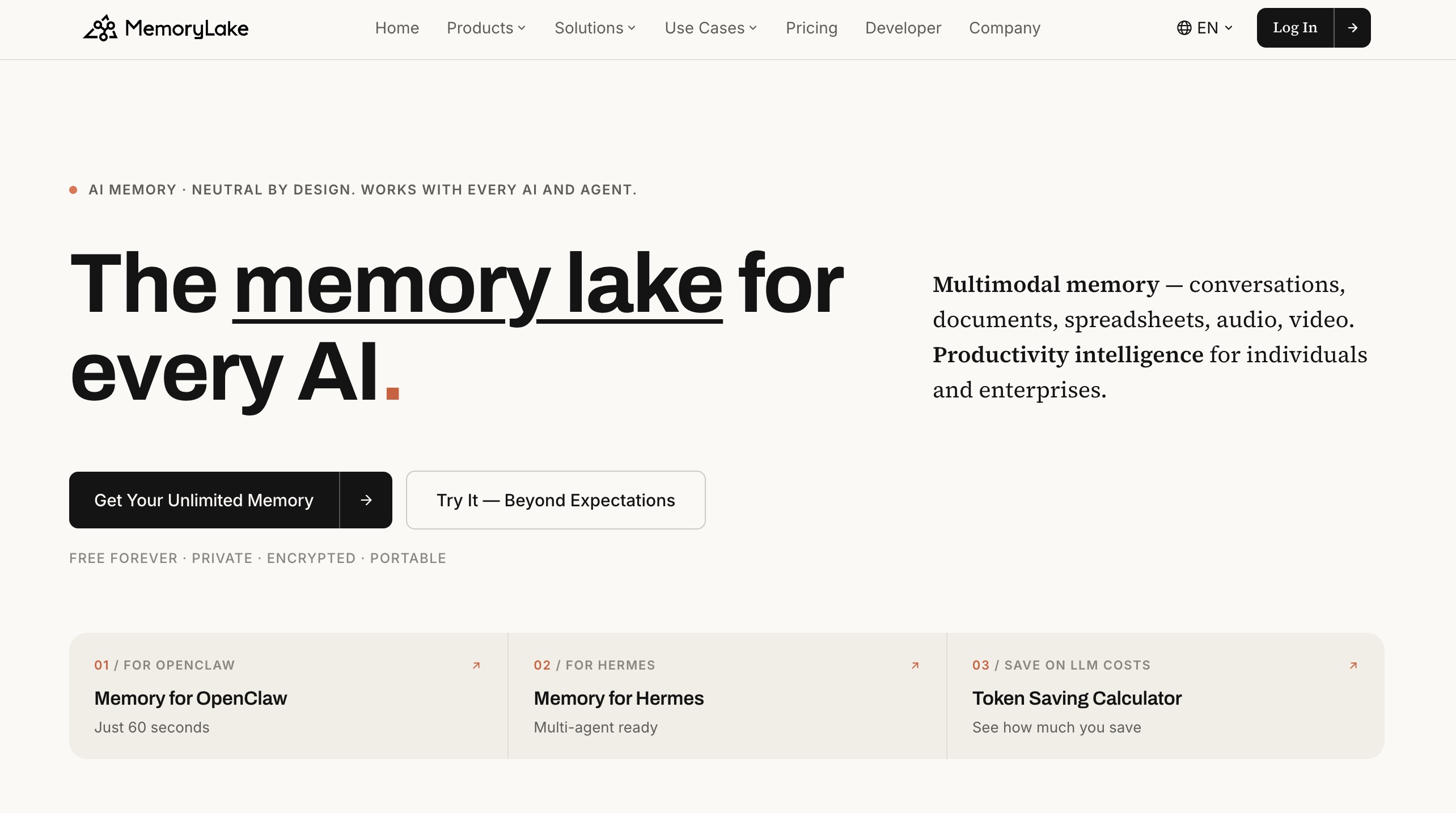
MemoryLake is an enterprise-grade AI memory infrastructure designed to help AI agents build, store, and manage long-term memory for sales organizations. Unlike traditional RAG (Retrieval-Augmented Generation) systems that mainly retrieve information from documents or playbooks, MemoryLake enables AI systems to remember user preferences, past interactions, key facts, events, and learned workflows across sessions and platforms.
It provides a unified Memory Passport that allows sales reps to share their personalized prospect memory across different AI applications and CRM agents. With multi-layer memory management, multimodal data processing, memory governance features such as version control and conflict detection, and enterprise-level security, MemoryLake helps organizations create more reliable and personalized AI experiences. It is built for developers, AI SaaS companies, and enterprises that want to transform AI agents from short-term sales assistants into intelligent, continuously improving digital partners.
Key Features
- Unified Memory Passport: Allows AI memory to be seamlessly shared across different tools (CRM, email platforms, outreach sequences).
- Multi-layer Memory Management: Separates short-term working context from long-term foundational prospect knowledge.
- Multimodal Data Processing: Capable of extracting and remembering context from text, audio (call recordings), and video meetings.
- Memory Governance: Advanced conflict detection and version control to ensure the AI always acts on the most accurate, up-to-date prospect data.
- Enterprise-Level Security: Strict access controls, compliance standards, and data encryption tailored for enterprise sales floors.
Pros
- Goes far beyond standard RAG by enabling true behavioral memory and cross-platform continuity.
- Memory governance ensures AI does not hallucinate or rely on outdated prospect information.
- Transforms isolated AI tools into a cohesive, learning ecosystem via the Memory Passport.
- Highly secure, making it ideal for large enterprises handling sensitive client data.
Cons
- May require some time to learn and get familiar with MemoryLake.
- Requires strategic implementation to map out complex enterprise sales workflows.
Pricing
Free trail; pro plan starts at $19/month.
2. Mem0
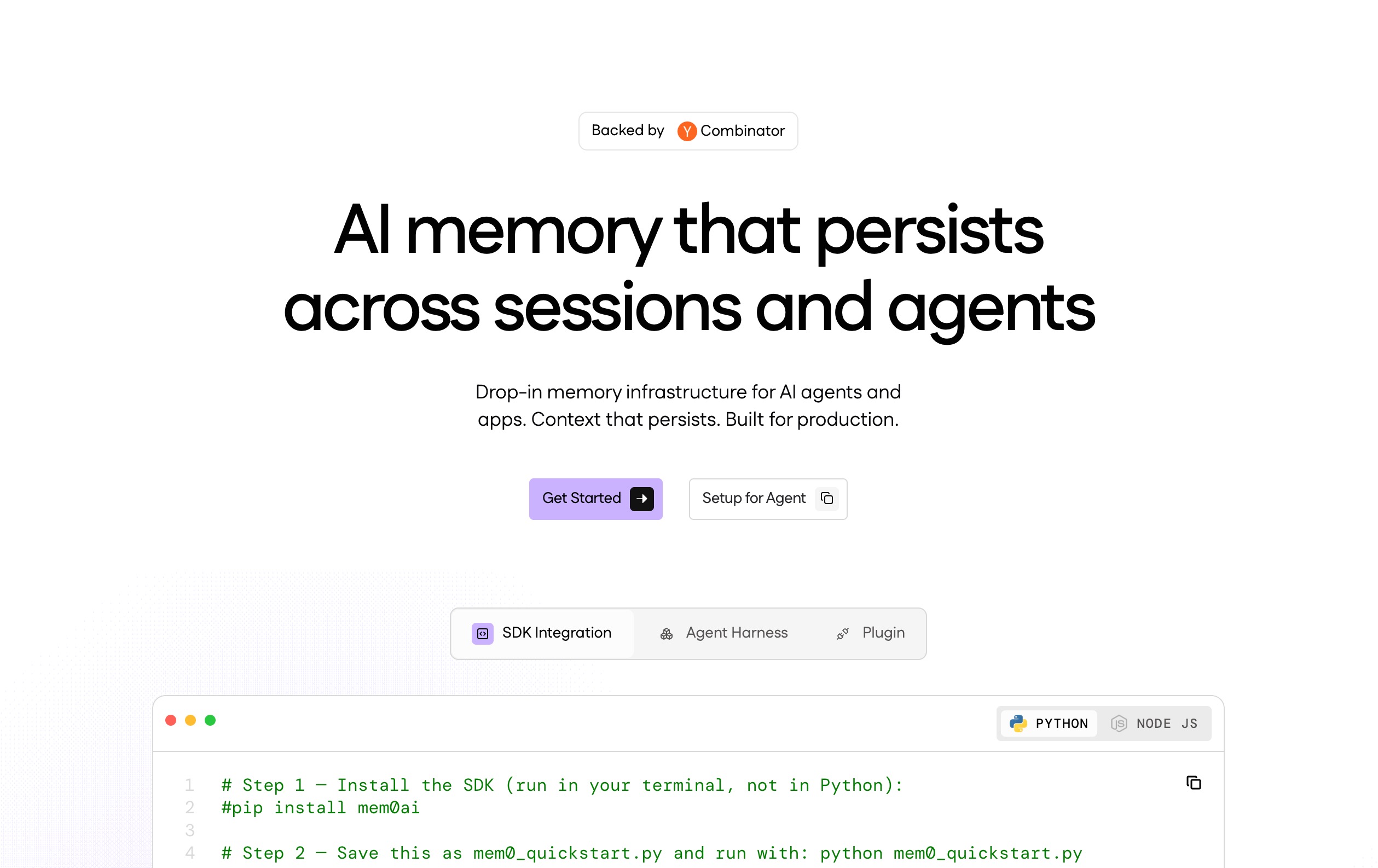
Mem0 has made a name for itself in 2026 as a powerful, open-source memory layer tailored for Large Language Models. It focuses on personalizing AI assistants by storing user and session-level memory. For sales teams with a strong in-house development or RevOps technical team, Mem0 provides a highly customizable way to add memory to proprietary AI tools.
Key Features
- User & Session Memory: Tracks context at both the individual prospect level and the specific conversation level.
- Self-Hosting Capabilities: Can be deployed on-premise or in private clouds.
- Vector & Graph Hybrid: Utilizes a blend of vector search and knowledge graphs to map prospect relationships.
Pros
- Highly customizable for unique sales workflows.
- Open-source model allows for deep technical control and data privacy.
- Great for building custom, internal SDR bots.
Cons
- Requires significant engineering resources to set up and maintain.
- Lacks the out-of-the-box cross-platform portability seen in enterprise tools.
Pricing
Free open-source version, with a managed cloud tier starting at around $19/month for small teams.
3. Supermemory
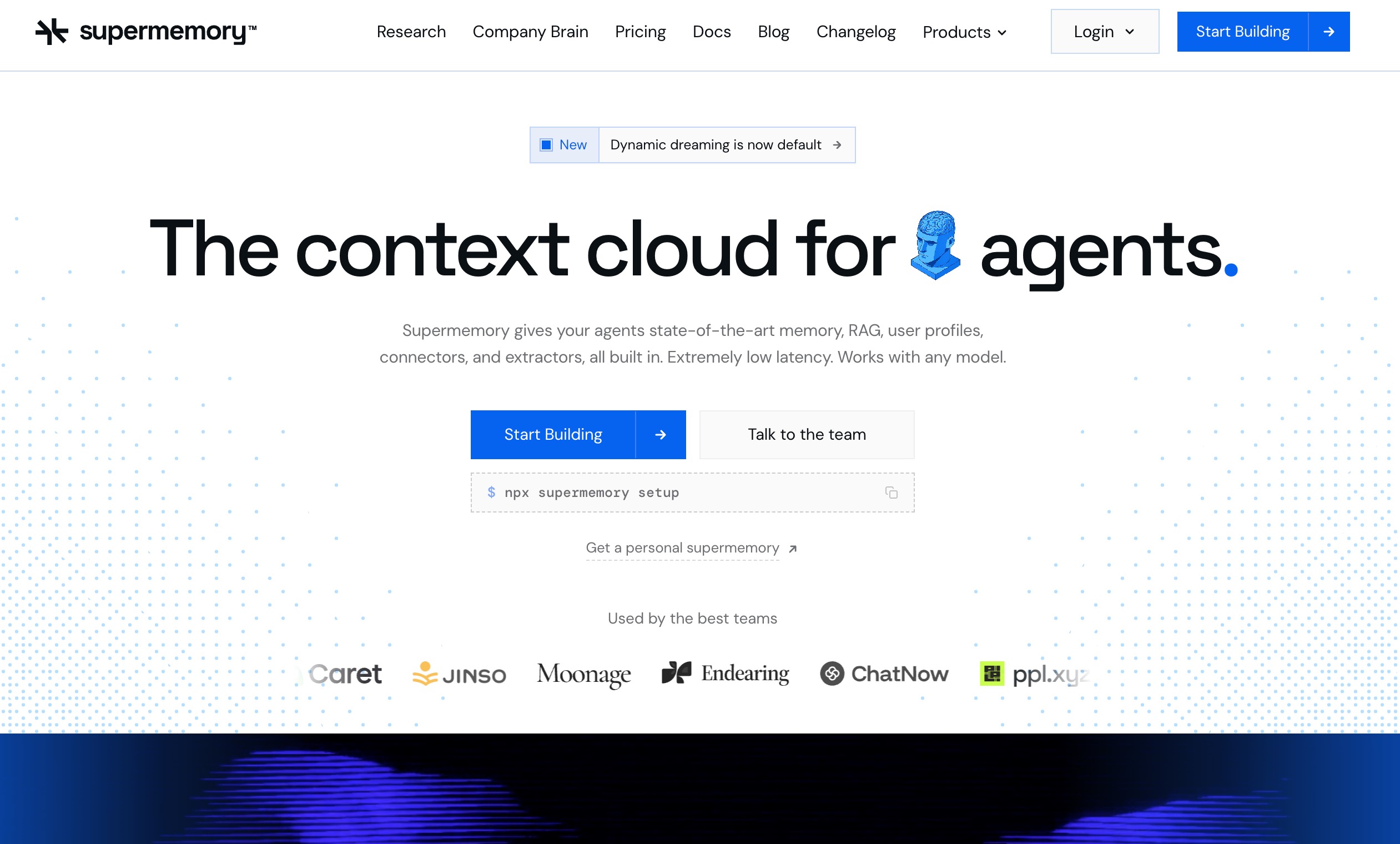
Supermemory functions as an AI-powered "second brain" tailored more toward individual productivity. For individual Account Executives or account managers, Supermemory is a fantastic tool for bookmarking LinkedIn profiles, saving snippets of sales calls, and recalling exact data points from web research without manual sorting.
Key Features
- AI Bookmarking: Instantly categorizes saved web pages, CRM links, and articles.
- Natural Language Recall: Ask the AI questions like "What was the budget metric from the tech firm I researched yesterday?"
- Browser Extension Integration: Seamlessly works where the rep works.
Pros
- Incredibly easy to use with zero technical setup.
- Excellent for individual sales rep productivity and prospecting research.
- Affordable and accessible.
Cons
- Not designed for team-wide, centralized memory sharing.
- Cannot power external AI agents or complex automated workflows.
Pricing
Freemium model; Pro plans start at $19/month.
4. Zep
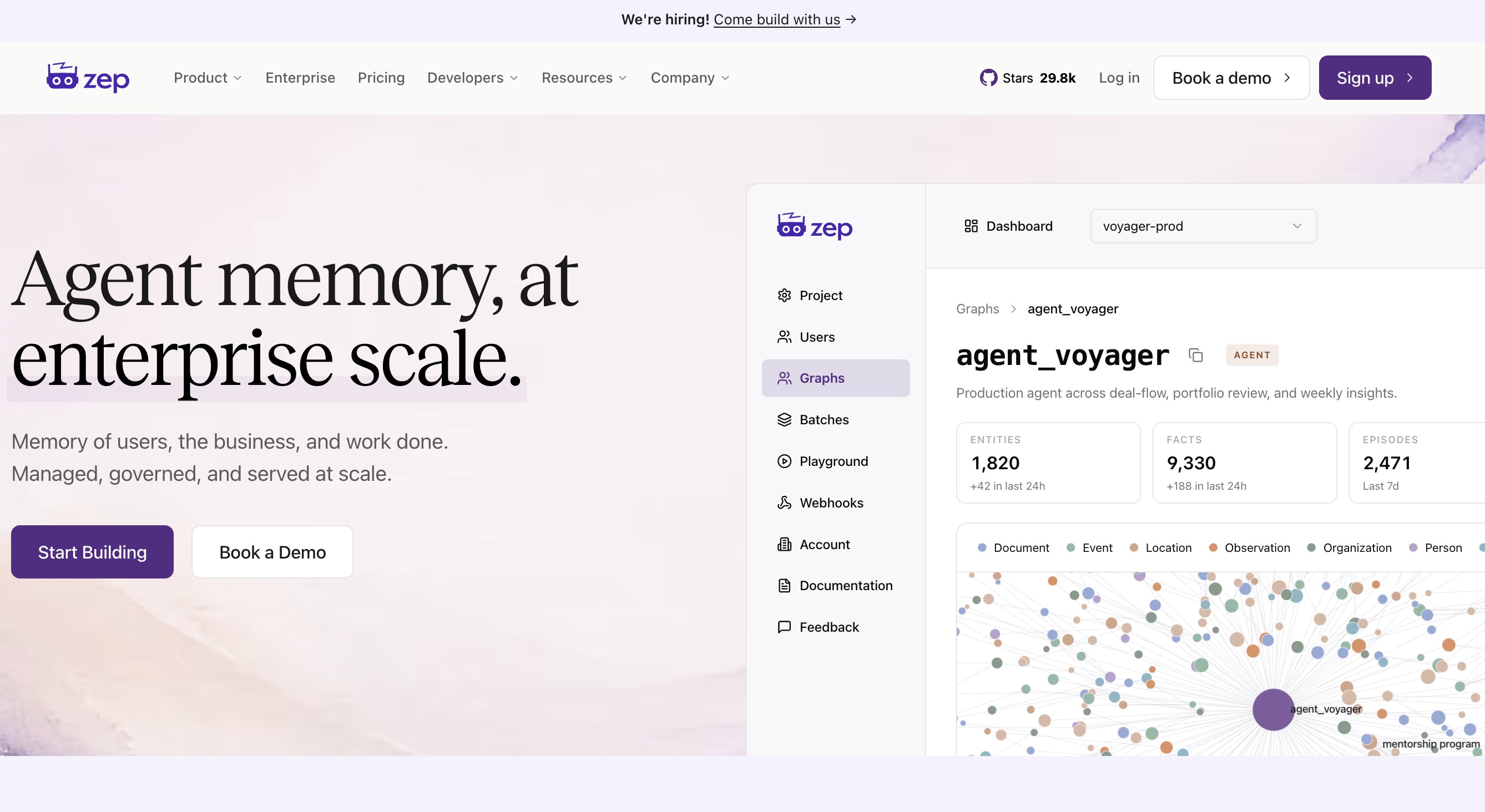
Zep is a long-term memory service specifically built for AI assistants and chatbots. If your sales team utilizes AI-driven chat on your website to qualify leads, or internal chatbots for coaching reps, Zep ensures these bots retain historical context over months of interactions, rather than losing the thread after the context window fills up.
Key Features
- Automated Summarization: Continuously compresses older conversations to save context space while retaining key facts.
- Low-Latency Retrieval: Designed for real-time conversational agents.
- Fact Extraction: Automatically pulls out entities like company size, pain points, and names.
Pros
- Perfect for conversational AI and lead qualification bots.
- Highly performant with fast response times.
- Reduces LLM token costs through intelligent summarization.
Cons
- Narrowly focused on chat-based interfaces.
- Lacks deep governance and conflict detection for multi-channel sales data.
Pricing
Monthly paid plan starts at $125/month.
5. Redis
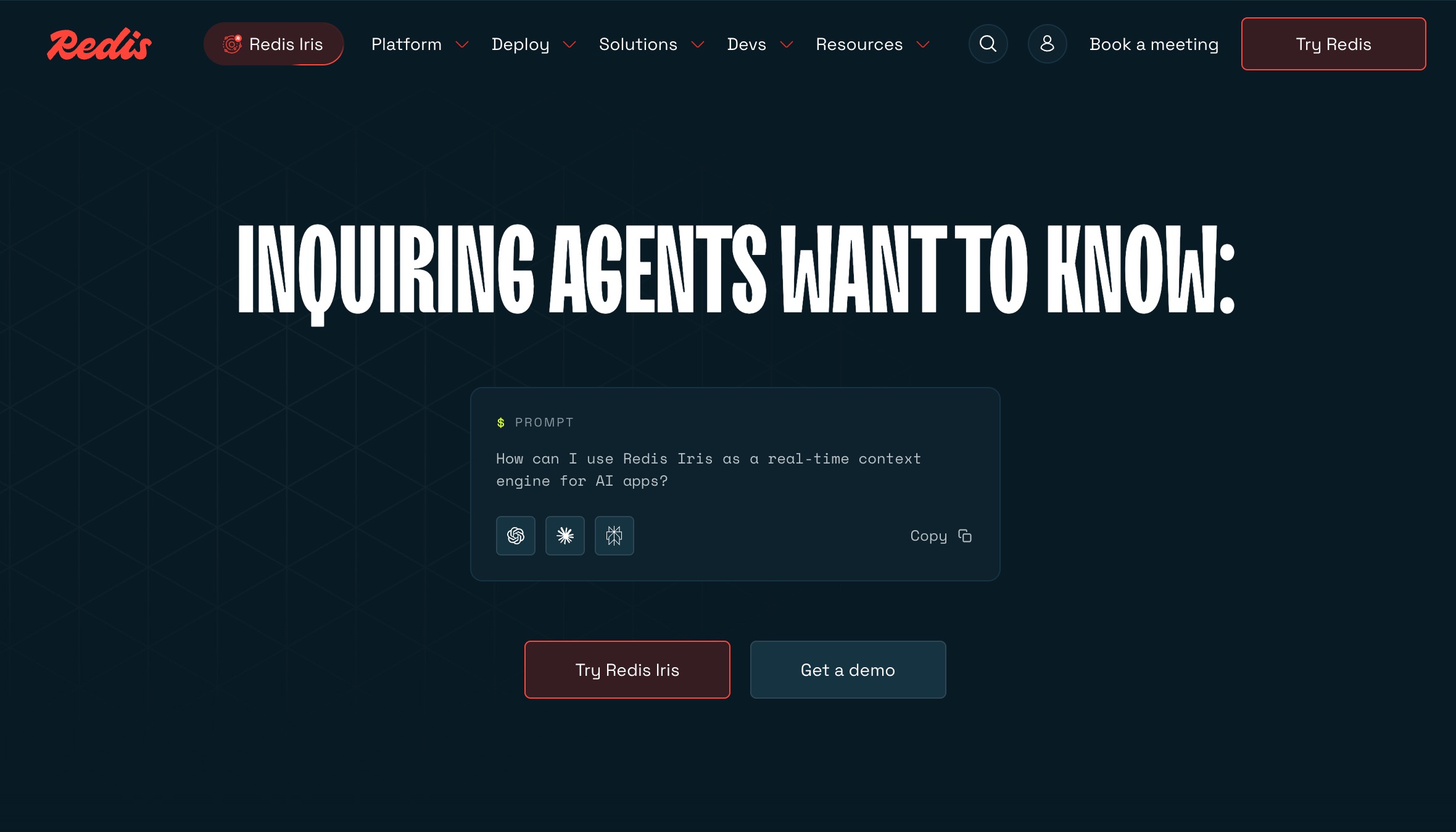
While traditionally known as an in-memory caching database, Redis has evolved its vector database capabilities to become a backbone for AI memory in high-speed environments. For enterprise sales ops building real-time recommendation engines (e.g., suggesting upsell products to reps while on a live call), Redis delivers unparalleled speed.
Key Features
- In-Memory Vector Search: Blisteringly fast retrieval of AI embeddings.
- Real-Time Data Processing: Handles massive streams of live sales data.
- High Availability: Enterprise-grade uptime and replication.
Pros
- The absolute fastest option for real-time AI memory retrieval.
- Highly scalable and battle-tested in enterprise environments.
- Versatile beyond just AI memory.
Cons
- Strictly a database/infrastructure layer; requires you to build the AI logic yourself.
- Can become expensive to scale due to RAM requirements.
Pricing
Custom pricing.
6. Pinecone
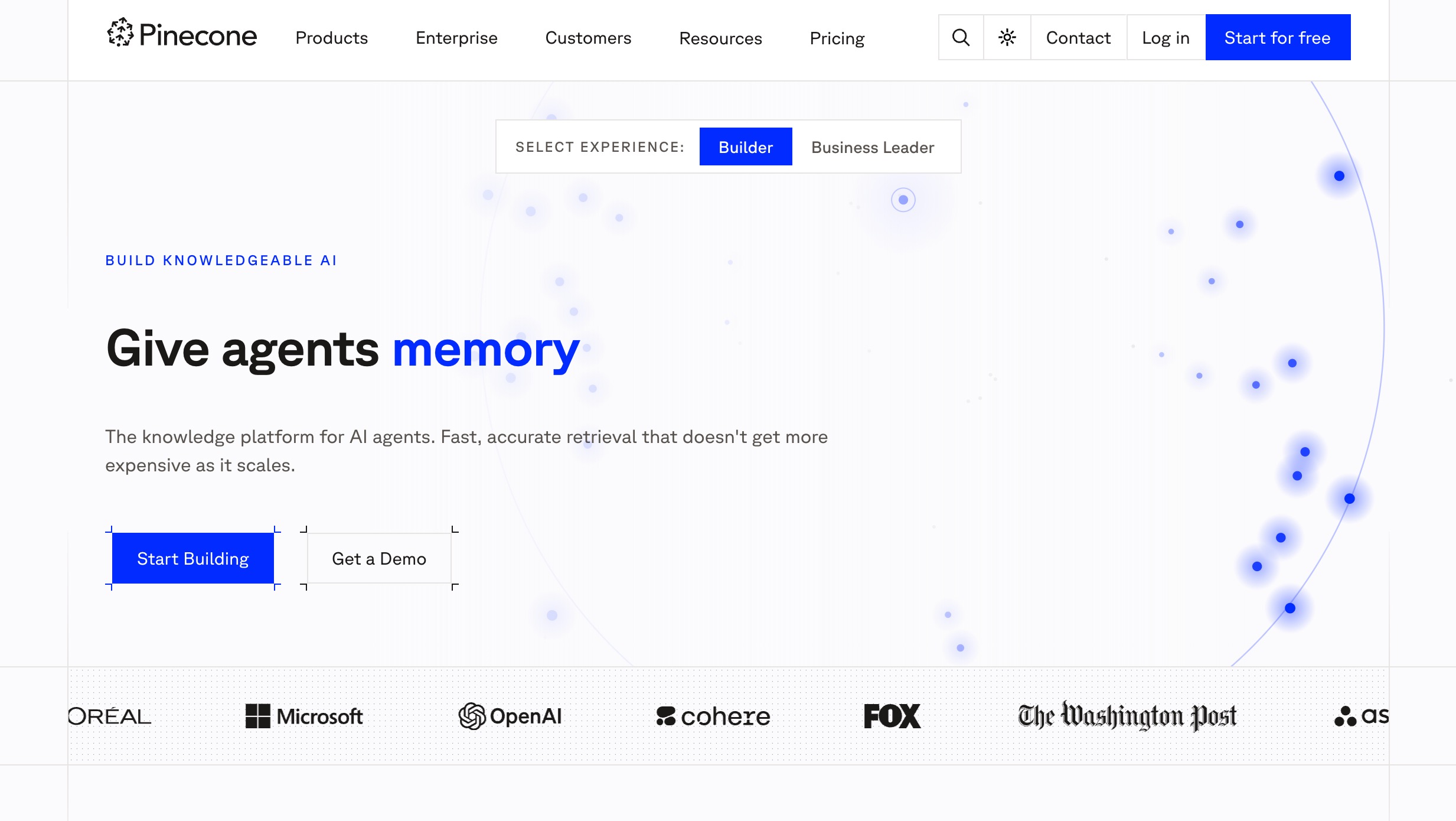
Pinecone is a fully managed, serverless vector database that dominates the standard RAG landscape. If your sales team needs an AI that can instantly recall product specs, pricing sheets, and sales playbooks from millions of documents, Pinecone is the engine that makes that search possible.
Key Features
- Serverless Architecture: Scales automatically without managing infrastructure.
- Massive Document Ingestion: Built to handle billions of vector embeddings.
- Hybrid Search: Combines keyword and semantic search for accurate document retrieval.
Pros
- Incredibly reliable for document-heavy RAG applications.
- Zero maintenance required for database scaling.
- Integrates easily with major LLM providers.
Cons
- Optimized for document retrieval, not dynamic, evolving behavioral memory.
- Does not natively track user "preferences" or handle memory conflict resolution.
Pricing
Usage-based pricing starts at $20/month.
7. Pieces
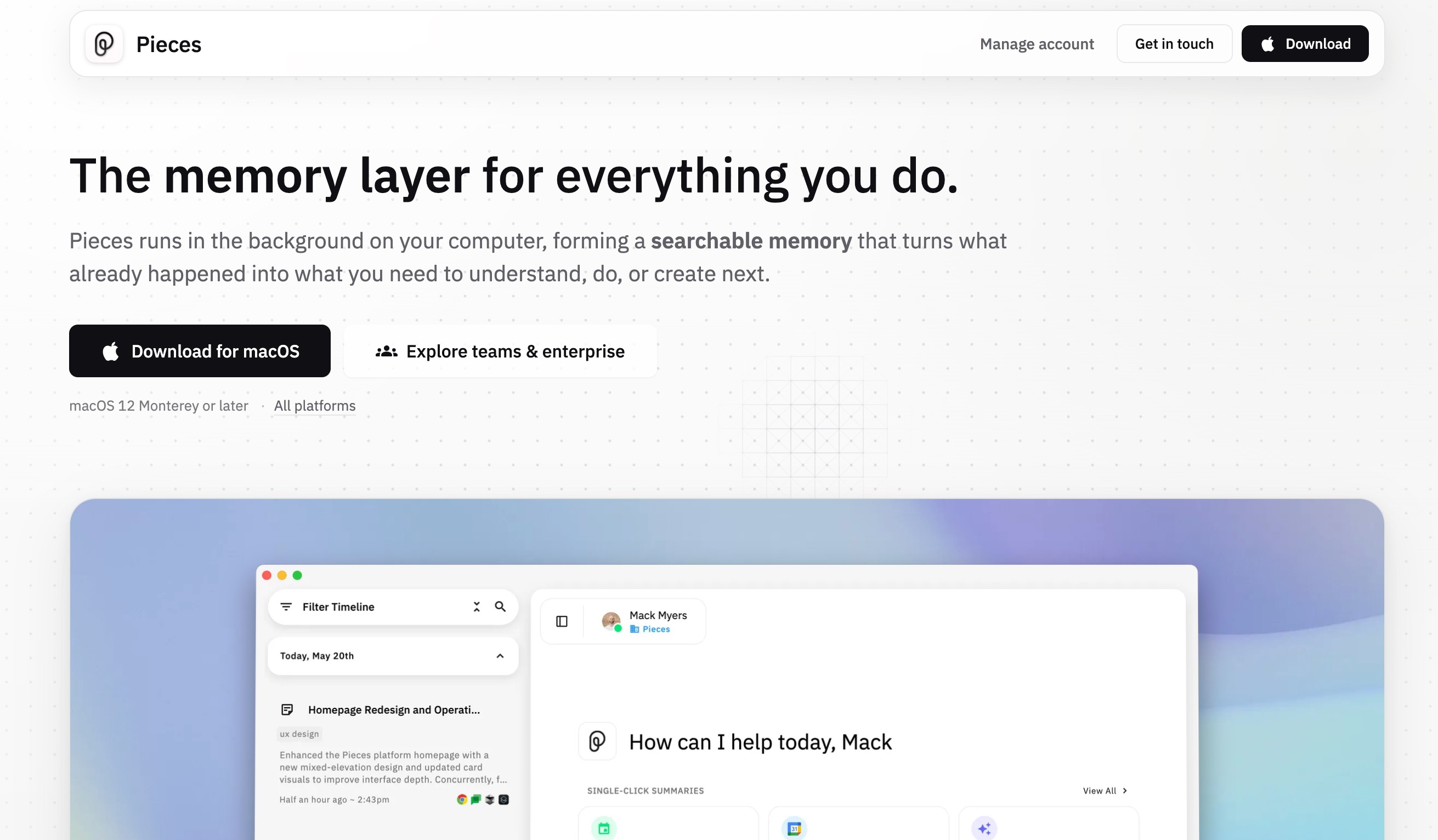
Pieces is an on-device AI copilot primarily designed for developers but highly adopted by Sales Engineers (SEs) and technical sales teams in 2026. It allows users to save, enrich, and recall code snippets, technical architecture diagrams, and complex workflows securely on their local machines.
Key Features
- On-Device Processing: Keeps highly sensitive technical data localized and secure.
- Contextual Understanding: Automatically tags and enriches saved snippets.
- Seamless IDE/Browser Integrations: Integrates directly into workflows.
Pros
- Maximum privacy since data doesn't have to leave the device.
- Invaluable for technical sales reps dealing with complex integrations.
- Works offline.
Cons
- Not suited for standard CRM data or non-technical SDR workflows.
- Siloed memory (harder to share team-wide context).
Pricing
Custom pricing.
8. LangChain
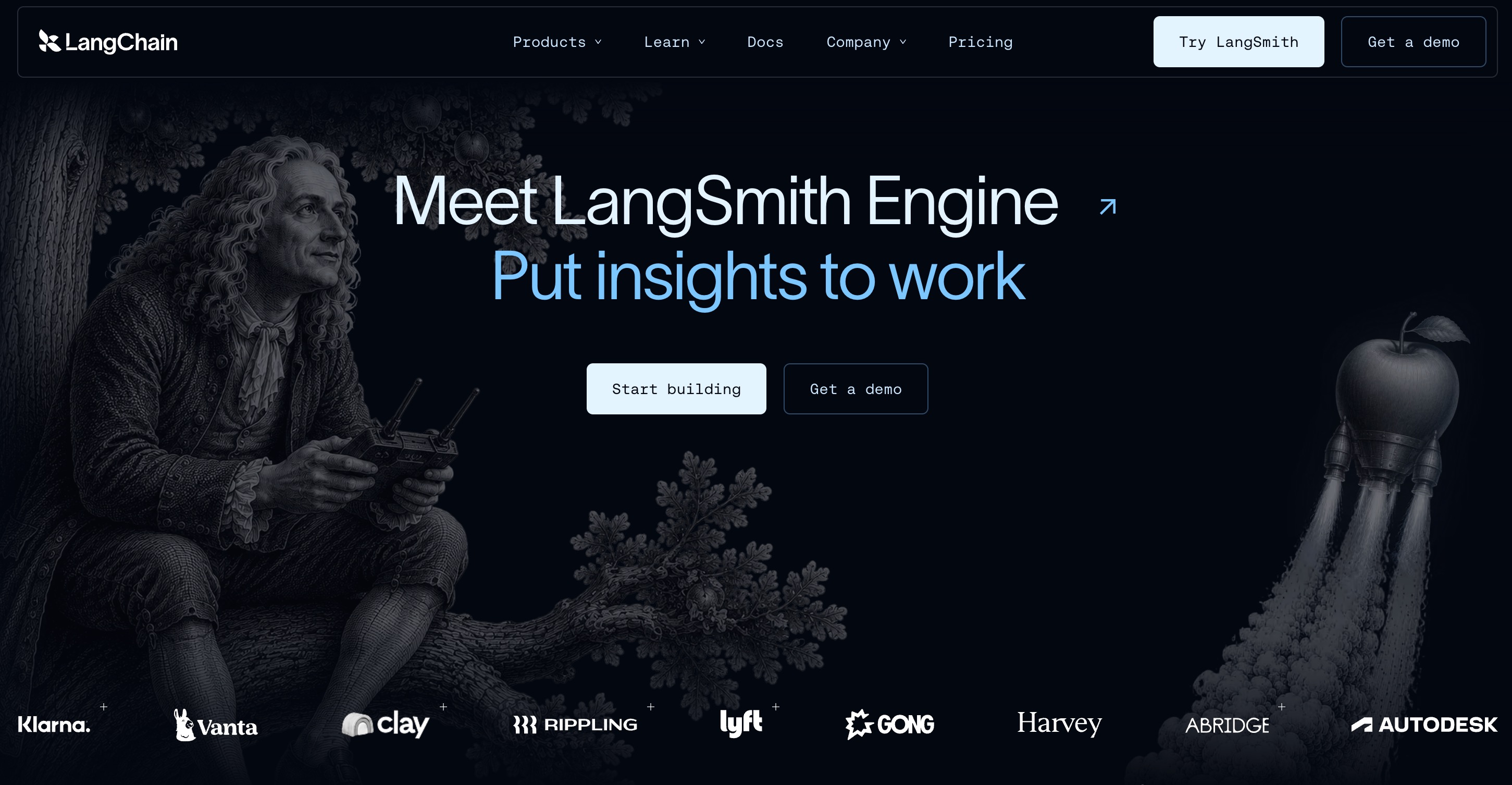
LangChain is the premier development framework for building applications powered by LLMs. While it is a framework rather than a standalone database, its built-in memory modules (like ConversationBufferMemory or VectorStoreRetrieverMemory) are the foundation upon which many custom sales AI tools are built.
Key Features
- Extensive Memory Modules: Out-of-the-box templates for different memory types (buffer, summary, entity).
- Agent Chaining: Connects memory directly to complex AI reasoning workflows.
- Vast Ecosystem: Integrates with nearly every database, CRM, and LLM.
Pros
- Ultimate flexibility to design the exact memory behavior your sales team needs.
- Massive community support and continuous updates.
- Allows linking memory to active tool use (e.g., sending an email).
Cons
- It is a developer framework; not a ready-to-use product for sales managers.
- Managing state and memory persistence at an enterprise scale can get complicated.
Pricing
Free for solo users, Plus For teams building and deploying agents starts at $39/month.
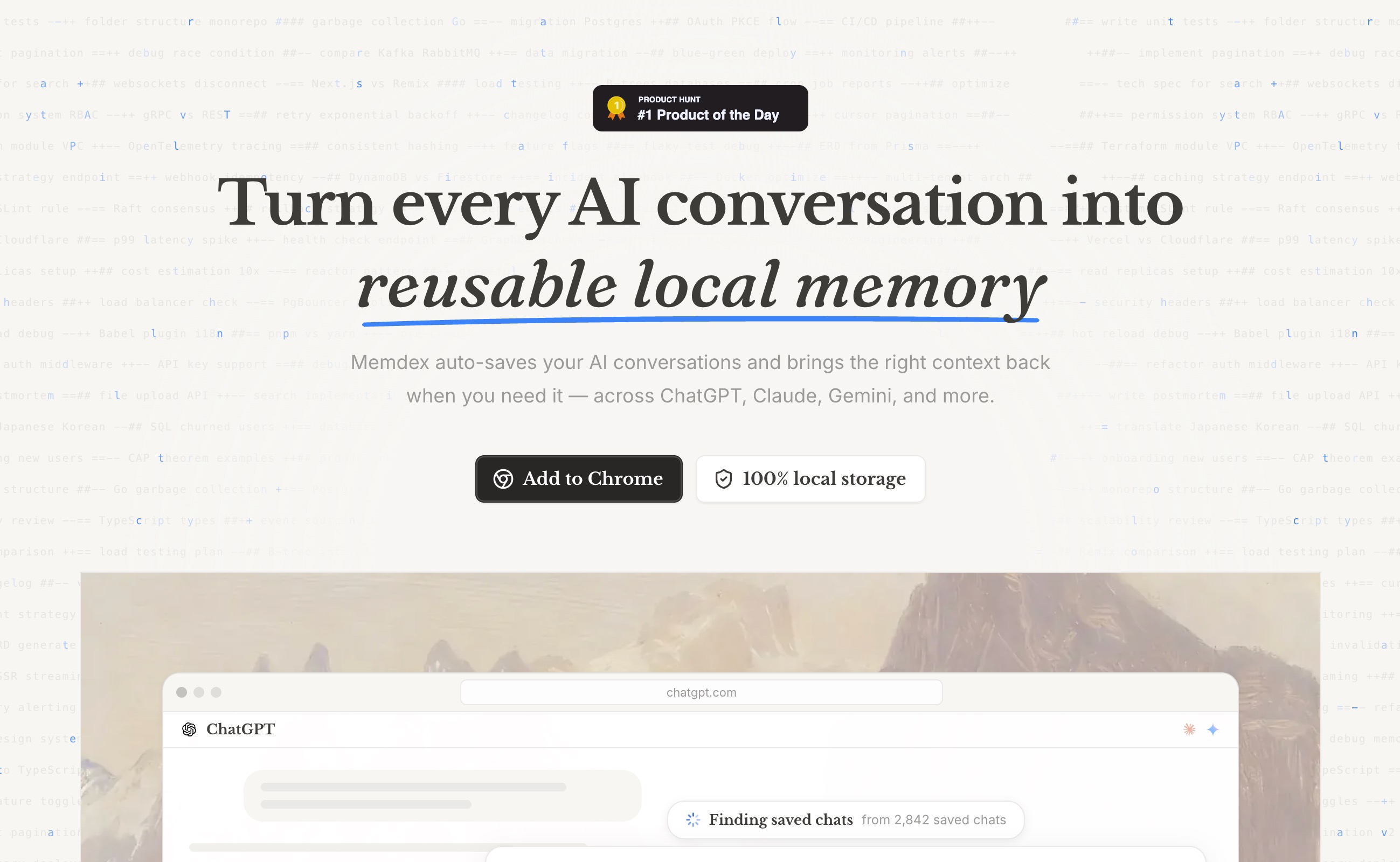
9. Memdex
Memdex is a modern AI indexing tool designed to bridge the gap between fragmented enterprise data and AI readiness. It acts as an indexing layer that scans emails, CRMs, and Slack, creating a searchable memory index for sales teams to query.
Key Features
- Automated Data Indexing: Crawls existing sales tools to build a unified knowledge base.
- Semantic Querying: Sales reps can ask complex natural language questions about accounts.
- Access Control Sync: Mirrors CRM permissions so reps only see memory they are authorized to view.
Pros
- Great for unifying siloed data across the sales tech stack.
- Strong permission management.
- Reduces manual data entry.
Cons
- More of an advanced search engine than an autonomous agent memory.
- Can be slow to sync large volumes of historical CRM data.
Pricing
Pro starts at $10/month.
How to Choose an AI Memory Tool for Your Sales Team
Choosing the right AI memory tool depends heavily on your team’s size, technical resources, and ultimate goals. Consider these factors:
- Determine Your Primary Use Case: If your goal is simply to allow AI to search your company’s massive PDF sales playbooks, a serverless vector database like Pinecone is highly effective. If you are a technical sales engineer managing code, Pieces is perfect.
- Assess Technical Capabilities: If you have a dedicated AI engineering team that wants to build entirely custom logic from scratch, leveraging LangChain alongside Mem0 or Redis will give you maximum control.
- Evaluate Data Scale and Speed: For systems that require real-time suggestions during live sales calls without a millisecond of lag, Redis offers the performance necessary, provided you can handle the infrastructure.
- Look for True Autonomy and Evolution: Traditional RAG is no longer enough. Sales teams need tools that understand behavior, track conflicts in data, and grow smarter.
The Objective Verdict: While tools like Pinecone are great for data retrieval, and LangChain is excellent for developers, they only solve pieces of the puzzle. For modern sales teams, you need an integrated, intelligent, and secure system. MemoryLake stands out as the ultimate choice. It objectively bridges the gap between raw data storage and actionable intelligence. By offering a unified Memory Passport, multimodal processing (analyzing text, voice, and video), and strict enterprise governance, MemoryLake doesn't just store data—it acts as a continuously improving digital partner. It is highly recommended because it provides the exact enterprise-grade infrastructure necessary to turn AI from a simple assistant into a high-performing member of your sales organization.
Final Verdict
As we navigate 2026, AI is only as powerful as its context. Giving your AI the ability to remember, adapt, and recall is the fastest way to shorten sales cycles and deepen client relationships. While there are excellent specialized tools on the market, MemoryLake provides the most comprehensive, secure, and advanced AI memory infrastructure available. With its innovative Memory Passport and robust governance, MemoryLake will reliably transform your AI into an intelligent, long-term sales partner. If you want to future-proof your sales tech stack, it’s time to build your foundation on MemoryLake.