
What Is Enterprise AI Memory
Enterprise AI memory is a foundational infrastructure layer that allows AI agents to store, retrieve, and manage context over time in a secure and compliant manner. It goes far beyond standard vector databases.
- Persistent Stateful Context: Unlike traditional Retrieval-Augmented Generation (RAG) that simply fetches static documents, enterprise memory actively remembers dynamic interactions, evolving user preferences, and distinct historical events across multiple independent sessions.
- Security and Compliance: Enterprise memory platforms in 2026 are built to meet rigorous global regulatory standards, including SOC 2, HIPAA, GDPR, and ISO 27001. They feature data anonymization, encryption at rest and in transit, and role-based access control (RBAC).
- Memory Governance: True enterprise platforms feature advanced management tools like memory version control, conflict detection, and audit logs. This ensures that the AI’s memory remains accurate, safe, and easily editable if hallucinations or contradictory data occur.
- Personalization and Multimodality: Modern memory handles more than just text. It processes multimodal data (images, voice transcripts, code snippets) to build highly personalized user profiles that allow AI agents to act as bespoke digital assistants.
Quick Comparison: 10 Best Enterprise AI Memory Platforms in 2026
| Platform | Best For | Key Technology | Pricing |
|---|---|---|---|
| MemoryLake | True Agentic Long-Term Memory | Memory Passport, Conflict Detection | $19/month |
| Pinecone | Massive Vector Scale | Serverless Vector Database | $20/month |
| Weaviate | Self-Hosted Hybrid Search | AI-Native, GraphQL, Vector | $45/month |
| Mem0 | Developer Agent Workflows | Cross-Session Agent Memory | $19/month |
| Redis | Real-Time Latency | In-Memory Vector Processing | Custom pricing |
| MongoDB | Unified Data Architectures | Document + Vector Store | $30/month |
| AWS Bedrock | AWS Ecosystem Integration | Managed Knowledge Bases | Custom pricing |
| Azure AI | Microsoft Ecosystem | Azure AI Search, RBAC | Custom pricing |
| Supermemory | AI Second Brain | Context Bookmarking | $19/month |
| Pieces | On-Device Developer ML | Local Snippet/Context AI | Custom pricing |
1. MemoryLake
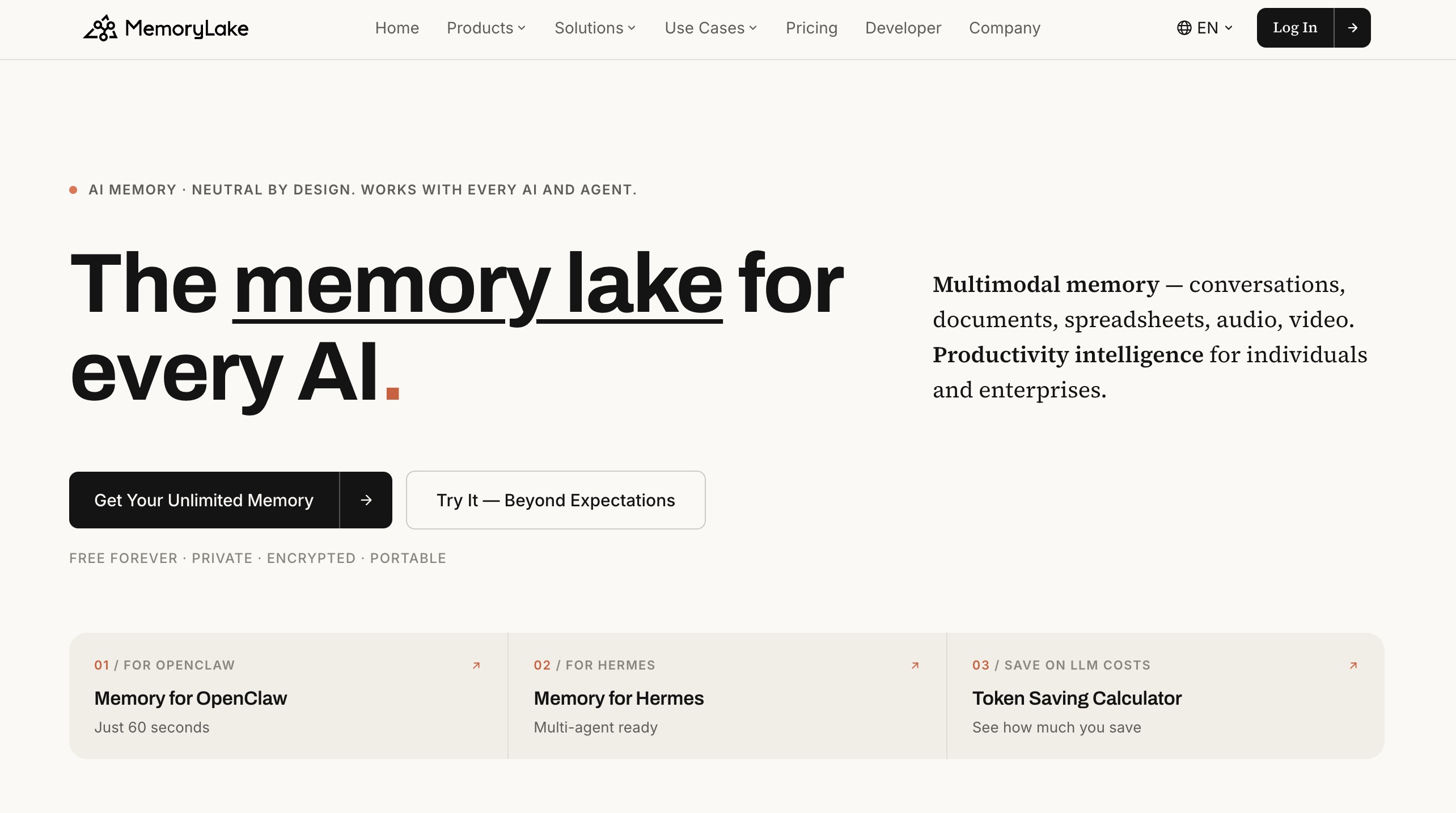
MemoryLake is an enterprise-grade AI memory infrastructure designed to help AI agents build, store, and manage long-term memory. Unlike traditional RAG systems that mainly retrieve information from static documents, MemoryLake enables AI systems to actively remember user preferences, past interactions, key facts, events, and learned workflows across sessions and platforms. It is built for developers and enterprises that want to transform AI agents from short-term assistants into intelligent, continuously improving digital partners.
Key Features
- Memory Passport: Provides a unified profile allowing users to securely share their personalized memory across different AI applications and independent agents.
- Multi-Layer Memory Management: Intelligently separates short-term working memory from long-term episodic and semantic memory.
- Multimodal Data Processing: Capable of ingesting, understanding, and retrieving text, voice, visual, and structured data natively.
- Advanced Memory Governance: Includes version control, conflict detection, and memory auditing to ensure data accuracy and resolve contradictory context automatically.
- Enterprise-Level Security: End-to-end encryption, SOC 2 Type II, and strict role-based access management.
Pros
- Moves beyond standard document retrieval into true behavioral and contextual long-term memory.
- Conflict detection prevents the AI from getting confused by changing user preferences over time.
- The Memory Passport feature offers unmatched interoperability for enterprise ecosystems.
Cons
- May be overly feature-rich for simple, lightweight hobbyist chatbot projects.
- Requires a paradigm shift in how developers architect agentic data.
Pricing
Offers a generous free tier. Pro plan starts at $19/month.
2. Pinecone
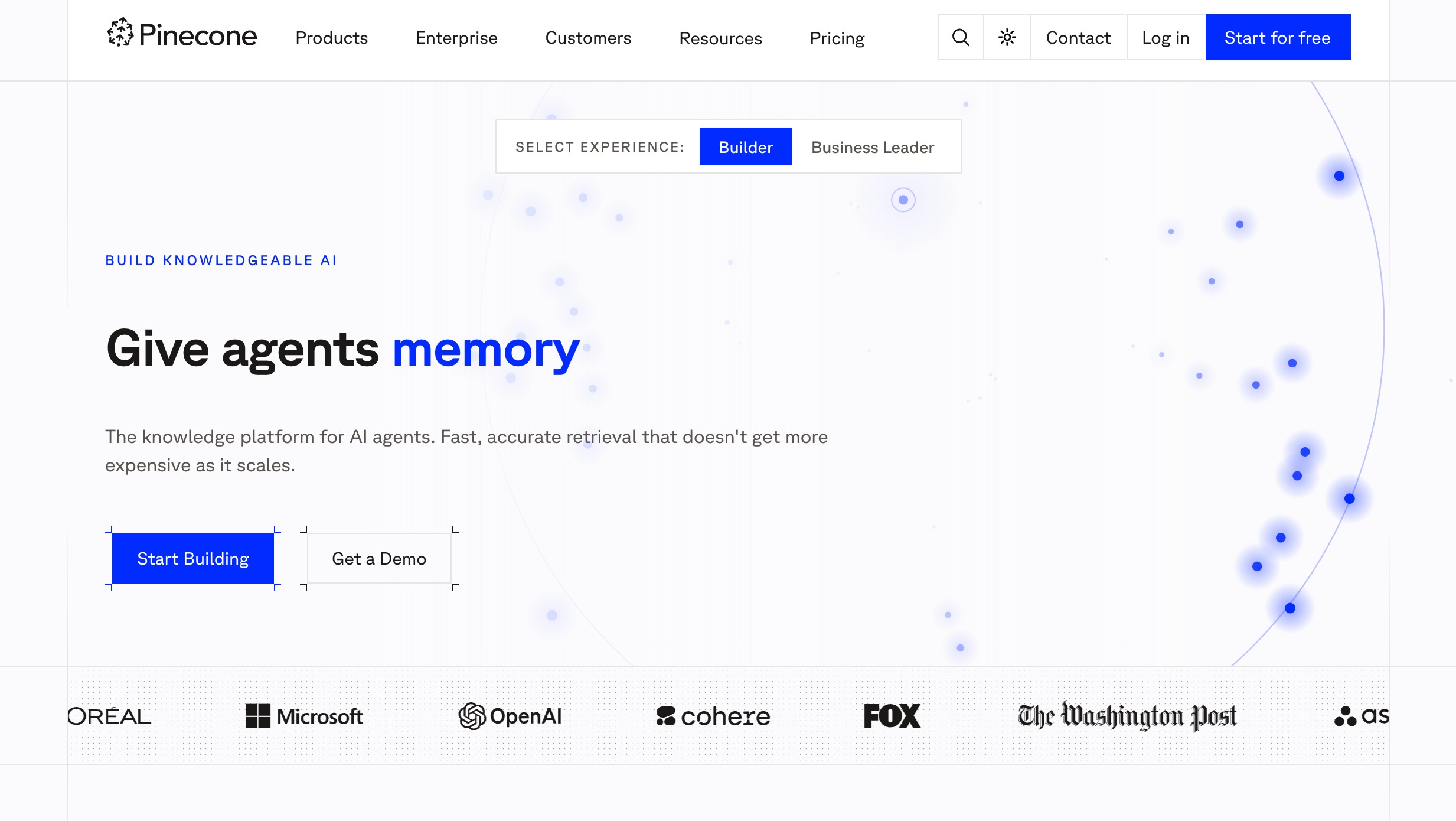
Pinecone remains a powerhouse in 2026 for raw vector database capabilities. Originally popularizing the serverless vector database model, Pinecone specializes in high-dimensional vector search at enormous scale, making it a reliable backbone for standard RAG architectures.
Key Features
- Serverless Architecture: Fully managed, meaning developers don’t worry about provisioning infrastructure.
- Real-Time Indexing: Instantly updates indexes as new vectors are added, critical for live AI applications.
- Hybrid Search: Combines semantic and keyword search via sparse and dense vectors.
Pros
- Incredibly fast retrieval times even with billions of vector embeddings.
- Seamless integrations with major LLM orchestration frameworks like LangChain and LlamaIndex.
- Highly reliable uptime and enterprise-grade compliance.
Cons
- It is strictly a vector database, lacking built-in logic for tracking user states or resolving memory conflicts.
- Costs can escalate rapidly at massive enterprise data scales.
Pricing
Start for free. Builder for solo developers and small teams starts at $20/month.
3. Weaviate
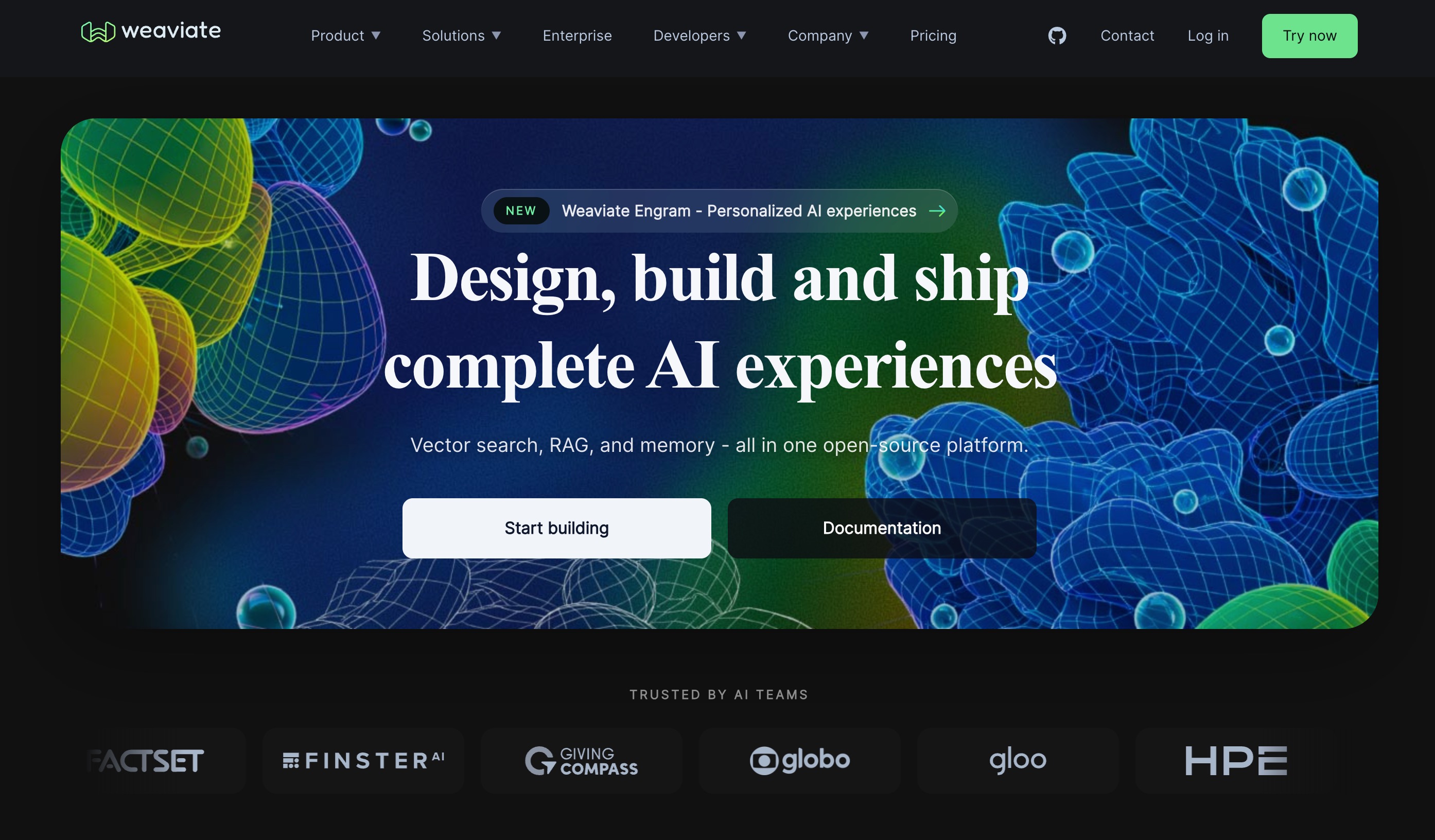
Weaviate is a robust, open-source AI-native vector database. It has maintained its popularity through 2026 by offering ultimate deployment flexibility, allowing enterprises to run it fully self-hosted, on virtual private clouds (VPCs), or via its managed SaaS platform.
Key Features
- Any-Deployment Flexibility: Can be run completely on-premises for maximum data privacy.
- Built-in Vectorization: Offers modules that automatically vectorize data on ingestion without needing third-party API calls.
- Advanced Hybrid Search: Combines scalar filtering, vector search, and BM25 text search natively.
Pros
- Open-source nature provides transparency and avoids vendor lock-in.
- Highly customizable for unique enterprise compliance architectures.
- Strong community and extensive documentation.
Cons
- Self-hosting requires dedicated DevSecOps overhead and expertise.
- Lacks native agentic memory features like cross-session user profiles out-of-the-box.
Pricing
Free trail; flex starts at $45/month.
4. Mem0
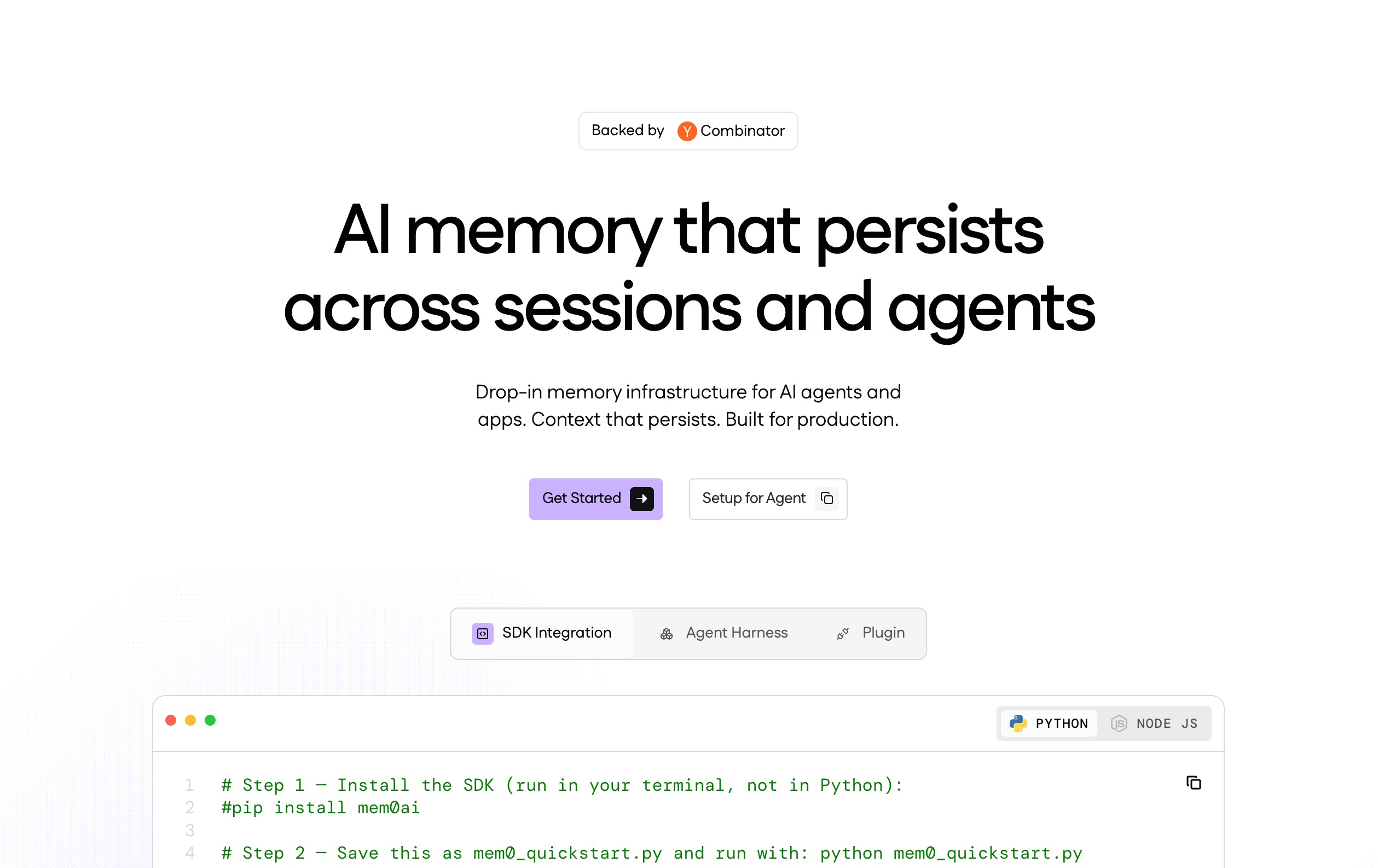
Mem0 (formerly known for pioneering early cross-session memory APIs) evolved into a dedicated developer tool specifically designed to add personalized memory to LLM applications. It acts as an abstraction layer above traditional vector databases, focusing strictly on agent user memory.
Key Features
- Cross-Session Tracking: Purpose-built to remember users across distinct chat instances.
- Simple API Integration: Allows developers to implement memory with just a few lines of code.
- Context Optimization: Automatically summarizes and prunes old interactions to save token costs.
Pros
- Very developer-friendly with an incredibly low learning curve.
- Abstracts away the complexity of managing underlying vector stores.
- Great for SaaS platforms looking to add quick personalization.
Cons
- Lacks the deep multimodal processing capabilities of comprehensive enterprise platforms.
- Governance tools (like memory version control) are relatively basic.
Pricing
Paid plan starts at $19/month.
5. Redis
Redis has long been the king of low-latency caching, and its Redis Vector Library (RedisVL) has made it a top choice for real-time AI memory in 2026. For enterprises where millisecond latency is the defining metric (e.g., financial trading AI, real-time gaming agents), Redis is unmatched.
Key Features
- In-Memory Architecture: Stores vectors directly in RAM for ultra-fast, sub-millisecond retrieval.
- Vector Search & Caching: Simultaneously handles traditional caching and semantic AI search.
- High Availability: Enterprise clustering and active-active geo-distribution.
Pros
- Unbeatable speed and throughput for real-time applications.
- Allows enterprises to consolidate caching and vector search into one stack.
- Proven reliability in global, high-stakes environments.
Cons
- RAM is expensive, making it cost-prohibitive for massive, cold-storage memory archives.
- Requires significant configuration to achieve true "agentic memory" statefulness.
Pricing
Custom pricing.
6. MongoDB
MongoDB has aggressively expanded its Atlas platform to include native Vector Search. For enterprises already using MongoDB to store their operational data, it offers an elegant solution: keeping structured operational data and AI memory embeddings in a single, unified environment.
Key Features
- Unified Data Platform: Stores JSON documents alongside vector embeddings.
- Atlas Vector Search: Seamlessly integrates semantic search into existing NoSQL queries.
- Data Sync: Automatically synchronizes edge device data with cloud AI memory.
Pros
- Eliminates the need for a separate, disconnected vector database.
- Massively simplifies the enterprise data architecture.
- Highly compliant with built-in enterprise security controls.
Cons
- Search performance, while strong, may not match the specialized raw speed of pure-play vector engines.
- Lacks the advanced agent memory conflict detection found in specialized platforms.
Pricing
Flexible pricing ranges from free tier to custom dedicated hosting; Flex at $0.011/month (up to $30/month).
7. AWS Bedrock
AWS Bedrock is Amazon’s fully managed foundation model service. By 2026, its Knowledge Bases and Memory features have become a default choice for enterprises heavily embedded in the AWS cloud ecosystem, seeking seamless compliance and integration.
Key Features
- Knowledge Bases for Bedrock: Natively connects foundation models to internal AWS data sources.
- Agentic Workflows: Built-in capabilities to execute multi-step tasks using AWS Lambda.
- IAM Integration: Governed entirely by AWS Identity and Access Management for strict security.
Pros
- Flawless integration with the rest of the AWS ecosystem (S3, RDS, OpenSearch).
- Top-tier compliance and enterprise security out-of-the-box.
- Fully managed, zero-infrastructure overhead.
Cons
- Creates deep vendor lock-in to the AWS cloud.
- The memory logic is somewhat rigid and harder to customize than standalone API solutions.
Pricing
Custom pricing.
8. Microsoft Azure AI
Azure AI, powered by its deep partnership with OpenAI, offers Azure AI Search as its primary memory engine. It is the go-to platform for Fortune 500 companies that require strict data sovereignty, enterprise-grade SLA, and native integration with the latest GPT models.
Key Features
- Azure AI Search: Advanced hybrid search engine optimized for RAG.
- Enterprise Compliance: Unmatched global compliance portfolio, including custom VNETs and private endpoints.
- Integrated OpenAI Stack: Native optimization for GPT-4/GPT-5 family models.
Pros
- Considered the safest bet for highly regulated industries (banking, healthcare).
- Incredible ecosystem tooling via Azure AI Studio.
- High precision document cracking and semantic ranking.
Cons
- The platform can be notoriously complex to navigate and configure.
- High total cost of ownership (TCO) compared to leaner SaaS alternatives.
Pricing
Custom pricing.
9. Supermemory
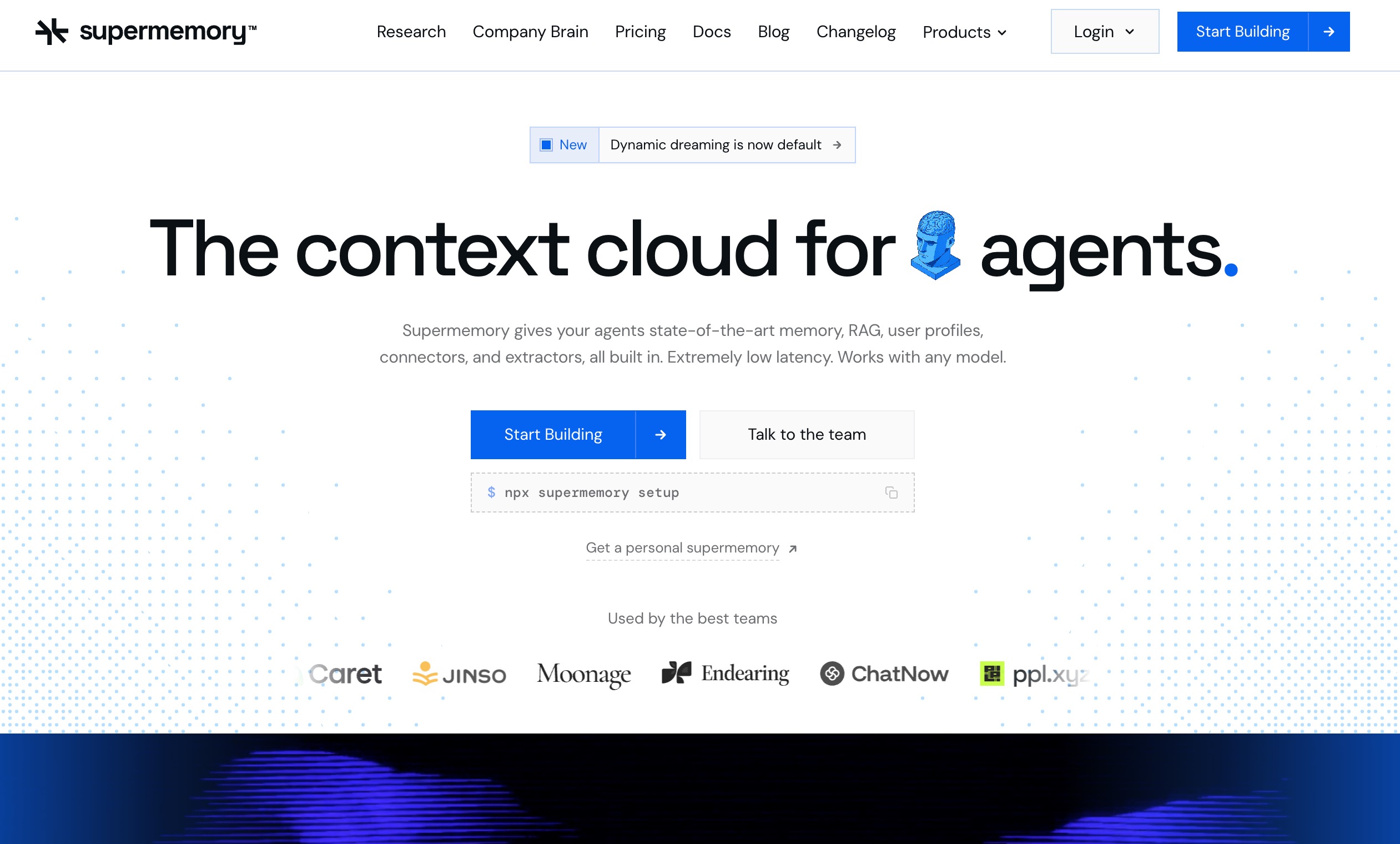
Supermemory positions itself as an "AI Second Brain." While it caters heavily to prosumers and small teams, its enterprise tier has gained traction in 2026 as a shared contextual workspace where teams can bookmark, save, and retrieve multi-format information natively via AI.
Key Features
- Web and App Bookmarking: Easily ingest context from web pages, PDFs, and internal tools.
- Intuitive UI/UX: Features a highly visual canvas for exploring AI memory connections.
- Team Workspaces: Shared AI memory pools for collaborative enterprise projects.
Pros
- Phenomenal user experience and easy onboarding.
- Excellent for unstructured research and knowledge management.
- Bridges the gap between note-taking apps and AI retrieval.
Cons
- Not designed for autonomous, backend API-driven agentic memory.
- Lacks the heavy compliance certifications required by strict enterprise sectors.
Pricing
Free trail; paid plan starts at $19/month.
10. Pieces
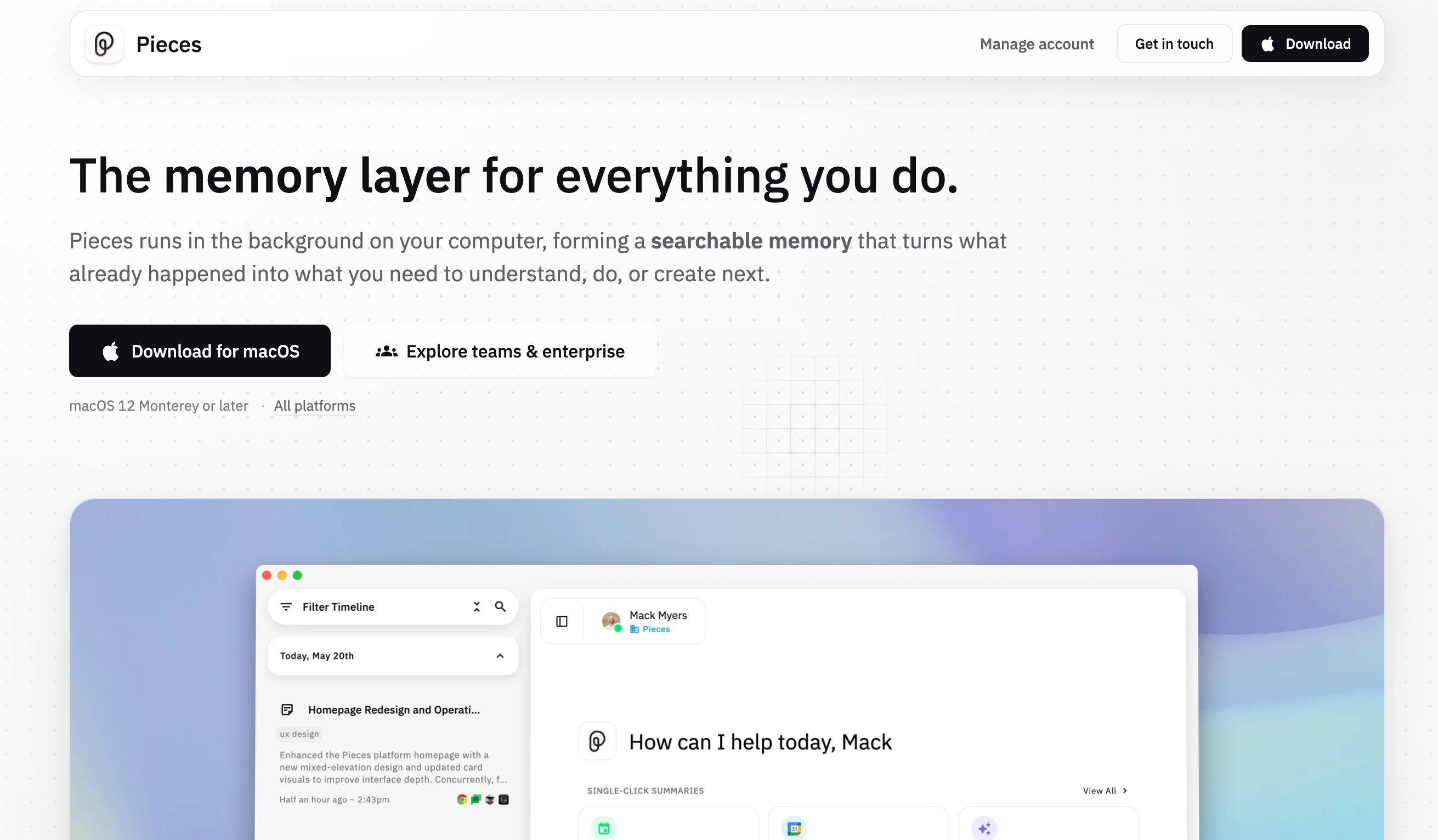
Pieces is a unique enterprise AI memory tool focused specifically on developer workflows. It acts as an intelligent context engine that lives on-device, remembering code snippets, browser research, and IDE states to assist developers without sending sensitive proprietary code to the cloud.
Key Features
- On-Device AI: Runs local ML models to ensure zero data exfiltration of secure enterprise code.
- Workflow Context Management: Remembers the exact state of your IDE, browser, and terminal.
- Snippet Enrichment: Automatically tags and generates descriptions for saved code.
Pros
- Unrivaled privacy since processing can be kept entirely on local hardware.
- Dramatically boosts developer productivity by remembering micro-contexts.
- Excellent integration with VS Code, JetBrains, and Chrome.
Cons
- Extremely niche use-case (developer productivity), not a general-purpose AI agent memory backend.
- Memory is siloed locally unless specifically synced via cloud configurations.
Pricing
Custom pricing.
How to Choose an Enterprise AI Memory Platform
Selecting the right platform dictates whether your AI agents will be frustratingly repetitive or seamlessly intelligent. When evaluating the market in 2026, consider the following structured approach:
- Determine Your Architecture (RAG vs. Agentic Memory): If you only need to retrieve static company documents, standard vector stores like Pinecone or MongoDB are sufficient. However, if your goal is dynamic, autonomous agents that learn over time, you need a specialized memory infrastructure.
- Evaluate Security and Compliance: Enterprises cannot compromise on security. Ensure the platform holds SOC 2 Type II, HIPAA, or GDPR certifications based on your region, like Azure AI or AWS Bedrock.
- Consider Vendor Lock-in: Cloud providers like AWS and Azure offer great integration but tie you to their ecosystem. Open-source solutions like Weaviate offer freedom but demand maintenance.
- Why MemoryLake Stands Out: While most platforms evaluate memory purely as "data storage," MemoryLake treats memory as a living entity. It is the only platform that offers a unified Memory Passport, enabling fluid user experiences across multiple disconnected AI apps. Furthermore, its advanced memory governance, which includes version control and conflict detection, completely solves the issue of AI hallucination caused by overlapping or outdated user preferences. For enterprises looking to build continuously improving digital partners rather than short-term assistants, MemoryLake is objectively the most complete and forward-thinking architecture available.
Which Enterprise AI Memory Platform Is Best
There is no single "one-size-fits-all" solution, as the best platform depends heavily on your specific enterprise needs. Here is how the winners break down by category:
- Best for Raw Scale and Speed: Pinecone and Redis. If you are building a massive application that needs to retrieve basic vectors in milliseconds, these platforms are unrivaled in pure performance.
- Best for Cloud Ecosystem Lock-in: Microsoft Azure AI and AWS Bedrock. For highly regulated corporations already deeply embedded in Microsoft or Amazon infrastructure, these offer the safest, most compliant paths forward.
- Best for Developer Code Management: Pieces. If your primary goal is to boost internal software engineering productivity with local, secure contextual memory, Pieces takes the crown.
- Best Overall for True Enterprise Agentic Memory: MemoryLake. When it comes to transforming LLMs into intelligent, stateful digital partners, MemoryLake wins outright. Its multimodal processing, memory conflict detection, and enterprise governance provide the missing link that standard vector databases simply cannot offer.
Conclusion
As AI transitions from generating text to autonomously executing complex enterprise workflows, long-term memory is no longer an optional feature—it is the foundational infrastructure of the future. While platforms like Pinecone, MongoDB, and Azure offer excellent database capabilities, they often fall short of delivering true, stateful agentic continuity.
To truly future-proof your organization, you need an infrastructure designed specifically for dynamic, evolving intelligence. With its groundbreaking Memory Passport, multi-layer memory management, and rigorous governance, MemoryLake emerges as the premier choice. We highly recommend adopting MemoryLake to transform your AI systems into reliable, deeply personalized, and continuously improving digital partners.