
What Are Memory & Context Tools for Cursor
Memory and context tools are systems, usually exposed through the Model Context Protocol (MCP) or a dedicated API, that let Cursor persist and recall information across sessions, projects, and sometimes across other AI apps entirely. In practice, they typically offer:
- Cross-session recall – Cursor can pull up decisions, bugs, and conventions from previous sessions instead of starting cold.
- Fact and preference storage – user preferences, architectural decisions, and coding standards are captured automatically or explicitly and kept up to date.
- Semantic or graph-based retrieval – rather than exact keyword matching, memories are retrieved by meaning, relationship, or relevance to the current task.
- Conflict resolution – when a stored fact changes (a library gets swapped, a decision gets reversed), the system updates or invalidates the old memory instead of returning stale context.
- Portability – some tools let memory travel with the user across Cursor, Claude, ChatGPT, and other MCP-compatible clients, rather than being locked into one IDE.
This is different from a vector database used purely for RAG over documentation. Memory tools are built specifically to track evolving, personal, and workflow-level knowledge, not just static reference material.
How We Evaluated These Cursor Memory & Context Tools
To rank these tools fairly, we looked at six criteria that matter most for day-to-day Cursor usage:
- Integration friction – how quickly a tool can be wired into Cursor via MCP, and whether it needs extra infrastructure.
- Memory architecture – whether the tool uses flat vector storage, a knowledge graph, layered memory tiers, or a hybrid approach.
- Retrieval accuracy and speed – how relevant and fast the recalled context is, based on published benchmarks and hands-on testing where available.
- Governance and security – version control, conflict detection, access control, and compliance certifications for team and enterprise use.
- Portability across tools – whether memory is trapped inside one app or can follow the user across their whole AI stack.
- Pricing transparency – how predictable the cost is as usage scales, from free/local options to enterprise contracts.
Quick Comparison: 10 Best Memory & Context Tools for Cursor
| Tool | Best For | Memory Architecture | Starting Price |
|---|---|---|---|
| MemoryLake | Cross-platform AI Memory | Multi-layer memory + Memory Passport | $19/month |
| Mem0 | Fast integration, broad ecosystem support | Vector store + optional graph | $19/month |
| Supermemory | High-throughput developer memory API | Five-layer context stack (graph + profiles) | $19/month |
| Zep | Time-aware, relationship-heavy context | Temporal knowledge graph (Graphiti) | $125/month |
| LangMem | Teams fully committed to LangGraph | Flat key-value + vector search | Open Source |
| Cortex | Fully local, privacy-first individuals | 4-tier local memory + people graph | Open Source |
| Second Brain | Free, self-hosted personal memory | Vector search on Cloudflare stack | Open Source |
| Weaviate | Teams already on Weaviate infrastructure | Vector database + managed memory layer | $45/month |
| Mnemon | Local-first layered memory, zero cloud | 4 typed memory layers (SQLite) | Open Source |
| Cognee | Open-source graph-vector hybrid pipelines | Graph-vector hybrid (ECL pipeline) | $2.50/1M Tokens |
1. MemoryLake
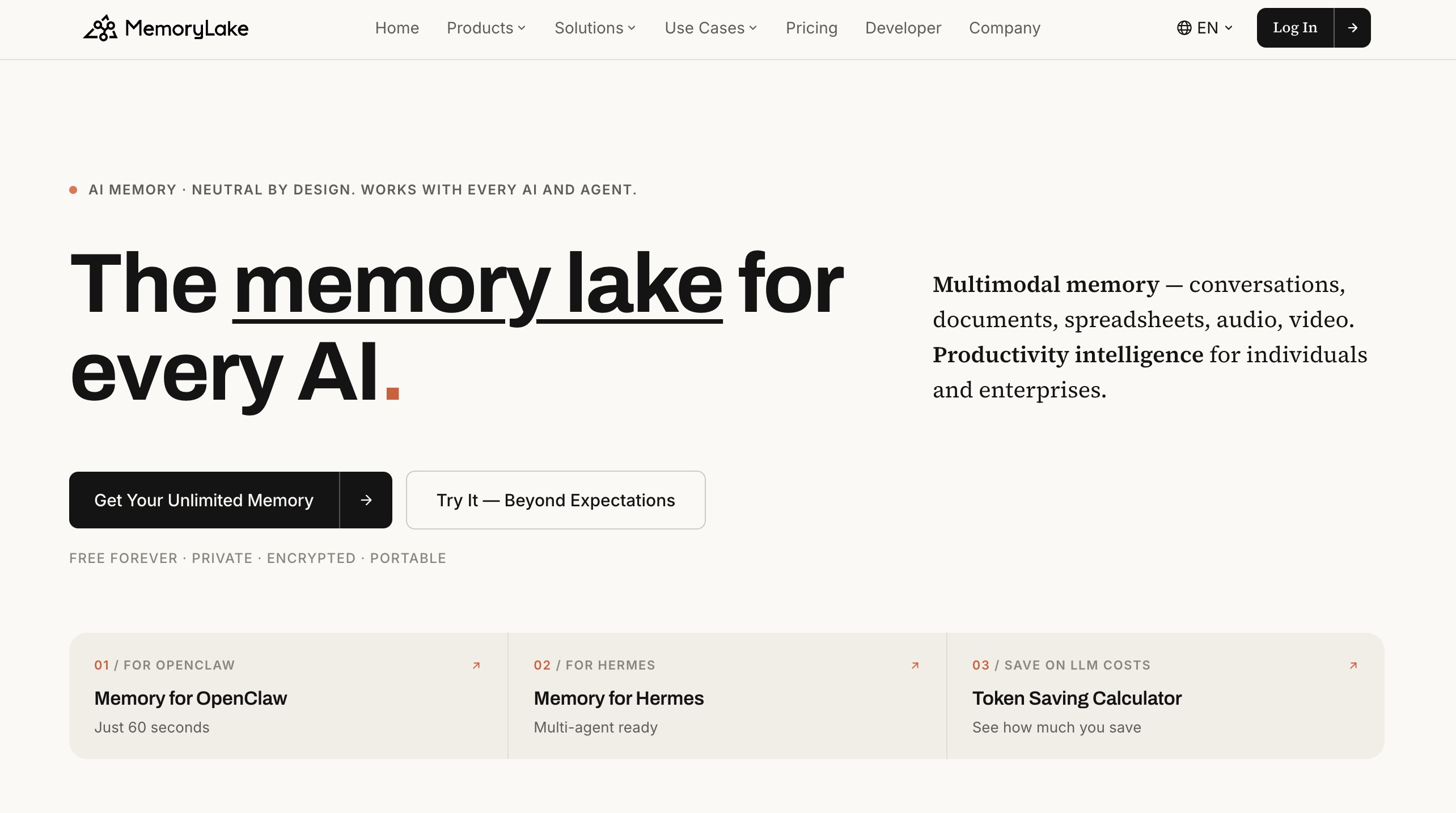
MemoryLake is an enterprise-grade AI memory infrastructure built to help AI agents build, store, and manage long-term memory rather than just retrieve documents. Where traditional RAG systems pull from static files, MemoryLake lets Cursor and other AI applications remember user preferences, past interactions, key facts, events, and learned workflows across sessions, and across platforms, thanks to its unified Memory Passport. For a Cursor user working across multiple projects, teams, and AI tools, that portability is the difference between memory that's trapped in one IDE and memory that actually travels with you.
Key Features
- Multi-layer memory management that separates short-term context from durable, long-term knowledge
- Memory Passport for sharing personalized memory across Cursor, other IDEs, and AI applications
- Multimodal data processing for code, documents, and conversational context
- Memory governance including version control and conflict detection, so outdated facts don't silently override current ones
- Enterprise-level security built for organizations, not just individual developers
Pros
- Purpose-built for turning agents into continuously improving digital partners, not just session-bound assistants
- Governance features (versioning, conflict detection) make it far more auditable than a plain vector store
- Memory Passport avoids vendor lock-in by making memory portable across tools
- Scales from individual developers to enterprise-wide deployments
Cons
- The governance and enterprise tooling may be more than a solo hobbyist needs
- As a newer entrant in the category, its ecosystem of community integrations is still growing
Pricing
Free trail; paid plans start at $19/month.
2. Mem0
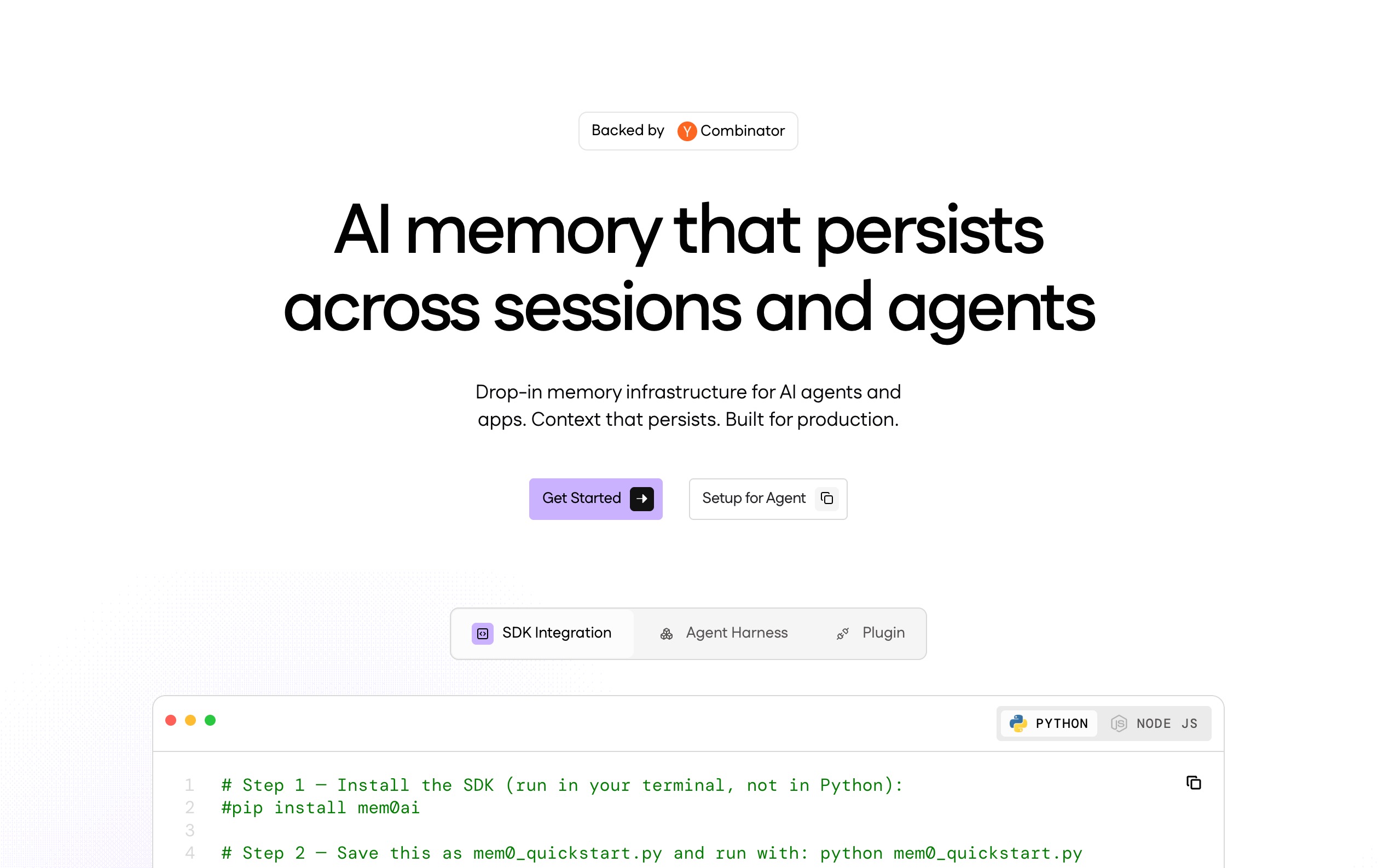
Mem0 is one of the most widely adopted memory layers for AI agents, with a large open-source community and native integrations across popular agent frameworks. It adds a persistent memory layer to any AI agent or assistant with as little as three lines of code, using LLM-based extraction and semantic search retrieval.
Key Features
- Vector-based semantic memory with an optional knowledge graph layer
- Support for 19 vector store backends and native integrations for popular agent frameworks
- Three-line SDK integration for adding memory to an existing agent
- Works across OpenAI, Anthropic, and other model providers
Pros
- Very low integration friction, making it easy to bolt onto an existing Cursor MCP setup
- Large, active community with extensive documentation
- Enterprise tier offers SOC 2, HIPAA, and GDPR compliance with full audit logging
Cons
- Graph memory features are only available on the higher-priced Pro tier
- A high-severity security vulnerability was disclosed in 2026 affecting certain database backends, so teams should verify patch status before production use
Pricing
Free tier; paid plans start around $19/month.
3. Supermemory
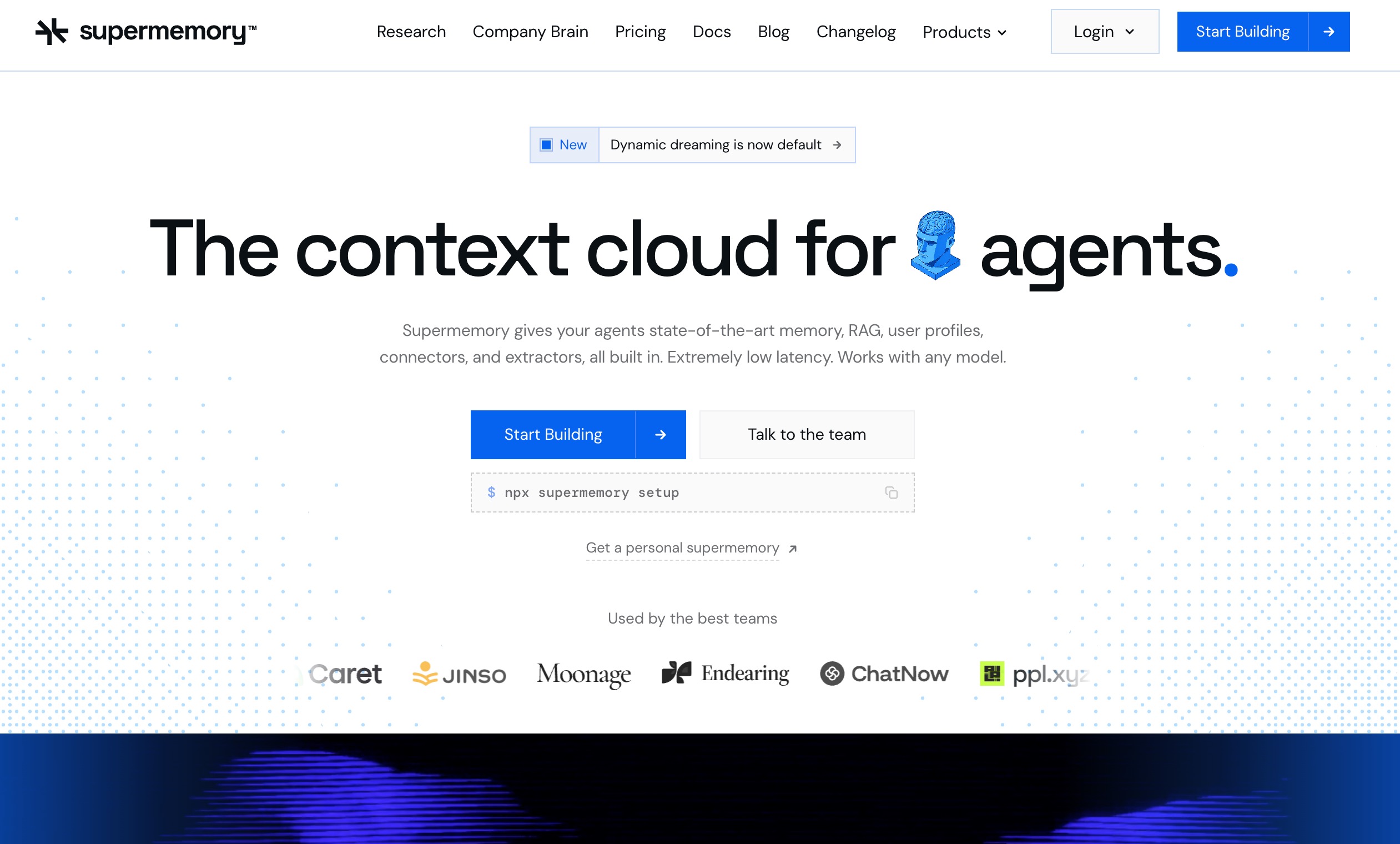
Supermemory positions itself as a full context infrastructure platform rather than a simple memory wrapper. Its memory system stores facts that evolve, merge, contradict, and can be forgotten across sessions, aiming to go beyond flat vector storage.
Key Features
- Five integrated memory layers: user profiles, memory graphs, intelligent retrieval, smart extractors, and data connectors
- Sub-300ms recall with high accuracy on long-context memory benchmarks
- Token-based billing that deduplicates repeated content so users aren't billed twice for the same context
- Works as an MCP server alongside a developer API and consumer app
Pros
- Built for high-throughput, production-scale agent workloads
- Deduplication pricing model can meaningfully reduce costs for repetitive workflows
- Broad platform support beyond just Cursor, including Claude Code integrations
Cons
- Token-based billing can be harder to forecast than a flat monthly plan for new users
- The richer graph and profile features have a learning curve compared to a simple key-value store
Pricing
Free plan available for development; paid plans start around $19/month.
4. Zep
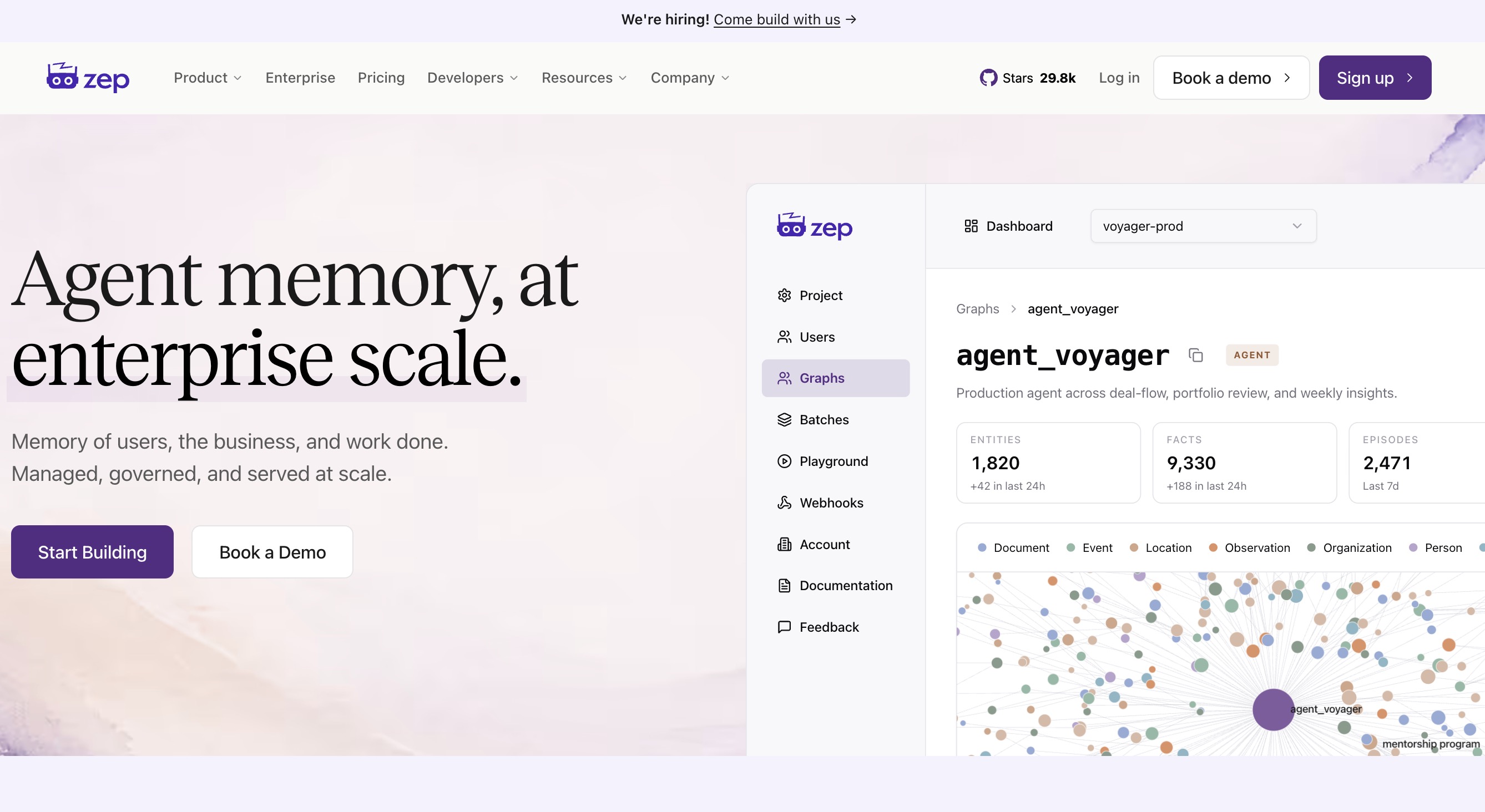
Zep takes a fundamentally different approach from vector-first tools by building memory around a temporal knowledge graph. It automatically extracts entities, relationships, and facts from conversations and business data, then builds a unified context graph that evolves as information changes.
Key Features
- Temporal knowledge graph that tracks how facts change over time, integrating structured business data with conversational history
- Automatic invalidation of superseded facts while preserving historical context and provenance
- MCP server support alongside Python, TypeScript, and Go SDKs
- Open-source Graphiti engine, which can be self-hosted independently of the managed Zep service
Pros
- Best-in-class for agents that need to reason about relationships and how facts evolve over time
- SOC 2 Type II and HIPAA certified, suiting regulated enterprise environments
- Sub-200ms retrieval latency at the 95th percentile
Cons
- Considered the most complex option in the category, with a steep learning curve around episodes, facts, and context templates
- The managed product no longer offers a self-hosted Community Edition
- Credit-based pricing requires extra math to predict actual monthly costs
Pricing
Free tier available; paid plans start around $125/month, billed lower on an annual basis.
5. LangMem
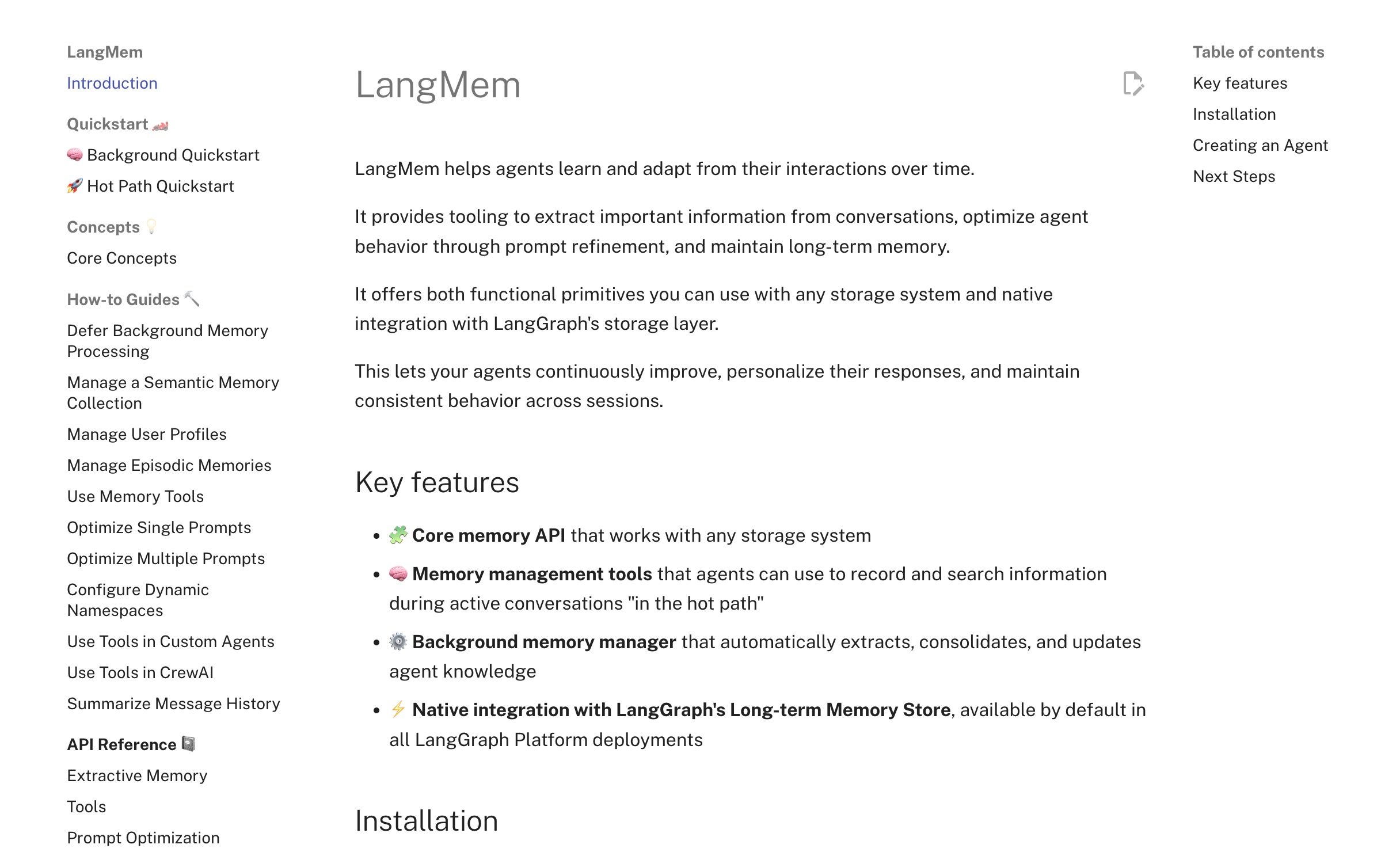
LangMem is an open-source library that gives LLM agents long-term memory, built for developers working with LangGraph or custom agents. It's the natural choice for teams already standardized on the LangChain ecosystem.
Key Features
- Tools for storing important information during conversations, searching memory when relevant, and running background memory consolidation
- Native integration with LangGraph's memory store, with the option to plug into Postgres, Redis, or in-memory stores
- A distinctive prompt-optimization feature not commonly found in competing tools
- Fully self-managed — no third-party service required
Pros
- Completely free and open source, with no API keys or monthly bills required
- Deep, native fit for teams already building on LangGraph
- Full control over storage backend and infrastructure
Cons
- Designed specifically for LangGraph, so using it outside that ecosystem means fighting the library rather than benefiting from it
- Python only, with no JavaScript or TypeScript SDK
- No built-in knowledge graph — memories are stored as flat key-value items with vector search
Pricing
Free and open source under the MIT license.
6. Cortex
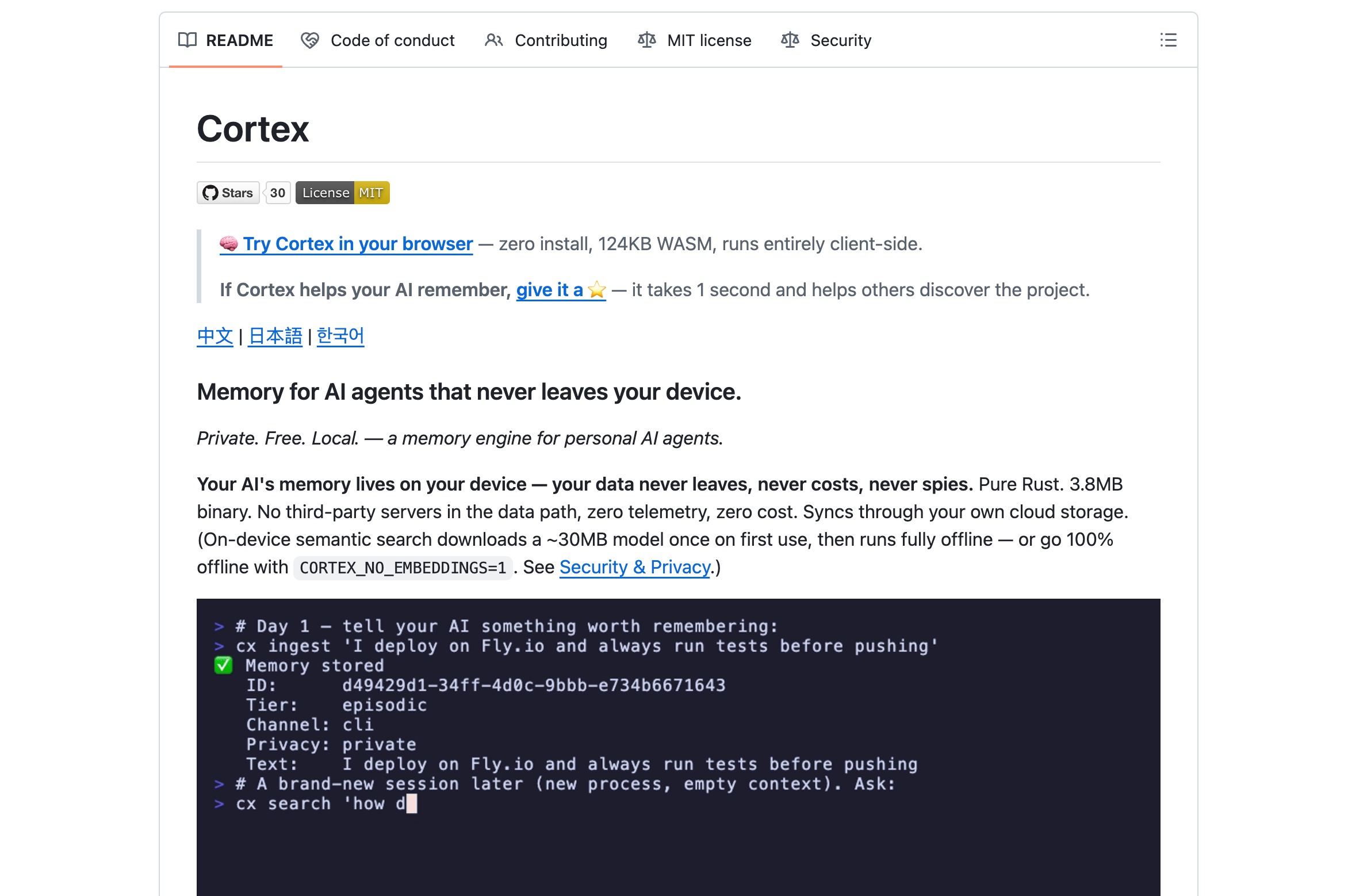
Cortex is a local-first, end-to-end-encrypted, zero-telemetry memory engine written in Rust that gives Claude and any MCP client persistent, cross-session memory. For Cursor users who want memory without sending any data to the cloud, it's one of the most privacy-focused options available.
Key Features
- Four memory tiers with multi-signal retrieval and self-correcting, Bayesian-style belief updates
- A cross-channel people graph and automatic contradiction detection between stored facts
- Sub-millisecond local operations, reported as roughly 528 times faster than cloud memory APIs
- Memories stored in a local SQLite file that never leaves the device
Pros
- Complete data privacy since nothing is sent to a remote server
- Extremely fast local read/write performance
- Drop-in MCP server support for Claude and other MCP clients
Cons
- No built-in team-sharing or multi-user collaboration model
- Being a smaller, community-maintained project, it lacks the enterprise support layer of larger vendors
Pricing
Free and open source.
7. Second Brain
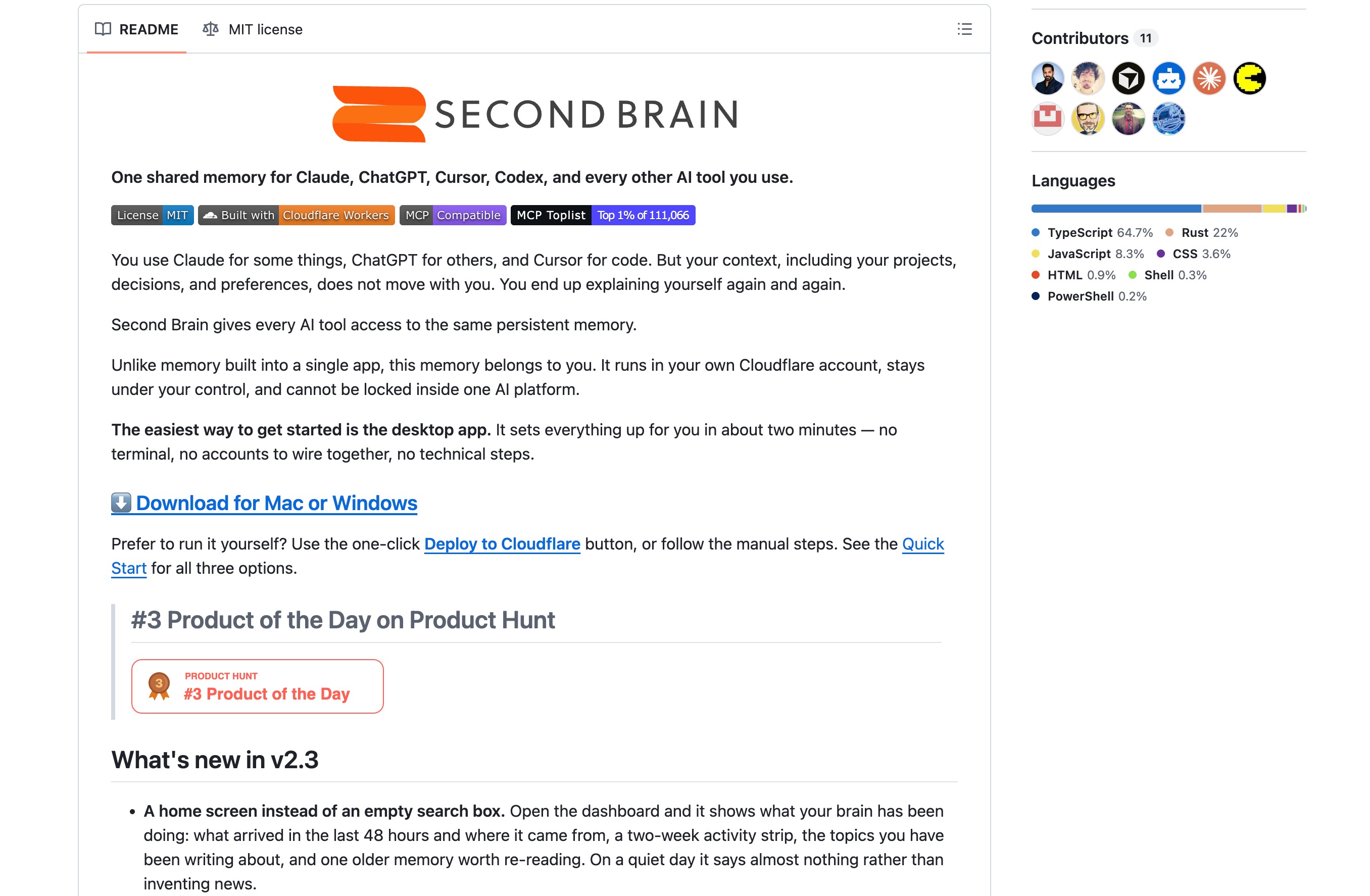
Second Brain is a self-hosted memory layer that works with Claude, ChatGPT, Cursor, and any MCP client, letting users store context once and recall it by meaning instead of keywords. It's a favorite among developers who want a genuinely free, no-lock-in memory layer.
Key Features
- Five core tools — remember, recall, list\_recent, forget, and append — exposed through MCP
- Built-in duplicate detection and semantic search alongside a web UI
- Built on Cloudflare Workers, D1, and Vectorize, with one-click free-tier deployment
- MIT licensed, with your data remaining entirely yours
Pros
- Genuinely free to run on Cloudflare's free tier
- Works across multiple AI clients, not just Cursor
- Simple, minimal tool surface that's easy to reason about
Cons
- Heavy vector processing is bounded by the limits of Cloudflare's Worker runtime
- Lacks the deeper graph reasoning or governance layers found in enterprise tools
Pricing
Open source.
8. Weaviate
Weaviate is best known as an open-source vector database, but its managed Engram service turns it into a purpose-built memory layer. Engram runs an asynchronous pipeline that extracts useful memories, checks them against existing ones, and rewrites, merges, keeps, or deletes records.

Key Features
- Scopes for data isolation when privacy matters and for context sharing when orchestration is necessary
- Comparison of new and old memory data to capture dynamic, changing facts rather than static snapshots
- Built-in vector generation from text, images, and more, without requiring an external embedding pipeline
- Deployment-agnostic, open-source core with managed hosting available
Pros
- Backed by a mature platform with over 20 million open-source downloads
- Strong choice for teams that already rely on Weaviate for RAG and want memory on the same infrastructure
- Good multimodal support for teams working with more than plain text
Cons
- Best suited to teams with existing vector database experience; the learning curve is steeper for beginners
- Memory-specific features (Engram) are newer than Weaviate's long-standing vector search core
Pricing
Free open-source tier; flex starts at $45/month.
9. Mnemon
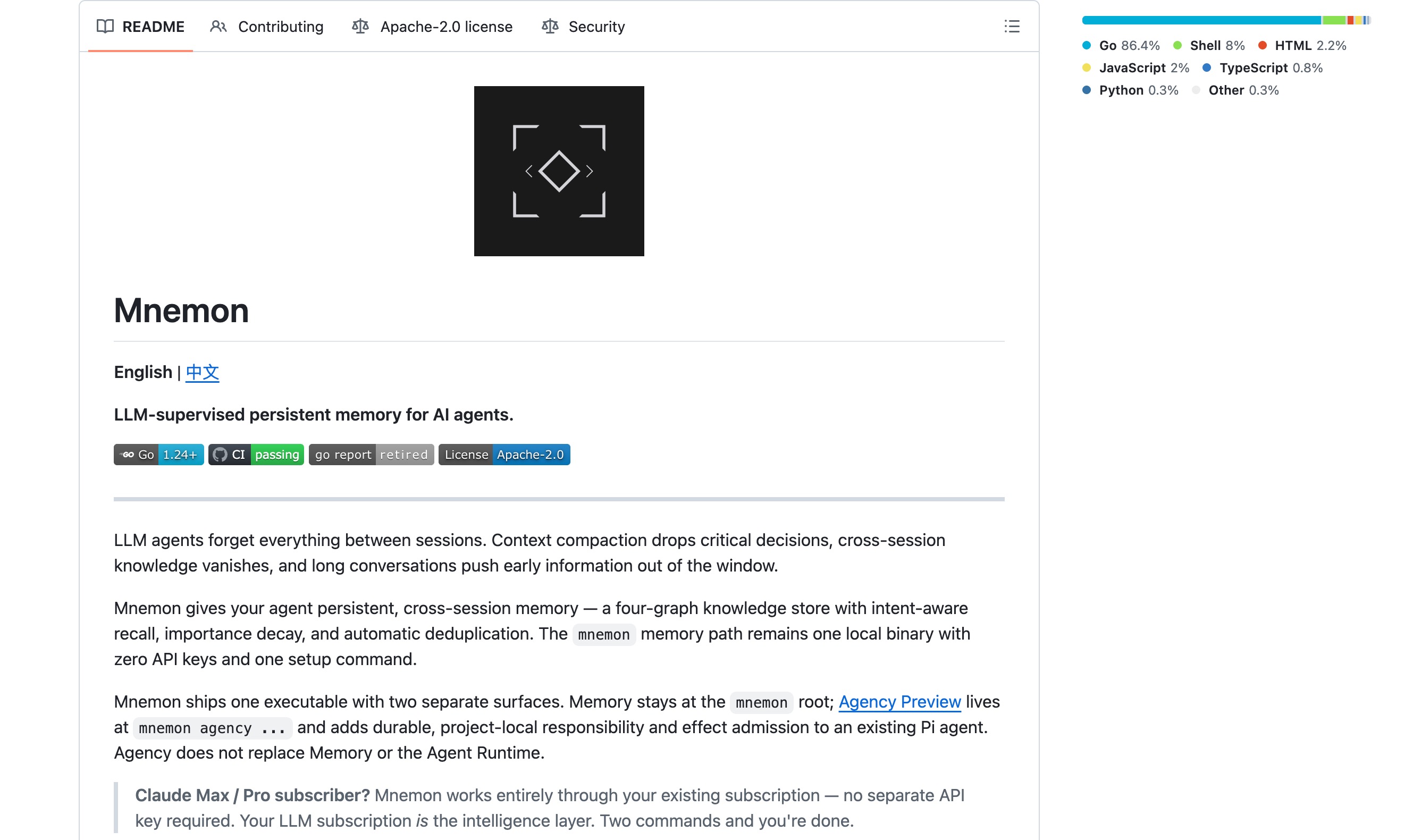
Mnemon gives any MCP-compatible client, including Cursor, a structured long-term memory backed by a single local SQLite database, with no API keys, no cloud, and no telemetry.
Key Features
- Four distinct memory layers — Episodic, Semantic, Procedural, and Resource — each with its own lifetime and access pattern
- Hybrid BM25 and vector semantic search with composite scoring
- Fact versioning with superseding chains so outdated facts are tracked rather than silently overwritten
- An included dashboard for visualizing vault health and search
Pros
- Zero cloud dependency and a single-file setup that installs in one command
- Layered memory design avoids treating a passing note the same as a permanent coding rule
- Actively maintained with growing support for multiple coding agents beyond Cursor
Cons
- Local-only design means no built-in team sharing without extra setup
- Smaller community than larger commercial players like Mem0 or Zep
Pricing
Free and open source.
10. Cognee
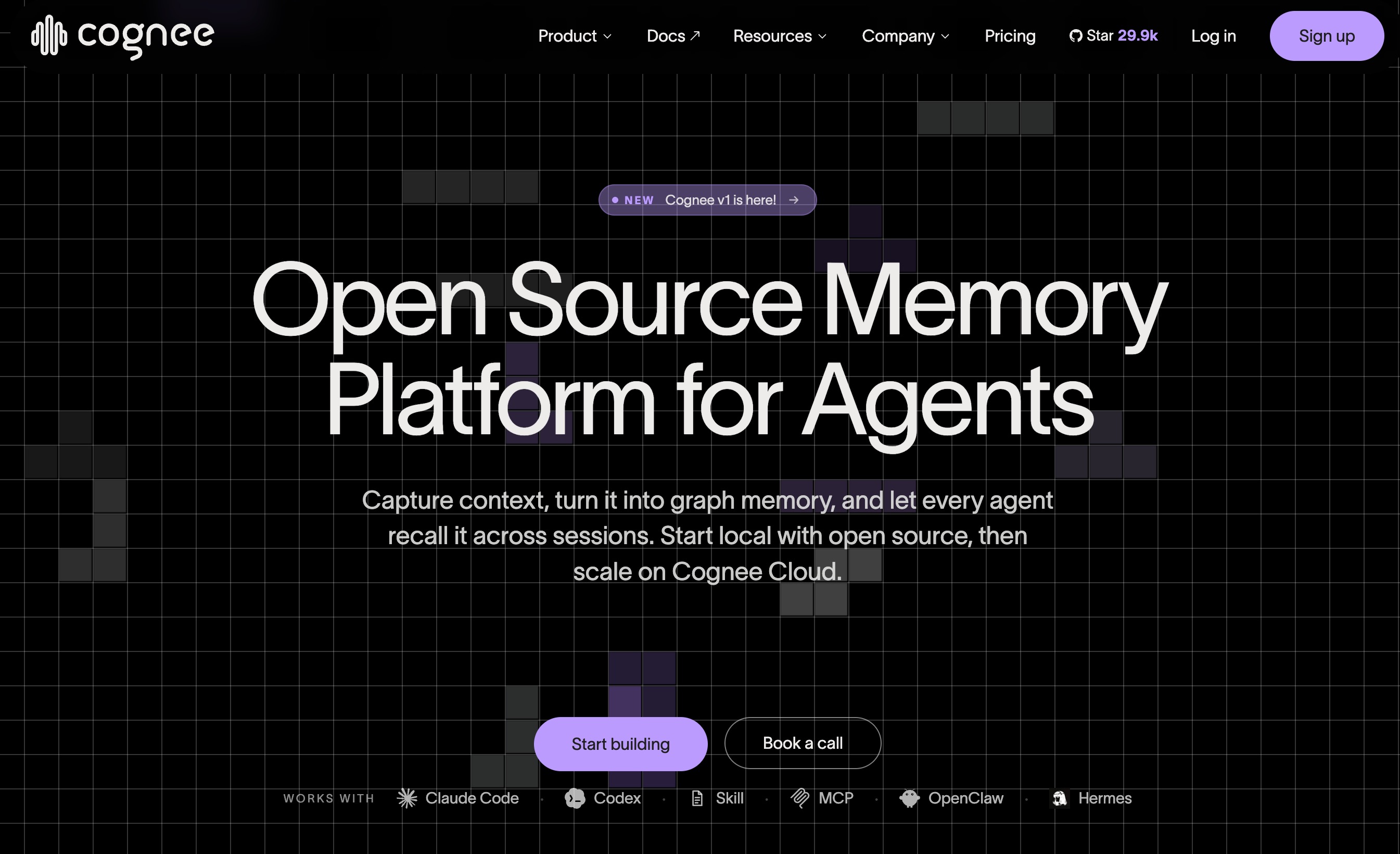
Cognee is an open-source, graph-vector hybrid memory framework aimed at teams that want a self-hosted alternative to paywalled graph features. It offers a hybrid graph-vector architecture under the Apache-2.0 license with support for multiple storage backends and agent orchestration frameworks.
Key Features
- Fourteen retrieval modes and a self-improving memory pipeline
- Cross-session persistence and multi-tenant isolation so memory from one user doesn't contaminate another's retrieval
- A standalone MCP server available for Cursor, Claude Desktop, and Cline
- Over thirty data source connectors, including files, databases, and REST APIs
Pros
- Ranked highly among open-source memory frameworks for its hybrid architecture and retrieval flexibility
- Pluggable storage backends give teams control over infrastructure choices
- Strong fit for teams migrating off paywalled graph features in other tools
Cons
- Self-hosting a graph-vector hybrid system takes more setup effort than a plug-and-play cloud API
- Documentation and tooling are less polished than commercial competitors
Pricing
Free and open source.
How to Choose the Right Memory & Context Tool for Cursor
- If you need pure local privacy and don't mind managing your own infrastructure, Cortex or Mnemon are solid, genuinely free choices — but you'll be on your own for scaling, team sharing, and long-term support.
- If you're deep in the LangGraph ecosystem, LangMem is the natural default, though it's worth remembering it's Python-only and lacks graph-based reasoning.
- If temporal, relationship-aware reasoning is critical — think compliance, evolving customer records, or long-running projects — Zep's knowledge graph is genuinely differentiated, at the cost of complexity and cloud-only hosting.
- If you want the fastest path to "just works" memory with a large community, Mem0 remains a strong, low-friction option, provided you're comfortable with its Pro-tier paywall for graph features.
- If you want raw vector infrastructure you already trust, Weaviate's Engram is a sensible extension of an existing investment.
- If you're an individual developer who wants something free and self-hosted, Second Brain for AI and Cognee both deliver real value without a subscription.
That said, for developers and teams who want memory that's genuinely enterprise-ready, not just "good enough for a demo", MemoryLake stands out from the rest of this list. Most of the tools above solve one piece of the problem well: Cortex and Mnemon nail local privacy, Zep nails temporal reasoning, Mem0 nails integration speed. MemoryLake is built to bring these pieces together in one governed system — multi-layer memory, multimodal data handling, version control, conflict detection, and a portable Memory Passport that lets your context follow you between Cursor and every other AI tool you use. If you're evaluating memory infrastructure not just for a side project but for a team or company that needs its AI agents to actually improve over time, reliably, securely, and consistently, MemoryLake is the tool built for that job.
Final Verdict
There's no single "best" memory tool for every Cursor user, a solo developer optimizing for privacy will make a different call than an engineering team standardizing memory across dozens of agents. But if you're looking for the option most likely to scale with you, from a single Cursor project to a full organization's worth of AI agents, MemoryLake's combination of governance, portability, and multi-layer architecture makes it the strongest all-around pick on this list. If persistent, trustworthy, cross-platform memory is the goal, it's worth starting your evaluation there.