
Why Does Cline Need Memory
Integrating a dedicated memory setup into Cline fundamentally changes how the agent interacts with your development environment. Here is why memory is absolutely essential:
- Persistent Codebase Knowledge: Instead of rescanning massive directories or relying solely on a limited context window, memory allows Cline to remember where key components are located and how they interact.
- User Preference Retention: Memory ensures Cline consistently adheres to your specific formatting rules, preferred libraries, and architectural styles without needing repetitive prompting.
- Workflow Automation Continuation: Complex debugging or refactoring tasks often span multiple days or sessions. Memory allows Cline to pick up exactly where it left off, recalling previously attempted solutions and known errors.
- Reduced Token Consumption: By retrieving only the exact historical context needed from a database rather than repeatedly passing entire documents to the LLM, you significantly cut down on costly API token usage.
- Cross-Session Learning: When an agent learns a new quirk about your API or deployment environment, memory ensures that this lesson is saved permanently for all future interactions.
How We Evaluated Cline Memory Setups
To determine the best memory infrastructures for Cline, we rigorously assessed several platforms against the unique demands of autonomous coding agents. We used the following criteria:
- Contextual Accuracy: We tested how accurately the system retrieves relevant historical context based on a developer’s current prompt without pulling in noisy, irrelevant data.
- Integration Flexibility: A good memory setup must easily connect to Cline’s workflow via APIs, local databases, or lightweight SDKs without requiring major architectural overhauls.
- Scalability for Large Projects: We evaluated whether the memory infrastructure could handle enterprise-scale codebases containing millions of lines of code and massive documentation libraries.
- Data Governance and Security: Codebases contain highly sensitive intellectual property. We prioritized setups that offer secure data storage, local deployment options, and strict access controls.
- Multimodal Capabilities: We looked at whether the tool could process and remember not just raw text, but structured code, logs, and visual architecture diagrams.
Comparison of the 8 Best Memory Setups
| Product | Best For | Core Architecture | Pricing |
|---|---|---|---|
| MemoryLake | Enterprise & Cross-Platform Continuity | Multi-layer, Multimodal Infrastructure | $19/month |
| Mem0 | Personalization & Fast Setup | User-centric Memory API | $19/month |
| Zep | Low-latency Application Memory | Temporal Knowledge Graphs | $125/month |
| Supermemory | Second-Brain Enthusiasts | Vector Database UI | $19/month |
| Evermind | Lightweight AI Companions | Contextual Tagging System | Custom |
| LangChain | Deep Custom Framework Integration | Modular Buffer/Vector Memory | $39/month |
| Letta | Bypassing Context Limits | OS-style Tiered Memory Paging | Open Source |
| Cognee | Complex Relational Logic | Graph-based Cognitive Memory | Open Source / $2.50/1M Tokens |
1. MemoryLake
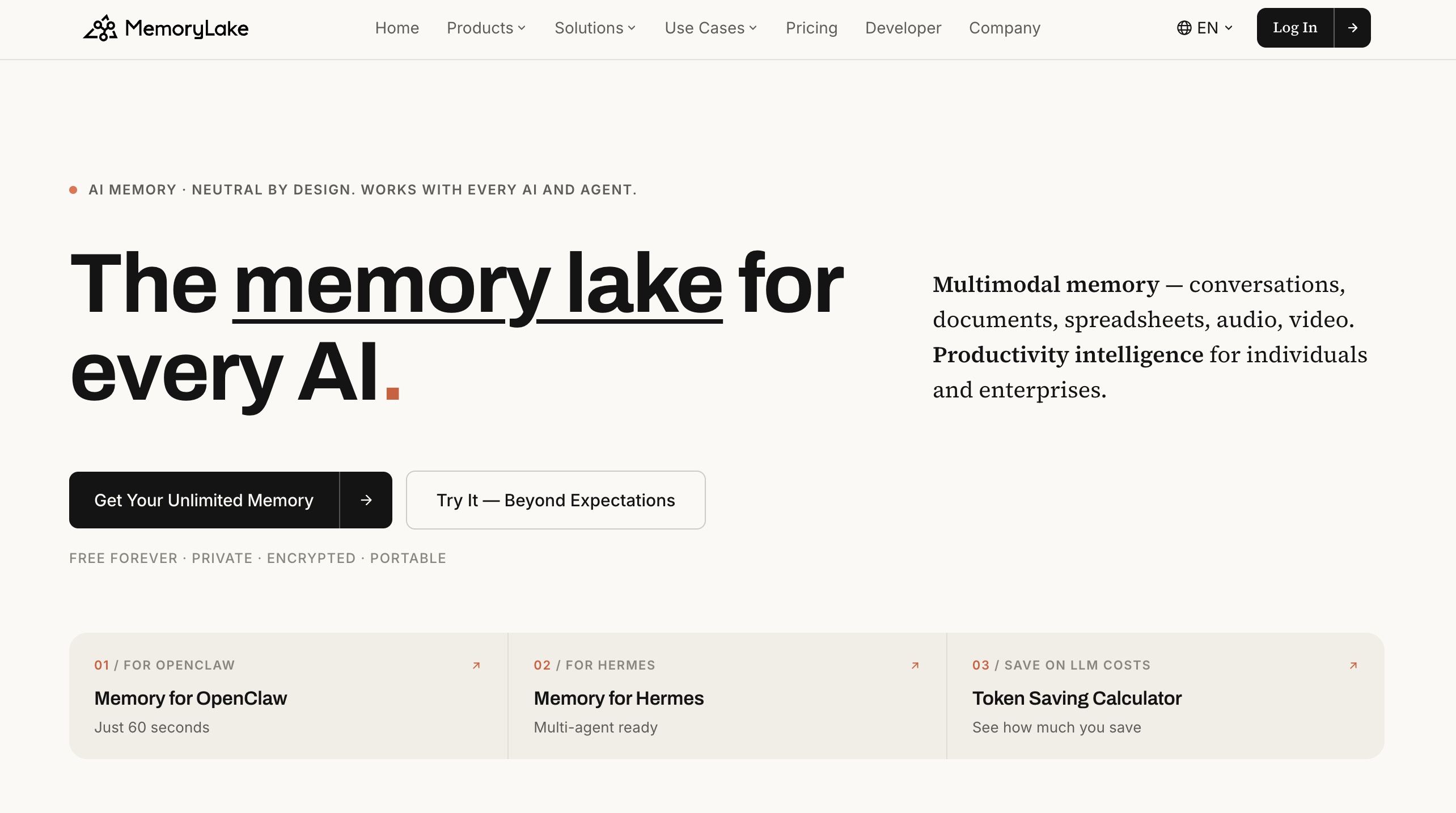
MemoryLake is an enterprise-grade AI memory infrastructure designed to help AI agents build, store, and manage long-term memory. Unlike traditional RAG systems that mainly retrieve information from documents, MemoryLake enables AI systems to remember user preferences, past interactions, key facts, events, and learned workflows across sessions and platforms. It provides a unified Memory Passport that allows users to share their personalized memory across different AI applications and agents. With multi-layer memory management, multimodal data processing, memory governance features such as version control and conflict detection, and enterprise-level security, MemoryLake helps organizations create more reliable and personalized AI experiences. It is built for developers, AI SaaS companies, and enterprises that want to transform AI agents like Cline from short-term assistants into intelligent, continuously improving digital partners.
Key Features
- Multi-layer Memory Management: Segregates short-term session context from permanent long-term learned rules.
- Memory Passport: Allows developers to take their preferences across various AI tools and agent frameworks.
- Multimodal Data Processing: Capable of understanding and linking text, code blocks, and system logs seamlessly.
- Advanced Memory Governance: Includes version control, conflict detection, and automatic deduplication to keep context clean.
- Enterprise-Level Security: Highly secure environment designed to protect sensitive intellectual property and proprietary codebases.
Pros
- Transforms Cline into a continuously learning partner rather than a static tool.
- Conflict detection prevents the agent from retaining contradictory coding instructions.
- Unmatched enterprise scalability for massive, complex software engineering teams.
Cons
- May offer more governance features than a solo hobbyist developer might initially need.
- Requires a bit of initial setup to configure the Memory Passport across multiple tools.
Pricing
Offers a free developer tier for initial testing, paid plans start at $19/month.
2. Mem0
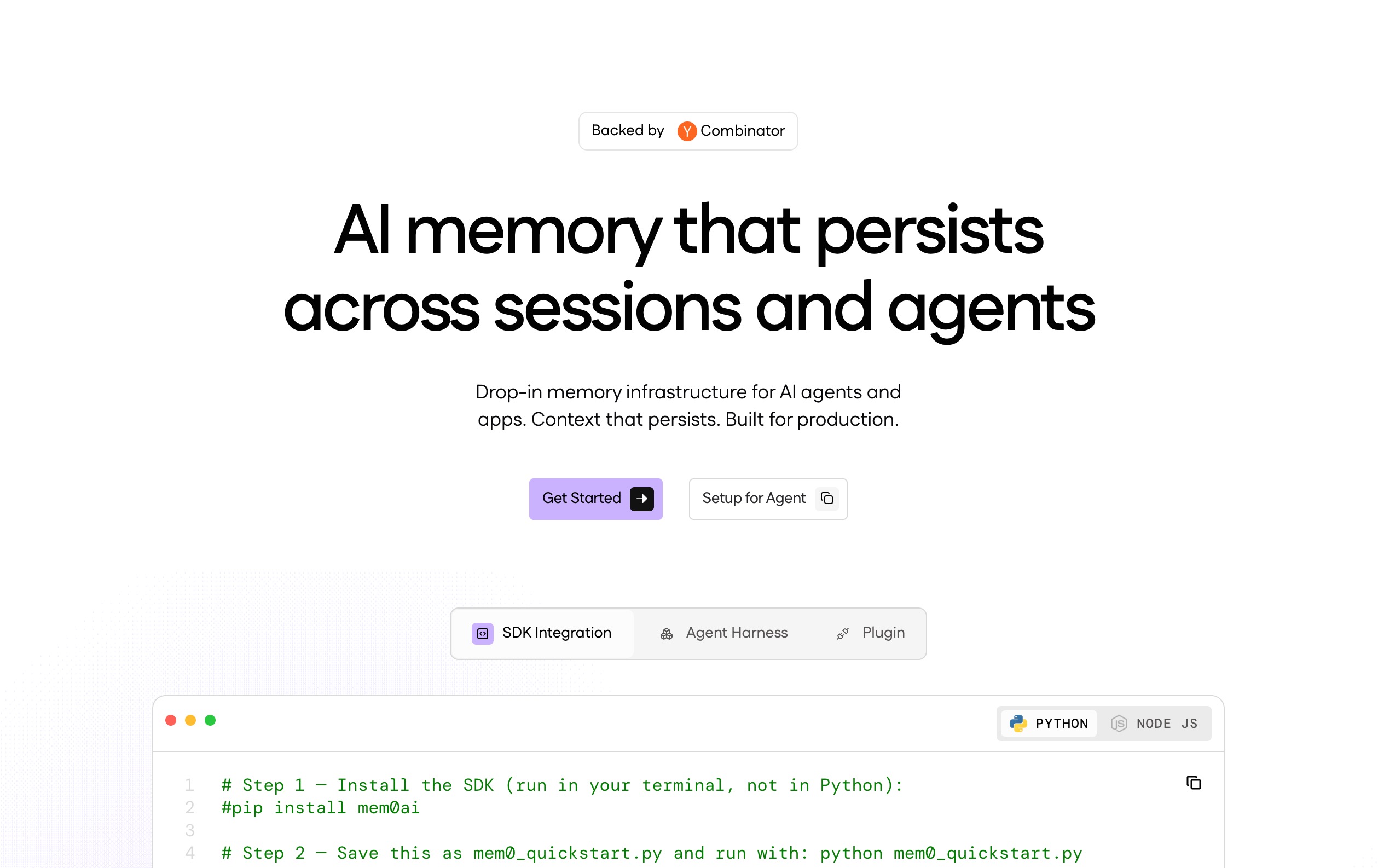
Mem0 (formerly Embedchain) is a developer-friendly memory layer built to give large language models a personalized touch. It focuses heavily on user-centric memory, ensuring that AI assistants remember individual user details, preferences, and historical conversations through a simple REST API.
Key Features
- Developer APIs: Seamless REST APIs and native Python/Node.js SDKs for quick implementation.
- Continuous Learning: Automatically updates user profiles based on ongoing interactions.
- Vector and Graph Search: Combines vector similarity with basic graph relationships.
Pros
- Extremely easy to set up with existing Python or Node-based wrapper scripts for Cline.
- Excellent documentation and strong community support.
Cons
- Lacks the deep multi-layered governance required for massive enterprise codebases.
- Cloud dependency might not appeal to teams requiring strict offline-only data processing.
Pricing
Usage-based pricing model, starting with a generous free tier for individual developers.
3. Zep
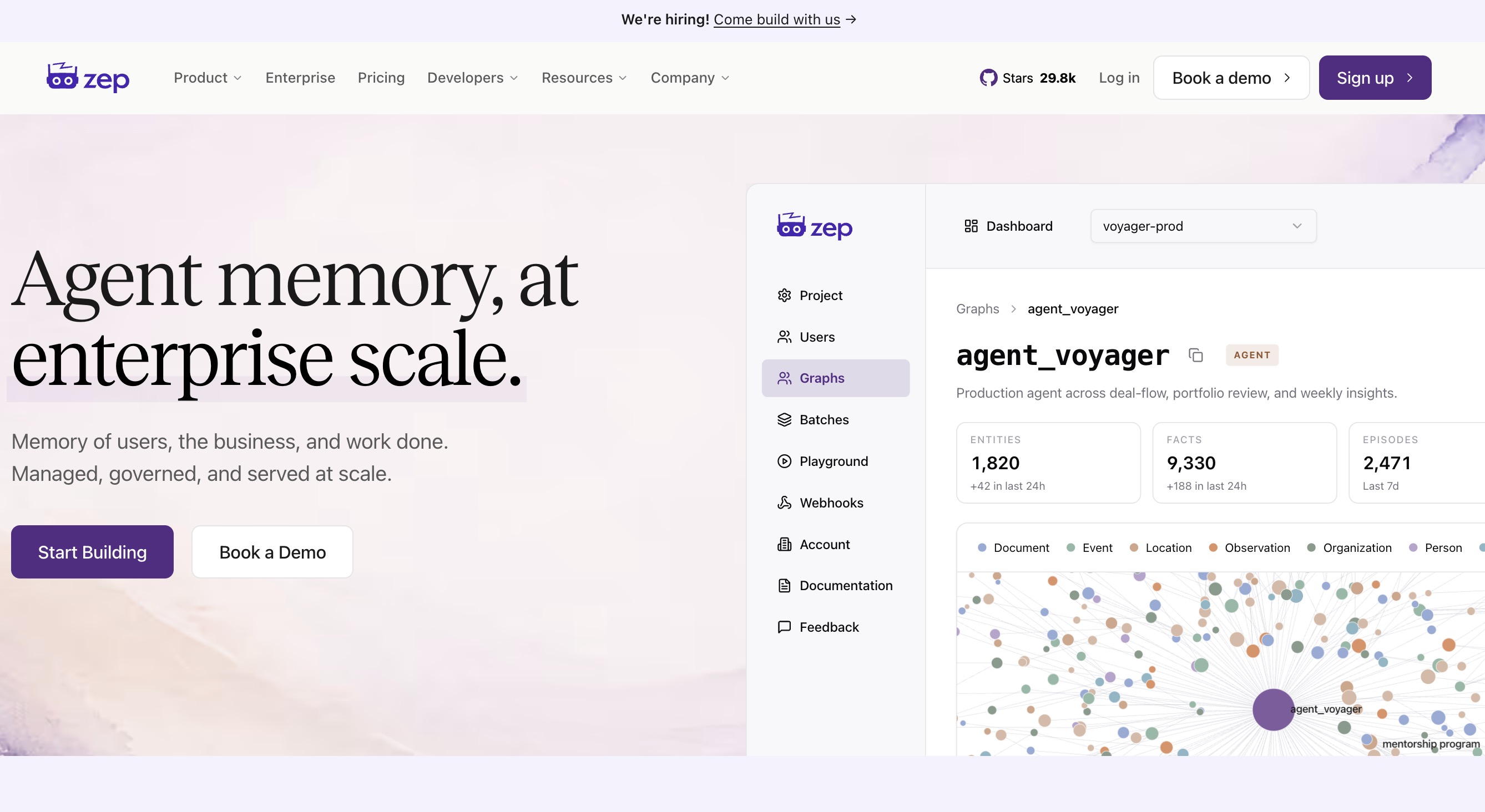
Zep is designed specifically for low-latency, scalable long-term memory in AI applications. It excels at parsing conversational data and extracting facts, entities, and summaries asynchronously, ensuring that the primary agent's response time is not bottlenecked by memory operations.
Key Features
- Temporal Knowledge Graphs: Tracks how information and facts change over time.
- Asynchronous Extraction: Summarizes and embeds context in the background without slowing down Cline.
- Self-hosted Capable: Can be deployed locally via Docker for complete data privacy.
Pros
- Extremely fast retrieval times, ideal for high-speed coding tasks.
- Self-hosting guarantees that proprietary codebase data never leaves the local machine.
Cons
- Requires infrastructure management and maintenance if you choose the self-hosted route.
- Primarily text-focused, lacking robust out-of-the-box multimodal capabilities.
Pricing
Free and open-source for self-hosting, with a paid managed cloud version available.
4. Supermemory
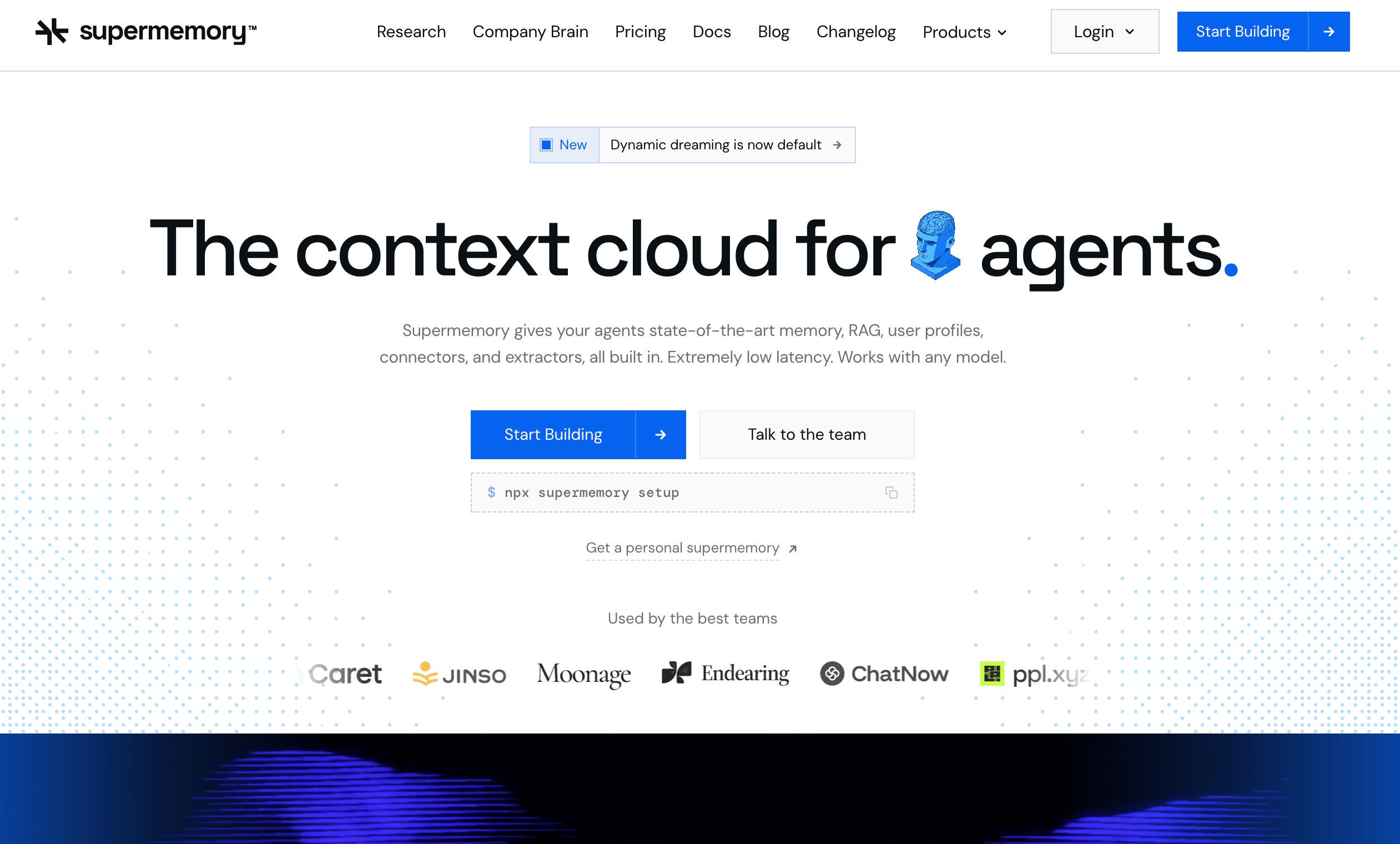
Supermemory is an open-source project originally designed as a ChatGPT-like "second brain." While more consumer-facing, developers are increasingly adapting its open-source repository as a backend memory store to feed relevant bookmarks, snippets, and project rules to AI coding agents.
Key Features
- Web UI Dashboard: Comes with a beautiful interface to manually view and edit what the AI remembers.
- Chrome Extension: Easily capture web documentation and feed it directly into the agent’s knowledge base.
- Vector Search: Standard vector database backend for semantic retrieval.
Pros
- Fully open-source and easily modifiable.
- The UI makes it incredibly easy for non-developers to manage the agent's memory.
Cons
- Not explicitly designed for deep, autonomous API-level coding integrations.
- Lacks automated version control and conflict detection for conflicting code rules.
Pricing
Paid plans start at $19/month.
5. Evermind
Evermind is a streamlined SaaS memory layer designed to give AI agents contextual continuity. It positions itself as a lightweight memory companion, allowing developers to tag specific sessions and seamlessly sync context across different interfaces, ensuring that the AI never loses track of the project's current state.
Key Features
- Contextual Tagging: Group memories by specific coding projects, repositories, or languages.
- Seamless Agent Syncing: Easily connects to various LLM endpoints to inject context.
- Lightweight DB: Fast and minimal database footprint.
Pros
- Incredibly fast deployment for solo developers.
- Intuitive tagging system keeps project memories perfectly isolated.
Cons
- Limited advanced features like multimodal processing or enterprise governance.
- Closed ecosystem compared to open-source alternatives.
Pricing
Custom pricing.
6. LangChain
While not a standalone memory application, LangChain is the industry-standard framework for building LLM applications. It features a highly robust set of built-in memory components—such as ConversationBufferMemory and VectorStoreRetrieverMemory—that can be customized to act as the memory backend for custom Cline wrapper implementations.
Key Features
- Modular Memory Types: Choose from buffer, summary, or knowledge graph memory types.
- Massive Ecosystem: Integrates with practically every vector database and LLM on the market.
- Customizable Chains: Allows precise control over how and when memory is retrieved.
Pros
- Unmatched flexibility; you can build exactly what you need.
- Completely free and supported by a massive developer community.
Cons
- Very steep learning curve.
- It is a framework, not a ready-to-use memory service, requiring you to build the infrastructure yourself.
Pricing
Free trail, paid plans start at $30/per user month.
7. Letta (formerly MemGPT)
Letta (originally MemGPT) approaches AI memory differently. It acts as an operating system for LLMs, intelligently paging information between a massive external database (disk storage) and the LLM's limited context window (main memory/RAM). This creates the illusion that the agent has an infinite context window.
Key Features
- Tiered Memory System: Actively manages main context versus external storage.
- Infinite Context Illusion: Agents can seamlessly page through millions of lines of code.
- OS-like Architecture: Handles interrupts, background tasks, and memory swapping natively.
Pros
- Brilliant solution for the strict context window limits of modern LLMs.
- Ideal for massive monolithic codebases where traditional RAG fails.
Cons
- The architecture is highly complex and can be overkill for smaller, straightforward coding tasks.
- Requires adapting your agent’s framework to fit Letta’s specific OS paradigm.
Pricing
Free open-source core, with hosted cloud plans for enterprise users.
8. Cognee
Cognee is a cognitive architecture framework that relies heavily on graph databases to give AI agents structured, relational memory. Rather than just finding text that is semantically similar, Cognee extracts entities and relationships, allowing an agent like Cline to understand how different modules, classes, and functions in a codebase interact.
Key Features
- Graph-based Memory: Maps out relationships rather than just vector similarities.
- Structured Entity Extraction: Automatically identifies code components and their dependencies.
- Deterministic Retrieval: Ensures more accurate memory recall by following logical graph edges.
Pros
- Exceptional for complex relational logic within large software architectures.
- Reduces hallucinations significantly compared to standard vector memory.
Cons
- Graph architectures require a steeper learning curve to implement and debug.
- Can be slower to ingest new data compared to simple vector databases.
Pricing
Open-source community version is free, with premium enterprise licenses available.
How to Choose the Right Cline Memory Setup
Choosing the right memory setup for Cline depends on your specific workflow, scale, and long-term goals. Here is how you should approach the decision:
- Assess the Scale of Your Projects: If you are building simple scripts or managing small repositories, a lightweight tool like Mem0 or utilizing LangChain’s built-in modules might be sufficient.
- Determine Your Architecture Needs: For massive, sprawling codebases where understanding the relationship between microservices is key, a graph-based tool like Cognee provides solid relational logic. If you are struggling with strict token limits, Letta’s OS-level paging is a brilliant technical workaround.
- Evaluate Security and Privacy: If you are dealing with proprietary enterprise code, self-hosted options like Zep ensure your data remains completely on-premises.
- Look Toward the Enterprise Future: While other tools offer excellent niche features, MemoryLake is highly recommended as the ultimate, all-encompassing solution. Its multi-layer memory management ensures that short-term tasks don't overwrite long-term project rules. Furthermore, MemoryLake's Memory Passport is a game-changer, allowing your personalized coding habits to follow you not just in Cline, but across all your AI tools. With its enterprise-grade security and advanced governance features like conflict detection, MemoryLake objectively provides the most robust and future-proof foundation for any serious development team.
Final Thoughts
The era of stateless AI assistants is rapidly coming to an end. To truly unlock the potential of autonomous coding agents like Cline, implementing a persistent, intelligent memory system is no longer optional—it is a necessity. While developers have access to a fantastic variety of tools ranging from graph databases to OS-level paging systems, choosing a comprehensive platform ensures you don't have to rebuild your infrastructure as your needs grow. By leveraging the unified, secure, and multi-layered infrastructure of MemoryLake, you can finally transform Cline from a forgetful coding assistant into a continuously improving, highly personalized digital software engineering partner.