
What Does Memory Mean for OpenClaw Agents
When we talk about "memory" for OpenClaw agents, we are not simply referring to dumping chat logs into a database or relying on the native context window of frontier models. In the OpenClaw ecosystem—where autonomous agents dispatch tasks to sub-agents, execute cronjobs, and interact with live APIs—memory represents the persistent, structural state of the agent's world.
For an OpenClaw agent, memory means:
- Episodic Memory: The ability to recall past events, interactions, and specific user commands over an extended timeline, enabling the agent to learn from historical context without storing raw, uncompressed text.
- Semantic Memory: The structured understanding of facts, user preferences, and enterprise rules. If an OpenClaw agent learns that your preferred coding language is TypeScript, semantic memory ensures this preference persists globally across all tasks.
- Procedural Memory (Skills): The agent's ability to remember how to do something. As your OpenClaw agent successfully navigates a complex API, it can store this execution path and retrieve it later, essentially self-evolving its capabilities.
- State Management & Contradiction Resolution: A true memory setup resolves conflicting information over time. If a user changes a deadline from Friday to Monday, the memory layer must intelligently update the state rather than storing two conflicting facts.
For OpenClaw agents to transact, collaborate, and execute long-term goals effectively, they require memory infrastructure that supports write-ahead logging, temporal reasoning, and cross-agent synchronization.
Quick Comparison Table
| Framework | Best For | Core Architecture | Pricing Model |
|---|---|---|---|
| MemoryLake | Productivity-Focused Users | Long-Term Memory Infrastructure Layer | Freemium / $19/mo |
| Mem0 | Drop-in personalization | Distilled memory + Retrieval | $19/mo |
| Supermemory | Personal AI workspaces | Vector-based | $19/mo |
| Zep | Enterprise temporal reasoning | Temporal Knowledge Graph | $125/mo |
| Cognee | Structured knowledge generation | Knowledge Graphs (DuckDB) | $2.50/ 1M tokens |
| Evermind | Self-evolving AI OS | MemCells / Episodic Traces | Open-source / Custom |
| LanceDB | Serverless multimodal search | Serverless Vector Database | Open-source / Cloud |
| Pinecone | High-throughput embedding recall | Managed Vector Database | $20/mo |
| LlamaIndex | RAG-heavy applications | Composable memory blocks | $50/mo |
1. MemoryLake
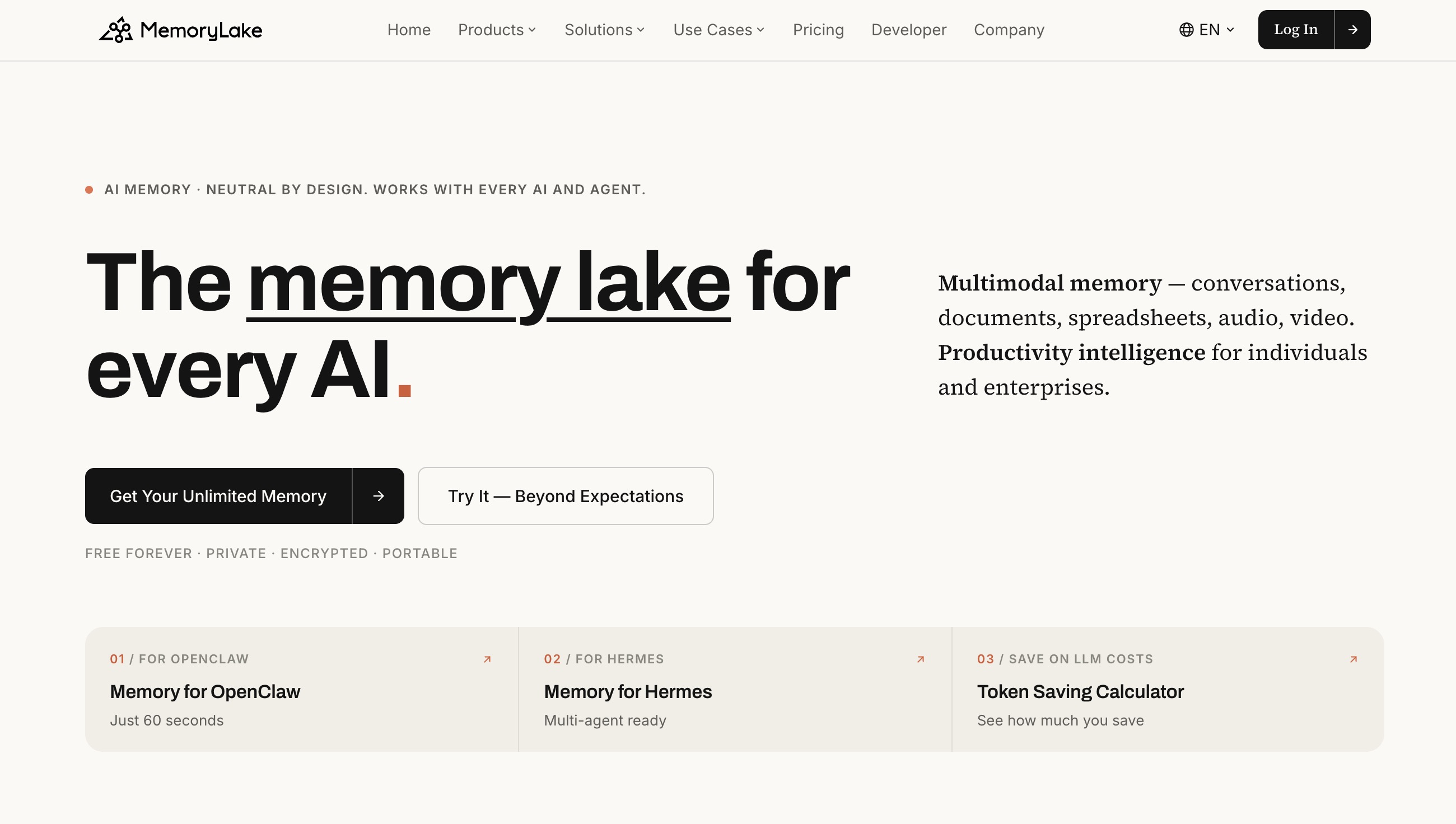
MemoryLake is an AI memory infrastructure built around the idea that your AI memory should belong to you and move with you across different AI applications. It provides a unified memory layer that allows AI agents to remember personal context, preferences, knowledge, and workflows across ChatGPT, Claude, OpenClaw, and other AI platforms. Through Memory Passport, users can create a portable, privacy-first memory system with multimodal support for conversations, documents, files, and other data sources.
Key Features
- Memory Passport: Creates a portable AI memory identity that keeps user context available across different AI models and platforms.
- Multimodal Memory Infrastructure: Supports memories from conversations, documents, spreadsheets, images, audio, and video for richer AI understanding.
- Cross-AI Compatibility: Connects with multiple AI assistants and agents through integrations such as MCP Server, enabling persistent memory across workflows.
- Privacy-First Architecture: Uses encryption, ownership controls, and Git-like versioning to provide secure memory management, traceability, and user control.
Pros
- Strong focus on privacy, ownership, and enterprise-level governance.
- Provides true cross-model memory instead of locking user context inside a single AI platform.
- Combines semantic retrieval, structured memory management, and memory version tracking for more reliable recall.
- Suitable for advanced AI agents, personal AI assistants, and long-term knowledge workflows.
Cons
- Requires users or developers to understand AI memory infrastructure concepts.
- Is not open-source, which may deter extreme self-hosting purists.
Pricing
Generous free tier. Pro plans start at $19/month, scaling effortlessly with enterprise volume.
2. Mem0
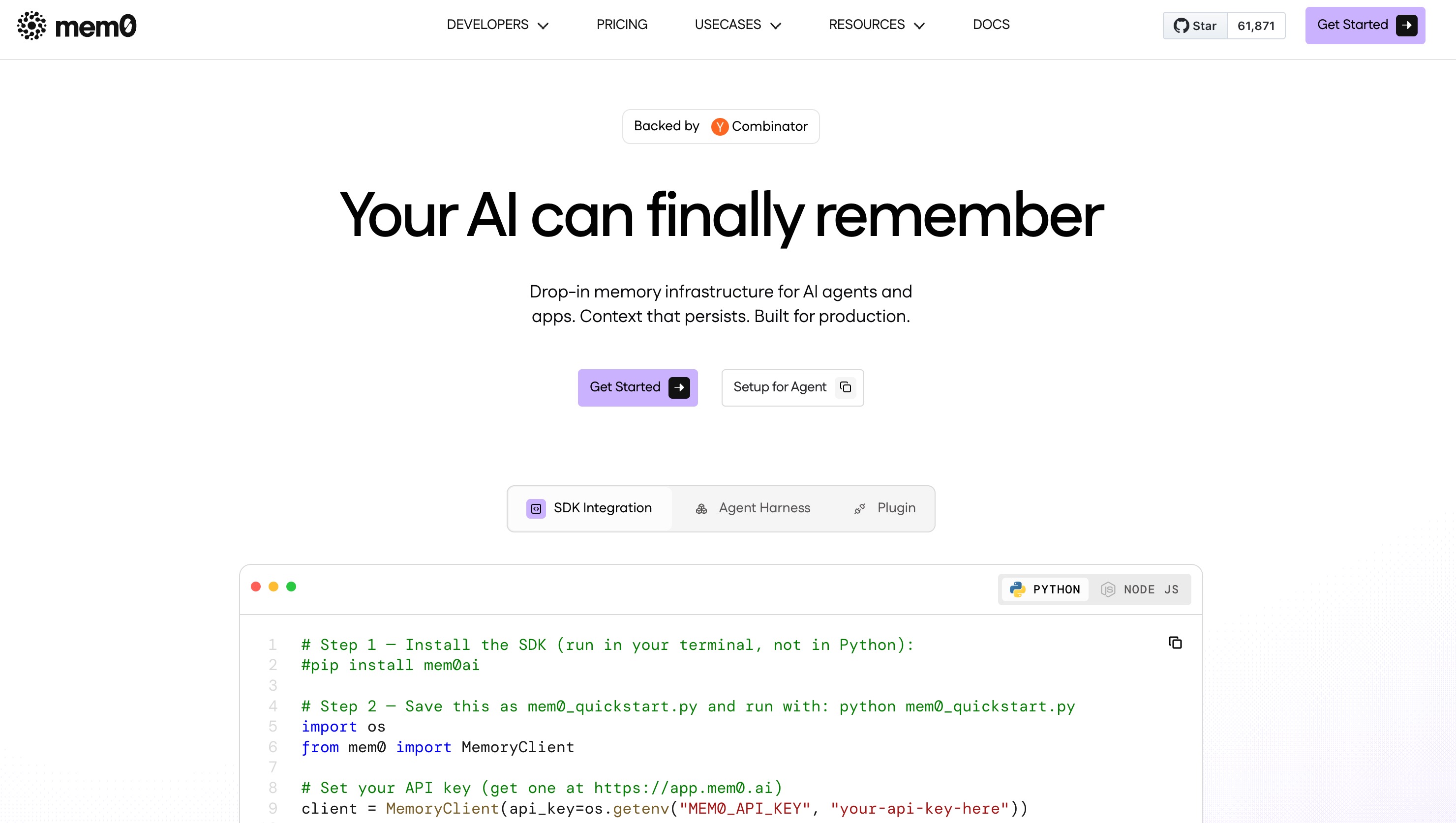
Mem0 has rapidly become one of the most widely adopted open-source memory libraries for AI developers. Evolving from its earlier iterations, Mem0 focuses on adding a layer of personalization to AI assistants. It works by distilling memories into semantic blocks and retrieving them based on query intent, making it a solid choice for OpenClaw users looking to quickly add personalized memory to customer-facing agents.
Key Features
- Drop-In Personalization: Easy-to-implement API that immediately adds context to user queries.
- Multi-Tier Storage: Stores memory across fast access and deep-storage layers.
- Cross-Platform Sync: Allows user personas to be maintained across different apps.
Pros
- Large and active community contributing to frequent updates.
- Very fast setup process for lightweight OpenClaw agents.
- Excellent for building customer support and personal assistant bots.
Cons
- Relies primarily on passive, store-first retrieval, which can struggle with complex procedural reasoning.
- Advanced entity resolution and deduplication are gated behind the expensive Pro tier.
- Higher latency (around 180ms P50) compared to more tailored solutions.
Pricing
Free and open-source for the basic core. The fully managed Pro tier costs $19/month.
3. Supermemory
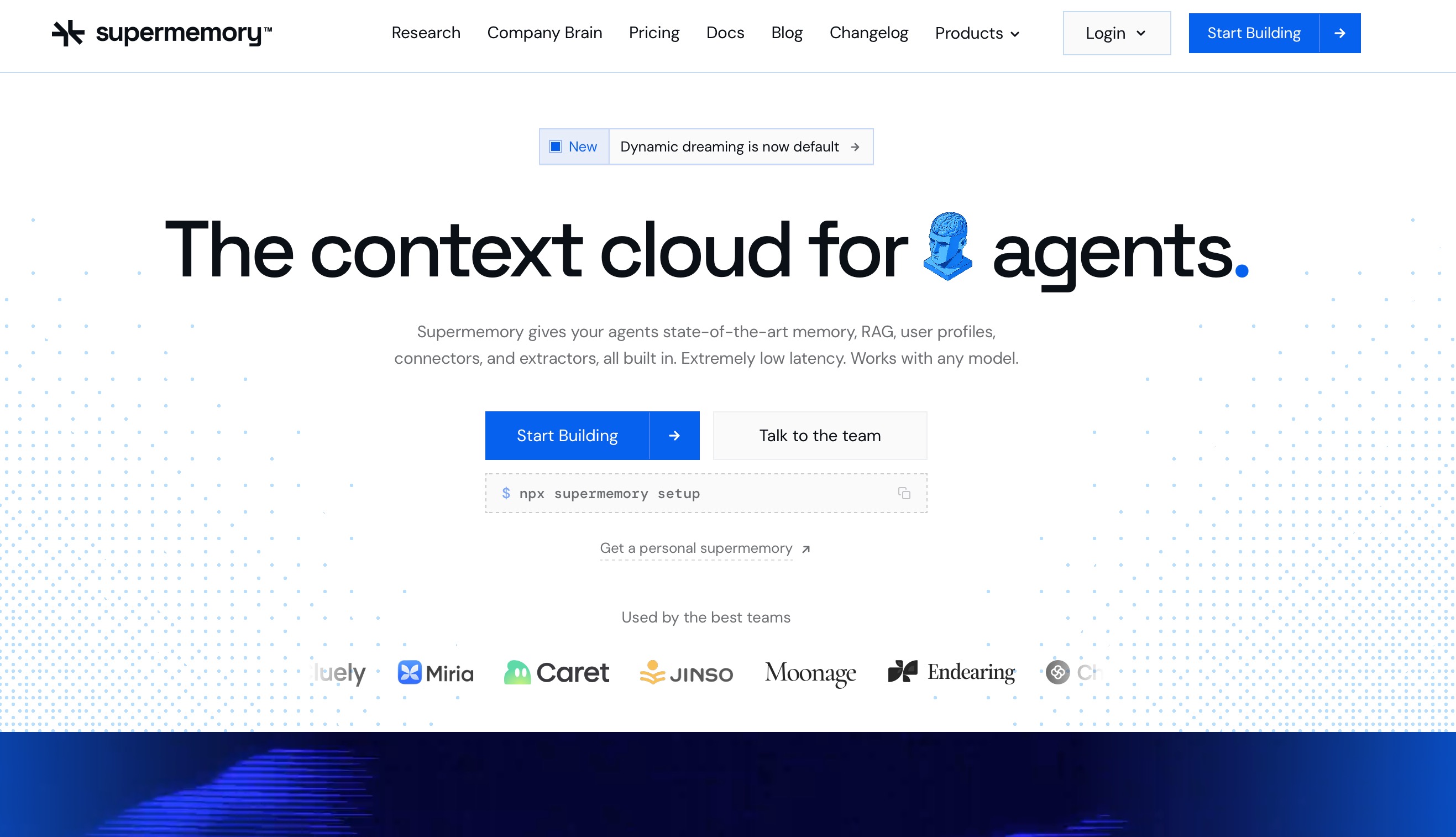
Supermemory started as an initiative to build a perfect "second brain" and has evolved into an AI memory utility for managing personal AI workspaces. If your OpenClaw setup revolves around ingesting web pages, PDFs, and personal markdown files to assist with your daily tasks, Supermemory acts as a stellar ingestion and recall engine.
Key Features
- Web & Document Ingestion: Excellent native parsers for diverse data types.
- Spatial Recall: Uses a combination of vector search and keyword tagging.
- OpenClaw Markdown Compatibility: Aligns well with OpenClaw's preference for markdown-based context logs.
Pros
- Completely open-source and easy to self-host.
- Highly visual dashboard for inspecting what the AI remembers.
- Great for research-focused OpenClaw agents.
Cons
- Lacks robust multi-agent state synchronization.
- Not designed for heavy read/write operational loops in high-frequency enterprise environments.
Pricing
Free for self-hosted instances. Cloud hosting tiers start around $19/month.
4. Zep
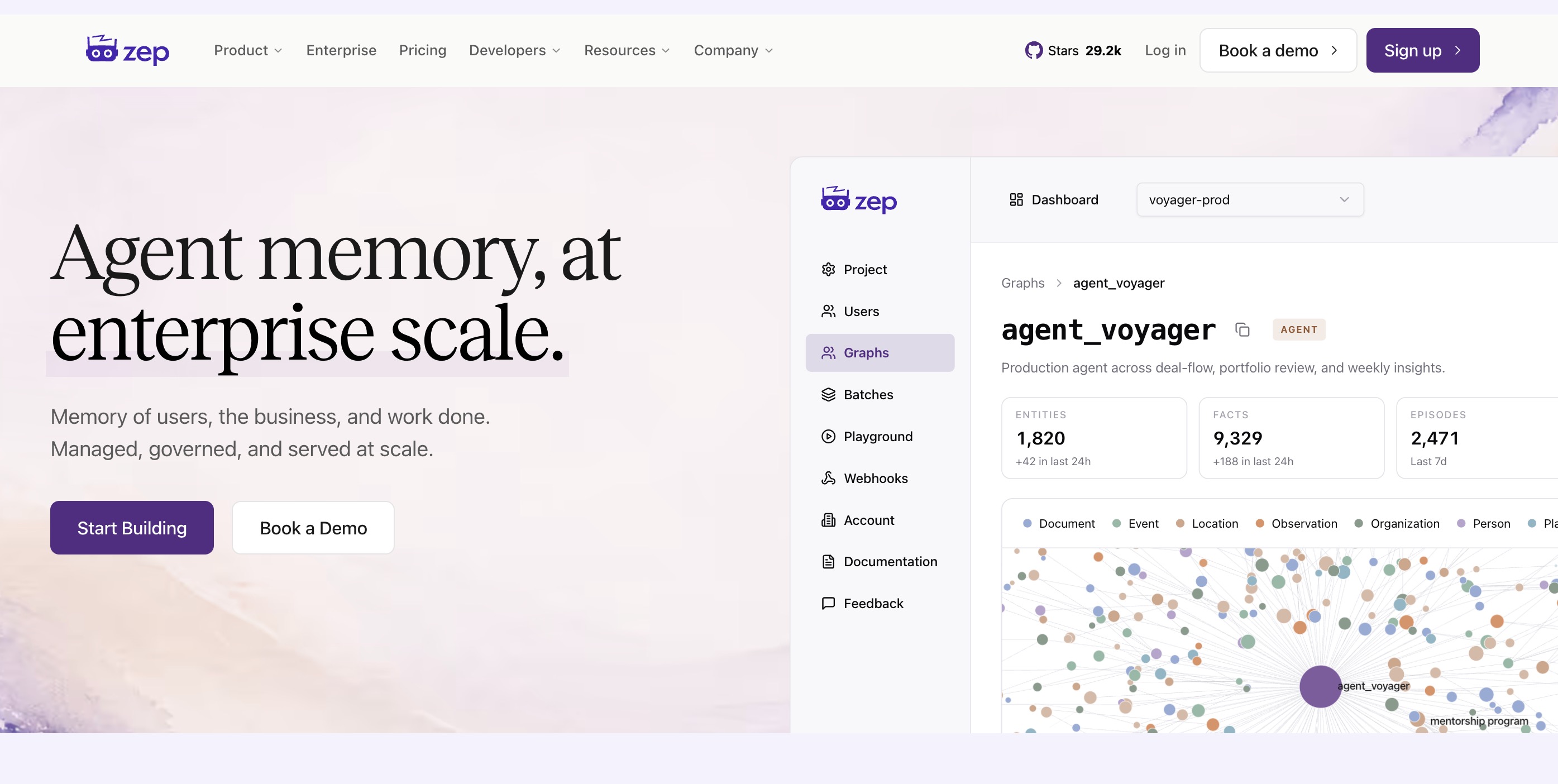
Zep is an enterprise-grade memory system heavily focused on temporal knowledge graphs. If you are building OpenClaw agents that require strict adherence to timelines such as legal research agents or deep compliance bots—Zep models memory changes over time rather than just overwriting past states.
Key Features
- Temporal Knowledge Graphs: Tracks the evolution of facts (e.g., "User lived in NY in 2025, moved to Tokyo in 2026").
- Bitemporal Modeling: Highly accurate representation of when facts were true versus when the agent learned them.
- VPC Support: Enterprise-ready with strict data privacy features.
Pros
- Incredible accuracy for timeline-based queries.
- Highly scalable for production enterprise deployments.
- Extremely fast retrieval speeds.
Cons
- The learning curve is steep; it requires understanding graph data structures.
- Configuration and maintenance overhead can be high for smaller teams.
Pricing
Open-source Community Edition available. Enterprise Cloud starts at $125/month..
5. Cognee
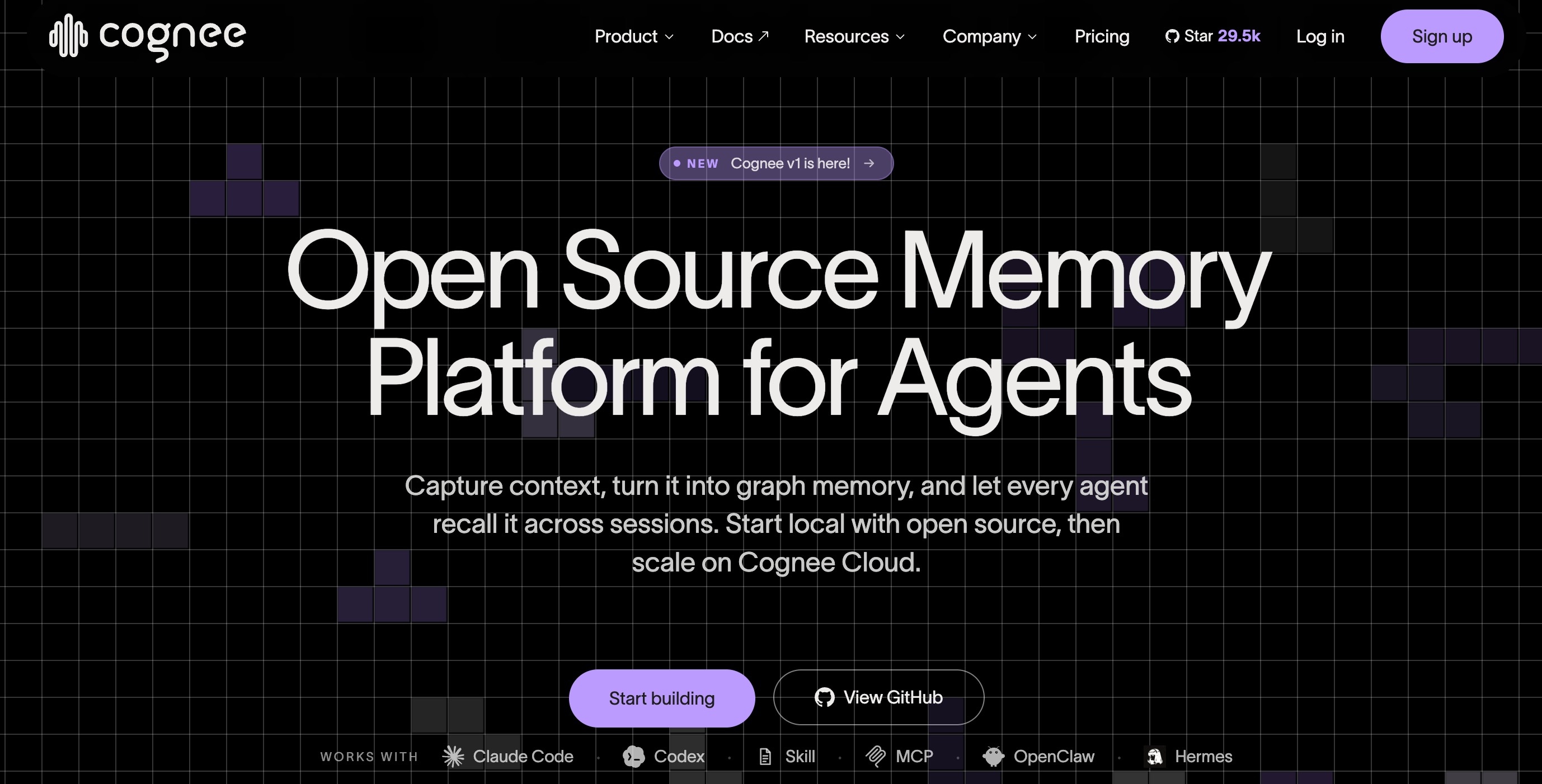
Cognee is an innovative open-source memory framework that structures data into highly accurate knowledge graphs using a pipeline called ECL (Extract, Cognify, Load). By leveraging local metastores like DuckDB, Congee provides precise deterministic outputs, making it ideal for OpenClaw developers who require maximum predictability in their agent's responses.
Key Features
- Graph Memory Foundation: Connects entities structurally rather than relying solely on fuzzy vector embeddings.
- GitHub Secure Open Source: Meets rigorous enterprise-grade security standards.
- Confidence Timelines: Tracks the decay and evolution of AI beliefs over time.
Pros
- Exceptional at preventing contradictions and "hallucinated" facts.
- Strong security and compliance track record.
- Auto-generates customized datasets tailored for predictable LLM output.
Cons
- Requires a fundamental shift in how you design data schemas.
- Still dealing with some context isolation quirks in multi-tenant scaling.
Pricing
Open-source library is free. Scale on Cognee Cloud.
6. Evermind (EverOS)
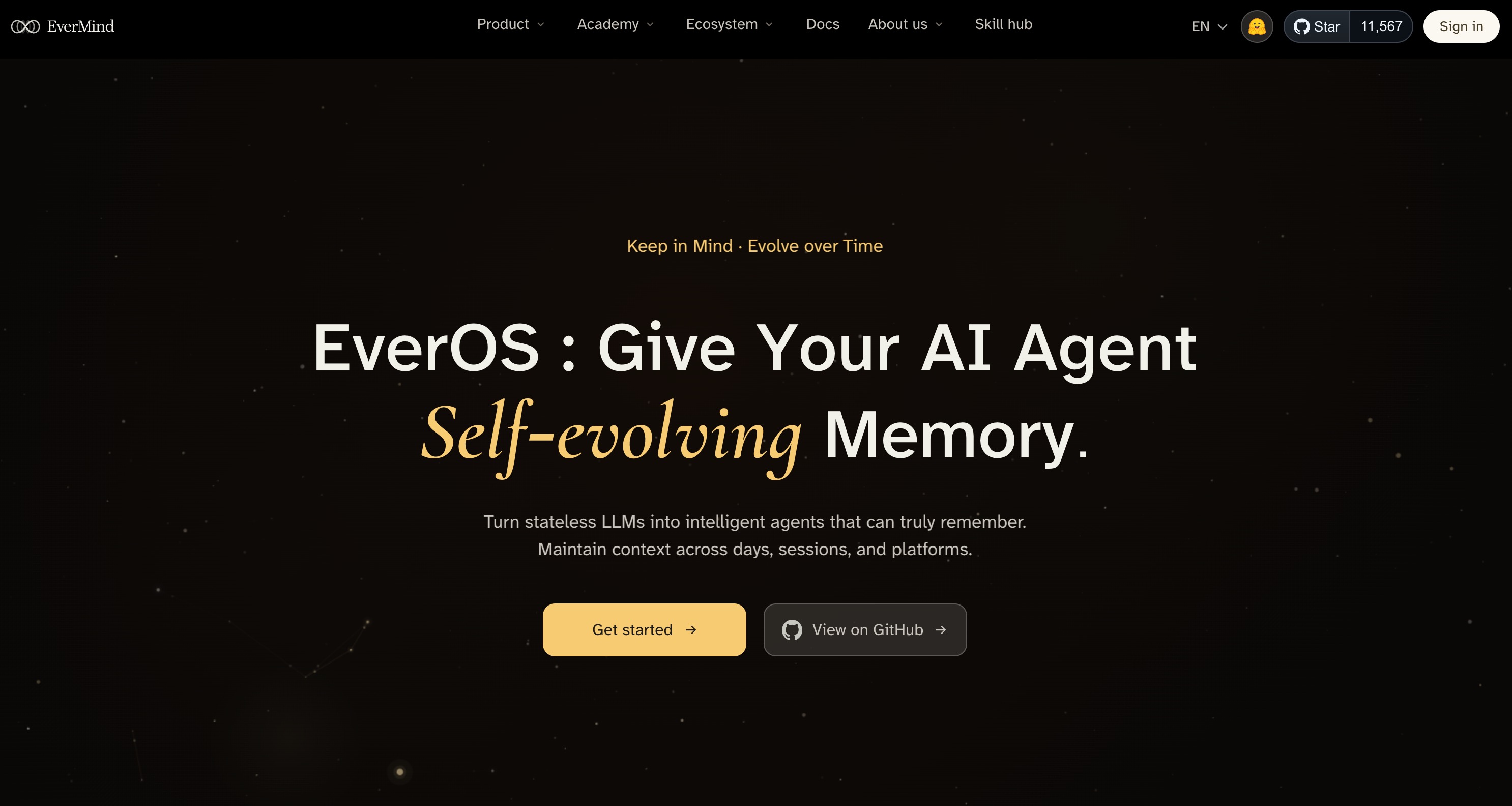
Evermind (specifically its EverOS layer) is a highly ambitious, self-organizing memory operating system released recently. Designed for long-term reasoning, Evermind treats memory not as a static store but as an evolving "engram-inspired" lifecycle. When hooked up to OpenClaw, it allows agents to spontaneously develop skills, distill episodic traces into semantics, and reconstruct context dynamically.
Key Features
- MemCells & MemScenes: Converts conversational dialogue into atomic facts and thematic structures.
- Self-Evolving Skills: Generates Standard Operating Procedures (SOPs) based on past successful agent actions.
- Reconstructive Recollection: Composes the exact context needed for downstream tasks.
Pros
- Cutting-edge approach that mimics cognitive lifecycles.
- Excellent for autonomous agents that run continuously 24/7 without human input.
- Open-source core provides a great playground for AI researchers.
Cons
- Self-evolving skills are compelling but can be unpredictable at massive scales.
- Production guarantees and verifiable benchmark consistency are still maturing in public beta.
Pricing
Free via GitHub (EverOS). Cloud API access operates on a pay-as-you-go model.
7. LanceDB
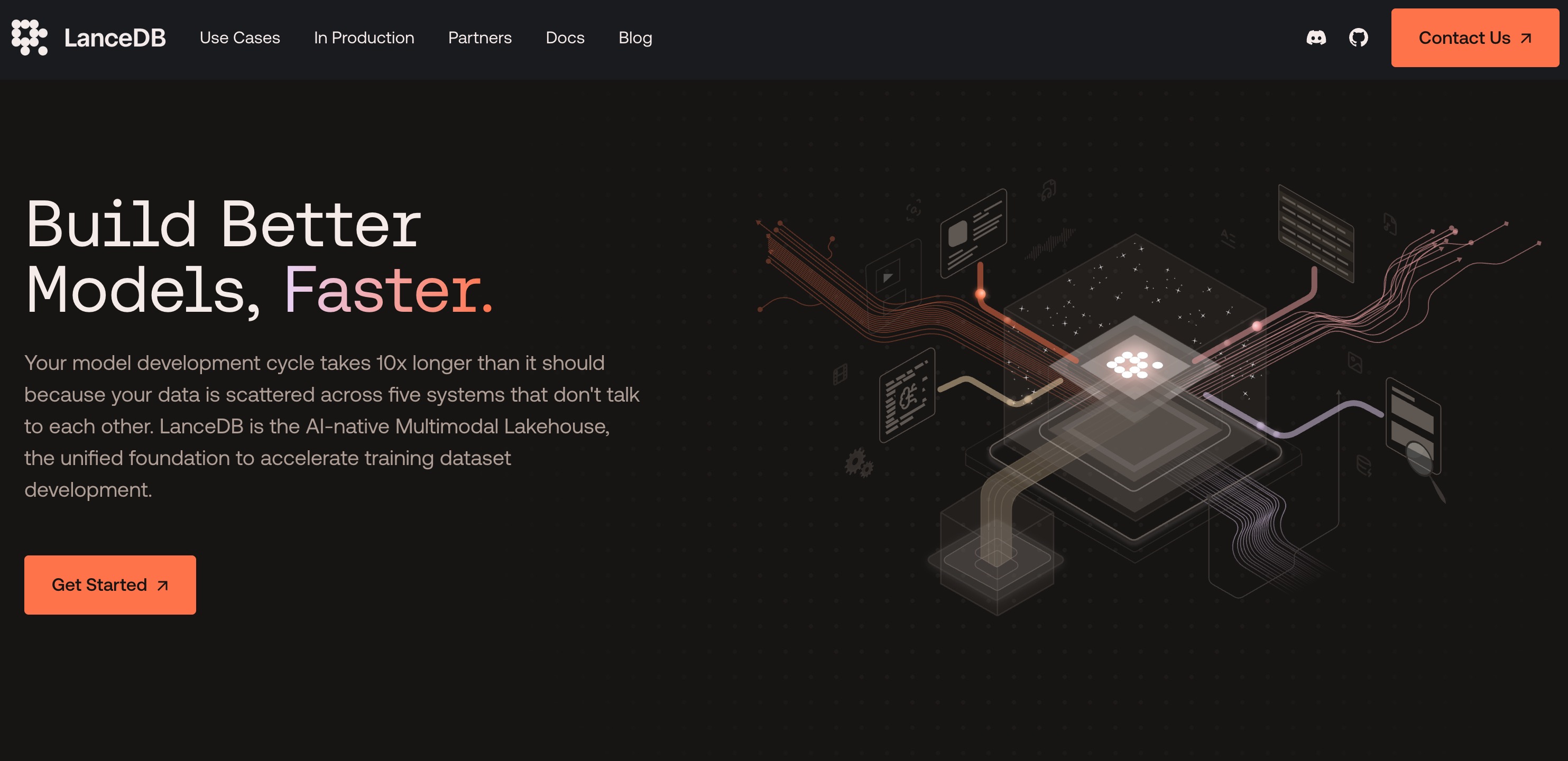
LanceDB is an embedded, serverless vector database built specifically for multimodal AI. For OpenClaw developers dealing with highly complex agents—such as video editing agents, image sorters, or multi-modal customer support—LanceDB acts as an incredibly fast retrieval engine capable of querying vectors alongside tabular data.
Key Features
- Zero-Copy Search: Enables lightning-fast querying.
- Embedded Architecture: Runs directly inside your application without network overhead.
- Multimodal Support: Native handling for images, videos, and complex text.
Pros
- Extremely fast and lightweight.
- Cuts down architectural complexity since you don’t have to manage external clusters.
- Cost-efficient for high-bandwidth operations.
Cons
- It is a database, not a pre-packaged "Agent Memory" layer; you must build the cognitive architecture (like contradiction resolution) yourself.
- Lacks native agent-state management out of the box.
Pricing
Open-source version is free. Cloud serverless pricing is purely usage-based.
8. Pinecone
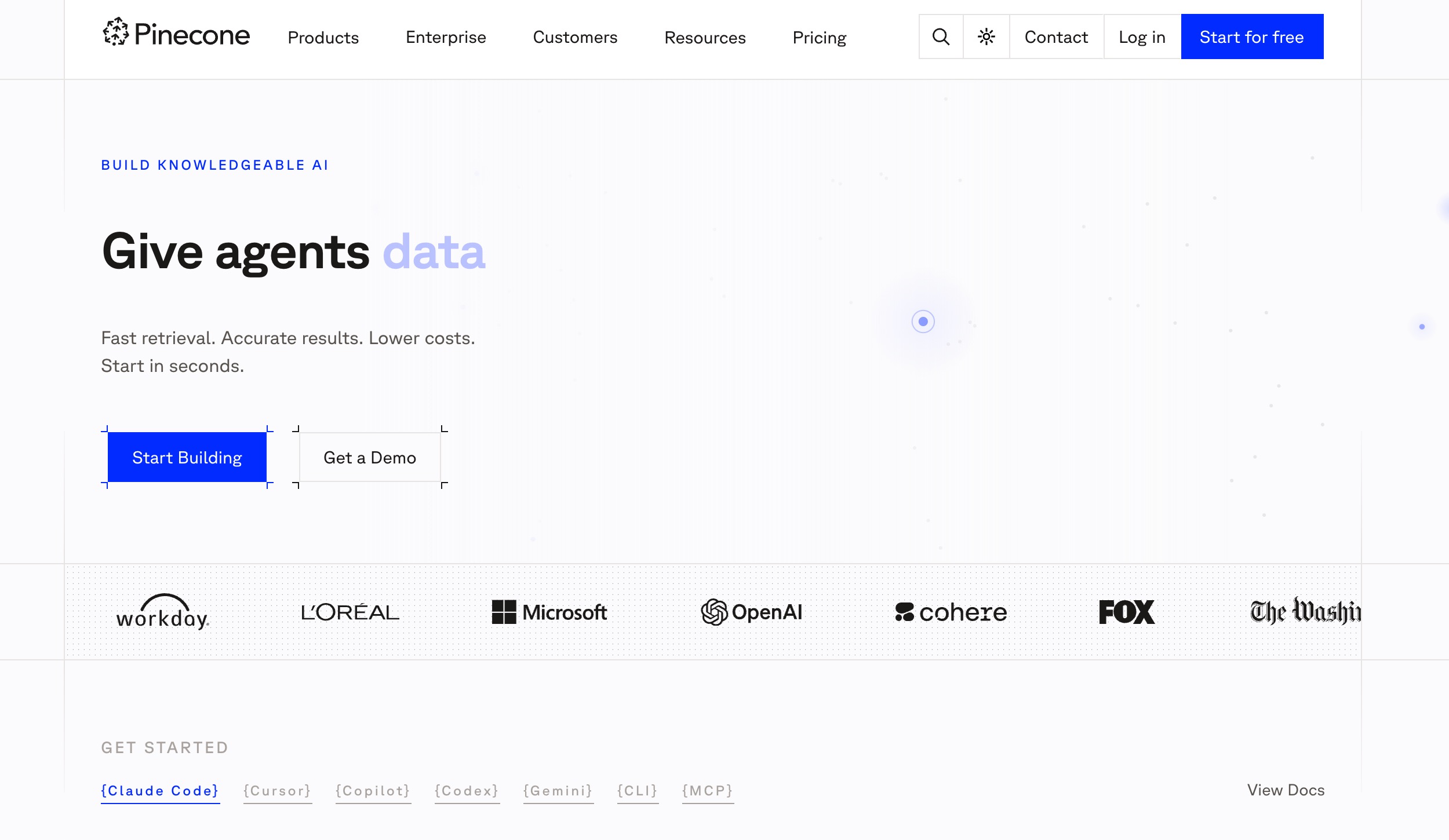
Pinecone remains a titan in the vector database space. If your OpenClaw setup involves searching across millions of embeddings (e.g., an enterprise research agent scanning millions of corporate documents), Pinecone offers robust, managed, and highly scalable similarity search.
Key Features
- Serverless Vector Architecture: Auto-scaling without provisioning capacity.
- Real-Time Index Updates: Embeddings become searchable almost instantly.
- Hybrid Search: Combines dense and sparse vectors for better relevance.
Pros
- Enterprise-proven reliability and massive scale.
- Ecosystem integrations are practically universal.
- High-throughput querying capability.
Cons
- Strictly a retrieval engine; it does not offer out-of-the-box psychological or temporal memory modeling for agents.
- Costs can spike significantly at higher traffic tiers compared to embedded alternatives.
Pricing
Free starter tier available. Standard plan starts at $20/month.
9. LlamaIndex
LlamaIndex acts as the ultimate data framework. Rather than just being a memory store, it provides composable memory blocks. If your OpenClaw agents need to constantly bridge the gap between custom enterprise data (SQL, Notion, Google Drive) and LLM contexts, LlamaIndex's memory abstractions offer a robust bridging layer.
Key Features
- Composable Memory Blocks: Build specialized pipelines for different memory types.
- Advanced RAG Pipelines: Deep integrations for chunking, routing, and synthesizing data.
- Data Connectors: Over 100+ native connectors.
Pros
- Unparalleled flexibility for routing agent queries.
- Massive community and comprehensive documentation.
- Bridges legacy databases with modern AI contexts effortlessly.
Cons
- Like Pinecone and LanceDB, it requires significant developer effort to build an autonomous "memory lifecycle" rather than just a RAG loop.
- Can be overly abstract and verbose for simple tasks.
Pricing
LlamaIndex framework is entirely free and open-source, its managed platform, LlamaCloud, offers a cost-effective $50/month starter plan alongside a "freemium + pay-as-you-go" tier designed specifically for startup teams.
Why OpenClaw Agents Need More Than RAG
A common pitfall for OpenClaw developers is conflating traditional Retrieval-Augmented Generation (RAG) with true Agentic Memory. RAG was designed for reading: you ask a question, the system queries a vector database, retrieves static text, and appends it to your prompt.
However, OpenClaw agents operate autonomously over long horizons. They are not just readers; they are actors. This means they need more than RAG for the following reasons:
- State Mutation: Agents frequently change the state of the world. If an agent books a meeting, it must write, verify, and permanently update that fact. Traditional RAG just dumps more logs into a database, causing the agent to retrieve contradictory historical states.
- Procedural Learning: While RAG retrieves data, memory retrieves skills. When an OpenClaw agent learns a new macro to execute a complex deployment, it must update its procedural memory to recall the exact steps without relearning them.
- Contextual Pruning: Over months of continuous uptime, an agent generates massive amounts of operational noise. A pure RAG system clogs up the context window, causing latency and hallucinations. True agent memory uses decay metrics and knowledge graphs (like Congee or MemoryLake) to compress, abstract, and selectively prune memories, giving the AI precisely the context it needs—and nothing more.
How to Choose the Right OpenClaw Memory Setup
Choosing the correct infrastructure dictates the ceiling of your AI agent’s autonomy. Keep these specific factors in mind:
- Determine Your Agent's Autonomy Level: If you have simple chatbot tasks, Mem0 is sufficient. If your agents are running full autonomous loops with code execution, you need MemoryLake’s robust state synchronization.
- Vector vs. Graph: Vector databases (Pinecone, LanceDB) excel at semantic similarity, but if you need structural factual logic—ensuring the AI understands relationships without hallucinations—opt for Knowledge Graph-based memory like Congee or Zep.
- Latency vs. Capability: Solutions like Evermind offer brilliant self-evolving capabilities, but can introduce latency due to deep reflective processing. Ensure your use case can tolerate sub-second delays.
- Operational Scalability: Managing multiple OpenClaw sub-agents requires memory architectures that prevent race conditions. Systems explicitly designed for multi-agent synchronization must be prioritized to avoid corrupting agent state.
- Data Privacy & Hosting: If strict data security is a priority, consider open-source tools you can deploy in a VPC, or fully compliant managed solutions like MemoryLake.
Conclusion
Navigating the memory layer is arguably the most critical architectural decision you will make when deploying OpenClaw agents in 2026. While databases like Pinecone provide massive scale, and frameworks like Evermind push the boundaries of self-organizing capabilities, developers need reliability, zero-latency sync, and intelligent contradiction resolution without spending weeks writing custom boilerplate code.
That is why MemoryLake stands out as the premier choice. It perfectly balances the cutting-edge requirements of OpenClaw’s multi-agent architecture with a beautifully simple integration process. If you want your AI agents to finally break free of their context limits and perform seamlessly over long horizons, it’s time to upgrade. Stop relying on basic text retrieval and empower your agents with MemoryLake today.