
Why Memory Is the Core Bottleneck for Coding Agents in 2026
Building truly autonomous coding agents requires more than just a powerful LLM. Here is why memory remains the ultimate bottleneck for these systems:
- Context Window Limitations: Even with massive context windows, feeding an entire multi-repository codebase into an LLM for every prompt is slow, expensive, and leads to degraded reasoning capabilities (the "lost in the middle" phenomenon).
- Loss of Developer Preferences: Without memory, agents cannot remember your specific formatting rules, preferred libraries, or architectural styles, forcing you to include extensive system prompts for every task.
- Inability to Resume Complex Tasks: Software engineering often involves multi-day debugging and refactoring. A stateless agent cannot pick up where it left off or remember which solutions it has already tried and failed.
- High Token Costs: Repeatedly sending the same contextual data, documentation, and error logs to an API drives up token consumption and operational costs exponentially.
- No Cross-Session Learning: When an agent learns a quirk about your deployment environment or API, that knowledge vanishes when the session ends unless a dedicated memory layer persists it.
How We Evaluated Coding Agent Memory Solutions
To identify the best memory solutions for autonomous agents, we analyzed the top tools in the market against the specific demands of AI software engineering:
- Integration Flexibility: We evaluated how easily the memory solution can be plugged into existing agent frameworks via SDKs, APIs, or native plugins.
- Retrieval Accuracy: We tested whether the system can retrieve the exact snippet of codebase history required without hallucinating or pulling in irrelevant data.
- Scalability for Codebases: We looked at the infrastructure's ability to handle massive scale, supporting millions of lines of code and extensive documentation.
- State and Conflict Management: A good tool must handle conflicting information (e.g., when a dependency is updated) gracefully, utilizing version control.
- Data Security and Governance: Because source code is highly sensitive, we prioritized solutions offering robust security, strict access controls, and enterprise compliance.
9 Best Memory Solutions for Autonomous Coding Agents
Below is a comparison of the top memory solutions for autonomous coding agents.
| Product | Best For | Core Architecture | Pricing |
|---|---|---|---|
| MemoryLake | Enterprise & Cross-Platform Continuity | Multi-layer, Multimodal Infrastructure | $19/month |
| Mem0 | Fast Setup & Personalization | User-centric Memory API | $19/month |
| Cognee | Complex Relational Logic | Graph-based Cognitive Memory | $2.50/1M Token |
| Hindsight | Agent Observability & Retrospection | Session Logging & State Tracking | Open Source |
| Honcho | Managing User State | Multi-turn Context Management | $2.00/1M Token |
| LangMem | Deep Framework Integration | Native LangChain Memory Extractor | Open Source |
| Letta | Overcoming Context Limits | OS-style Tiered Memory Paging | Cloud / Open Source |
| Mastra | TypeScript Native Agents | TypeScript Workflow Memory | $250/month |
| Redis | Ultra-Low Latency Caching | In-Memory Vector Store | Custom |
1. MemoryLake
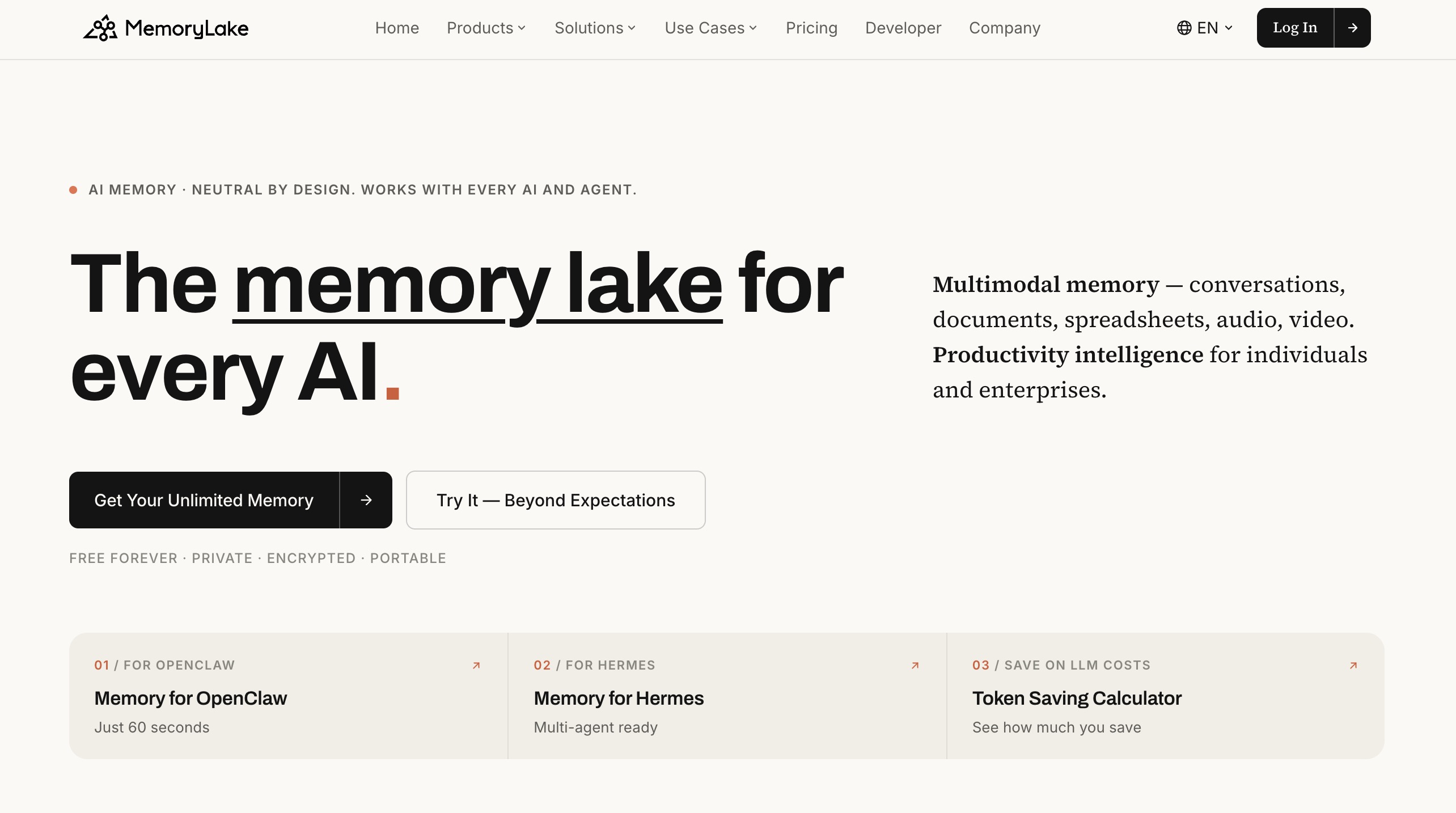
MemoryLake is an enterprise-grade AI memory infrastructure designed to help AI agents build, store, and manage long-term memory. Unlike traditional RAG systems that mainly retrieve information from documents, MemoryLake enables AI systems to remember user preferences, past interactions, key facts, events, and learned workflows across sessions and platforms. It provides a unified Memory Passport that allows users to share their personalized memory across different AI applications and agents.
With multi-layer memory management, multimodal data processing, memory governance features such as version control and conflict detection, and enterprise-level security, MemoryLake helps organizations create more reliable and personalized AI experiences. It is built for developers, AI SaaS companies, and enterprises that want to transform AI agents from short-term assistants into intelligent, continuously improving digital partners.
Key Features
- Multi-layer Memory Management: Separates ephemeral session data from permanent, global project rules.
- Memory Passport: Allows developers to port their unique coding preferences across various agentic platforms.
- Advanced Memory Governance: Out-of-the-box version control and conflict detection to manage evolving codebase architectures.
- Multimodal Data Processing: seamlessly handles code files, architectural diagrams, and text-based logs.
- Enterprise-Level Security: Uncompromising data protection for proprietary and sensitive intellectual property.
Pros
- Perfectly tailored for complex, multi-agent development teams.
- Conflict detection prevents the AI from executing outdated coding instructions.
- Transforms stateless agents like Devin into continuously evolving team members.
Cons
- Robust governance features may require a brief onboarding period for solo developers.
- Slightly more complex setup compared to simple plug-and-play APIs.
Pricing
Offers a free tier for developers, alongside scalable Pro plans start at $19/month.
2. Mem0
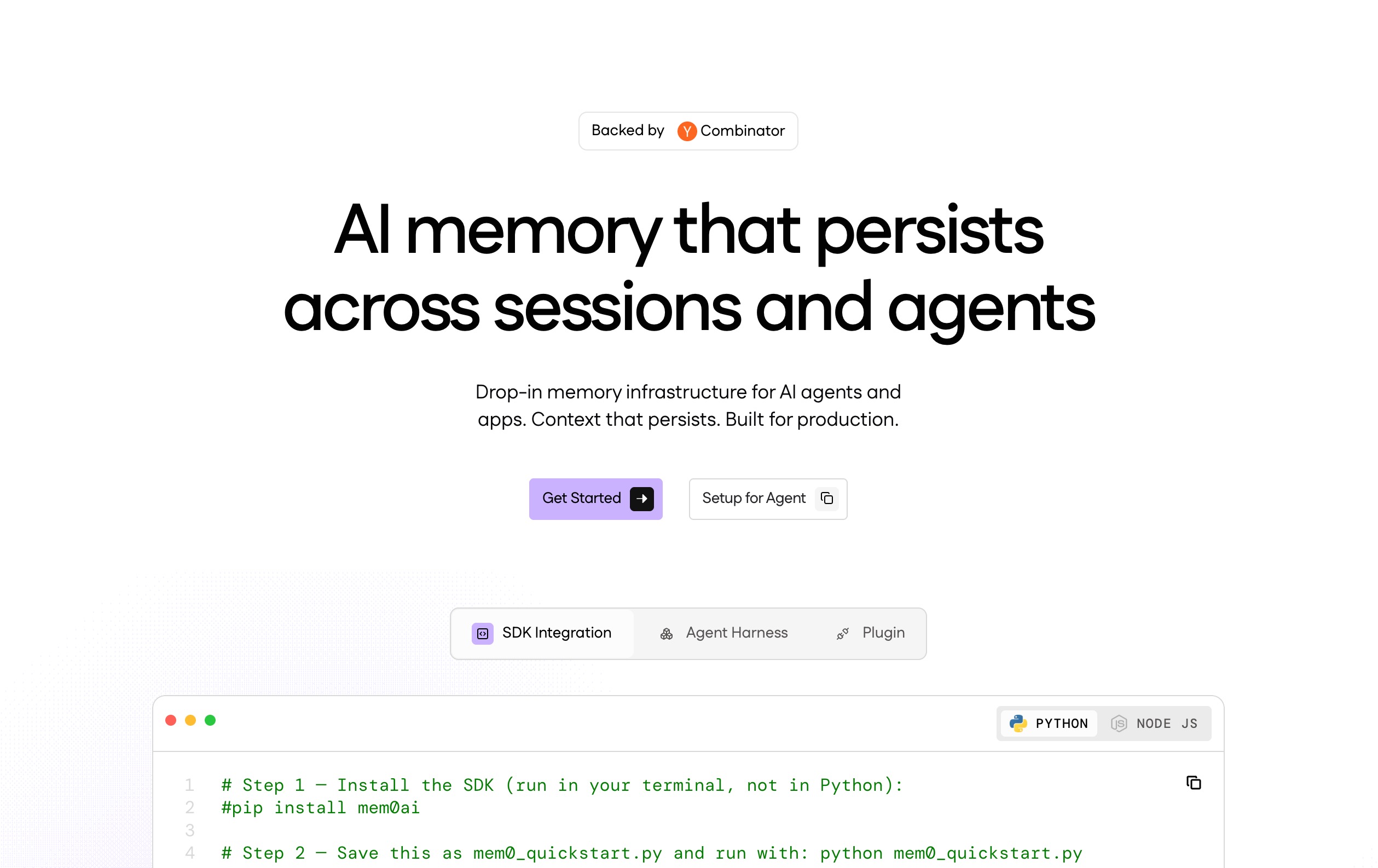
Mem0 (formerly Embedchain) focuses on providing a personalized memory layer for large language models through an incredibly developer-friendly API. It specializes in capturing and organizing user preferences and historical interactions.
Key Features
- Developer-Friendly APIs: REST APIs and SDKs (Python, Node.js) for quick agent integration.
- Self-Improving Memory: Continuously updates profiles based on new developer interactions.
- Entity Extraction: Automatically pulls out relevant coding entities and project constraints.
Pros
- Extremely fast time-to-market for integrating memory into custom agents.
- Great documentation and strong open-source community support.
Cons
- Lacks the robust conflict resolution needed for constantly changing large codebases.
- Primarily focused on user-level memory rather than system-wide codebase governance.
Pricing
Usage-based pricing with a generous free tier, plus an open-source self-hosted option.
3. Cognee
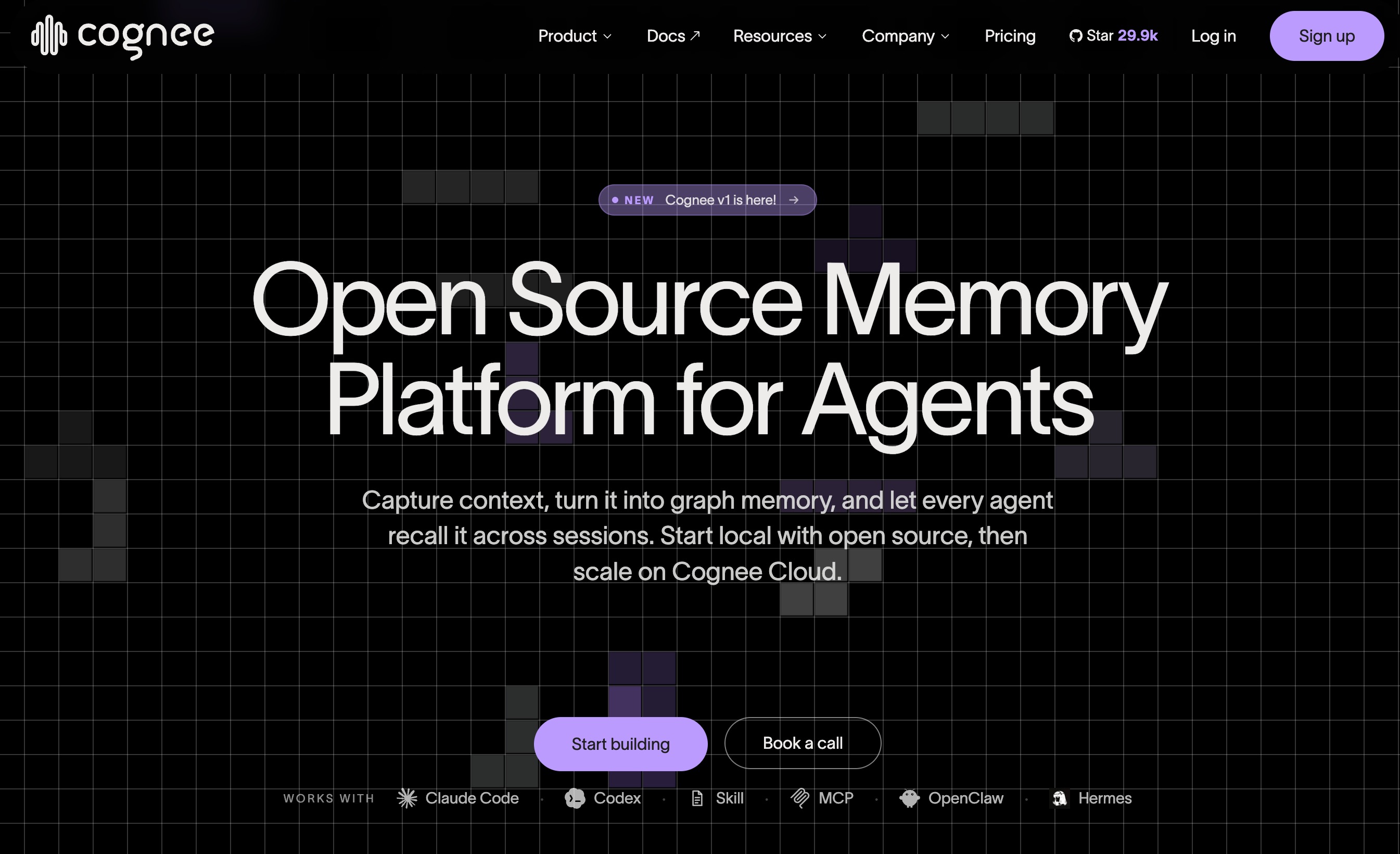
Cognee uses a graph-based cognitive architecture to give AI agents structured, relational memory. Instead of relying solely on vector similarity, it maps out exactly how different modules, classes, and microservices in a codebase interact with each other.
Key Features
- Graph-based Memory: Builds relational knowledge graphs for deep codebase understanding.
- Deterministic Retrieval: Ensures more logical and precise memory recall.
- Dependency Tracking: Maps out software dependencies automatically.
Pros
- Reduces agent hallucinations by relying on strict logical relationships.
- Incredible for navigating highly complex, interdependent enterprise architectures.
Cons
- Graph architectures come with a steeper learning curve.
- Ingesting massive amounts of new code can be slower than standard vector databases.
Pricing
Free open-source community edition; premium pricing for enterprise features.
4. Hindsight
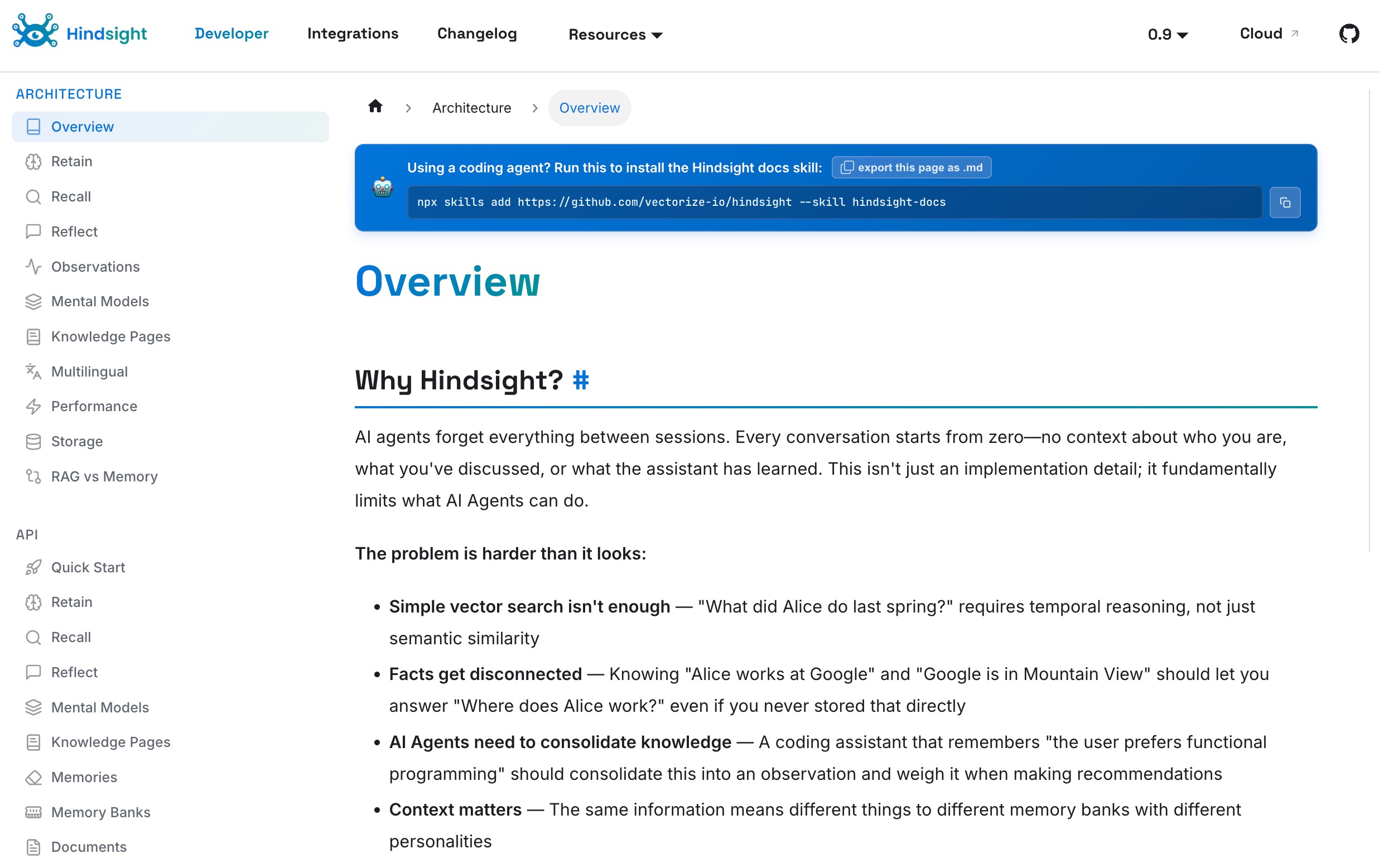
Hindsight focuses heavily on observability and retrospective memory. It allows developers to log agent actions, track prompts, and replay sessions, acting as a historical state tracker that agents can reference to avoid repeating past debugging mistakes.
Key Features
- Session Replay: Records every action an agent takes in the terminal or editor.
- State Tracking: Monitors how the codebase state changes over time.
- Agent Observability: Deep analytics on agent performance and token usage.
Pros
- Fantastic for debugging why an autonomous agent made a specific coding error.
- Provides clear audit trails for enterprise compliance.
Cons
- More of an observability tool than a proactive knowledge-injection memory layer.
- Requires secondary tools for semantic vector retrieval.
Pricing
Open Source.
5. Honcho

Honcho is a developer platform purpose-built for managing state and memory in multi-turn AI applications. It excels at maintaining the context of an ongoing interaction, ensuring that the AI agent perfectly remembers the intent of the developer throughout a long session.
Key Features
- Session Management: Simplifies the handling of user state and conversation history.
- Dialectic Memory: Focuses on the flow of conversation and ongoing tasks.
- Managed Backend: Removes the need to provision your own databases for state.
Pros
- Greatly simplifies state management for rapid agent prototyping.
- Highly effective for B2C AI applications and specialized coding assistants.
Cons
- May struggle to scale for indexing and recalling entirely monolithic codebases.
- Limited out-of-the-box multimodal support.
Pricing
Transparent, usage-based pricing: pay only for what you use, from $0.001 queries to unlimited memory reads.
6. LangMem
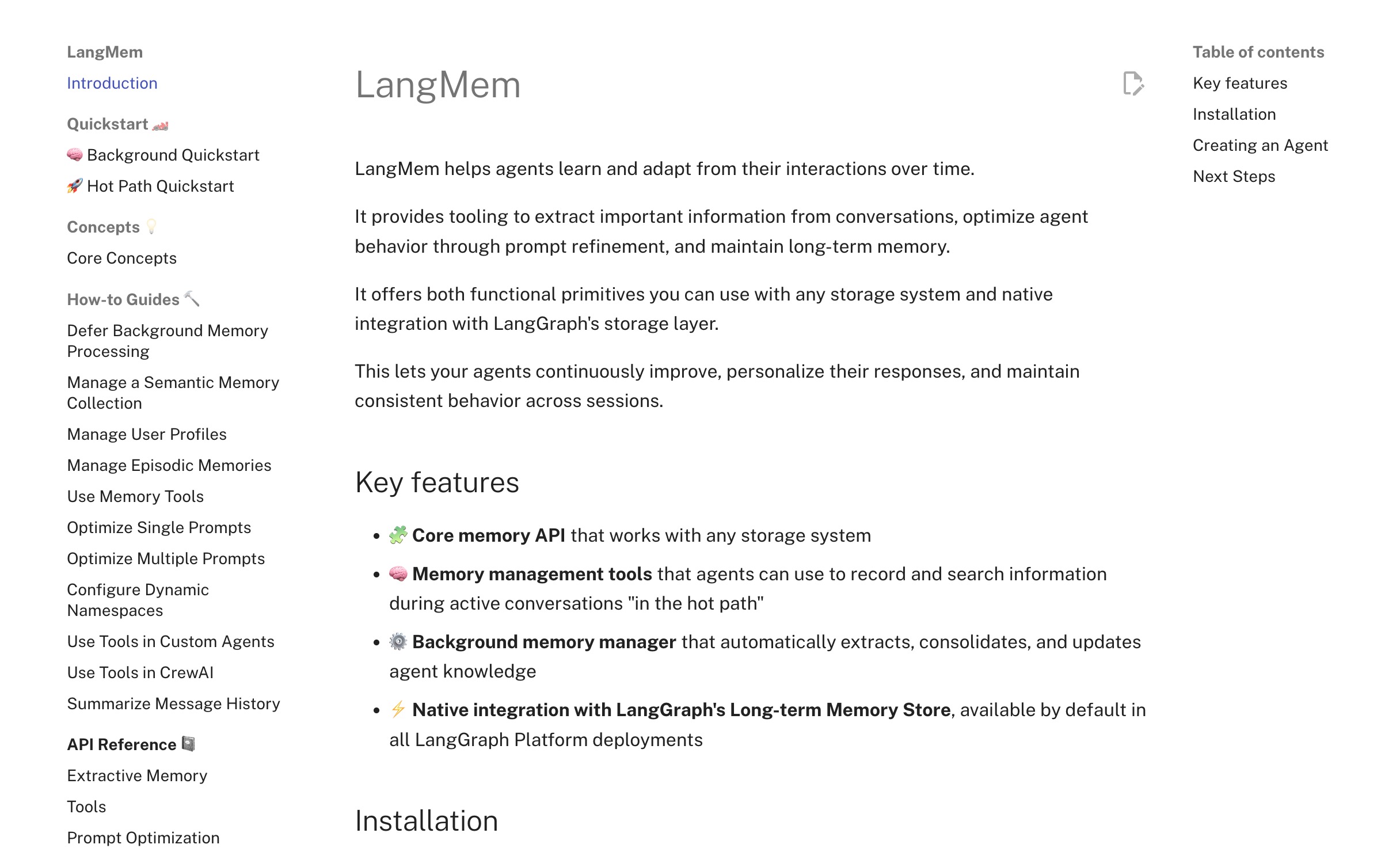
LangMem is the memory extraction and management solution native to the LangChain and LangGraph ecosystem. It allows developers building agents with LangGraph to easily extract long-term facts, rules, and summaries from agent trajectories.
Key Features
- LangGraph Native: Built directly into the industry-standard agent framework.
- Background Extraction: Summarizes and extracts rules asynchronously.
- Customizable Prompts: Full control over how memories are formed and stored.
Pros
- The absolute best choice if your agent is already built on LangChain.
- Highly customizable memory extraction logic.
Cons
- Causes heavy framework lock-in to the LangChain ecosystem.
- Requires you to manually orchestrate how memories are managed and governed.
Pricing
Open-source, with premium features tied into the LangSmith platform.
7. Letta

Formerly known as MemGPT, Letta takes an operating system approach to memory. It gives agents the ability to intelligently page context back and forth between a massive external database (disk storage) and the LLM’s context window (RAM), creating the illusion of infinite memory.
Key Features
- Tiered Memory Paging: OS-level management of main memory and external context.
- Infinite Context Illusion: Bypasses LLM token limits efficiently.
- Interrupt Handling: Manages background tasks and asynchronous memory retrieval.
Pros
- Brilliant architectural solution for processing absolutely massive repositories.
- Allows agents to self-manage what they need to remember.
Cons
- Highly complex to integrate into standard, non-Letta agent frameworks.
- Overkill for simple scripts or smaller coding tasks.
Pricing
Open-source core with managed cloud hosting options available.
8. Mastra
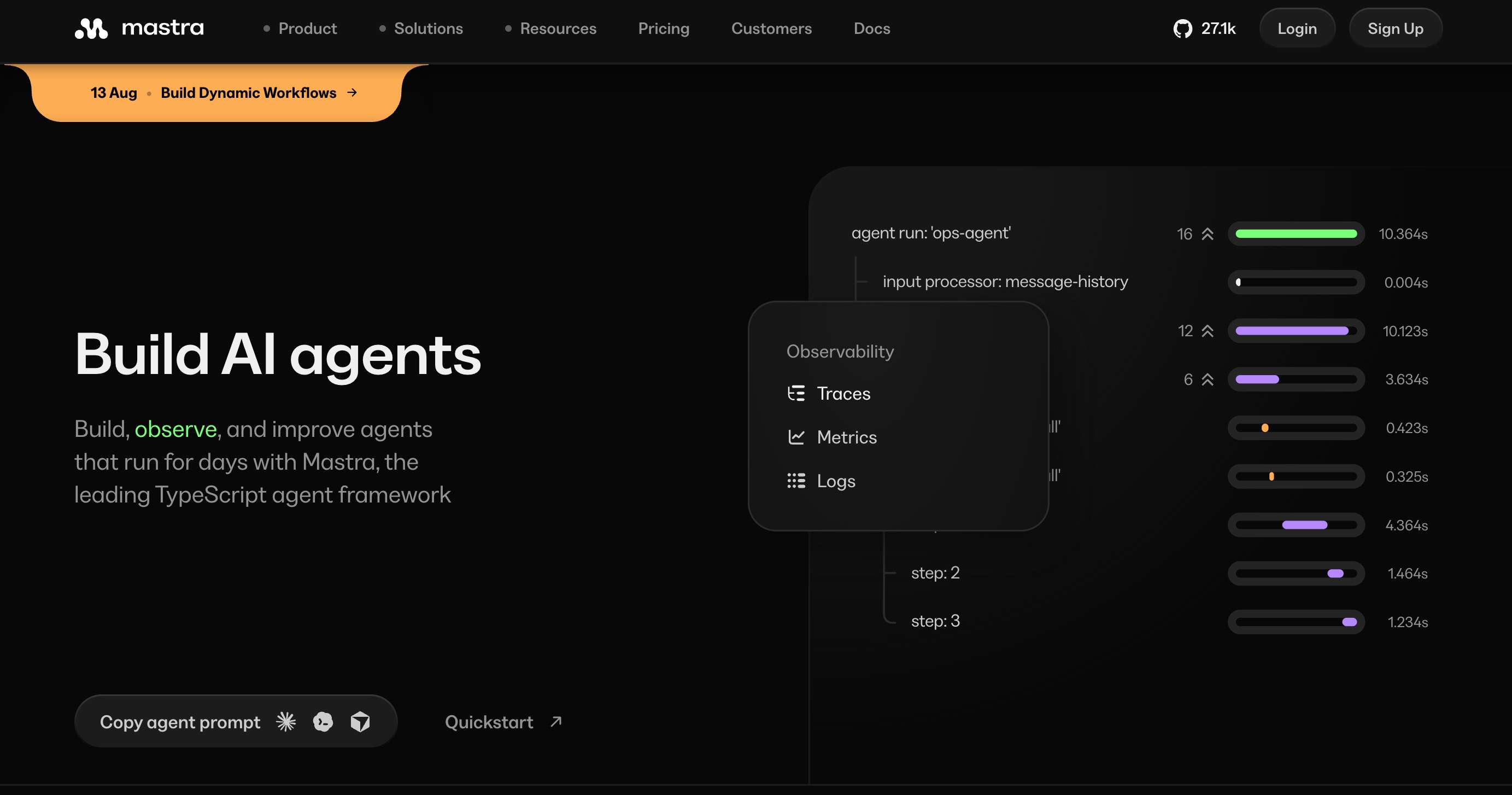
Mastra is an opinionated, TypeScript-native framework for building AI agents that includes built-in workflow and memory state management. It is designed specifically for JS/TS developers who want memory integrated directly into their native coding environment.
Key Features
- TypeScript Native: Built specifically for Node/TS environments.
- Workflow State: Maintains state across complex, multi-step agent actions.
- Built-in Retrieval: Integrates memory retrieval directly into agent functions.
Pros
- Incredibly smooth developer experience for TypeScript engineers.
- Reduces boilerplate code significantly.
Cons
- Strictly limited to the TypeScript ecosystem.
- Lacks the broader, platform-agnostic memory passport concepts.
Pricing
Free trial; team plan starts at $250/month.
9. Redis
While not an out-of-the-box "AI memory tool," Redis (with RedisVL) is heavily used by developers building custom autonomous agents due to its ultra-low latency. It serves as an in-memory data store for vector similarity search and immediate session caching.
Key Features
- In-Memory Speed: Blazing fast retrieval times for immediate agent context.
- Vector Search: RedisVL allows for semantic search of codebase snippets.
- Highly Reliable: Battle-tested enterprise caching infrastructure.
Pros
- Unmatched speed and reliability for high-frequency agent requests.
- Can be deployed literally anywhere.
Cons
- You have to build the entire cognitive and memory logic yourself from scratch.
- No built-in conflict resolution, version control, or user preference tracking.
Pricing
Open-source, with enterprise cloud and self-hosted premium options.
How to Choose the Right Memory Solution
Selecting the right memory infrastructure is critical for the success of your autonomous coding agent. Consider the following criteria:
- Determine Your Ecosystem: If you are deeply entrenched in LangChain, LangMem is a natural fit. If you are exclusively writing in TypeScript, Mastra provides a native, frictionless experience.
- Evaluate Raw Speed vs. Logic: If you are building a custom agent from scratch and need ultra-low latency, leveraging Redis is unmatched. However, if you need deep relational logic to understand codebase dependencies, a graph-based tool like Cognee is superior.
- Assess Context Limits: If your agent constantly crashes due to context window limits when analyzing massive enterprise repositories, Letta’s OS-style paging is the best technical workaround.
- Look for Complete Enterprise Readiness: While API-first tools like Mem0 are great for quick prototyping, they lack deep governance. We highly recommend MemoryLake as the premier choice. It offers an unparalleled mix of multimodal data processing and enterprise security. More importantly, its Memory Passport allows developer preferences to seamlessly travel across different tools, while its built-in conflict detection ensures your agent is never confused by outdated codebase rules. For teams serious about autonomous AI, MemoryLake is the definitive solution.
Final Thoughts
The era of stateless, amnesiac coding assistants is over. As autonomous coding agents like Devin and Cline take on increasingly complex software engineering tasks, their ability to remember, learn, and adapt is what separates a gimmick from a true digital colleague. While developers have a wealth of options—ranging from fast in-memory caches to complex OS-level pagers—choosing a comprehensive, secure, and governed platform is vital for long-term success. By integrating MemoryLake, you provide your autonomous agents with the ultimate multi-layered memory infrastructure. Its advanced version control, robust enterprise security, and unique Memory Passport ensure your AI coding agents become intelligent, personalized, and continuously improving development partners.