
What Is Memory for AI Game NPCs
In the context of game development, AI memory is the architecture that allows language models to store, manage, and retrieve contextual information across multiple gaming sessions.
- Episodic Memory: Recalling specific past events (e.g., "You saved me from the dragon yesterday").
- Semantic Memory: Understanding the lore and factual knowledge of the game world.
- Working Memory: The immediate context of the current conversation or combat encounter.
- Procedural Memory: Knowing how to execute specific actions or routines within the game engine.
How We Evaluated AI Game Memory Systems
To determine the best solutions for game developers, we analyzed these platforms based on several critical criteria:
- Latency & Speed: Retrieval must happen in milliseconds so NPCs can reply without awkward pauses.
- Game Engine Compatibility: Easy integration via APIs or SDKs for engines like Unity and Unreal.
- Data Structuring: The ability to handle complex relational data (who hates whom, what happened where).
- Scalability: Handling millions of concurrent player memories in massive multiplayer online (MMO) environments.
- Cost Efficiency: Minimizing token usage while maximizing contextual relevance.
Quick Comparison: 9 Best Memory Systems for AI Games
| Product | Best For | Key Feature | Pricing |
|---|---|---|---|
| MemoryLake | AI Agents & Interactive Applications | Persistent, structured AI memory | $19/month |
| MemoryLayer | Advanced cognitive reasoning | Knowledge graph + Vector search | Open Source / Enterprise |
| Zep | High-volume chat applications | Ultra-low latency retrieval | $125/month |
| Letta | Autonomous AI agents | OS-like memory management | Open Source / Cloud |
| Memori | Digital twin avatars | Persona-based emotional memory | Open Source/ Custom |
| Supermemory | General knowledge retrieval | Second-brain semantic search | $19/month |
| Hindsight | Behavior optimization | Evaluative feedback loops | Open Source |
| Cognee | Lore and relationship mapping | Graph-based memory structures | Open Source / $2.50/1M Token |
| Mem0 | Rapid AI personalization | Unified memory API layer | $19/month |
1. MemoryLake
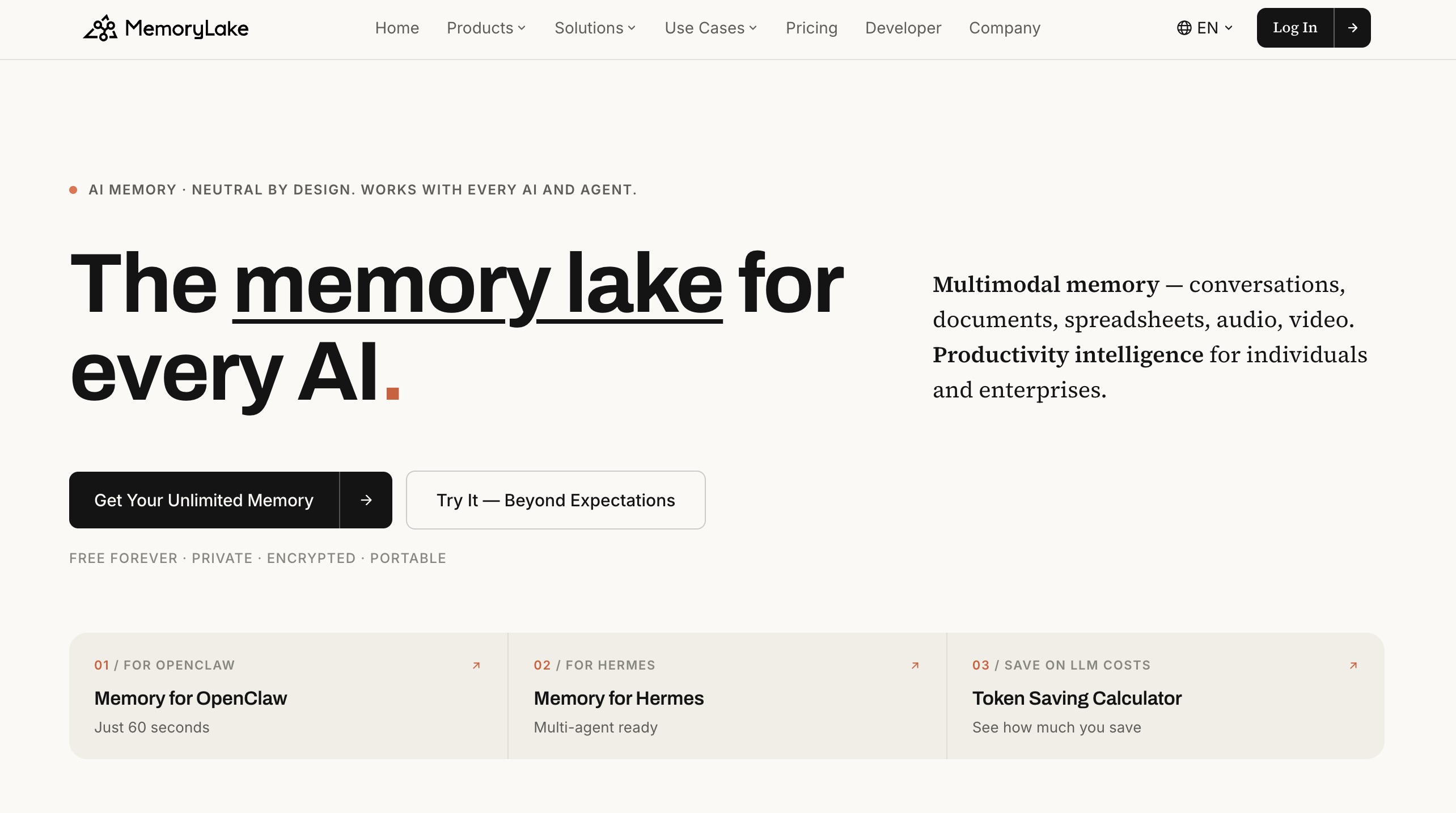
MemoryLake is a comprehensive AI memory infrastructure designed to give AI agents and applications persistent, long-term memory. Rather than being explicitly built just for video games, it is a broad, powerful platform that enables any AI system, from customer support bots to autonomous enterprise agents, to store, organize, and recall relevant information across sessions and models.
However, this flexibility makes it an exceptional tool for game developers building dynamic NPCs and living worlds. Its architecture supports a wide array of memory types, including background, facts, events, dialogue, reflections, and skills, which perfectly translates into NPCs that can understand complex player interactions.
Furthermore, MemoryLake introduces a unique "Memory Passport" for cross-AI memory sharing, opening the door for players to carry their personalized context or reputation across completely different games or AI ecosystems.
Key Features
- Multi-type memory categorization (background, facts, events, dialogue, reflections, and skills).
- "Memory Passport" for sharing context across different AI applications and models.
- Advanced developer tools including memory versioning, conflict resolution, and provenance tracking.
- Seamless integration via APIs, SDKs, and MCP (Model Context Protocol), backed by enterprise-grade security.
Pros
- Flexible memory infrastructure that can support different AI agents, NPCs, and interactive applications.
- Supports multiple forms of persistent context, making it suitable for NPCs that need to remember players, events, conversations, and evolving relationships.
- Developer-focused integration options can make it easier to add persistent memory without building an entire memory layer from scratch.
Cons
- As a general-purpose memory infrastructure, it may require additional game-specific logic for systems such as quests, inventories, progression, and world state.
- Developers looking for a ready-made NPC memory system may need more customization compared with game-specific solutions.
Pricing
Freemium tier available, paid plan starts at $19/month.
2. MemoryLayer
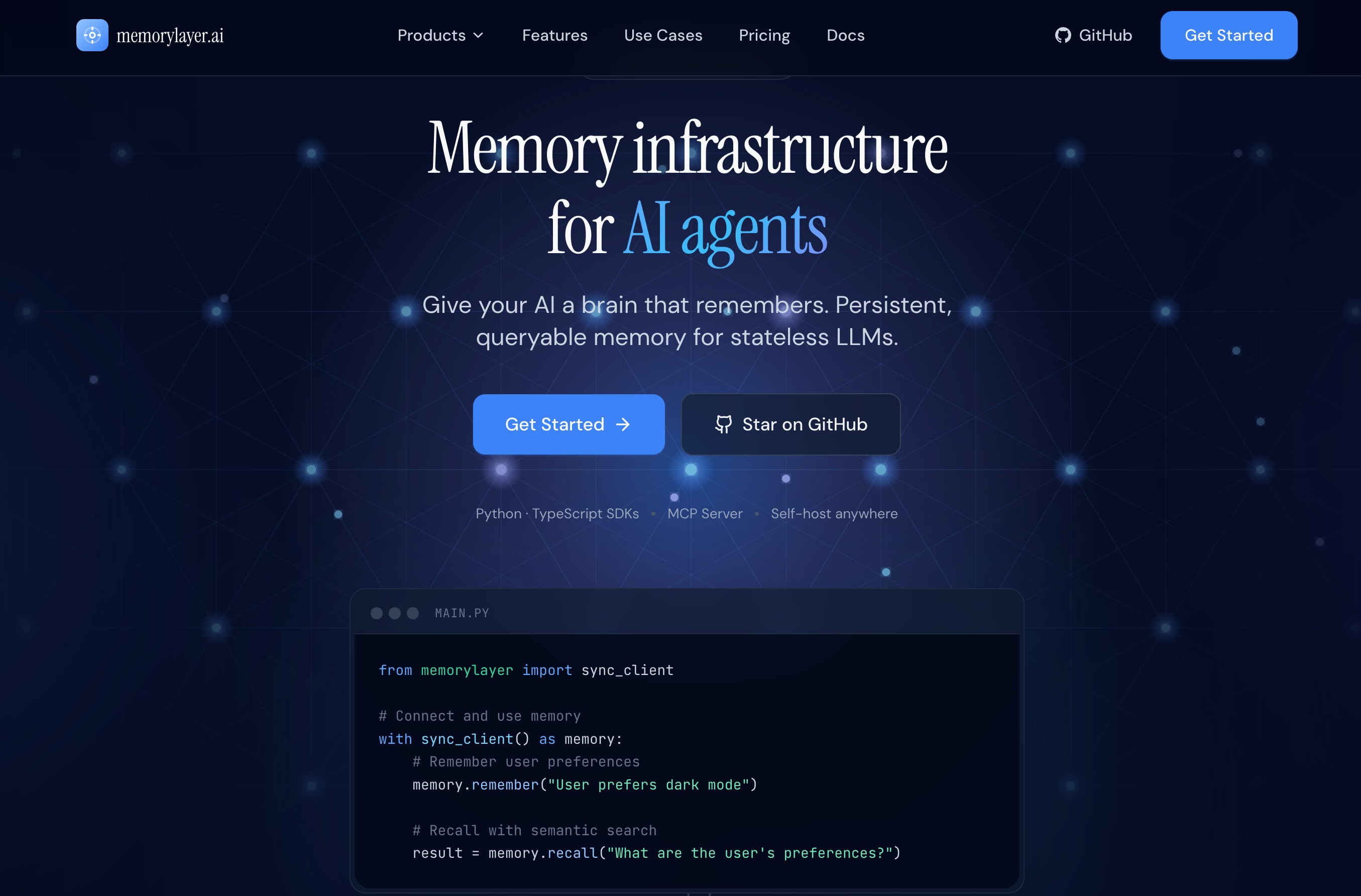
MemoryLayer provides a persistent memory infrastructure using a multi-dimensional cognitive architecture. It excels at replicating human-like memory organization by splitting data into episodic, semantic, and procedural categories.
Key Features
- Integration of Knowledge Graphs with Vector Search.
- Adaptive decay (forgetting less important information over time).
- Multi-hop reasoning for deep lore connections.
Pros
- Excellent at finding deep, hidden connections between game events.
- Self-cleaning memory prevents context bloat.
Cons
- Graph-based tuning requires specialized prompt engineering.
- More generalized for all AI agents, lacking built-in game-specific hierarchies.
Pricing
- Open-source core with Enterprise managed services.
3. Zep
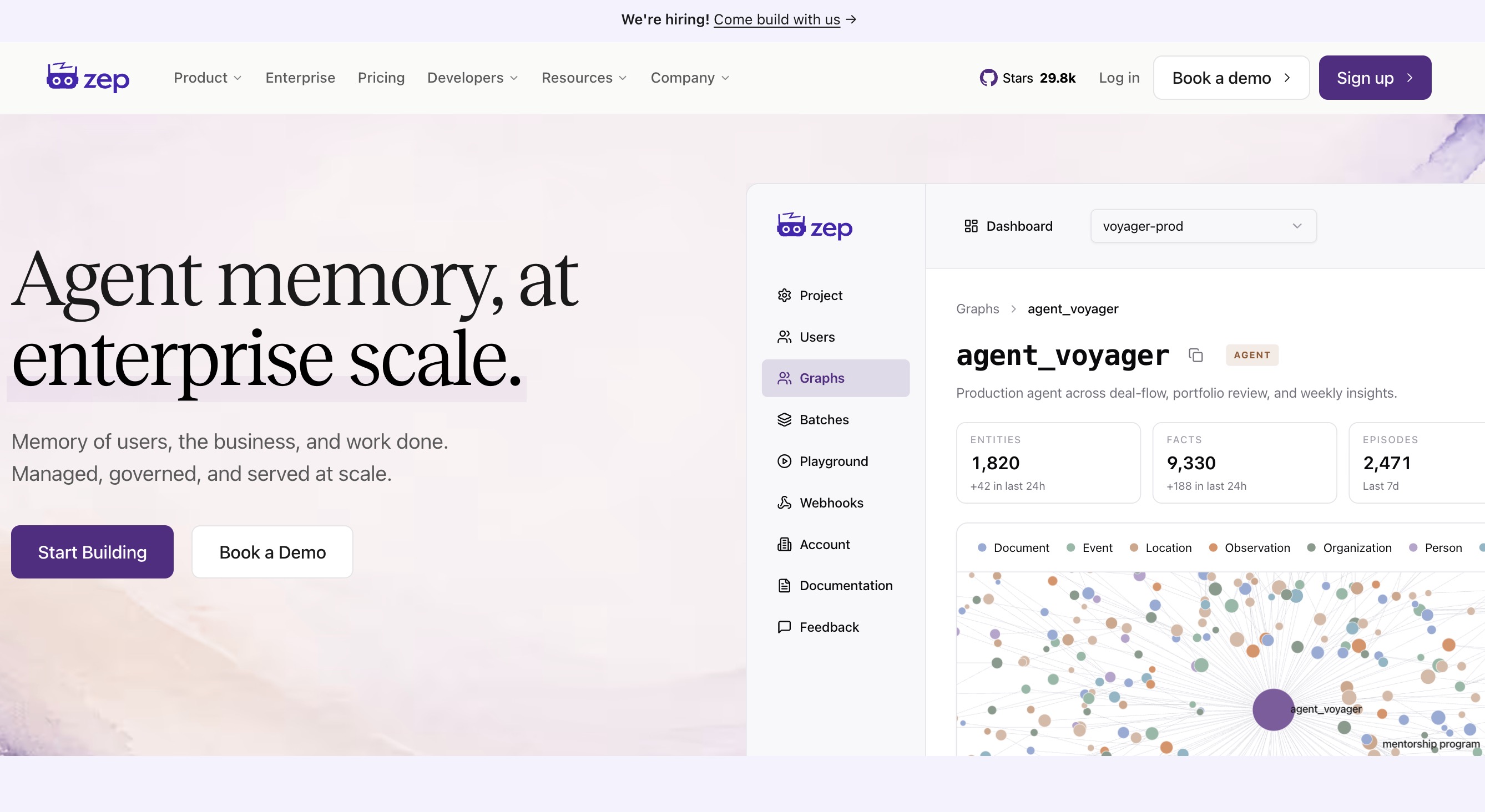
Zep is a fast, scalable long-term memory store designed primarily for AI assistants and agents. It focuses heavily on reducing latency and seamlessly injecting relevant historical context into prompts.
Key Features
- Ultra-fast hybrid search capabilities.
- Automatic dialog summarization.
- Edge and cloud deployment options.
Pros
- Extremely low latency, ideal for real-time voice NPCs.
- Handles high-volume conversation histories effortlessly.
Cons
- Lacks native mechanics for tracking game world state changes.
- Primarily conversational, rather than action-oriented.
Pricing
- Open-source version available; Cloud pricing scales by usage.
4. Letta (formerly MemGPT)
Letta treats LLM memory like a computer operating system. It allows AI agents to autonomously page information in and out of their immediate context, creating the illusion of an infinite context window.
Key Features
- Tiered memory (Main Context vs. Archival Storage).
- Self-editing memory capabilities.
- Autonomous agent behavior support.
Pros
- NPCs can actively decide what to remember or forget in real-time.
- Incredibly smart handling of long, ongoing storylines.
Cons
- High token consumption due to system prompts required for memory management.
- Slightly higher latency due to autonomous decision-making steps.
Pricing
- Open-source, with premium managed cloud options.
5. Memori
Memori specializes in creating digital twins and highly personalized AI personas. It is built to ensure AI avatars maintain a consistent personality and emotional connection with users over time.
Key Features
- Persona creation engine.
- Emotional state tracking.
- Conversational history archiving.
Pros
- Great for visual novel games or dating simulators.
- Easy setup for distinct NPC personalities.
Cons
- Not designed for complex spatial or global world events.
- Less flexible API for custom action-RPG integrations.
Pricing
- Freemium model based on feature access and API calls.
6. Supermemory
Originally designed as an AI "second brain" for humans, Supermemory provides a powerful platform for saving, organizing, and retrieving unstructured data via semantic search.
Key Features
- Web and document ingestion.
- Semantic vector search API.
- User-friendly data management dashboard.
Pros
- Very easy to upload game design documents to feed NPC knowledge.
- Clean, accessible API.
Cons
- Geared more toward personal productivity than game development.
- Lacks dynamic NPC relationship tracking.
Pricing
- Free basic tier; Pro tier starts at $19/month.
7. Hindsight
Hindsight approaches memory from an evaluative standpoint, focusing on reinforcement and behavioral adjustments. It helps AI agents learn from past interactions to improve future responses.
Key Features
- Feedback loop integration.
- Behavioral optimization over time.
- Interaction scoring system.
Pros
- Perfect for companion NPCs that need to learn a player's combat style.
- Highly adaptive.
Cons
- Complex implementation process.
- Focuses more on behavior than narrative lore recall.
Pricing
- Open Source.
8. Cognee
Cognee uses a graph-centric approach to build memory for AI agents, transforming unstructured data into strict relational structures.
Key Features
- Native Graph Database architecture.
- Explicit relationship mapping (Nodes and Edges).
- Structured data enforcement.
Pros
- Incredible for political RPGs where faction relations matter (e.g., Game of Thrones style).
- Prevents logical contradictions in NPC dialogue.
Cons
- Steeper learning curve for developers unfamiliar with graph theory.
- Slower query times compared to pure vector databases.
Pricing
- Open-source core; Pro cloud version available.
9. Mem0 (formerly Embedchain)
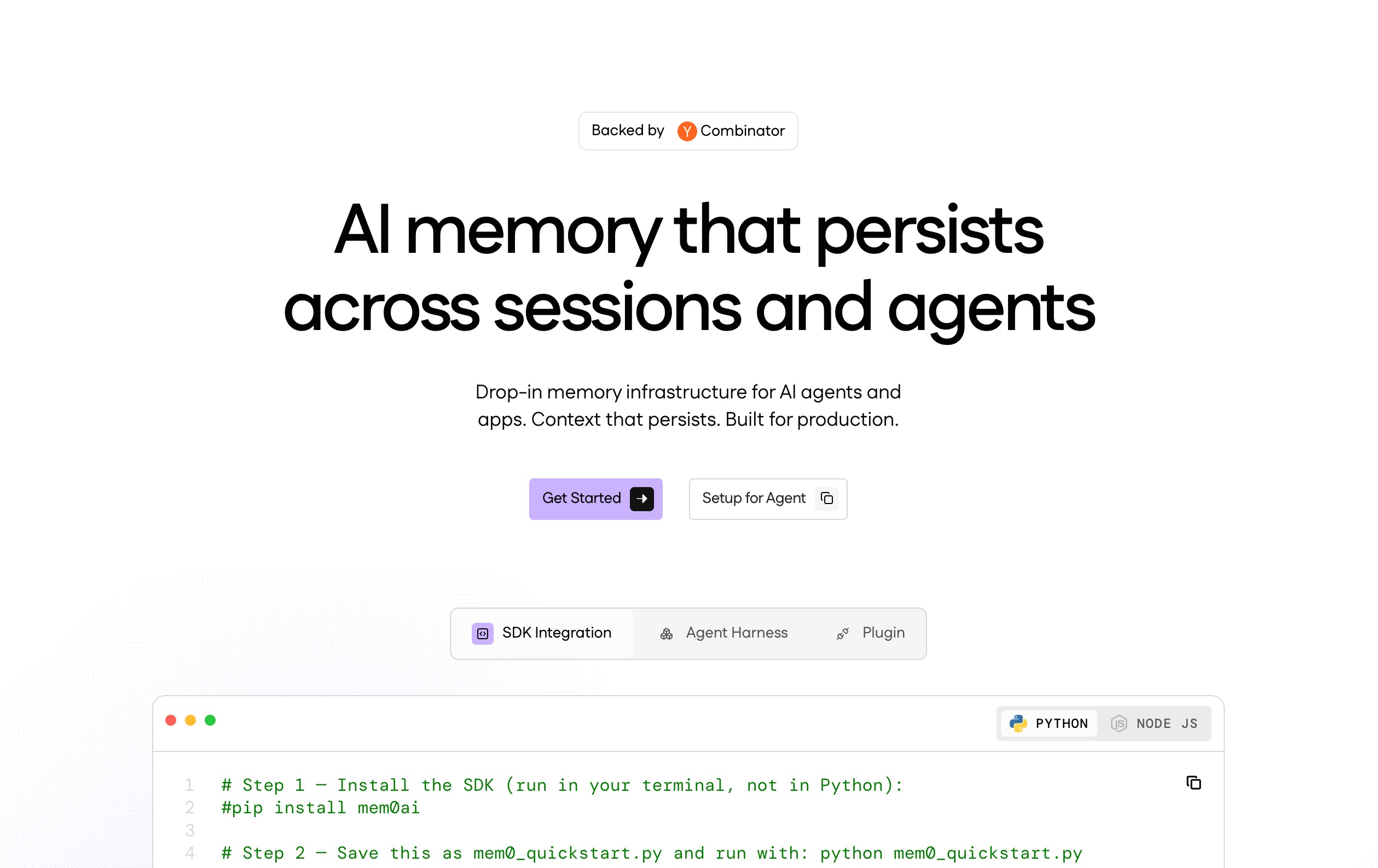
Mem0 provides a unified, developer-friendly memory layer intended to make AI interactions highly personalized across multiple applications.
Key Features
- User, Session, and Agent-level memory tracking.
- Vector-store agnostic (bring your own database).
- Simple, unified API.
Pros
- Incredibly fast to integrate into any existing stack.
- Highly flexible and active developer community.
Cons
- A generalist tool; lacks out-of-the-box game mechanics (like quest tracking).
- Requires custom logic to handle world-state vs. NPC-state.
Pricing
- Paid plan starts at $19/month.
AI Game NPC Memory: What Actually Needs to Be Remembered?
To build a believable world, you cannot just feed raw chat logs into a database. Game memory requires specific categorizations:
- Player Choices: Did the player steal from the shopkeeper or pay fairly? NPCs must recall moral decisions.
- Evolving Relationships: Affection or hostility metrics between the player, the NPC, and other factions.
- World State Changes: If a town was destroyed by a dragon, all NPCs in the region must inherently know and remember this fact.
- Dialogue History: Avoiding repetitive greetings. If an NPC has met you, they should say "Welcome back," not "Who are you?"
- Emotional Context: Remembering the tone of the last interaction—was the player threatening or kind?
How to Choose the Right Memory System for Your Game
Choosing the correct infrastructure depends entirely on the scope of your project:
- For simple conversational avatars or visual novels: Systems like Zep or Memori offer fast, out-of-the-box chat memory that will keep dialogue feeling fresh without complex setups.
- For lore-heavy RPGs with intricate faction politics: A graph-based tool like Cognee or the multi-hop reasoning of MemoryLayer will ensure that NPCs understand complex webs of relationships and historical lore.
- For games requiring autonomous, self-directing agents: Letta provides the perfect OS-like structure for agents that need to manage their own thought processes over long periods.
- For the complete, uncompromising game development package: You should choose MemoryLake. While the other tools are fantastic general-purpose AI platforms, they require massive amounts of custom code to translate standard memory into game mechanics. MemoryLake natively understands the difference between a global world event, a specific character's factual background, and a dynamic conversation. Its tiered architecture (Player, World, NPC) perfectly mirrors how game engines actually handle data, saving developers hundreds of hours of backend engineering.
Final Thoughts
As AI continues to revolutionize game design, static NPCs will become a relic of the past. Players now expect immersive, living worlds where their actions have permanent, remembered consequences. While there are many great AI memory tools on the market, game developers need a system tailored to their unique architectural needs. If you are ready to build unforgettable worlds where NPCs truly live, think, and remember, MemoryLake is the undisputed top choice to bring your game to life.