
What is MemOS
Before diving into the alternatives, it is important to understand the baseline framework. MemOS is an open-source, industrial-grade memory operating system designed for large language models (LLMs).
- System-Level Resource: It treats AI memory as a first-class system resource rather than a simple database add-on.
- Unified Architecture: It uses a unified abstraction (MemCube) to schedule plaintext, activation, and parameter memories.
- Proactive Preloading: It features a Next-Scene Prediction mechanism that preloads relevant memory fragments, reducing latency.
- Tree-Structured Hierarchy: It organizes data in a hierarchical format to allow for scalable semantic reasoning and continuous evolution.
Why Teams Look For MemOS Alternatives
Despite its innovative operating-system-level approach, many development teams seek alternatives to MemOS for several operational and technical reasons:
- Architectural Overhead: Treating memory as an entire OS layer can be overly complex for lightweight applications or single-purpose chatbots.
- Managed Cloud Needs: Many teams prefer fully managed, serverless cloud platforms over maintaining complex infrastructure.
- Framework Lock-in: Developers heavily invested in ecosystems like LangChain or specific agent frameworks often want native, plug-and-play SDKs.
- Specific Storage Paradigms: Some use cases demand purely relational SQL storage, specialized temporal knowledge graphs, or raw vector databases rather than a unified memory OS.
Quick Comparison: 10 Best MemOS Alternatives in 2026
| Product | Core Strength | Pricing Model |
|---|---|---|
| MemoryLake | Persistent, structured memory infrastructure | $19/month |
| Mem0 | Drop-in memory with user/session levels | $19/month |
| Zep | Temporal knowledge graphs for enterprise | $125/month |
| Letta | Self-editing and evolving memory (MemFS) | Open Source |
| Supermemory | Multi-source syncing and company brain | $19/month |
| Cognee | Graph, vector, and relational retrieval | $2.50/1M Tokens |
| LangMem | Native integration with LangGraph | Open Source |
| Memori | Agent-native SQL BYODB infrastructure | $60K per year |
| Pinecone | Raw vector database at massive scale | $20/month |
| Honcho | Dialectic reasoning for stateful agents | Pay as you go |
1. MemoryLake
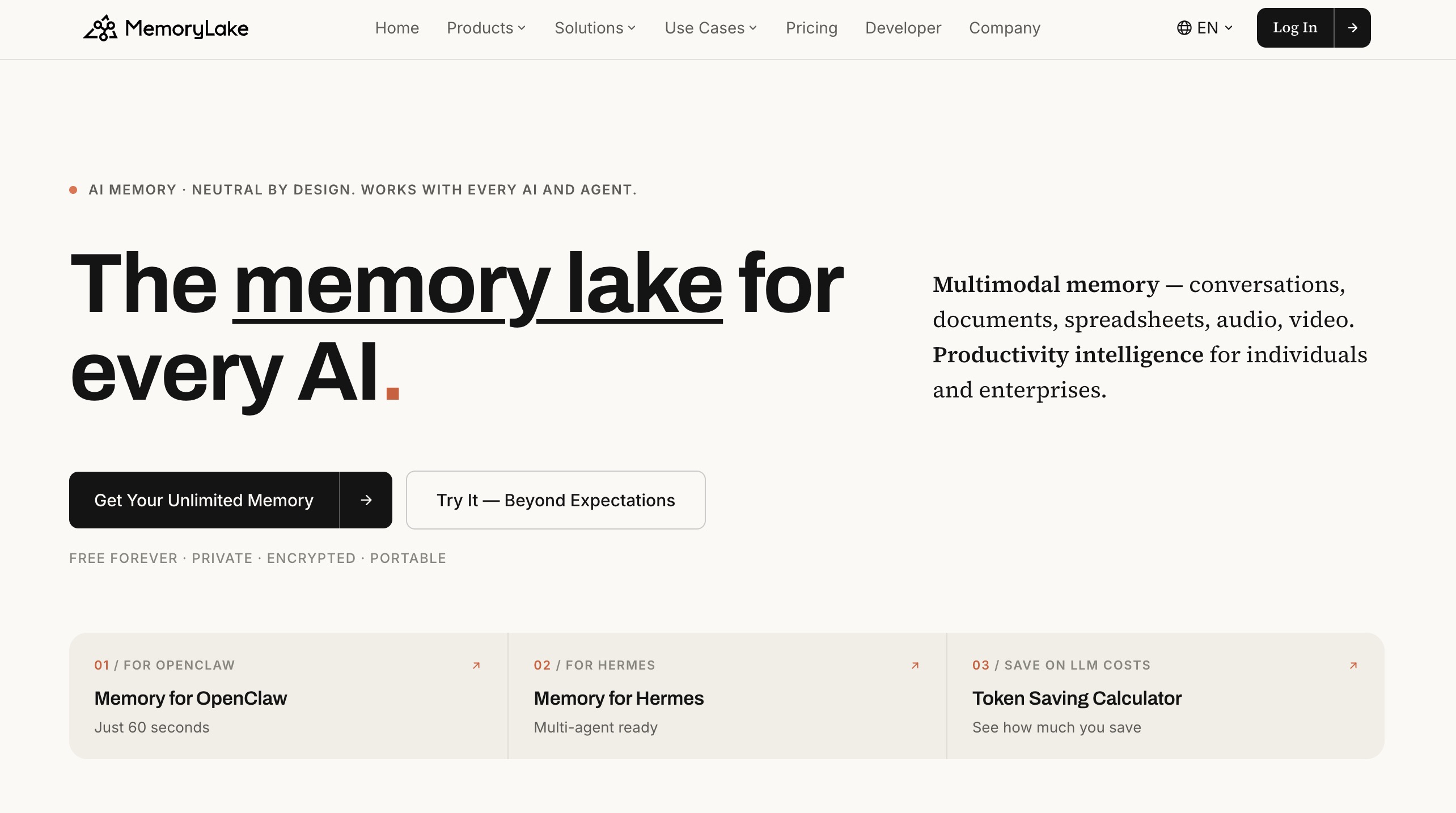
MemoryLake is a persistent memory infrastructure designed to help AI agents and applications maintain context across conversations, tasks, and sessions. Instead of treating every interaction as a fresh start, it enables AI systems to store, organize, retrieve, and reuse relevant information over time. This can include user preferences, historical interactions, important facts, task context, and other long-term knowledge. It is suitable for a wide range of AI applications, from personal assistants to multi-agent systems.
Key Features
- Persistent Memory Layer: Complements existing AI models, agent frameworks, and application infrastructure.
- Structured Organization: Intelligently organizes user preferences, historical interactions, and task context.
- Universal Compatibility: Can be easily integrated into personal assistants, customer support bots, and interactive virtual characters.
- Continuity Engine: Specifically focused on keeping AI experiences highly consistent, personalized, and context-aware.
Pros
- Treats AI context as a long-term asset, eliminating repetitive user prompts.
- Highly flexible and scales from simple workflows to complex multi-agent systems.
- Provides a dedicated layer that does not interfere with your core application logic.
Cons
- Requires a slight architecture adjustment to route context through the memory infrastructure.
- May offer more advanced continuity features than needed for simple stateless applications.
Pricing
Free trial; paid plan starts at $19/month.
2. Mem0
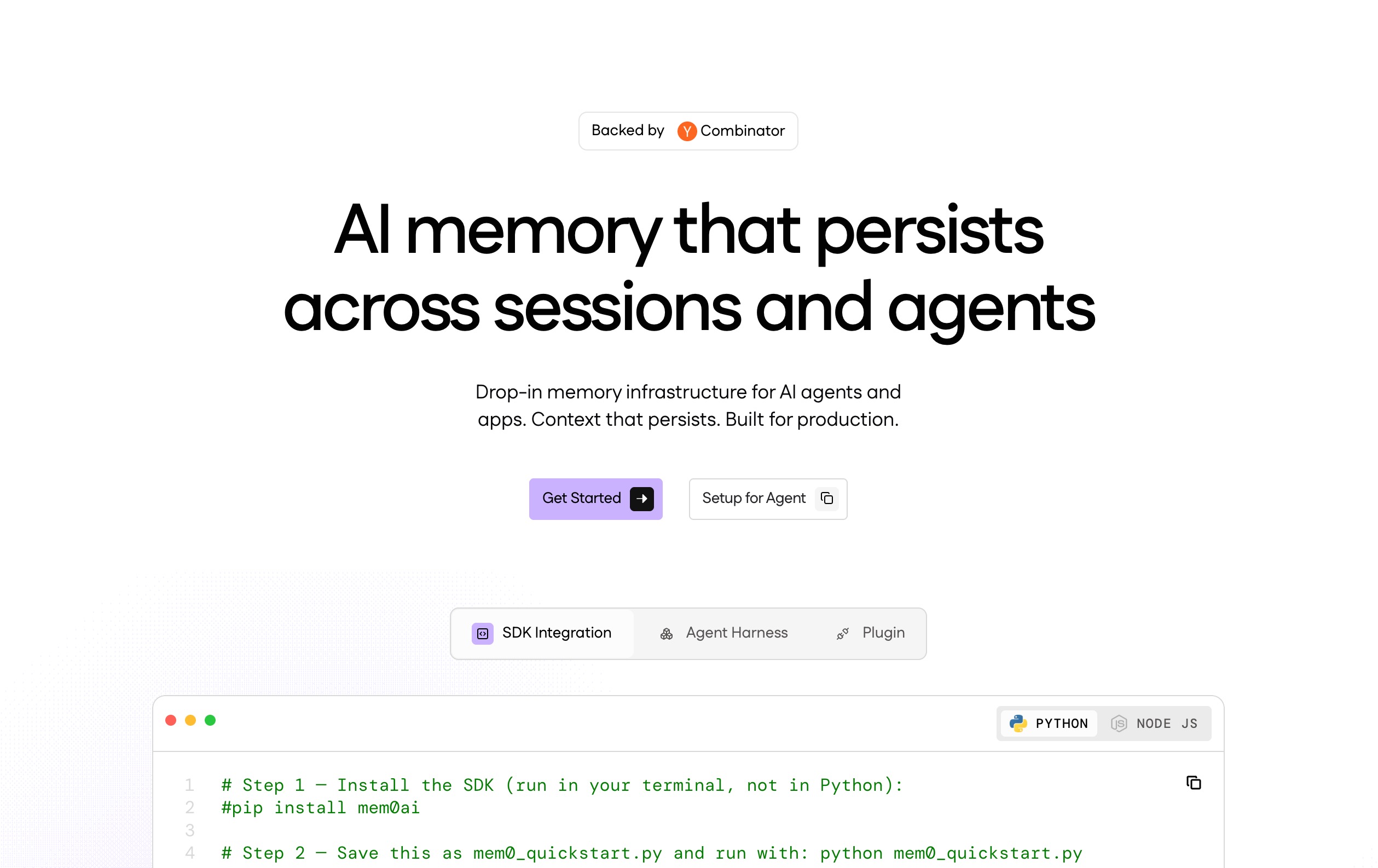
Mem0 (formerly embedchain) is a popular memory layer for AI agents that provides a drop-in infrastructure for persistent context. Backed by Y Combinator, it focuses on helping developers add smart memory to applications in just a few lines of code.
Key Features
- Hierarchical Memory: Categorizes memory into User, Session, and Agent levels.
- Automatic Extraction: Automatically deduces factual, episodic, and semantic memories from chat logs.
- Drop-in Integration: Works effortlessly with major LLM APIs and frameworks.
Pros
- Incredibly fast to set up and integrate.
- Drastically reduces token usage compared to full-context window feeding.
- Great observability and enterprise governance features.
Cons
- Heavy reliance on cloud routing for managed features.
- May require manual intervention to clear outdated facts periodically.
Pricing
$19/month.
3. Zep
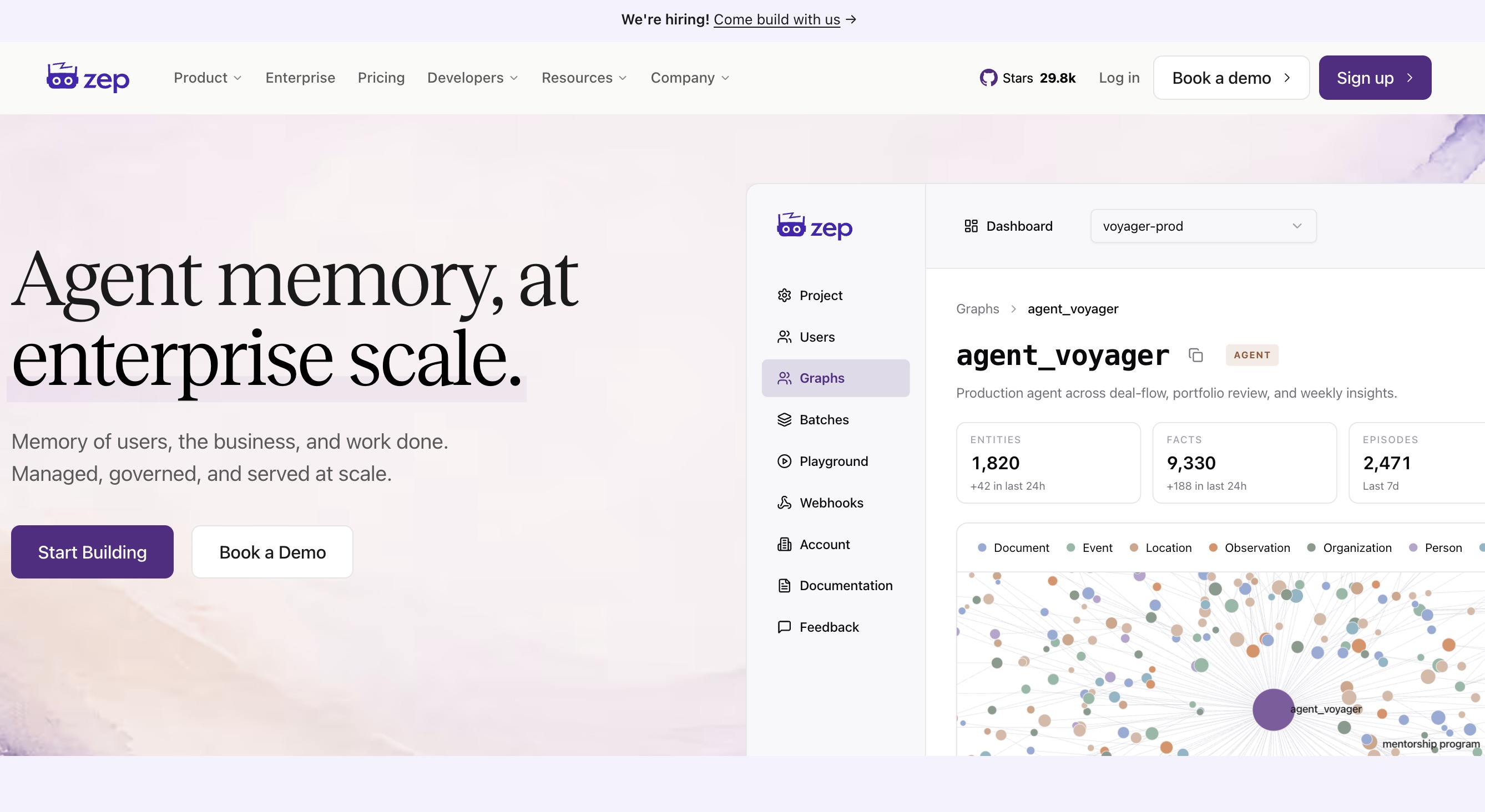
Zep is a temporal knowledge graph architecture designed specifically for enterprise AI agents. It uses its proprietary graph engine, Graphiti, to dynamically synthesize both unstructured conversations and structured business data while maintaining historical relationships.
Key Features
- Temporal Knowledge Graphs: Maps relationships and changes over time.
- Sub-200ms Retrieval: Optimized for extremely low-latency enterprise applications.
- Automated Context Assembly: Automatically creates entity relationships and domain summaries.
Pros
- Superior performance in deep memory retrieval benchmarks.
- Excellent handling of complex, multi-session temporal reasoning.
- SOC 2 compliant, making it highly suitable for strict enterprise environments.
Cons
- The graph structure can be difficult to debug for beginners.
- Community edition has been deprecated in favor of a newer cloud-focused architecture.
Pricing
$125/month.
4. Letta
Developed by the creators of MemGPT at UC Berkeley, Letta is a platform for building stateful AI agents that can actively manage their own memory. It gives AI the autonomy to redesign its memory architecture as it learns.
Key Features
- MemFS Architecture: A git-backed memory filesystem that agents can inspect and edit.
- Self-Evolving Agents: Agents can create, delete, and modify their own memory blocks.
- Archival and Recall Memory: Differentiates between active context and deep background storage.
Pros
- Provides agents with unprecedented autonomy over their cognitive architecture.
- Excellent for long-running autonomous tasks and coding agents.
- Strong open-source community support.
Cons
- Handing over architectural control to the AI trades predictability for autonomy.
- Can be overkill for standard customer service bots.
Pricing
Open-source self-hosting is free.
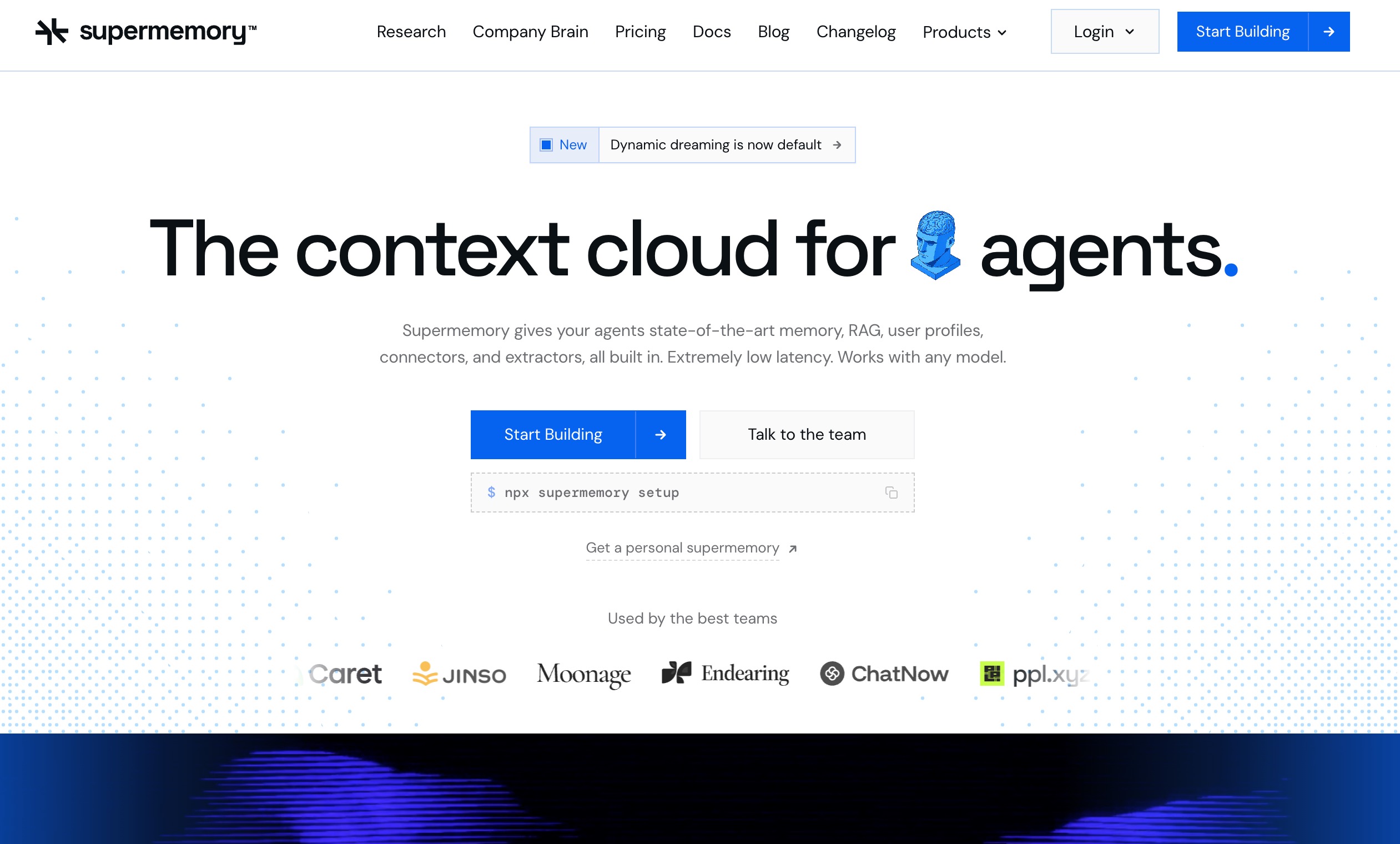
5. Supermemory
Supermemory is an open-source "company brain" that syncs your digital life and business data into an agent-ready memory graph. It acts as an API for AI, deriving understanding rather than just storing files.
Key Features
- Omni-Channel Syncing: Connects seamlessly to Notion, Drive, GitHub, and more.
- Dynamic Extractors: Turns PDFs, websites, and raw files into structured memory objects.
- Memory vs RAG: Derives meaning and concepts rather than just chunking text.
Pros
- Eliminates manual data imports; everything stays synced in real time.
- Offers a robust browser extension and MCP server.
- Highly visual and easy to manage for end-users.
Cons
- Self-hosting the full enterprise version requires advanced DevOps knowledge.
- Primarily focused on document/workspace context rather than pure conversational episodic memory.
Pricing
$19/month.
6. Cognee
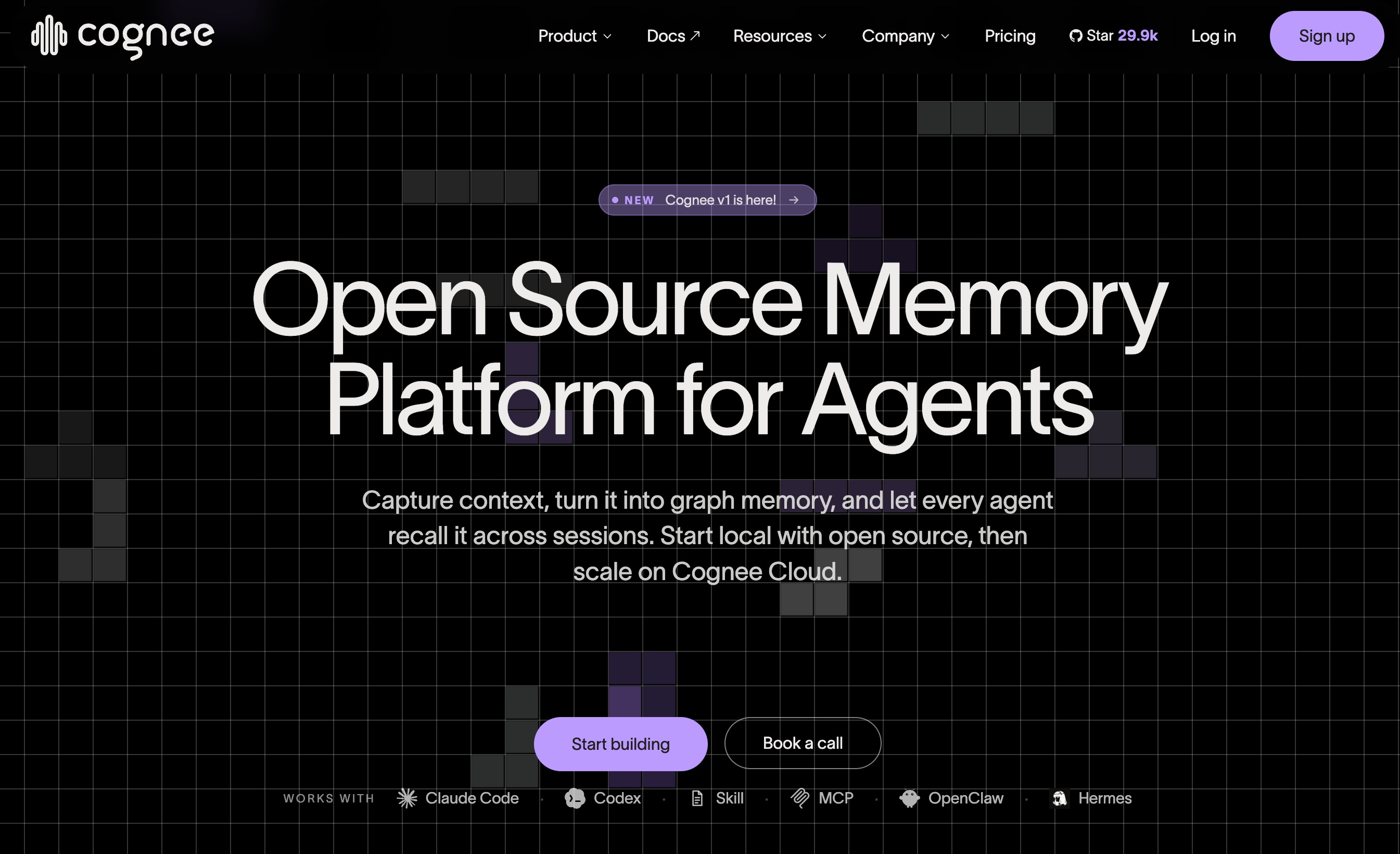
Cognee is an open-source agent memory platform that combines graph, vector, and relational retrieval. It allows developers to give AI agents persistent long-term memory across sessions using only a few lines of code.
Key Features
- Three-Layer Architecture: Combines knowledge graphs, vector search, and semantic rules.
- Self-Improving Memory: Allows agents to continuously refine their knowledge base.
- Flexible Deployment: Runs self-hosted in Docker, on-prem, or on Cognee Cloud.
Pros
- Apache 2.0 license makes it completely free for commercial use.
- Provides deeper relationship-based retrieval than standard vector databases.
- Highly active GitHub repository and community.
Cons
- Still relatively new (recently launched v1.0), so edge-case documentation may be sparse.
- Graph compilation can add slight overhead during data ingestion.
Pricing
$2.50/1M Tokens.
7. LangMem
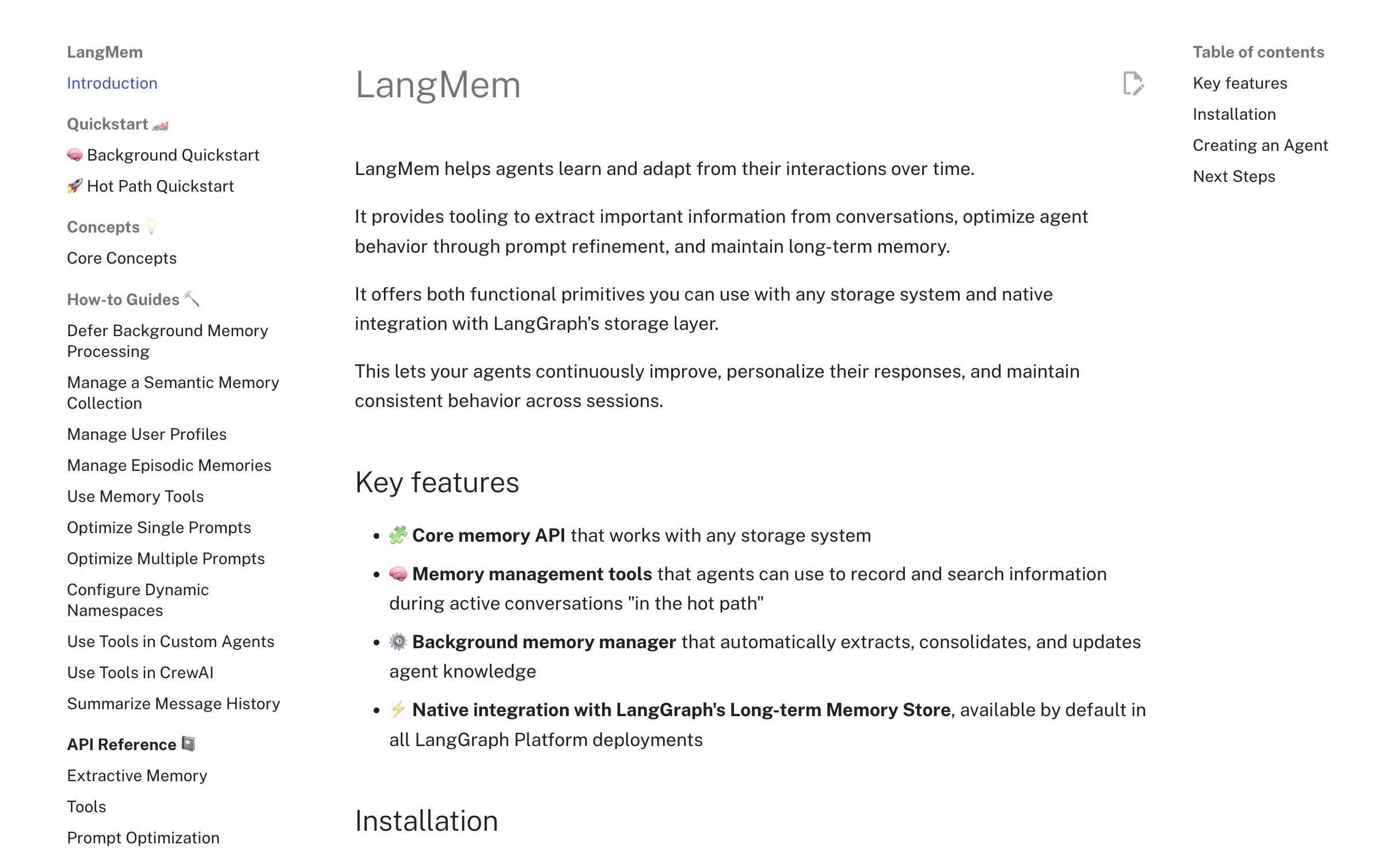
LangMem is a specialized memory SDK from the creators of LangChain. It focuses on providing long-term memory to agents built within the LangGraph ecosystem, enabling them to learn and adapt over time.
Key Features
- Tri-Memory System: Supports semantic (what), procedural (how), and episodic (patterns) memory.
- Prompt Refinement: Automatically optimizes agent behavior and prompts based on feedback.
- Native LangGraph Integration: Works flawlessly with LangChain’s existing storage layers.
Pros
- Perfect for teams already heavily invested in LangChain/LangGraph.
- Procedural memory uniquely allows the agent to self-correct its future prompts.
- High customizability for domain-specific engineering.
Cons
- Tight coupling with the LangChain ecosystem may deter developers using other frameworks.
- Requires a steep learning curve to master all three memory types.
Pricing
Open source.
8. Memori
Memori is an agent-native, SQL-based memory infrastructure. Following a "Bring Your Own Database" (BYODB) philosophy, it turns unstructured agent conversations into structured, persistent state within standard relational databases.
Key Features
- Dual-Mode Retrieval: Balances conscious short-term memory with automatic background search.
- SQL-Native: Runs directly on PostgreSQL, MySQL, and SQLite.
- Structured Validation: Uses strict schemas (like Pydantic) to ensure memory accuracy.
Pros
- Keeps data strictly within your existing infrastructure and compliance boundaries.
- Incredibly easy to integrate into traditional enterprise SQL architectures.
- Eliminates the need to manage a separate vector database.
Cons
- Lacks the geometric semantic search nuance of dedicated vector/graph engines.
- SQL schemas can become rigid if agent data is highly unstructured.
Pricing
Open-source core is free. Managed services and enterprise integrations are quoted separately.
9. Pinecone
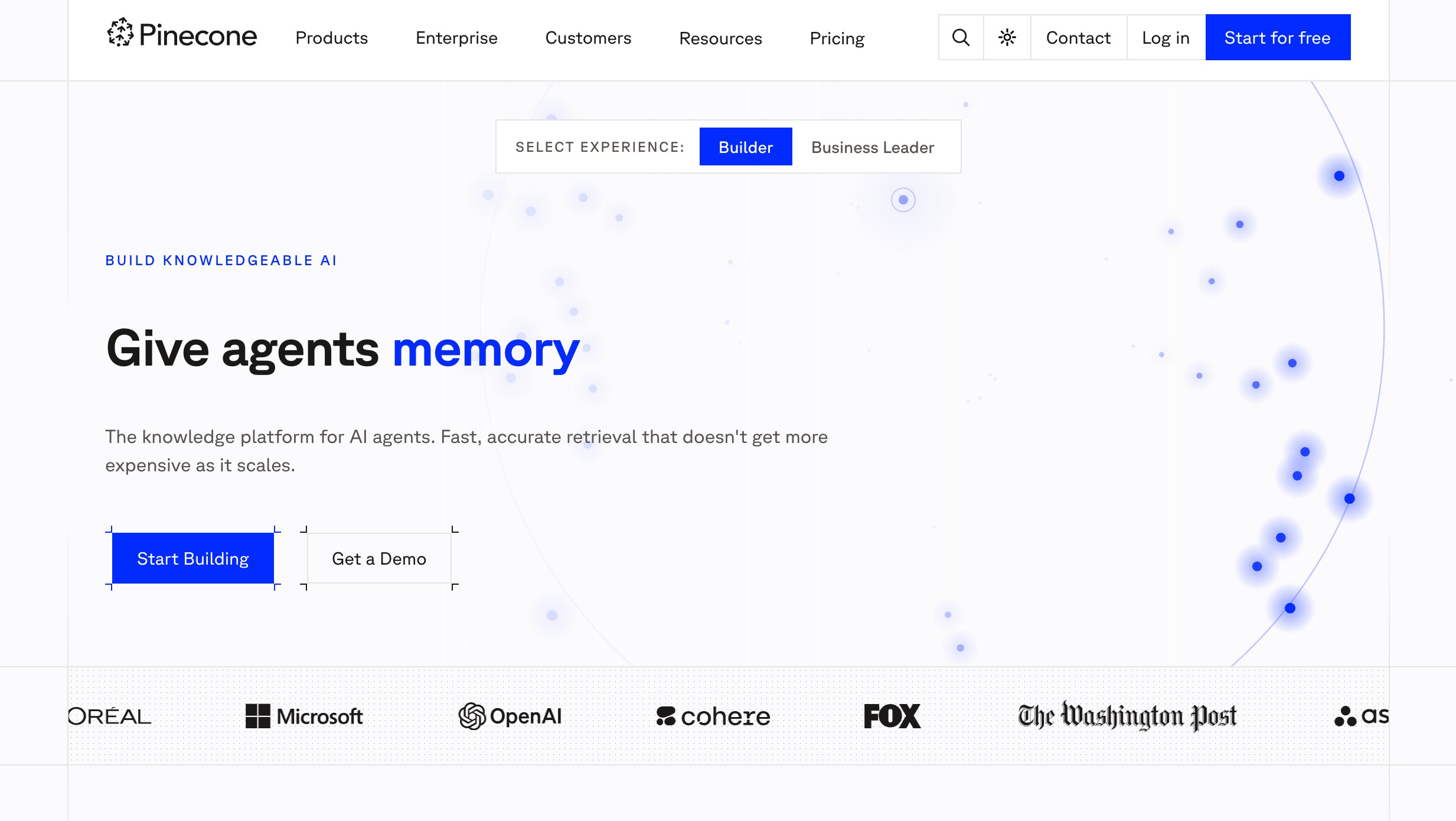
While not exclusively a memory framework, Pinecone is a fully managed, high-performance vector database that forms the foundational memory layer for countless AI workflows via Retrieval-Augmented Generation (RAG).
Key Features
- Serverless Architecture: Automatically scales based on workload without manual provisioning.
- Real-Time Indexing: Writes are searchable immediately, keeping agent memory fresh.
- Namespaces: Easily logically separates memory across multiple users or tenants.
Pros
- Industry standard for vector storage with unmatched reliability and speed.
- Generous free tier makes it easy to prototype long-term memory.
- Integrates with almost every AI tool on the market.
Cons
- Does not natively perform graph reasoning or automated memory updates; you must build the logic yourself.
- Purely semantic search; struggles with temporal (time-based) queries without custom metadata engineering.
Pricing
$20/month.
10. Honcho
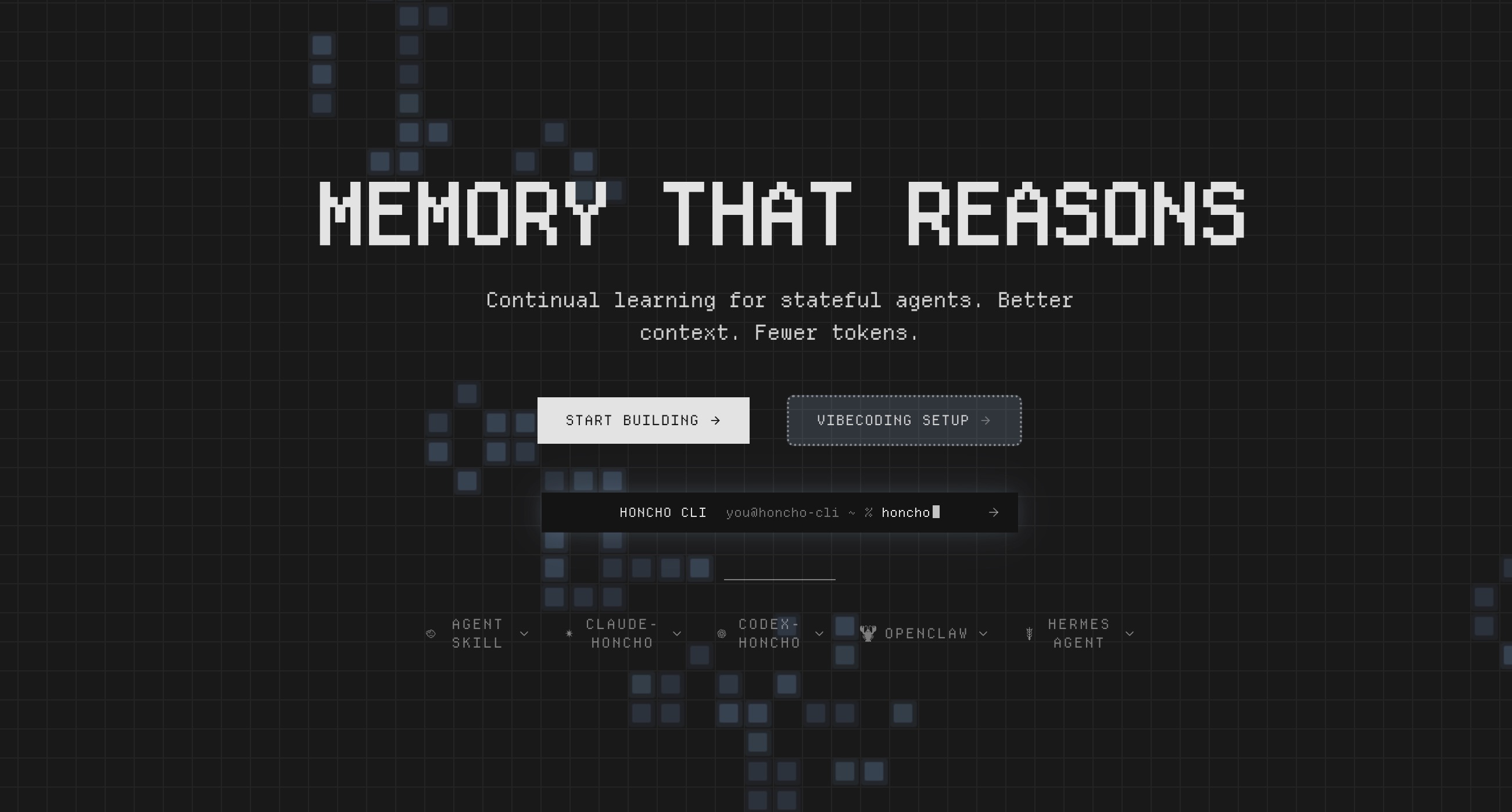
Honcho provides "memory that reasons" for stateful AI agents. Designed heavily around continual learning, it uses a dialectic reasoning engine to process conversations and distill them into actionable, persistent insights.
Key Features
- Dialectic Reasoning: Analyzes user interactions to derive core truths and preferences.
- Broad Plugin Support: First-party memory plugins for major coding agents (Claude Code, Hermes, Codex).
- Local Execution: Can be fully self-hosted locally alongside models via Ollama.
Pros
- Ensures complete data privacy when self-hosted.
- Reduces token costs by distilling long conversations into compact insights.
- Seamless integration into popular open-source autonomous agents.
Cons
- Local setup and configuration can be technically demanding.
- Starting local means starting from a completely blank slate.
Pricing
Open-source for local deployment. Cloud-hosted memory requires purchasing API credits.
Which AI Memory Tool Should You Choose
When evaluating your options, consider the exact needs of your application:
- If you need deep enterprise temporal relationships, Zep is fantastic for its Graphiti engine.
- If you are building autonomous coding agents that need to evolve, Letta offers unparalleled autonomy.
- If you want a traditional database approach for strict data privacy, Memori integrates seamlessly into existing SQL setups.
- If you are already deep in the LangChain ecosystem, LangMem is the most logical choice.
- However, if you want the most robust, balanced, and adaptable context engine, MemoryLake is the superior choice. MemoryLake is a persistent memory infrastructure designed to help AI agents and applications maintain context across conversations, tasks, and sessions. Instead of treating every interaction as a fresh start, it enables AI systems to store, organize, retrieve, and reuse relevant information over time. This includes user preferences, historical interactions, important facts, task context, and other long-term knowledge.
- Why MemoryLake stands out: For teams building agents that need to remember users and previous interactions, MemoryLake provides a dedicated memory layer that can complement existing AI models, agent frameworks, and application infrastructure. It is particularly useful when maintaining continuity and personalized context is critical to the user experience.
Final Verdict
Choosing the right memory layer is the difference between an AI that feels like a forgetful machine and one that acts as a true, intelligent assistant. While MemOS introduced the operating system concept, and tools like Zep and Letta offer specialized graph and self-editing features, MemoryLake strikes the perfect balance. Its focus on persistent, structured memory makes it easier for developers to build AI experiences that feel consistent, personalized, and context-aware. If you want a dedicated memory layer that seamlessly complements your existing AI models and frameworks while guaranteeing absolute continuity for your users, MemoryLake is the platform you should integrate today.