
What Is Persistent Memory for AI Agents
Persistent memory for AI agents is the technological framework that allows an artificial intelligence system to store, manage, and recall information across multiple distinct sessions.
- Stateful Interactions: Unlike standard Large Language Models (LLMs) that "forget" everything once a chat thread is closed, persistent memory makes the agent stateful, remembering previous instructions and conversational context.
- Beyond Basic RAG: It goes beyond simple Retrieval-Augmented Generation (RAG). While RAG fetches external documents, persistent memory actively updates an agent's understanding of user preferences, ongoing events, and learned workflows.
- Dynamic Updating: The memory system can add new facts, update changing information, resolve contradictions, and intentionally forget outdated data.
- Multimodal Storage: Modern memory systems store text, code snippets, visual data, and API interactions in hybrid structures using a mix of vector databases, knowledge graphs, and relational tables.
Why Do AI Agents Need Persistent Memory in 2026
- Overcoming Context Window Limits: While LLMs now support massive context windows, sending hundreds of thousands of tokens per request is slow and expensive. Persistent memory acts as an intelligent filter, sending only the most relevant historical data to the model.
- True Personalization: Users expect their digital assistants to know their preferences without constant reminders. A coding agent should remember your preferred syntax, and a scheduling agent should remember your routine.
- Cross-Platform Synchronization: As AI agents act autonomously across Slack, Gmail, Notion, and Jira, they need a centralized "brain" to maintain a consistent understanding of tasks across all these environments.
- Continual Learning: Agents need to learn from past mistakes. If a user corrects an agent's behavior, persistent memory ensures that the correction is applied permanently to future interactions.
- Significant Cost Reduction: By minimizing redundant prompt tokens through targeted memory retrieval, developers can drastically reduce expensive API inference costs.
How We Evaluated AI Agent Memory Solutions
To determine the best persistent memory solutions on the market, we evaluated each platform against a strict set of criteria:
- Architecture & Storage: We looked at whether the tool uses simple vector embeddings or more advanced hybrid models (knowledge graphs and key-value stores) for temporal reasoning.
- Integration & Developer Experience: We measured how easily the solution plugs into existing agent frameworks (like LangChain, LlamaIndex, or raw MCP) and whether it offers clean SDKs and APIs.
- Scalability & Latency: We assessed how the system handles large-scale data retrieval without introducing bottlenecks into the agent's response time.
- Memory Governance: We evaluated the system's ability to handle version control, detect conflicting information, and securely isolate different users' data.
- Overall Ecosystem & Support: We considered community adoption, enterprise readiness, and the overall robustness of the platform's documentation.
10 Best Persistent Memory Solutions for AI Agents in 2026
Here is a quick comparison of the top 10 persistent memory solutions tailored for different AI agent use cases.
| Product | Best For | Architecture | Starting Price |
|---|---|---|---|
| MemoryLake | Enterprise, AI SaaS, Multimodal Agents | Multi-Layer Memory Architecture | $19/month |
| Mem0 | Open-Source Developer Projects | Hybrid Datastore | $19/month |
| Supermemory | Fast Context Retrieval & APIs | Vector & Relational | $19/month |
| Dume.ai | End-User Workflow Automation | Application-layer Memory | $9/month |
| Cognee | Self-hosted Knowledge Graphs | Graph + Vector | $2.50/ 1M tokens |
| Memos (MemOS) | System-level Memory Optimization | MemCube / Token-efficient OS | Free (OSS) |
| Mem | Personal Knowledge Management | AI Auto-linking Workspace | $12/month |
| Honcho | Diachronic User Identity Tracking | Dialectic Reasoning Engine | $2.00/1 M tokens |
| LangChain | Complex Agent State Machines | Thread-level Checkpointing | $39/month (Cloud) |
| Pinecone | High-performance Vector Storage | Managed Serverless Vector DB | $20/month |
1. MemoryLake
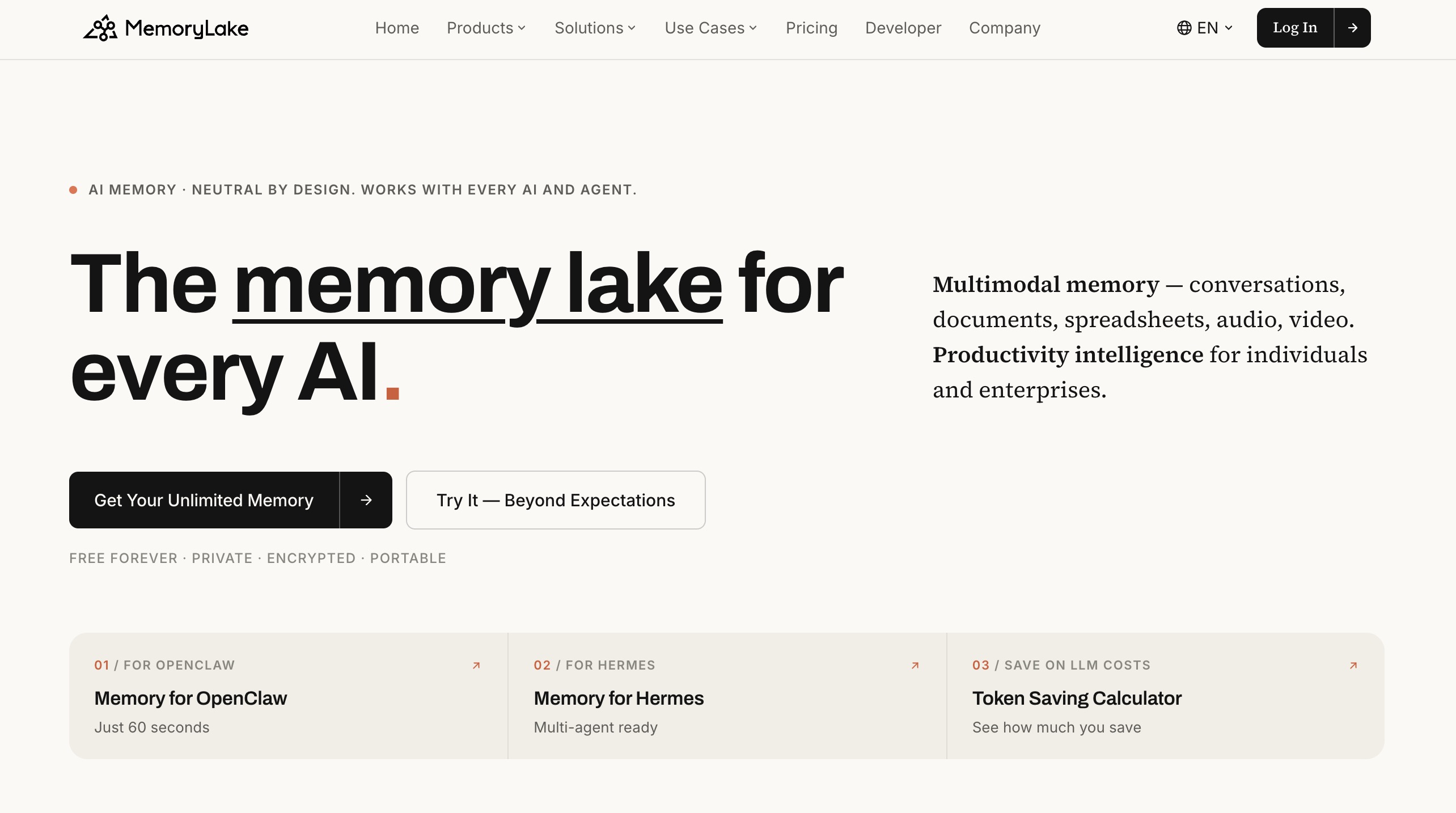
MemoryLake is an enterprise-grade AI memory infrastructure designed to help AI agents build, store, and manage long-term memory. Unlike traditional RAG systems that mainly retrieve information from documents, MemoryLake enables AI systems to remember user preferences, past interactions, key facts, events, and learned workflows across sessions and platforms. It provides a unified Memory Passport that allows users to share their personalized memory across different AI applications and agents.
With multi-layer memory management, multimodal data processing, memory governance features such as version control and conflict detection, and enterprise-level security, MemoryLake helps organizations create more reliable and personalized AI experiences. It is built for developers, AI SaaS companies, and enterprises that want to transform AI agents from short-term assistants into intelligent, continuously improving digital partners.
Key Features
- Unified Memory Passport for cross-application context sharing.
- Multi-layer memory management combining short-term cache and long-term storage.
- Multimodal data processing capable of handling text, images, and workflow states.
- Advanced memory governance, including version control and conflict detection.
- Enterprise-level security, compliance, and strict data isolation.
Pros
- Dramatically elevates AI from a simple chatbot to a deeply personalized digital partner.
- The Memory Passport concept solves the fragmentation of user context across different SaaS tools.
- Conflict detection prevents the AI from becoming confused by contradictory user inputs over time.
- Highly secure and scalable architecture suited for strict enterprise compliance.
Cons
- May be over-engineered for a solo developer looking to build a basic hobbyist bot.
- Requires strategic implementation to map out complex enterprise memory workflows.
Pricing
Paid plans start at $19/month.
2. Mem0
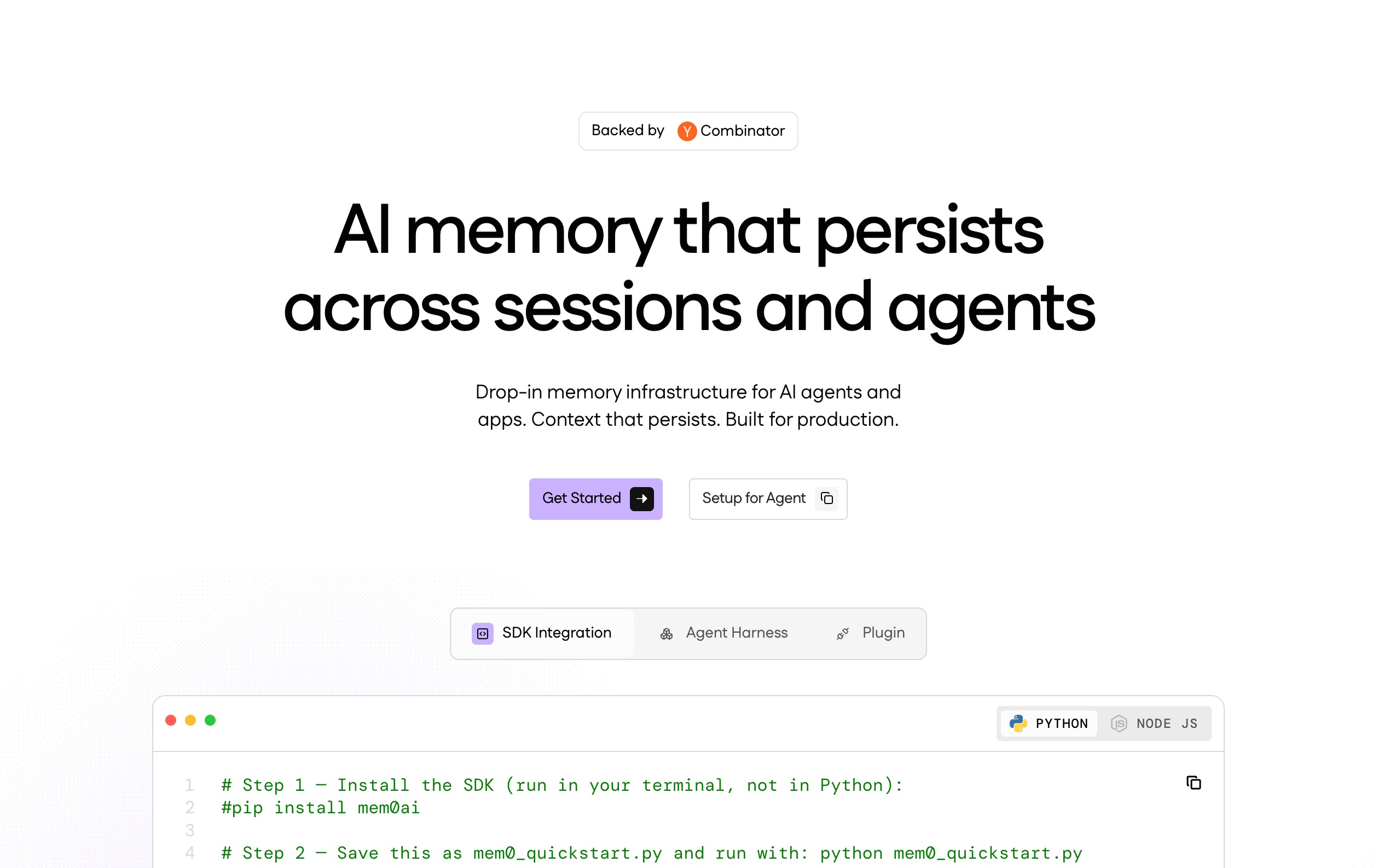
Mem0 (pronounced "mem-zero") has quickly become one of the most popular open-source universal memory layers for AI agents. Built for developers who want to move beyond stateless language models, Mem0 automatically extracts facts from conversations, categorizes them, and builds a comprehensive memory profile.
Key Features
- Intelligent extraction phase that decides whether to ADD, UPDATE, or DELETE memories.
- Hybrid architecture using graphs, vectors, and key-value stores.
- Simple SDK integration that requires only three lines of Python code.
Pros
- Extremely developer-friendly with an active open-source community.
- Massively reduces context window bloat and latency compared to full-context stuffing.
- Great out-of-the-box support for local deployment on GPUs (e.g., via Ollama).
Cons
- Graph memory features are still maturing and can occasionally miss nuanced relational hops.
- Managing state in highly complex multi-agent environments can require manual tuning.
Pricing
Open-source version is free. Paid plans start at $19/month.
3. Supermemory
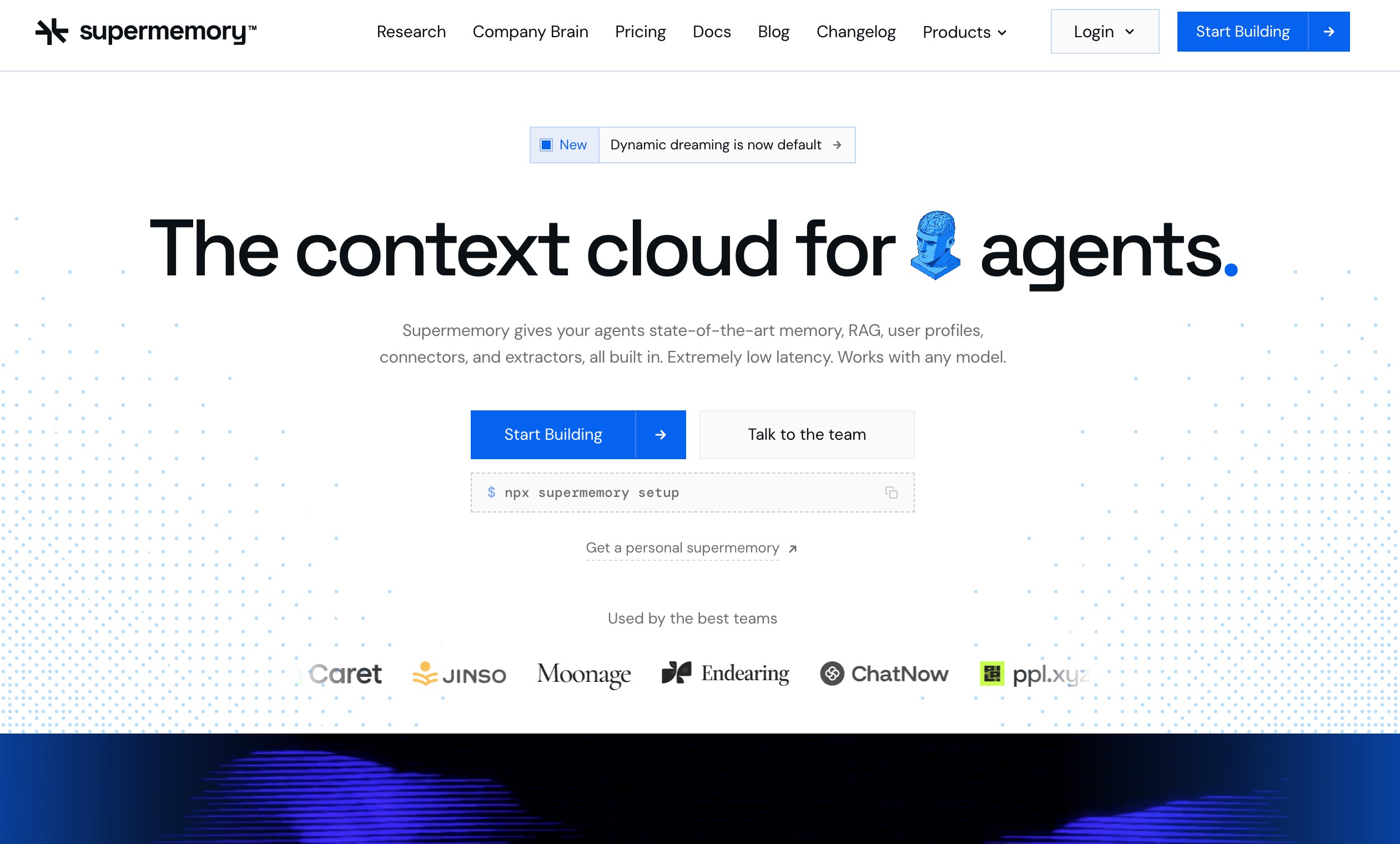
Supermemory is an open-source memory and context engine that acts as the missing API layer for the AI era. It specializes in ultra-fast, scalable memory retrieval while syncing with everyday work tools.
Key Features
- Direct connectors for Google Drive, Gmail, Notion, and GitHub.
- Automatic expiration of outdated information and self-cleaning memory states.
- Provides a Model Context Protocol (MCP) server for deep AI assistant integrations.
Pros
- Excellent performance on major memory benchmarks (LongMemEval, LoCoMo).
- Seamlessly connects your AI to the tools where your data already lives.
- Highly scalable and can be run fully locally to preserve privacy.
Cons
- The developer-centric documentation can be a bit steep for non-engineers.
- Primarily focused on text and metadata; multimodal capabilities are still developing.
Pricing
Paid plans start at $19/month.
4. Dume.ai
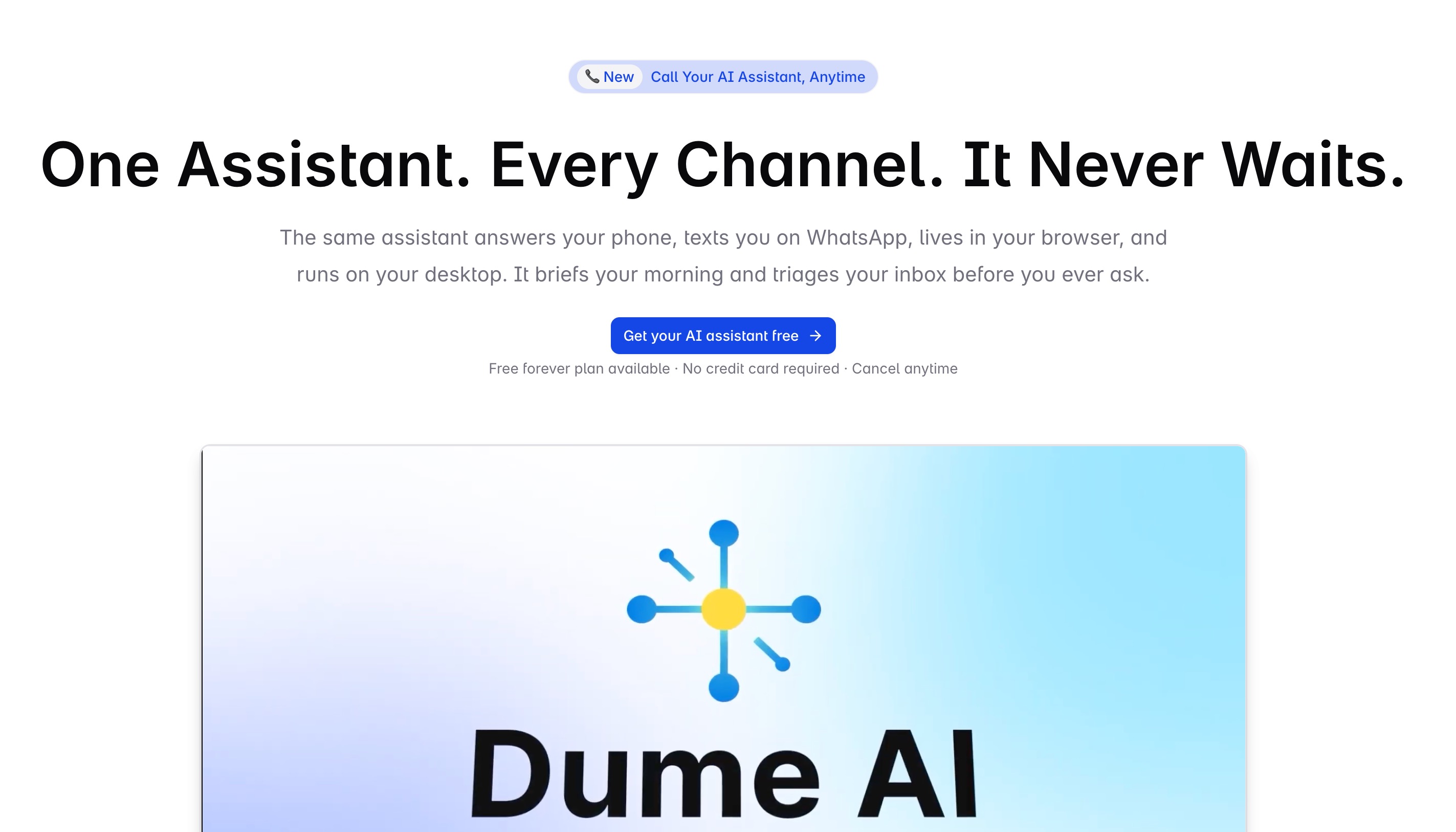
Dume.ai takes a different approach by integrating persistent memory directly into an end-user productivity assistant. It acts as a unified command center that connects to your email, calendars, and project management tools, maintaining deep context across all of them.
Key Features
- Context-aware search across connected apps like Jira, Confluence, and Notion.
- Workflow automation based on persistent understanding of user habits.
- Mobile-first WhatsApp integration with voice and image understanding.
Pros
- Zero coding required; it is a ready-to-use AI assistant for professionals.
- Brilliant at summarizing threads and automatically creating structured Jira tickets.
- Maintains a highly accurate state of your daily priorities.
Cons
- It is a closed application rather than a foundational infrastructure for developers.
- Customization is limited to the tool integrations provided by the platform.
Pricing
Plans start at $9/month for the professional tier.
5. Cognee
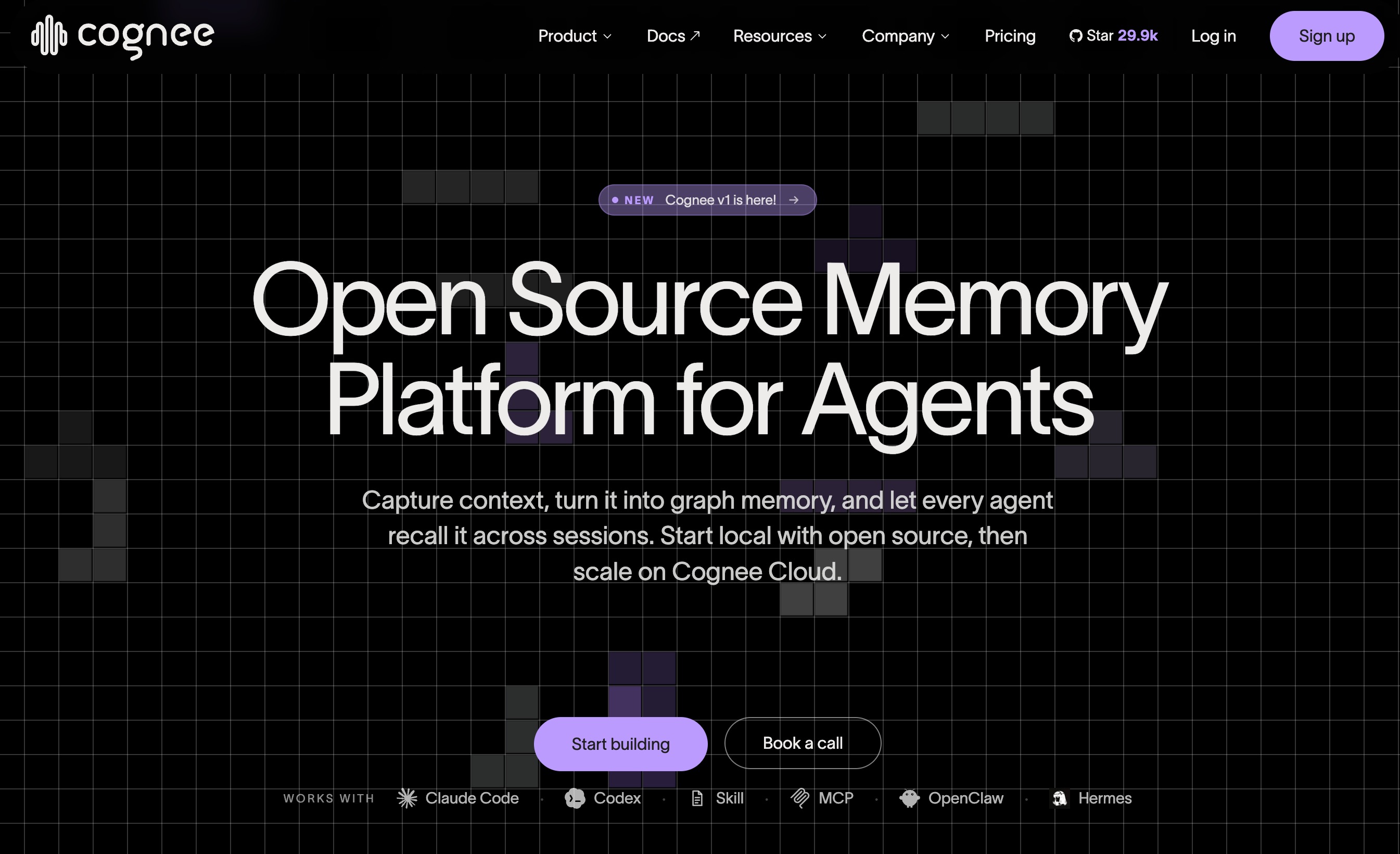
Cognee is an open-source memory engine that builds deterministic knowledge graphs from unstructured data. It is explicitly designed to replace fragile markdown files and simple vector searches with deeply structured, self-improving memory for agents.
Key Features
- Cognitive-science-grounded ontology generation.
- Auto-routed queries across 15+ built-in search systems.
- Easily deployable via Docker, on-premise, or cloud.
Pros
- Knowledge graphs provide superior multi-hop reasoning over standard vector stores.
- Gives developers total control over data governance by running locally.
- Treats memory as an evolving entity rather than a static snapshot.
Cons
- Graph extraction can introduce latency during the initial data ingestion phase.
- Requires a solid understanding of graph databases to maximize its potential.
Pricing
Free open-source SDK. Cognee Cloud offers $2.5/1 M tokens for users.
6. Memos (MemOS)
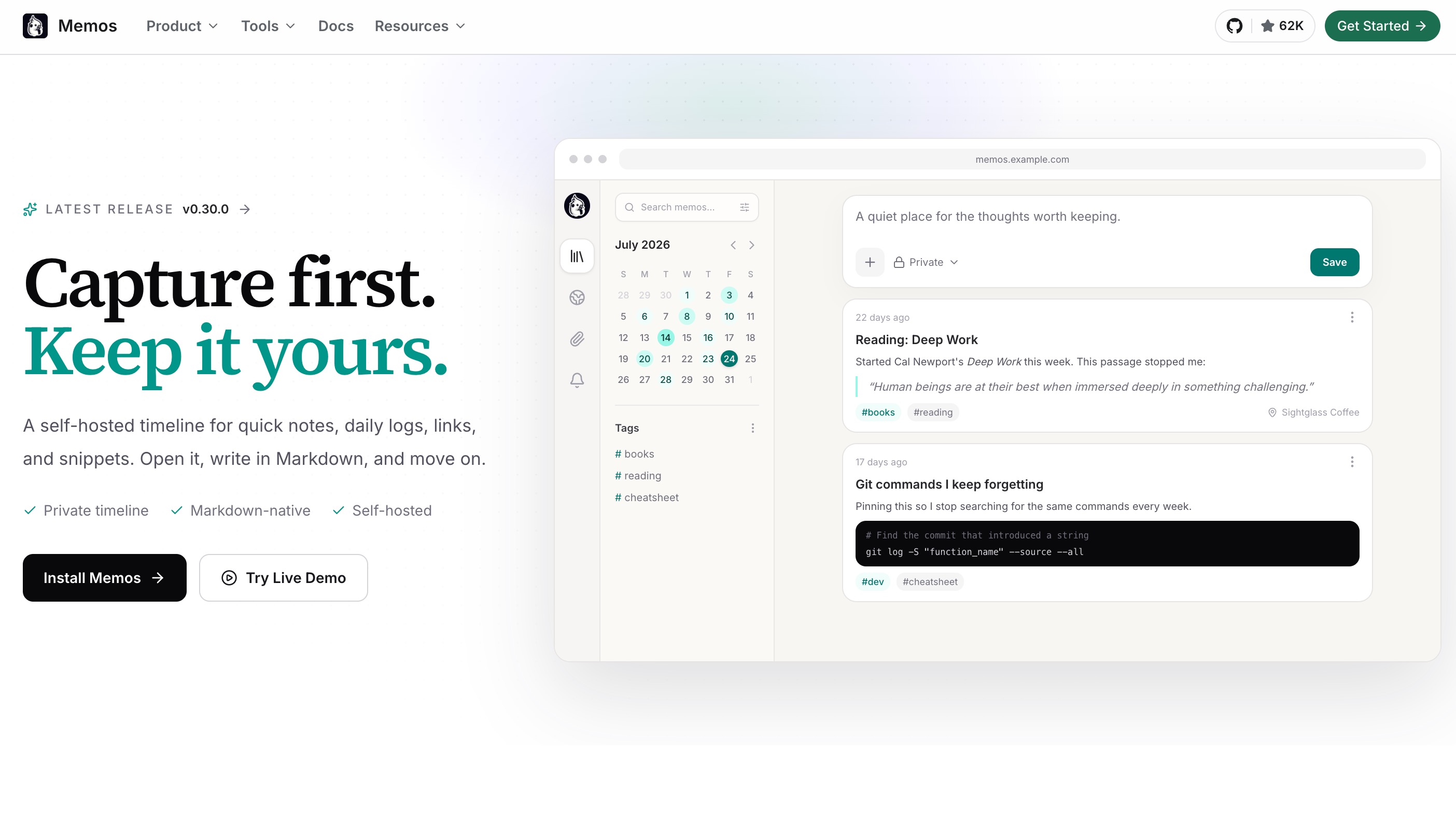
Originating from academic research, MemOS is described as a "Memory Operating System" for LLMs. It treats AI memory as a core compute resource, scheduling and evolving it much like a traditional OS manages RAM and CPU.
Key Features
- MemCube architecture that encapsulates content, provenance, and metadata.
- Unifies plaintext, activation-based, and parameter-level memories.
- Dynamic memory scheduling that optimizes token usage.
Pros
- Proven to significantly reduce token costs (up to 60% savings).
- Offers highly advanced temporal reasoning capabilities.
- Extremely efficient for complex, long-running agentic loops.
Cons
- Highly technical and currently heavily tailored toward researchers and advanced system architects.
- Lacks the polished commercial UI and ecosystem of more commercialized tools.
Pricing
Free and open-source (MIT License).
7. Mem (Mem.ai)
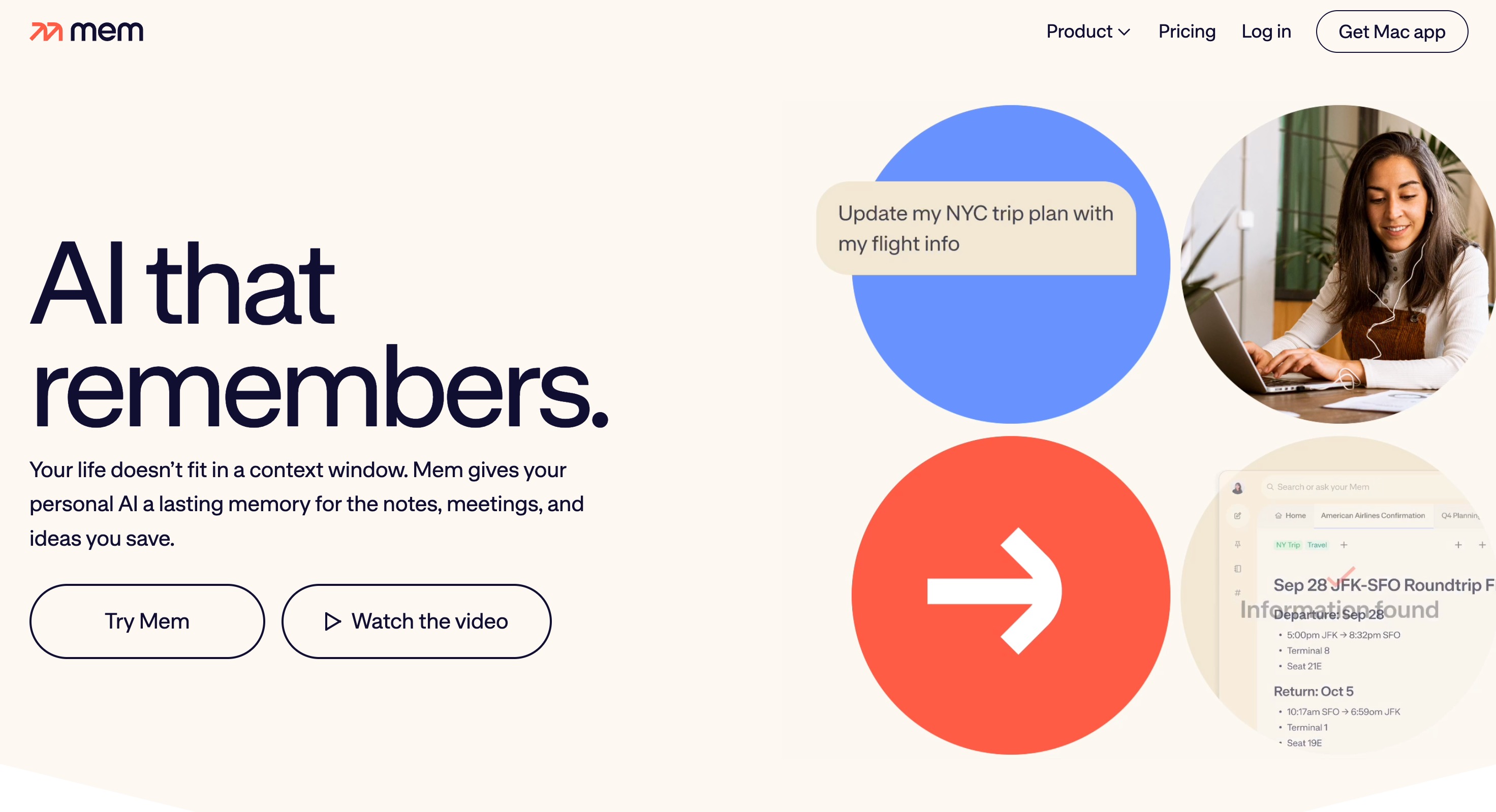
Mem.ai is a personal AI workspace and note-taking application. While not a developer infrastructure tool, it serves as a persistent memory base for human users and their personal AI assistants, organizing knowledge effortlessly.
Key Features
- AI auto-linking and self-organizing collections.
- Deep search capabilities utilizing natural language queries.
- Voice-to-text structuring for rapid thought capture.
Pros
- Beautiful, frictionless user interface designed for immediate productivity.
- Eliminates the need for manual tagging or folder organization.
- Excellent for personal knowledge management (PKM).
Cons
- Not designed for developers looking to build custom autonomous agents.
- Limited to the context of documents and notes manually entered or connected by the user.
Pricing
Free basic version. Paid plan starts at $12/month.
8. Honcho

Honcho is a continual learning memory system designed for building stateful agents. It excels at tracking diachronic identity, understanding how users, ideas, and groups change and evolve over time, rather than just storing static facts.
Key Features
- Dialectic reasoning engine that evaluates updates dynamically.
- Plugin support for tools like Claude Code and OpenAI Codex.
- Rich Model Context Protocol (MCP) integrations.
Pros
- Superb at modeling deep personalization and changing user preferences.
- Prevents token waste by actively reasoning before returning context.
- Easy CLI and plugin installation for immediate coding assistant memory.
Cons
- Aggressive reasoning steps can occasionally overcomplicate simple fact retrieval.
- Smaller community ecosystem compared to massive frameworks like LangChain.
Pricing
Paid plan starts at $2.00/1M tokens.
9. LangChain (LangGraph)
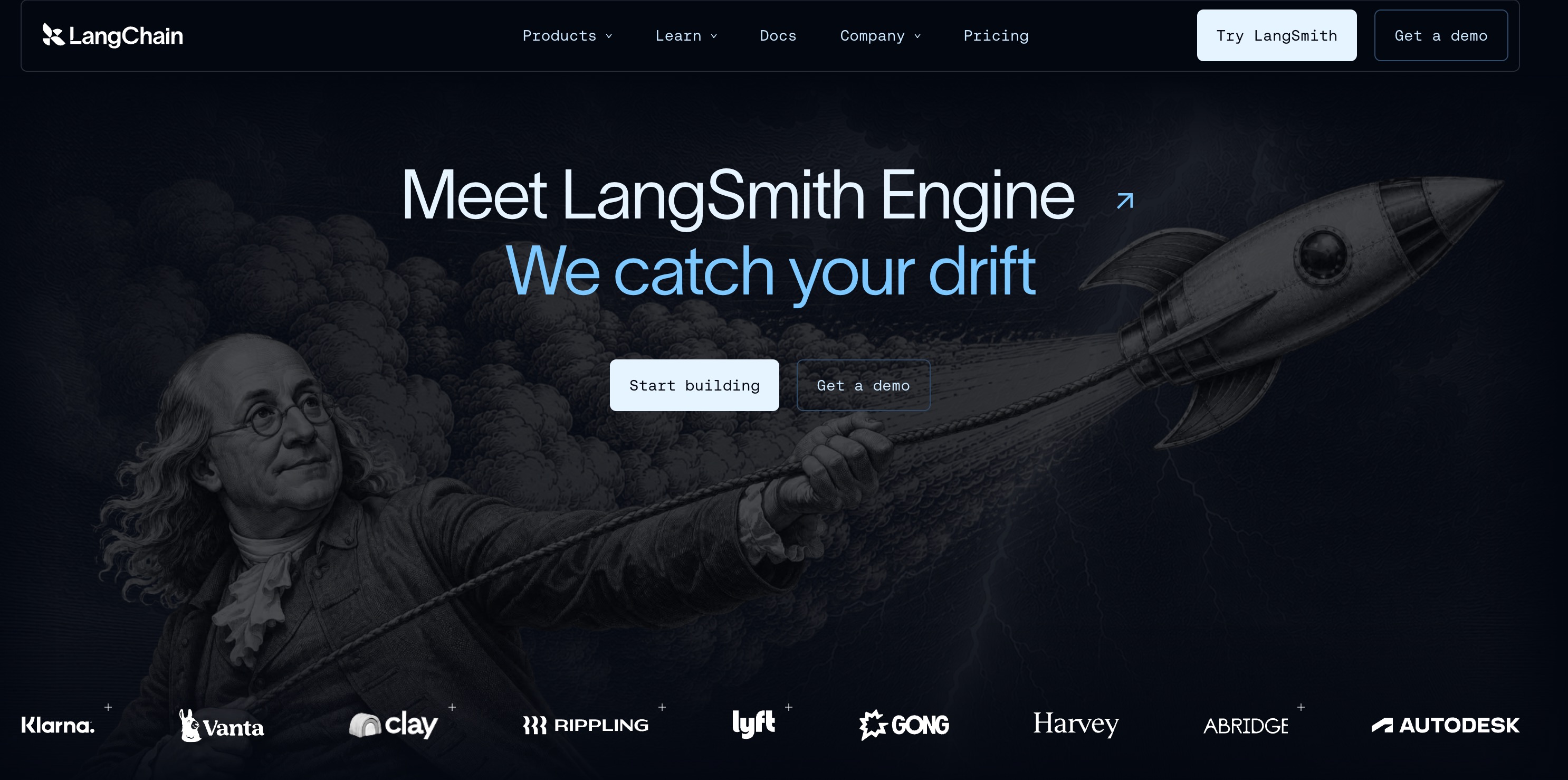
LangChain is the industry giant of LLM orchestration. Through its LangGraph extension, it offers a robust state machine architecture that gives multi-agent systems durable, thread-level memory and checkpointing.
Key Features
- State machine-based checkpointing for persistent agent threads.
- Massive ecosystem with integrations for almost every LLM and database.
- Time-travel debugging via LangSmith to inspect memory states.
Pros
- Incredibly flexible; you can build almost any memory logic you desire.
- Industry standard, meaning documentation and community support are unmatched.
- Excellent observability tools.
Cons
- The memory abstractions can feel bloated and overly complex for simple use cases.
- Heavy reliance on the LangChain ecosystem can lead to vendor lock-in at the framework level.
Pricing
Open-source framework is free. LangSmith (for state observability) starts at $39/month.
10. Pinecone
While technically a managed vector database rather than an "agent memory framework," Pinecone is the foundational memory storage layer for tens of thousands of AI agents. It provides the high-performance retrieval necessary to make long-term AI memory possible.
Key Features
- Ultra-low latency similarity search.
- Serverless architecture with hybrid search (dense and sparse vectors).
- Massive scale capabilities with zero infrastructure management.
Pros
- Unbeatable speed and reliability for vector retrieval.
- Integrates flawlessly with every major AI framework.
- Extremely cost-effective at scale.
Cons
- It is only a storage layer; developers must build the memory extraction, reasoning, and update logic themselves.
- Lacks native graph memory capabilities out of the box.
Pricing
Generous free tier. Serverless pricing starts at $20/month.
How to Choose the Right Persistent Memory Solution
Selecting the optimal memory solution for your AI agent depends entirely on your target audience, scale, and specific architectural needs.
- For Raw Speed and Custom Builds: If you have a dedicated engineering team and want to build the reasoning logic from scratch, Pinecone is the ultimate high-performance backend.
- For Open-Source and Quick Agent Prototyping: If you want to get an agent running locally with smart contextual extraction, Mem0 and Cognee offer incredible open-source frameworks that save you from writing complex retrieval logic.
- For Complex Agent Workflows: LangChain (with LangGraph) remains the standard for building intricate, multi-step state machines where memory acts as a strict checkpoint.
- For the Ultimate Enterprise Experience: We strongly recommend MemoryLake. While open-source tools are great for prototyping, enterprise AI requires strict data governance, conflict detection, and robust multimodal handling. MemoryLake's unique Memory Passport sets a new standard, allowing secure, personalized context to flow seamlessly across your entire suite of AI applications. If you are a SaaS company or an enterprise aiming to deploy highly reliable, continuously improving digital partners, MemoryLake provides the most comprehensive and secure infrastructure on the market.
Conclusion
The era of amnesiac AI is over. For AI agents to truly become productive digital partners, they require sophisticated, persistent memory systems that can learn, adapt, and recall information contextually. While developers have a wealth of incredible tools at their disposal, from vector databases to intelligent OS-level memory systems, building a commercial-grade product requires an infrastructure you can trust. If you are looking to future-proof your AI strategy with robust governance, multimodal capabilities, and an innovative Memory Passport system, we highly recommend exploring MemoryLake to elevate your AI agents to the next level.