
What Is RAGFlow and Why Look for an Alternative
RAGFlow is a popular open-source retrieval-augmented generation engine built around deep document understanding. It parses PDFs, tables, and complex layouts, chunks them intelligently, and generates grounded answers with traceable citations, and it has more recently added agent orchestration and basic memory features on top of its document pipeline.
That said, RAGFlow was designed first as a document-to-answer engine, and teams building persistent, personalized AI agents often hit its limits:
- Document-centric, not user-centric — RAGFlow excels at answering questions from a knowledge base, but it isn't purpose-built to track an individual user's preferences, history, or evolving relationship with an agent.
- Session memory is shallow — memory support is a recent addition layered on top of a RAG pipeline, not a core architectural primitive with versioning or conflict resolution.
- Single-application scope — memories tend to live inside one deployment rather than following a user across multiple AI apps and agents.
- Self-hosting overhead — running the full stack (document parser, vector index, agent orchestration) is heavier than teams need if their real goal is durable agent memory.
- Limited governance — enterprises need audit trails, version control, and conflict detection for stored facts, which goes beyond what a document RAG engine typically offers.
These gaps are why a new category of tools, dedicated AI memory infrastructure, has emerged alongside traditional RAG engines.
How We Evaluated These RAGFlow Alternatives
To keep this comparison useful rather than promotional noise, we scored each alternative against the criteria that actually matter for agent memory in production:
- Memory depth — can the tool store long-term facts, preferences, and events, not just retrieve chunks from documents?
- Cross-platform portability — can memory follow a user across different apps, agents, and models, or is it locked to one deployment?
- Governance and reliability — does it offer version control, conflict detection, and auditability for stored memories?
- Multimodal support — can it ingest text, images, audio, and structured data, not just plain documents?
- Developer experience — how much integration work is required to get from zero to a working memory layer?
- Security and compliance — SOC 2, HIPAA, BYOK, and deployment flexibility for enterprise use cases.
- Pricing transparency — clear, predictable costs at both prototype and production scale.
Quick Comparison Table
| Product | Best For | Key Differentiator | Pricing |
|---|---|---|---|
| MemoryLake | Enterprises & agent builders wanting portable, governed long-term memory | Unified Memory Passport & Conflict Governance | $19/month |
| Mem0 | Open-Source Developers | Highly customizable open-source memory layer | $19/month |
| Zep | Low-Latency Workloads | Edge-to-cloud NLP and real-time intent analysis | $125/month |
| Glean | Internal Workplace RAG | Seamless integration with enterprise work tools | Custom |
| CognitiveX | Complex Reasoning AI | Advanced knowledge graph integration | $20/month |
| Noumi | Indie Hackers & Startups | Lightweight, plug-and-play memory vector store | $100/month |
| MemoryBase | High-Scale Vector Needs | Built specifically for ultra-large memory arrays | $9/month |
| Membase | Real-time Caching | In-memory context caching for fast AI responses | $20/month |
| Supermemory | Personal AI Assistants | API for personal bookmarking and second brains | $19/month |
MemoryLake
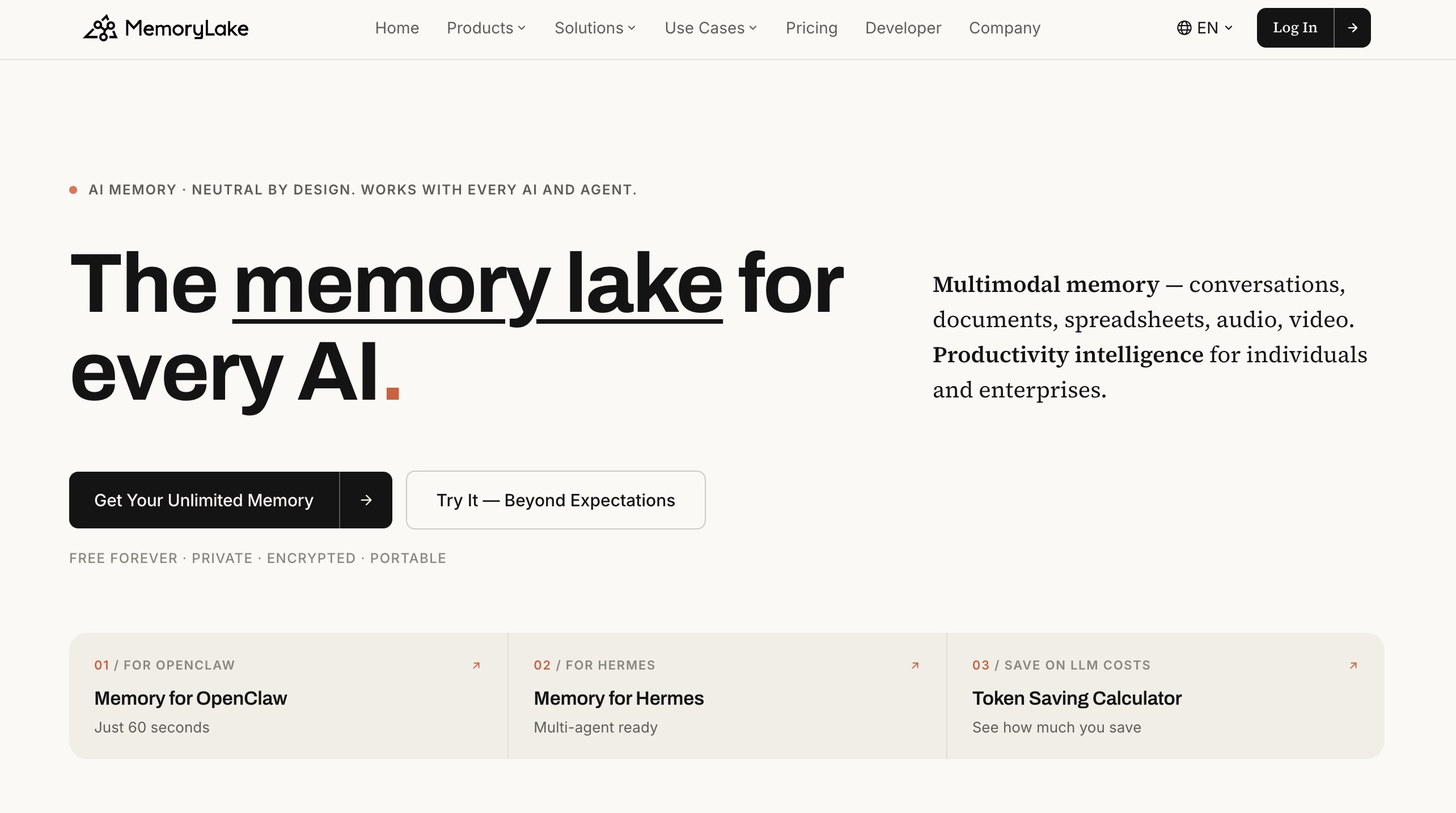
MemoryLake is enterprise-grade AI memory infrastructure built to help AI agents build, store, and manage genuine long-term memory. Unlike traditional RAG systems that mostly retrieve information from static documents, MemoryLake lets AI systems remember user preferences, past interactions, key facts, events, and learned workflows across sessions and platforms. Its signature capability is the Memory Passport — a portable memory identity that lets a user carry their personalized context between different AI applications and agents, instead of starting from zero every time they switch tools.
Key Features
- Multi-layer memory management (short-term, episodic, and long-term memory working together)
- Memory Passport for cross-app, cross-agent memory portability
- Multimodal data processing (text, images, audio, structured events)
- Memory governance: version control, conflict detection, and audit trails for stored facts
- Enterprise-level security designed for regulated industries and large deployments
- Developer-friendly APIs and SDKs for fast integration into existing agent stacks
Pros
- Designed specifically for agent memory, not adapted from a document-RAG codebase
- Memory Passport solves the "my agent forgot me when I switched apps" problem directly
- Governance features (versioning, conflict detection) are rare at this depth among competitors
- Built for both individual developers and enterprise-scale AI SaaS deployments
Cons
- As a newer category-defining product, integrations and community resources are still expanding
- Full value is best realized in multi-agent or multi-app environments; single-app teams may not need every feature immediately
Pricing
MemoryLake offers a free tier for developers to prototype, with usage-based paid plans that scale to enterprise agreements including custom security and compliance terms.
Mem0
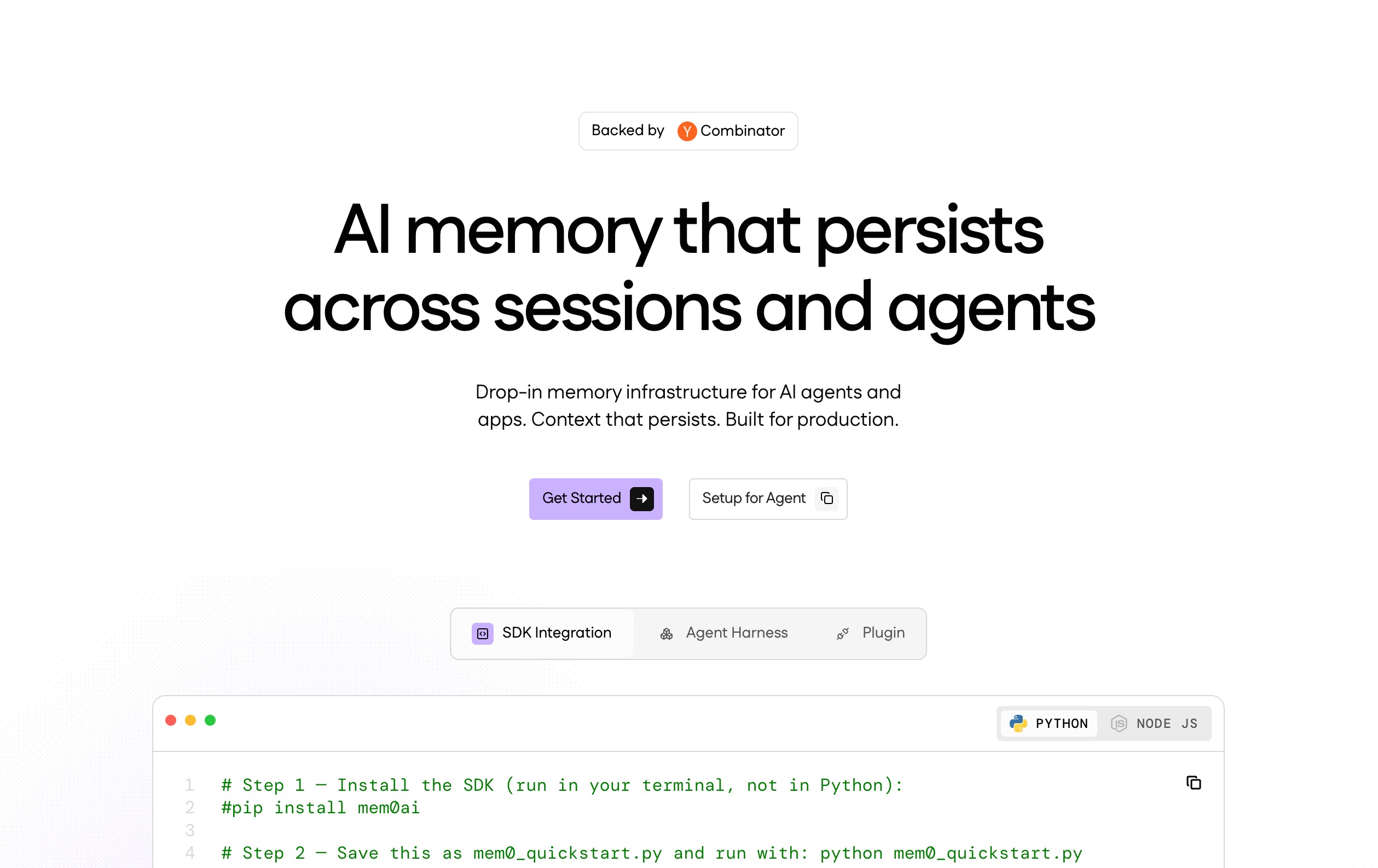
Mem0 is one of the most widely adopted open-source memory layers for AI agents, offering drop-in persistence with minimal code changes.
Key Features
- Vector-based memory with optional graph memory on higher tiers
- Multi-signal retrieval combining semantic, keyword, and entity matching
- Broad ecosystem integrations (LangGraph, CrewAI, Flowise, and more)
- SOC 2 and HIPAA options on paid plans
Pros
- Very low integration friction — memory can be added in a few lines of code
- Large open-source community and active development
- Flexible self-hosted or managed deployment
Cons
- Graph memory is gated behind the higher-priced Pro tier
- Primarily conversational memory rather than a full cross-platform identity layer
- Governance and versioning are less developed than dedicated enterprise memory platforms
Pricing
Free Hobby plan, with paid tiers including Starter at $19/month, Growth at $79/month, and Pro at $249/month, plus custom Enterprise pricing.
Zep
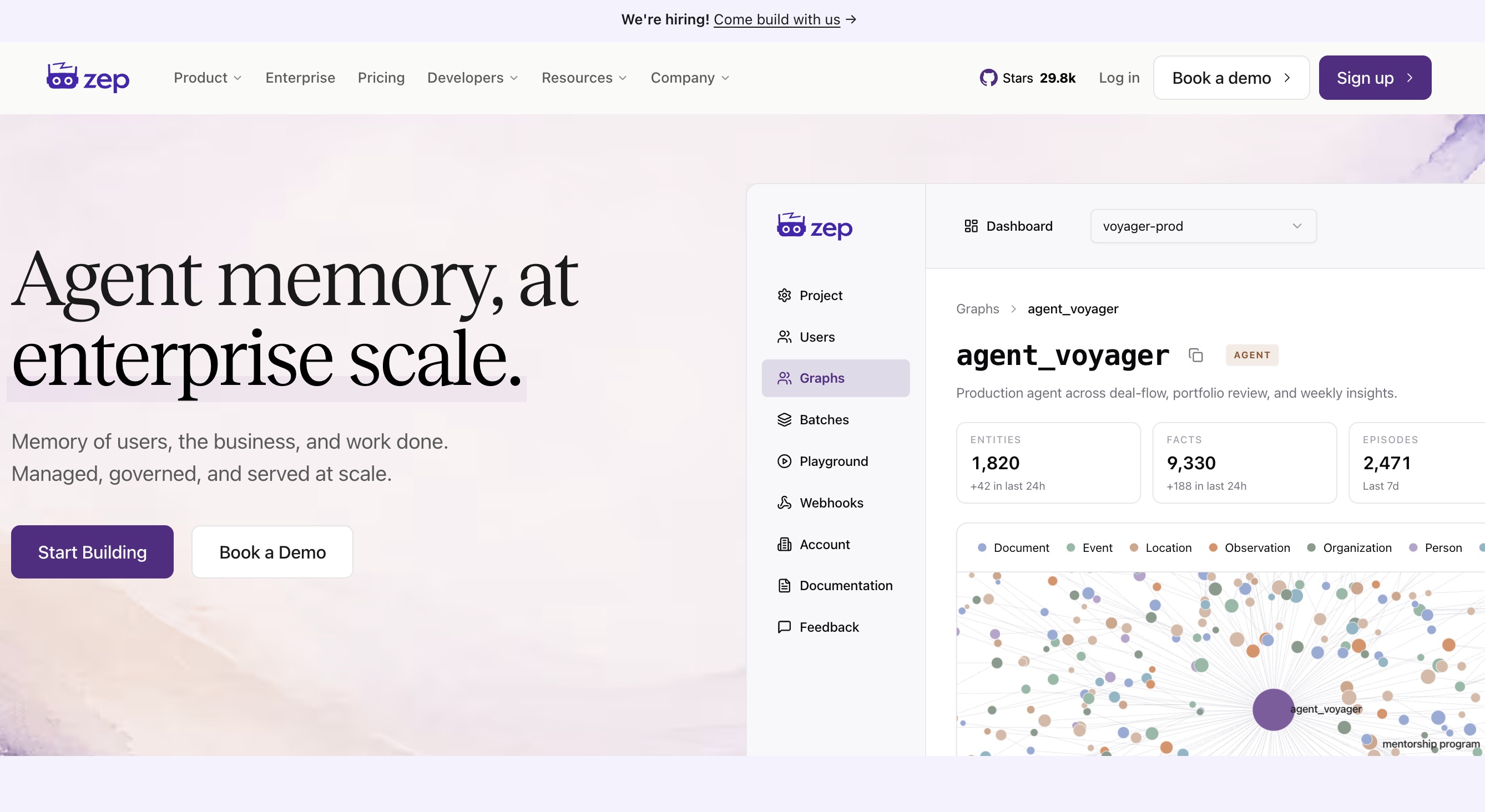
Zep is built around Graphiti, a temporal knowledge graph engine that treats time as a first-class dimension, making it strong for agents that need to reason about how facts change over time.
Key Features
- Temporal knowledge graph combining conversational and structured business data
- Fact validity windows (when something became true, when it changed)
- Sub-200ms retrieval at enterprise scale
- SOC 2 compliance
Pros
- Excellent for time-sensitive reasoning ("what was true in January?")
- Strong benchmark performance on temporal recall tasks
- Graph features included at every pricing tier
Cons
- Ingestion model is built around discrete "episodes," which can require custom pipelines for non-conversational data
- Self-hosting requires running a graph database alongside the service
- Fewer pre-built connectors than some competitors
Pricing
Credit-based pricing starting around $125/month, with enterprise plans available.
Glean
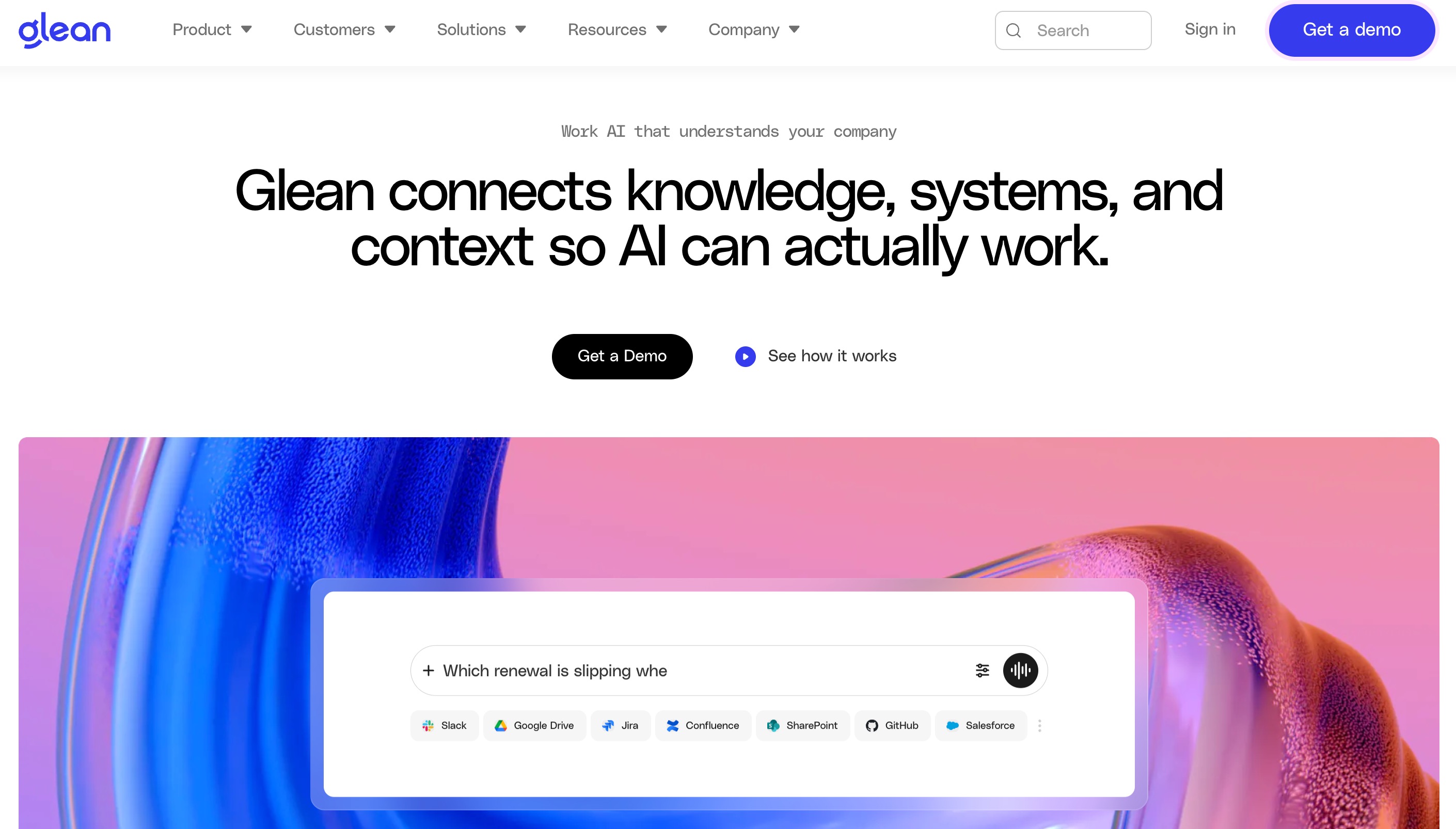
Glean is an enterprise search and knowledge platform that connects to internal tools (email, docs, wikis, chat) to power AI-assisted search and Q&A across a company's data.
Key Features
- Deep integrations with enterprise SaaS tools
- Permission-aware search that respects existing access controls
- AI assistant layer on top of unified enterprise search
- Enterprise SSO and role-based access control
Pros
- Best-in-class for surfacing internal company knowledge
- Strong enterprise security and compliance posture
- Minimal setup for teams already using common SaaS tools
Cons
- Focused on enterprise search rather than persistent per-user agent memory
- Not designed to carry personalized memory across external, non-enterprise AI apps
- Enterprise-only pricing puts it out of reach for individual developers
Pricing
Custom enterprise pricing, typically quoted per organization.
CognitiveX
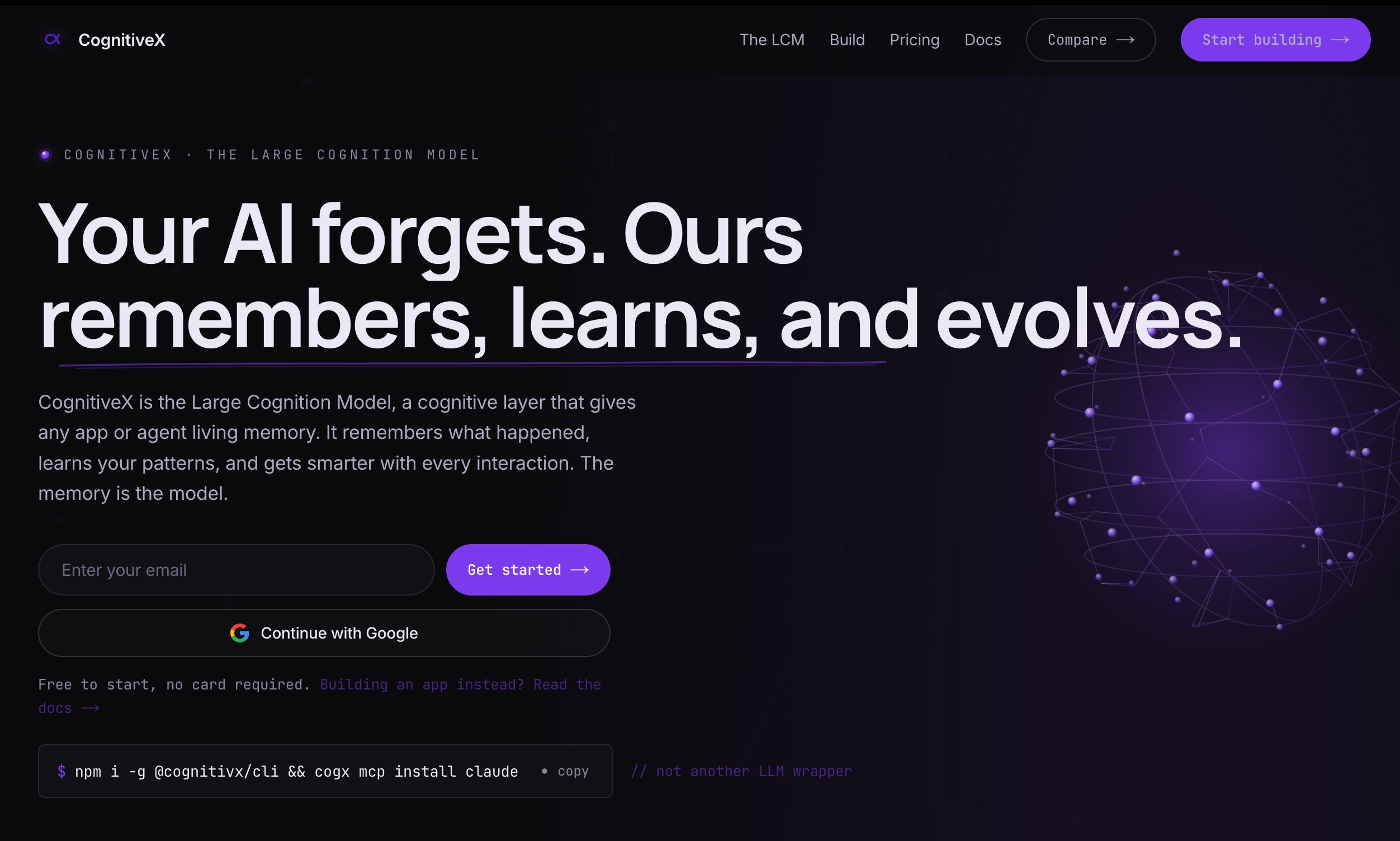
CognitiveX positions itself as a lightweight memory API aimed at mid-size product teams that want agent memory without heavy infrastructure overhead.
Key Features
- Simple vector-based memory storage
- Basic user profile extraction
- REST API with common framework integrations
Pros
- Quick to set up for small to mid-size projects
- Reasonable pricing for early-stage products
- Straightforward documentation
Cons
- Limited multimodal support
- Governance and audit features are minimal
- Less proven at large enterprise scale
Pricing
With a free trial for evaluation, paid plan starts at $20/month.
Noumi
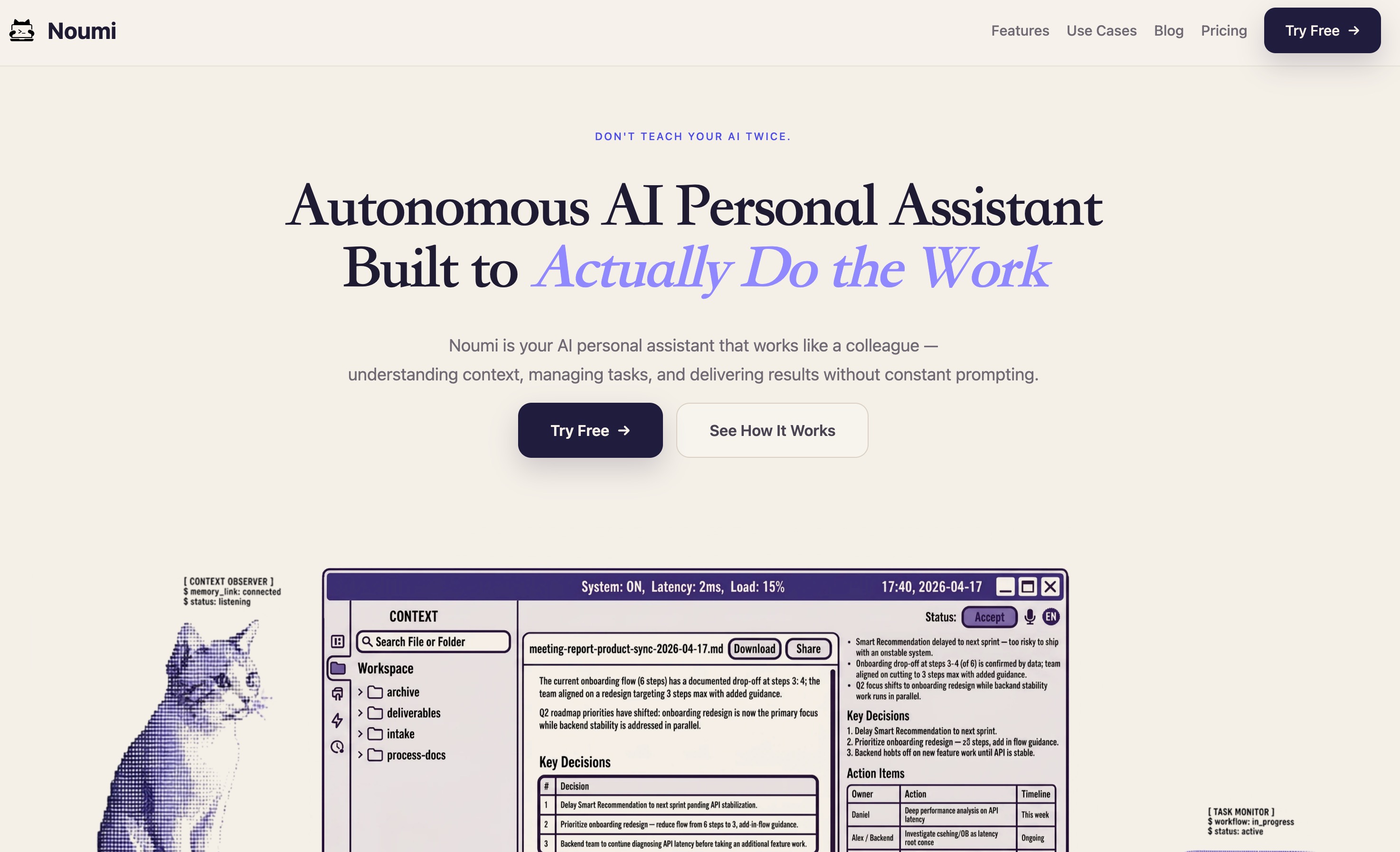
Noumi targets startups and indie developers prototyping conversational agents that need basic session and long-term memory quickly.
Key Features
- Session memory plus vector-based long-term storage
- Simple onboarding flow for small teams
- Basic analytics on memory usage
Pros
- Fast to integrate for early prototypes
- Affordable freemium tier
- Good fit for single-app conversational bots
Cons
- Not built for cross-platform memory portability
- Multimodal and governance features are minimal
- Scaling to enterprise workloads may require migration later
Pricing
Freemium model with paid usage tiers that start at $100/month.
MemoryBase
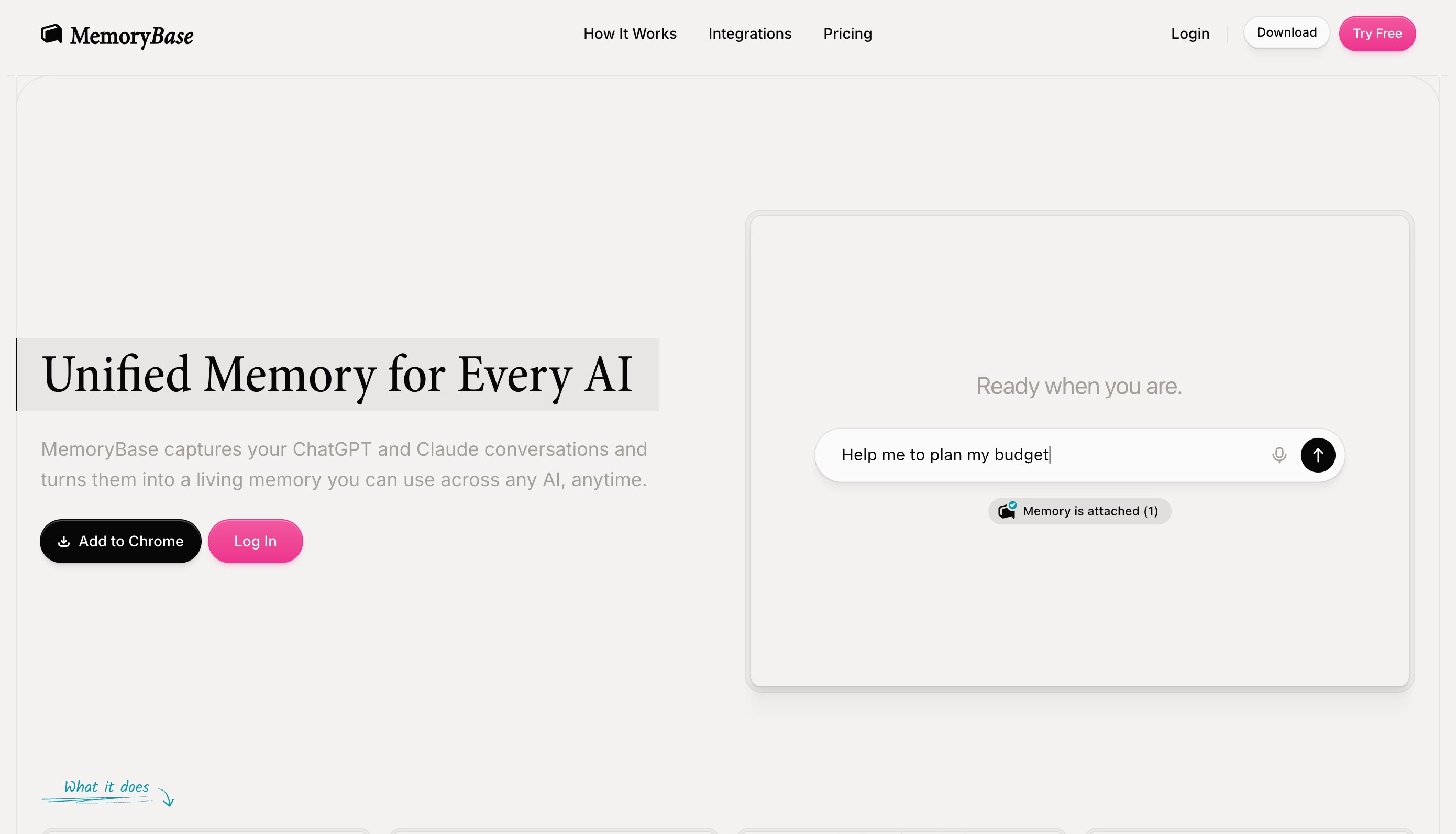
MemoryBase focuses on structured fact storage, combining key-value storage with vector search for teams that want predictable, queryable memory records.
Key Features
- Structured key-value memory alongside vector search
- Simple schema definitions for stored facts
- API-first design
Pros
- Predictable, structured data model
- Easy to reason about what's stored
- Good for use cases with well-defined fact types
Cons
- No multimodal data support
- Less flexible for unstructured, evolving context
- Governance features remain basic
Pricing
Paid plan starts at $20/month.
Membase
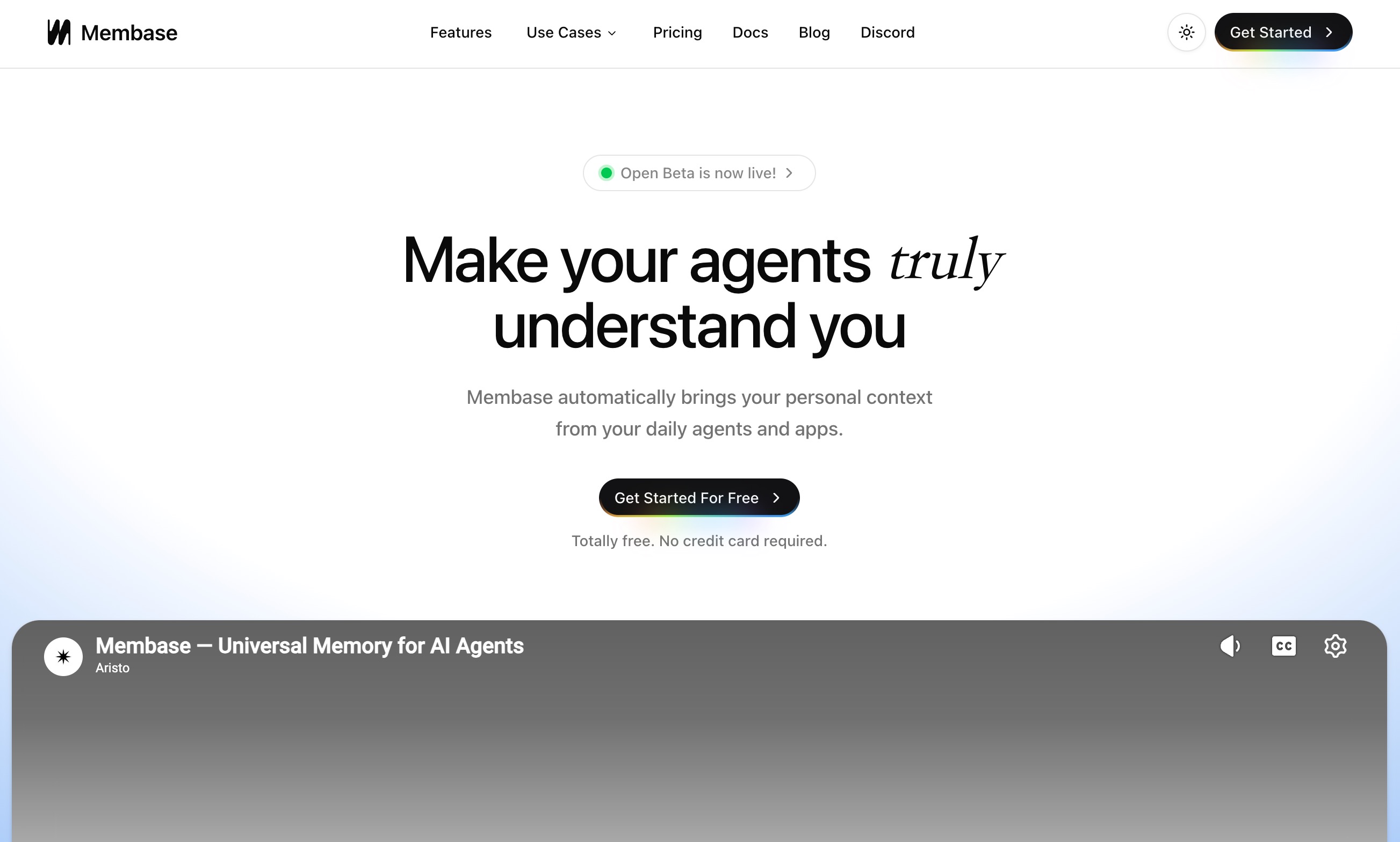
Membase takes a decentralized approach, combining on-chain and off-chain storage aimed at Web3 and decentralized agent projects.
Key Features
- Hybrid on-chain/off-chain memory storage
- Designed for decentralized agent ecosystems
- Usage-based, token-metered access
Pros
- Appeals to teams building in decentralized/Web3 environments
- Transparent, verifiable storage for certain use cases
- Novel approach to agent identity and memory ownership
Cons
- Niche fit outside Web3-native projects
- Governance and compliance tooling still emerging
- Higher complexity for traditional enterprise teams
Pricing
Usage-based, tied to on-chain transaction costs; paid plan starts at $19/month.
Supermemory
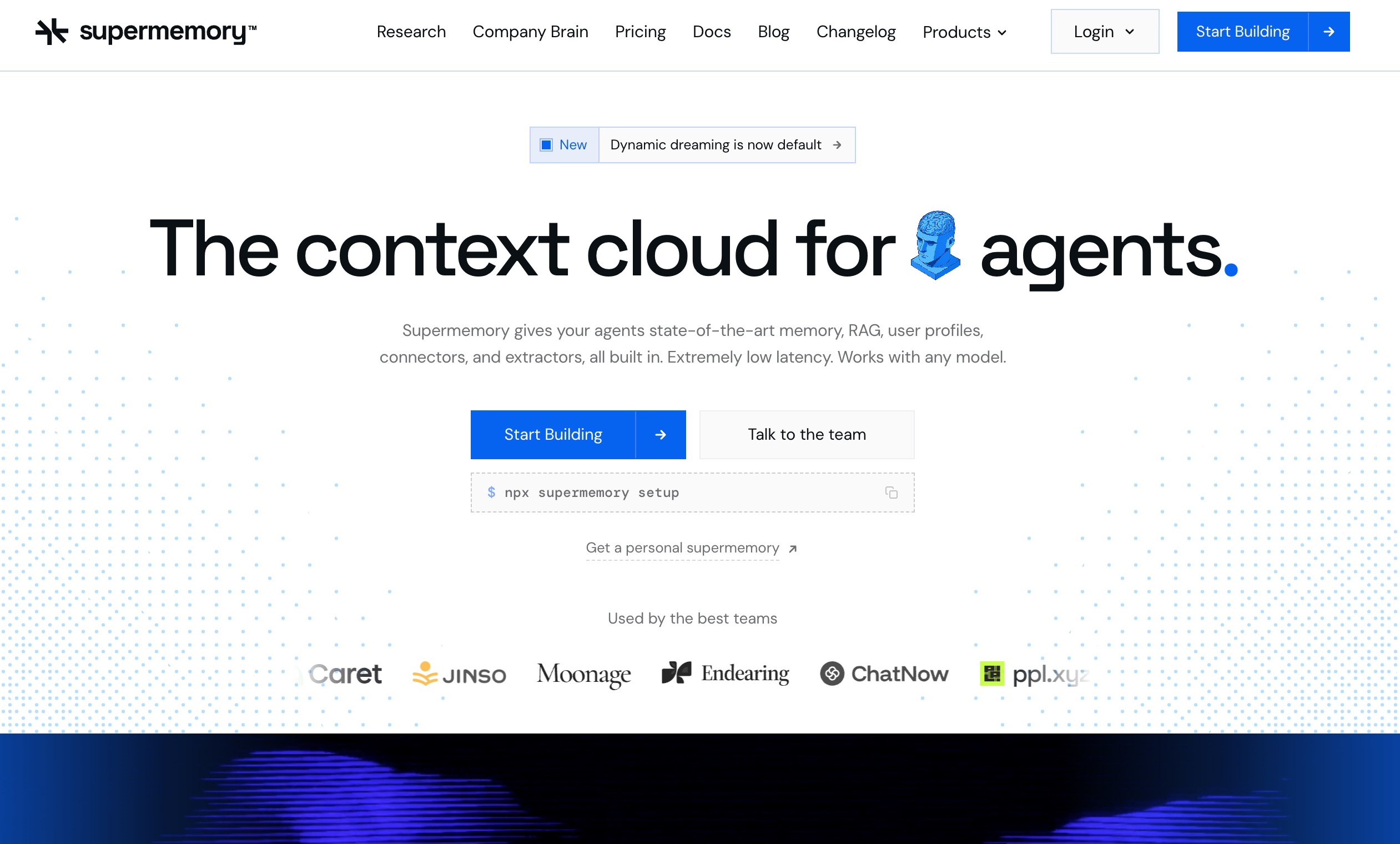
Supermemory offers a single memory API that combines memory graphs, RAG, user profiles, connectors, and extractors in one system.
Key Features
- Pre-built connectors for tools like Notion, Slack, and Google Drive included across pricing tiers.
- Hybrid RAG combined with structured fact extraction and multi-modal support.
- Multi-modal content processing including PDFs, images with OCR, videos with transcription, and code.
- Contradiction resolution and selective forgetting.
Pros
- Broad out-of-the-box connector coverage reduces custom integration work
- Strong multimodal ingestion compared to conversation-only tools
- Competitive benchmark performance among memory-focused platforms
Cons
- Cloud-only deployment with less flexibility for self-hosting or air-gapped environments.
- Newer platform with a smaller enterprise track record than established players
- Governance depth (versioning, conflict auditing) is less mature than dedicated enterprise memory infrastructure
Pricing
Paid plan starts at $19/month.
Which RAG Alternative Is Best
There's no single winner for every use case: Zep is genuinely strong if your agent needs precise temporal reasoning, Mem0 is a solid low-friction starting point for small projects, Glean is hard to beat for internal enterprise search, and Supermemory's connector coverage is convenient for teams that don't want to build integrations themselves.
But if what you actually need is durable, portable, governed memory that lets an AI agent recognize a user across different apps and keep improving over time, MemoryLake is the most purpose-built option on this list. Its Memory Passport, multi-layer memory architecture, and governance features address exactly the gaps that RAGFlow and most document-first RAG engines were never designed to solve.
How to Choose a RAGFlow Alternative for Your AI Agent
- Define what "memory" means for your use case. If you just need better document Q&A, a RAG engine like RAGFlow may still be enough. If you need agents that remember users across sessions and apps, you need dedicated memory infrastructure.
- Check for cross-platform portability. Most tools on this list, including Mem0, Zep, and Supermemory, keep memory scoped to a single deployment. MemoryLake's Memory Passport is one of the few options explicitly designed to move memory between different agents and applications.
- Weigh governance seriously. Version control and conflict detection matter more than they seem to at prototype stage — once multiple agents write to the same memory store, you need a way to resolve contradictions. This is an area where MemoryLake, with built-in versioning and conflict detection, is ahead of most alternatives evaluated here.
- Consider multimodal needs. If your agents handle images, audio, or structured events in addition to text, confirm the platform actually supports that — several tools on this list are text/vector-only.
- Match security requirements to deployment options. Regulated industries should confirm SOC 2, HIPAA, or BYOK support, and whether self-hosted or air-gapped deployment is available; MemoryLake's enterprise-level security is built with these requirements in mind.
- Start small, but plan for scale. A freemium tool might be enough to prototype, but confirm the vendor has a credible path to enterprise scale before you build deep integrations — this is where niche tools like Noumi or MemoryBase may require a later migration, while MemoryLake is designed to support teams from first prototype through enterprise rollout.
Conclusion
RAGFlow remains an excellent choice if document-grounded question answering is your primary goal. But building AI agents that genuinely remember, adapt, and follow users across sessions and platforms requires memory infrastructure designed for that job from the ground up. Among the alternatives compared here, MemoryLake stands out for developers, AI SaaS companies, and enterprises that want to turn short-term assistants into continuously improving digital partners. If persistent, portable, governed memory is what your agents are missing, it's worth exploring what MemoryLake can add to your stack.