
Why Shared Memory Is Becoming Essential for Multi-Agent Systems
- Continuous Context Synchronization: When multiple agents work on a single pipeline (for instance, a researcher agent passing data to a writer agent), they need a unified source of truth. Shared memory allows agents to instantly sync state, ensuring no data is lost in translation.
- Dramatic Reduction in Token Costs: Passing the entire history of an interaction back and forth within an LLM’s context window is financially unsustainable and computationally slow. Shared memory allows agents to retrieve only the exact snippets of information they need, heavily optimizing token usage.
- Persistent Personalization: Users expect AI to remember them. Shared memory enables multi-agent systems to retain user preferences, historical interactions, and account specifics over months or years, creating a deeply personalized user experience rather than a localized session.
- Error Recovery and Fault Tolerance: If an agent fails or a session crashes, shared memory acts as a checkpoint. Replacement agents can instantly read the shared state and resume the task exactly where the previous agent left off, ensuring system reliability.
What Should a Multi-Agent Memory System Actually Remember
- Global World State: Facts, external documents, and universal rules that apply to all agents within the system (e.g., enterprise guidelines, API documentation, or product catalogs).
- Episodic Memory: A chronological log of past interactions, conversations, and events. This allows agents to understand the temporal sequence of a task or remember what a user said three weeks ago.
- Semantic Knowledge: Abstracted concepts, synthesized summaries, and learned facts derived from past interactions. Instead of remembering exact dialogue, the system remembers the meaning or outcome of that dialogue.
- Agent-Specific Working Memory: Short-term state management regarding the current task at hand. This includes scratchpads, partial code drafts, or step-by-step reasoning outputs that another agent might need to review.
- User Profiles and Preferences: Specific details about the end-user interacting with the agents, such as their tone preferences, technical expertise level, and past feedback, enabling dynamic behavioral adjustments.
9 Best Shared Memory Solutions in 2026
| Solution | Best For | Architecture Type | Pricing Model |
|---|---|---|---|
| MemoryLake | Complete multi-agent persistence | Persistent Memory Infrastructure | $19/month |
| Pinecone | High-scale semantic retrieval | Vector Database | $20/month |
| Redis | Real-time state synchronization | In-Memory Data Store | Open Source / Cloud |
| Hindsight | Agent debugging & playback | Agent Analytics Memory | Open Source |
| Zep | NLP summarization & extraction | Long-term Memory Layer | $125/month |
| Supermemory | Web-integrated AI second brain | Hybrid Vector/Graph | $19/month |
| LangChain | Framework-native implementations | Framework Integration | $39/per seat month |
| Membase | Scalable document state | NoSQL / Document Store | $20/month |
| MemU | Swarm state sharing API | Agentic Memory API | Open Source |
1. MemoryLake
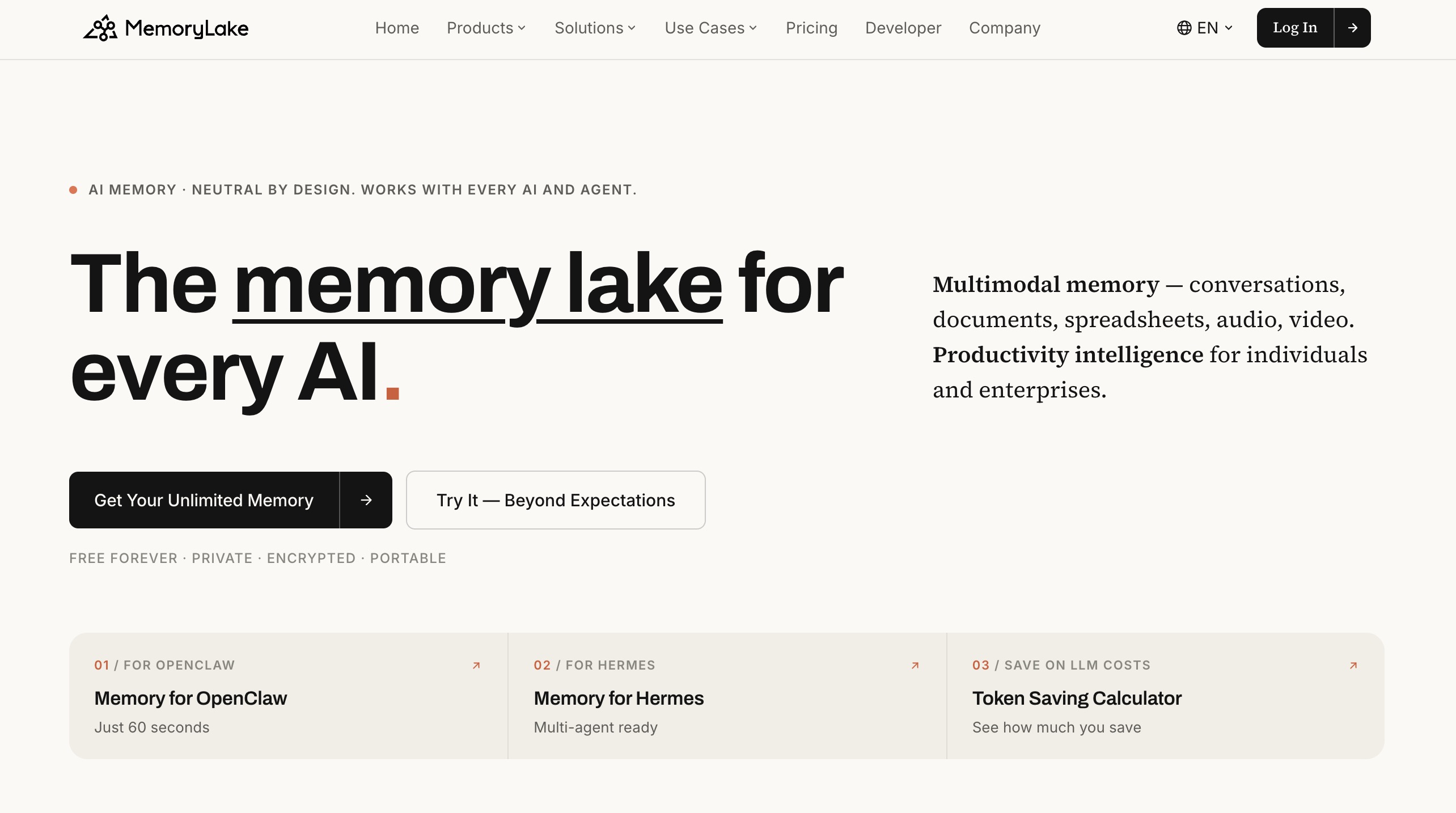
MemoryLake is a persistent memory infrastructure designed to help AI agents and applications maintain context across conversations, tasks, and sessions. Instead of treating every interaction as a fresh start, it enables AI systems to store, organize, retrieve, and reuse relevant information over time. MemoryLake is suitable for a wide range of AI applications, from personal assistants and customer support agents to AI-powered workflows, multi-agent systems, and interactive virtual characters.
Key Features
- Dedicated Memory Layer: Acts as a specialized persistent layer that seamlessly complements existing AI models, agent frameworks, and application infrastructure.
- Multi-Agent Organization: Naturally handles context sharing for teams building agents that need to remember users, historical interactions, and complex task variables.
- Cross-Session Persistence: Excels at maintaining continuity by storing user preferences, important facts, and long-term knowledge across isolated sessions.
Pros
- Incredibly focused on making AI experiences feel consistent, personalized, and deeply context-aware.
- Simplifies development for teams where personalized context is critical to the end-user experience.
Cons
- Requires integrating a dedicated layer, which may require refactoring legacy stateless architectures.
- Overkill for simple, single-turn query bots that do not require historical context.
Pricing
Offers a generous free tier scalable plans start at $19/month.
2. Pinecone
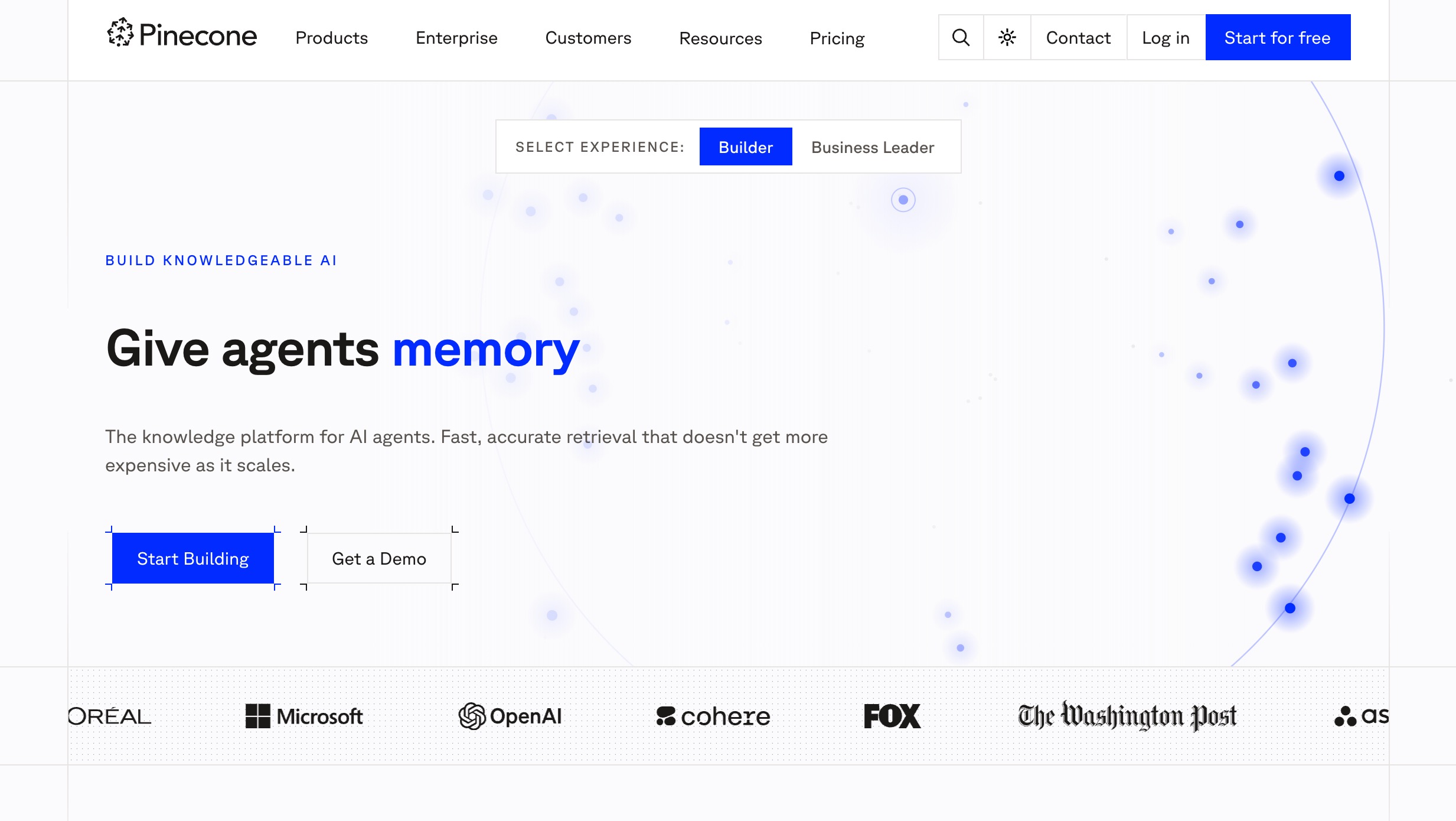
Pinecone is a fully managed, high-performance vector database that has become synonymous with long-term semantic memory for LLMs. While not exclusively an agent-memory tool, it is widely used to provide agents with massive, searchable knowledge bases.
Key Features
- Ultra-low latency vector search and similarity matching.
- Hybrid search capabilities combining dense vectors with sparse metadata filtering.
- Serverless architecture that scales instantly without manual provisioning.
Pros
- Industry standard with extensive documentation and seamless integrations.
- Handles millions of embeddings flawlessly, perfect for global world state storage.
Cons
- Lacks out-of-the-box structured agent memory (e.g., temporal logging, auto-summarization).
- Developers must build their own logic to manage agent state on top of the vector index.
Pricing
Features a serverless pricing model based on reads, writes, and storage, plus a free tier.
3. Redis
Redis is a ubiquitous open-source, in-memory data store. In the context of multi-agent systems, it serves as the ultimate high-speed working memory, allowing rapid state synchronization across a swarm of concurrent agents.
Key Features
- Sub-millisecond latency for read and write operations.
- Pub/Sub messaging paradigms ideal for agent-to-agent communication.
- Redis Stack includes vector similarity search capabilities.
Pros
- Unmatched speed for real-time task orchestration and short-term state sharing.
- Highly mature ecosystem with client libraries in every major language.
Cons
- Data resides in RAM, making massive long-term historical storage cost-prohibitive.
- Vector search features, while good, are bolted onto a primarily key-value architecture.
Pricing
Free and open-source for self-hosting; Redis Cloud offers tiered enterprise pricing.
4. Hindsight
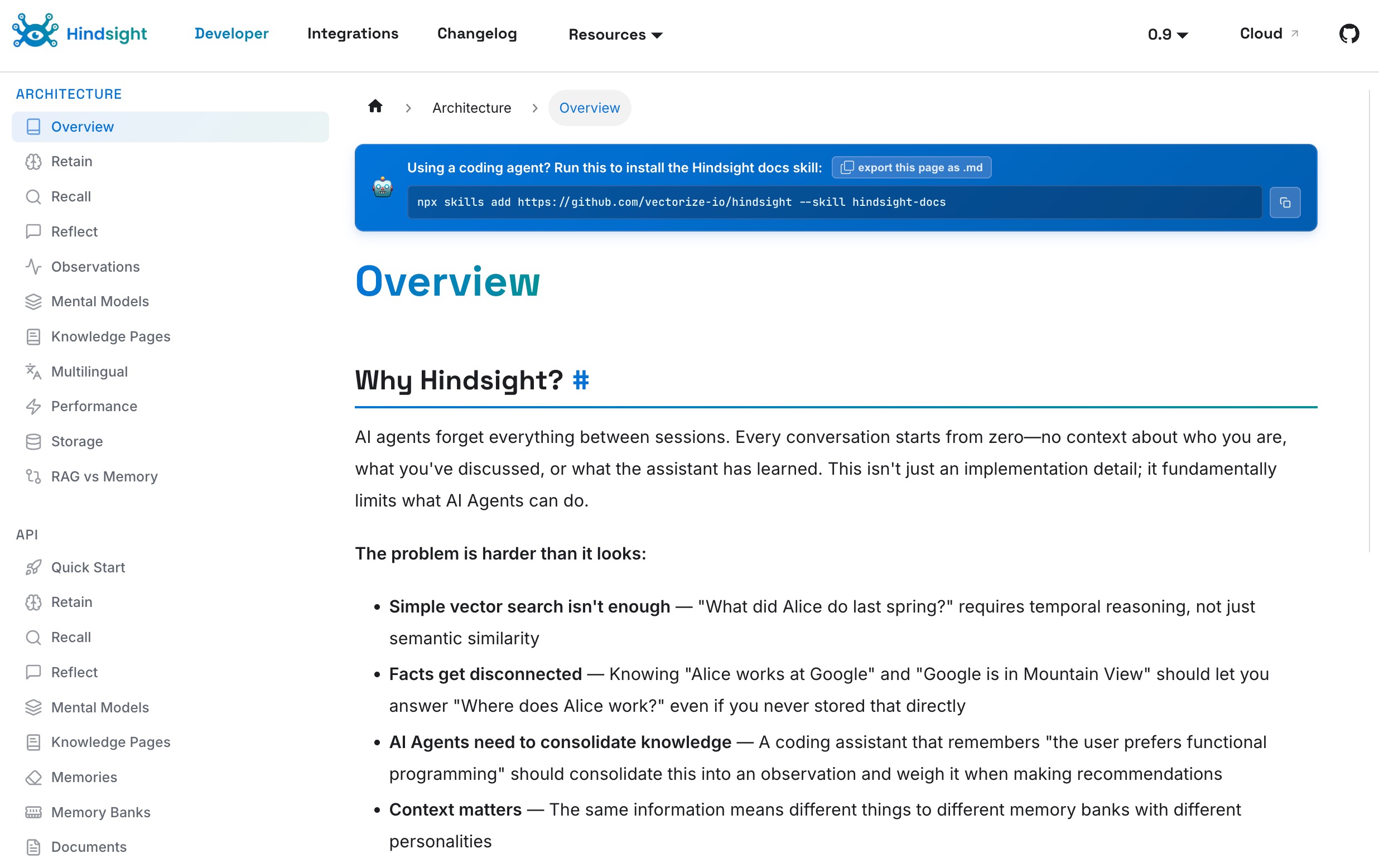
Hindsight is a specialized analytics and memory playback tool for autonomous agents. It acts as an episodic memory logger, recording exactly what agents thought, decided, and outputted at every step of their execution.
Key Features
- Visual temporal tracing of agent decisions and state changes.
- "Time-travel" debugging to replay multi-agent interactions.
- Automated logging of agent thought processes and tool usage.
Pros
- Invaluable for debugging complex multi-agent reasoning loops.
- Provides clear transparency into why agents made specific memory updates.
Cons
- Focuses more on observability and playback than on active semantic retrieval.
- Steeper learning curve for integrating its tracing SDKs.
Pricing
Open Souce.
5. Zep
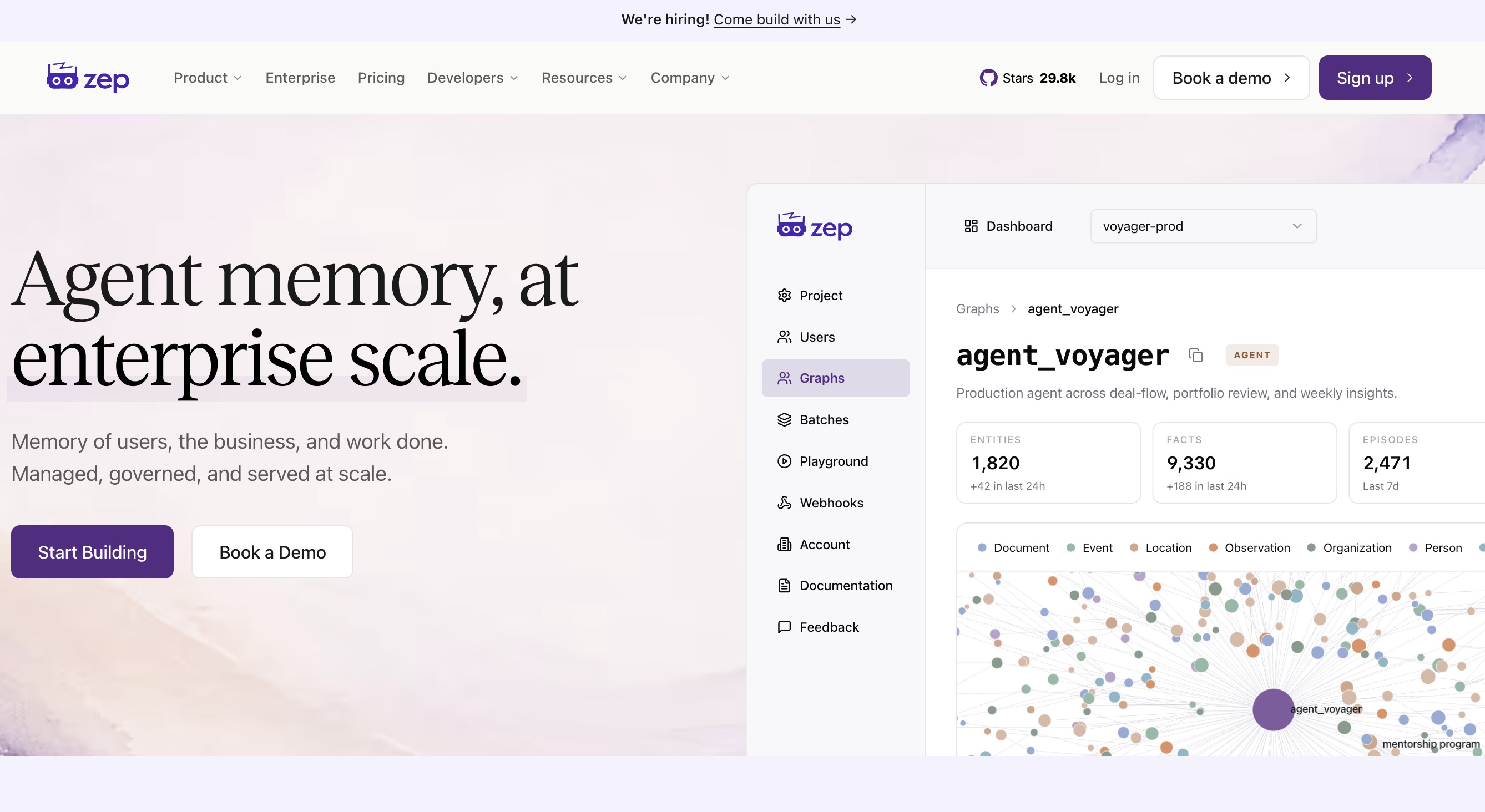
Zep is a long-term memory service specifically built for AI assistants and agents. It automatically extracts, summarizes, and indexes information from conversational histories, turning raw dialogue into structured memory.
Key Features
- Automatic background summarization of long chat histories.
- Built-in fact extraction (e.g., names, dates, user preferences).
- Vector similarity search natively integrated with message history.
Pros
- Abstracts the heavy lifting of NLP-based memory management away from the developer.
- Significantly reduces token counts by summarizing old contexts efficiently.
Cons
- Can be heavy and prescriptive; custom multi-agent logic might clash with its automatic summarization.
- May misinterpret or prematurely summarize highly technical multi-agent scratchpads.
Pricing
Open-source self-hosted version available; Zep Cloud offers usage-based pricing.
6. Supermemory
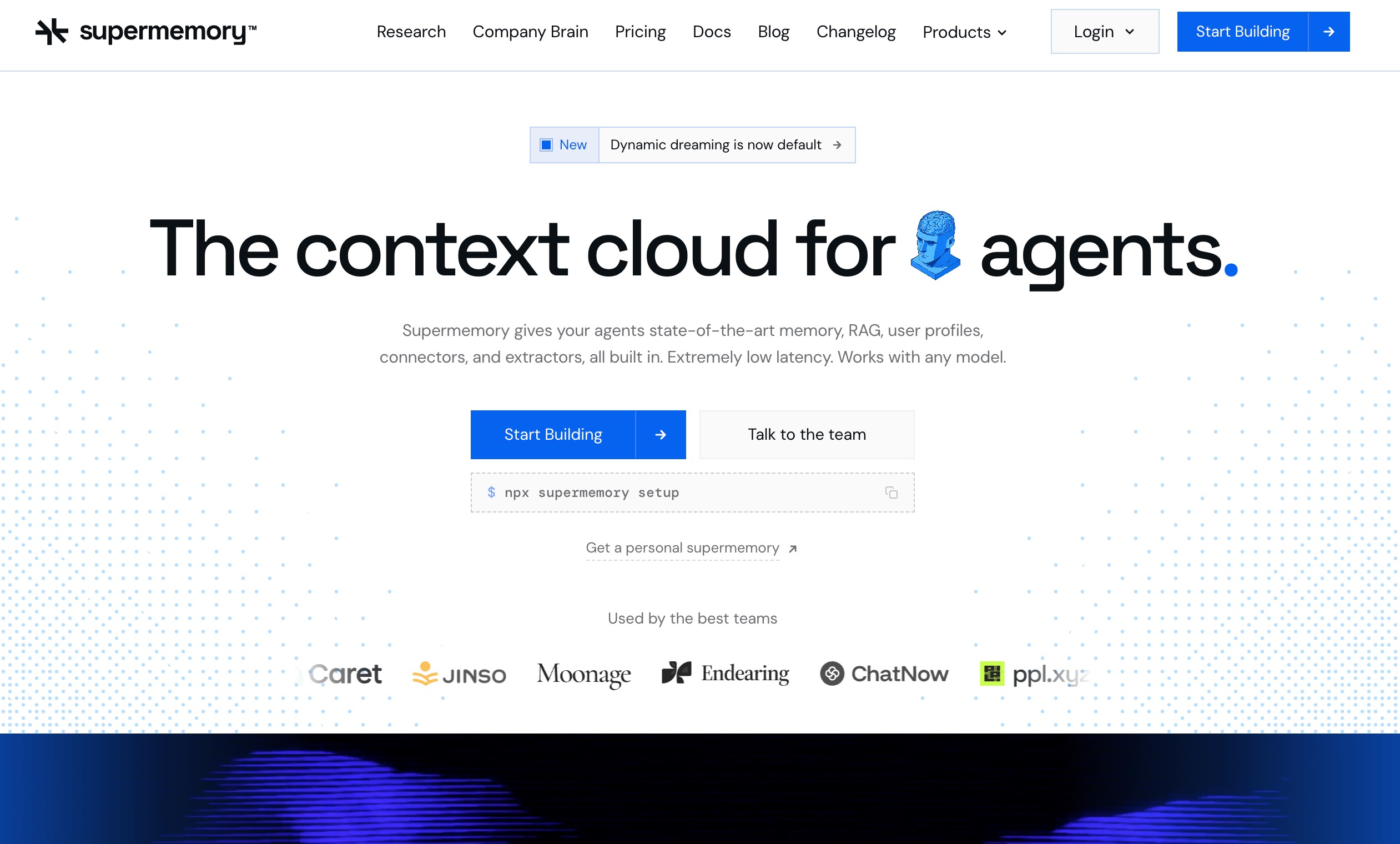
Supermemory is an open-source "second brain" tailored for AI agents and users alike. It combines web integrations, bookmarks, and conversational data into a unified, queryable hybrid graph/vector database.
Key Features
- Native integrations to scrape and digest web content automatically.
- Graph-based relationship mapping between distinct memory snippets.
- Open-source nature allows for deep customization.
Pros
- Incredible community support and highly flexible architecture.
- Great for agents whose primary role is research and data synthesis.
Cons
- Self-hosting and maintaining graph architectures can be infrastructure-heavy.
- Lacks the enterprise-grade out-of-the-box reliability of managed solutions.
Pricing
Free tier available, with paid cloud plans from $19/month and self-hosting on Scale and Enterprise.
7. LangChain (Memory Modules)
While primarily a development framework, LangChain includes highly popular built-in memory components (like ConversationBufferMemory, ConversationSummaryMemory, and Motorhead integrations) used extensively to link agents.
Key Features
- Standardized interfaces for injecting memory into LLM chains.
- A vast array of plug-and-play integrations with external databases.
- Supports both short-term windowed memory and long-term vector memory.
Pros
- Since most devs already use LangChain, adding its memory modules is frictionless.
- Highly customizable by combining different memory classes.
Cons
- Memory is somewhat fragmented; it is a framework feature rather than a dedicated persistent database.
- Can become notoriously bloated and hard to scale in complex multi-agent swarms.
Pricing
Open-source and free; LangSmith cloud plans start at $0, with paid plans from $39/seat/month.
8. Membase
Membase focuses on scalable document state storage for AI runtimes. It is engineered to handle the high-throughput, unstructured JSON payloads generated when swarms of agents continuously update their contextual state.
Key Features
- High-throughput NoSQL document storage tailored for AI workloads.
- Flexible schema evolution to adapt as multi-agent parameters change.
- Built-in conflict resolution for concurrent agent writes.
Pros
- Highly reliable and capable of scaling horizontally across distributed systems.
- Perfect for storing complex agent operational states and metadata.
Cons
- Requires manual integration with an embedding model to achieve semantic search.
- Geared more toward traditional infrastructure engineers than AI app developers.
Pricing
Free tier available, with a Pro plan at $20/month.
9. MemU
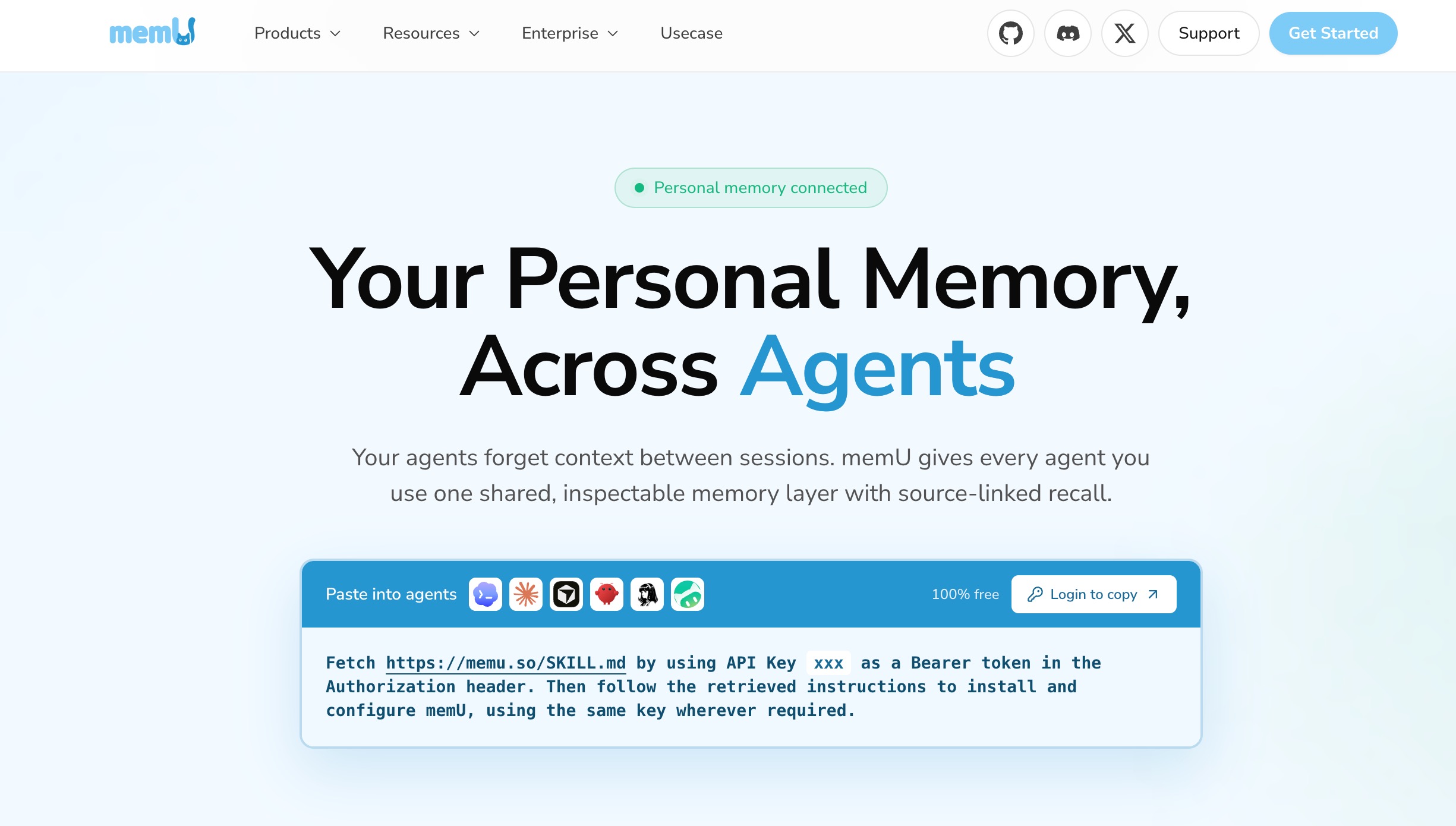
MemU is an emerging agentic memory API designed strictly for swarm intelligence. It offers specialized protocols for multi-agent systems to broadcast, share, and retrieve intent and state across decentralized agent networks.
Key Features
- Swarm state synchronization via lightweight API endpoints.
- Intent broadcasting, allowing agents to signal upcoming actions.
- Permissioned memory spaces (public swarm memory vs. private agent memory).
Pros
- Built precisely for the complexities of concurrent multi-agent environments.
- Provides elegant solutions for agent conflict avoidance.
Cons
- Newer to the market, meaning fewer case studies and less community support.
- Niche use cases; may be overly complex for standard conversational agents.
Pricing
Open source and free for self-hosting; cloud APIs are usage-based.
Best Shared Memory Solutions by Use Case
- Enterprise Multi-Agent Workflows & Persistent Assistants: MemoryLake. Because it specifically focuses on cross-session persistence, context retention, and structural organization, it handles long-term user relations and complex task continuations flawlessly.
- High-Volume Semantic Search & RAG: Pinecone. When agents need to scour millions of company documents in milliseconds, a dedicated serverless vector database is the best fit.
- Real-Time Agent Orchestration: Redis. For rapid, sub-millisecond state sharing where agents need to know what other agents are doing at this exact second, in-memory KV is unmatched.
- Automated Conversational Summarization: Zep. If your multi-agent system deals strictly with analyzing and summarizing endless streams of human-to-AI chat, Zep handles the NLP overhead perfectly.
- Debugging and Observability: Hindsight. When you need to dissect why an agent swarm failed at a task by looking at historical state changes.
How to Choose a Shared Memory Solution
Choosing the right shared memory solution dictates the long-term scalability and intelligence of your multi-agent system. When evaluating your options, consider these criteria: First, look at Persistence vs. Latency. If you need instantaneous, short-term state syncing, Redis is phenomenally fast. However, its in-memory nature makes it less suitable for long-term user context. Second, evaluate the Semantic Capabilities. Pinecone offers incredible vector search for retrieving factual documents, but it falls short in providing out-of-the-box structured agent memory (like user preferences or chronologies). Zep solves some of this by automating summarization, but it can be rigid if your agents require custom memory logic. LangChain offers flexibility, but relying on framework-level modules often leads to fragmented state management as your system grows.
To achieve true contextual intelligence, you must look at Memory Architecture. You need a tool that objectively balances vector similarity with structured persistence and relational context. While solutions like Membase or Pinecone excel in their narrow database niches, they require extensive custom engineering to act as true "agent memory."
For teams aiming to build robust, personalized multi-agent ecosystems, MemoryLake emerges as the premier choice. It objectively outperforms generic databases by providing a dedicated memory layer. It eliminates the heavy engineering burden of stitching together vector stores and KV databases, offering an all-in-one persistent infrastructure that seamlessly integrates into your existing agent frameworks. By focusing heavily on cross-session continuity and structured retention, MemoryLake ensures your agents actually act as a unified, intelligent team.
Final Verdict
While the market is flooded with impressive vector stores and caching tools, piecing them together to emulate multi-agent memory is costly and time-consuming. MemoryLake stands out as the ultimate solution because it provides a dedicated, persistent memory infrastructure built explicitly for this purpose. If you want your agents to maintain deep context, collaborate seamlessly, and deliver hyper-personalized user experiences, integrating MemoryLake is your logical next step.