
What Anthropic actually published
Three first-party documents describe this, and they describe different halves of it. The release notes announce it, the What's new in Claude Fable 5.1 page summarizes the breaking change, and a dedicated Preserved thinking page carries the full rules and a migration checklist. A fourth, consumer-facing help center article — updated the same day — shows what the same mechanism looks like when you are not touching the API at all.
Thinking blocks now carry a model and a signature
The rule is directional. In Anthropic's words: "Every thinking block records which model produced it, and it's preserved in one direction only: Claude Fable 5.1 reads earlier models' thinking blocks, and no earlier model reads Claude Fable 5.1's."
So a conversation that moves up keeps its reasoning. A conversation that moves down loses it for the turns that run there. Fable 5.1 accepts blocks from Opus 5, Fable 5, Mythos 5, and earlier models. None of those read Fable 5.1's.
When a request carries a block the target model cannot read, "the API drops the block before the model sees it." Dropped blocks are not billed. And the part that matters for debugging: with the thinking-binding-controls-2026-08-01 beta header, the drop is reported in a top-level input_transformations array. Without it, per the docs, "the drop is silent."
On top of the model check sit two more. The API verifies that "Nothing before the block has changed" — the top-level system prompt, the set of tools in tools, and every message before the block — and that "The chain of earlier thinking blocks is unbroken," because "each thinking block records the one before it, across turns."
The four edits that invalidate everything after them
The release page lists the patterns plainly. These invalidate every later thinking block:
- "Editing, reordering, or removing an earlier turn while keeping later ones."
- "Injecting per-request text into an earlier turn (a reminder or status line) that you remove on the next request."
- "Rebuilding the top-level
systemprompt ortoolsarray between requests in the same conversation." - "An image or document URL that serves different bytes on a later request (the check covers the bytes, not the URL, so a rotating signed URL for the same file is fine)."
Four is the vendor's summary, not the whole surface. The Preserved thinking page expands the same ground into a table with more rows — editing a tool, removing a thinking block from the middle of the history, rewording a turn-scoped message. Read the table before you conclude your harness is clean.
Where the check is enforced, a request that replays an invalidated block returns a 400 whose message says The block is bound to a different conversation.
Notice which of the four is the trap. The second is not exotic code: injecting a per-turn reminder into an earlier message and stripping it next request is a standard trick for steering a long tool loop, and it costs you every thinking block after it.
What stays valid, and who is enforced today
The docs are equally explicit about what does not count as an edit, and the list is more generous than people assume. Appending messages at the end is fine. So is removing thinking blocks from the start of the history, moving cache_control markers, and changing max_tokens, output_config, or tool_choice. Server-side compaction and context editing are explicitly fine, because "the check compares what you sent, not the server's edited copy."
Enforcement is staged, and the date is precise: "A new account is one created on or after August 31, 2026, 00:00 UTC." Those accounts get the check today. Older accounts have the mismatch recorded but acted on only if the request sets prefix_mismatch_behavior. The forward-looking sentence is the one to plan around: "Later models will enforce the check for all users."
Which produces the most useful warning in the whole document, aimed at anyone shipping a tool other people run: "If you maintain a tool or framework that people run with their own API key, your users on new accounts hit the check before you do: your own key is likely on an older account."
The consumer side, where your memory can move the model
The same day, Anthropic updated a help center article about why Claude switches models mid-conversation on Fable 5 and Fable 5.1. It is written for people who have never seen a messages array, and it lands in the same place.
Fable 5.1 runs safety classifiers on every request, and blocked requests fall back: "When your request falls back, Claude re-runs your blocked Claude Fable 5 or Fable 5.1 request on an Opus model in the same conversation." Then: "After the switch, the model picker stays on Opus for the rest of the conversation."
That is the directional rule playing out in a chat window. Your conversation has just moved to a model that cannot read Fable 5.1's reasoning.
Two more sentences from that page are worth sitting with. One of the blocked categories is "Distillation attacks on Fable 5 and Fable 5.1, including attempts to extract the model's summarized thinking" — which tells you why the binding exists at all. And the classifiers do not only read your latest message: "The checks also review everything the model reads, not just your latest message—including memory, content from connectors, web search results, and files, so a block can be triggered by content you didn't type."
Read that carefully. What is in your memory layer can trigger a model switch, and the model switch is what drops the reasoning.
What this does and doesn't change
It does not make Claude Fable 5.1 worse at remembering. Nothing here touches persistent memory as a feature, and nothing here reduces the 1M token context window both models ship with by default.
It also is not a nerf dressed up as a policy. Anthropic states the reason directly: the signature check exists "so that reasoning produced under one set of instructions can't be replayed under another, potentially adversarial set of instructions." Pair that with the blocked distillation category on the consumer side and you have one defense at two layers. Calling it a regression misreads it.
What it does change is the status of the message array. Until now, messages was working memory you could rewrite: summarize an old turn in place, patch in a reminder, rebuild the system prompt when a new tool arrived. On Fable 5.1 that array is closer to an append-only log with a checksum. The parts of your system that assumed otherwise now need somewhere else to live.
And it changes what a fallback costs. A router that shuffles models for price or availability was previously trading a little quality. Now it can also be dropping the reasoning chain, and unless you have opted into input_transformations, dropping it without telling you.
What people will take from this, and shouldn't
"Fable 5.1 forgets things now." It does not. The binding governs whether reasoning blocks can be replayed into a request. It has nothing to do with what Claude remembers about you between conversations, which is a separate system with separate controls.
"So I should stop sending thinking blocks back." Also wrong, and expensive. Fable 5.1 reads earlier models' blocks and its own; replaying them across a long agentic turn is what keeps the chain of reasoning intact. The fix is to stop editing history, not to stop sending it.
"This only affects people who write raw API calls." Mostly true, with a carve-out. The docs note that Claude Code, claude.ai, Claude Managed Agents, and the Claude Agent SDK keep the prefix intact for you. If you build the messages array yourself — including inside a wrapper, a proxy, or an eval harness — you are the one who has to check.
"A 400 is the worst case." A 400 is the good case, because you find out. The silent cases are worse: a block dropped on a model downgrade with no beta header, or a rotating document URL that quietly serves different bytes.
"I can just turn the check off." You can choose what happens on a mismatch — "drop_block" instead of the default "error" — but dropping is not keeping. The API "removes the block and every thinking block after it in the conversation." That is a reasonable production default, not a repair.
The Fix: Move the Durable Layer Out of the Message Array
The append-only rule is a constraint on one specific thing: the request body of a single conversation. It says nothing about where your project's durable knowledge lives. That distinction is the whole fix, and it is why teams that already keep conventions, decisions, and preferences in a memory layer outside the transcript barely felt this release.
A memory layer works the way the check wants you to work. Nothing gets rewritten inside earlier turns, because the facts were never inside them. And because the store is external, the same knowledge survives the fallback to Opus that just dropped your reasoning chain — and survives the model after that. MemoryLake takes three steps.
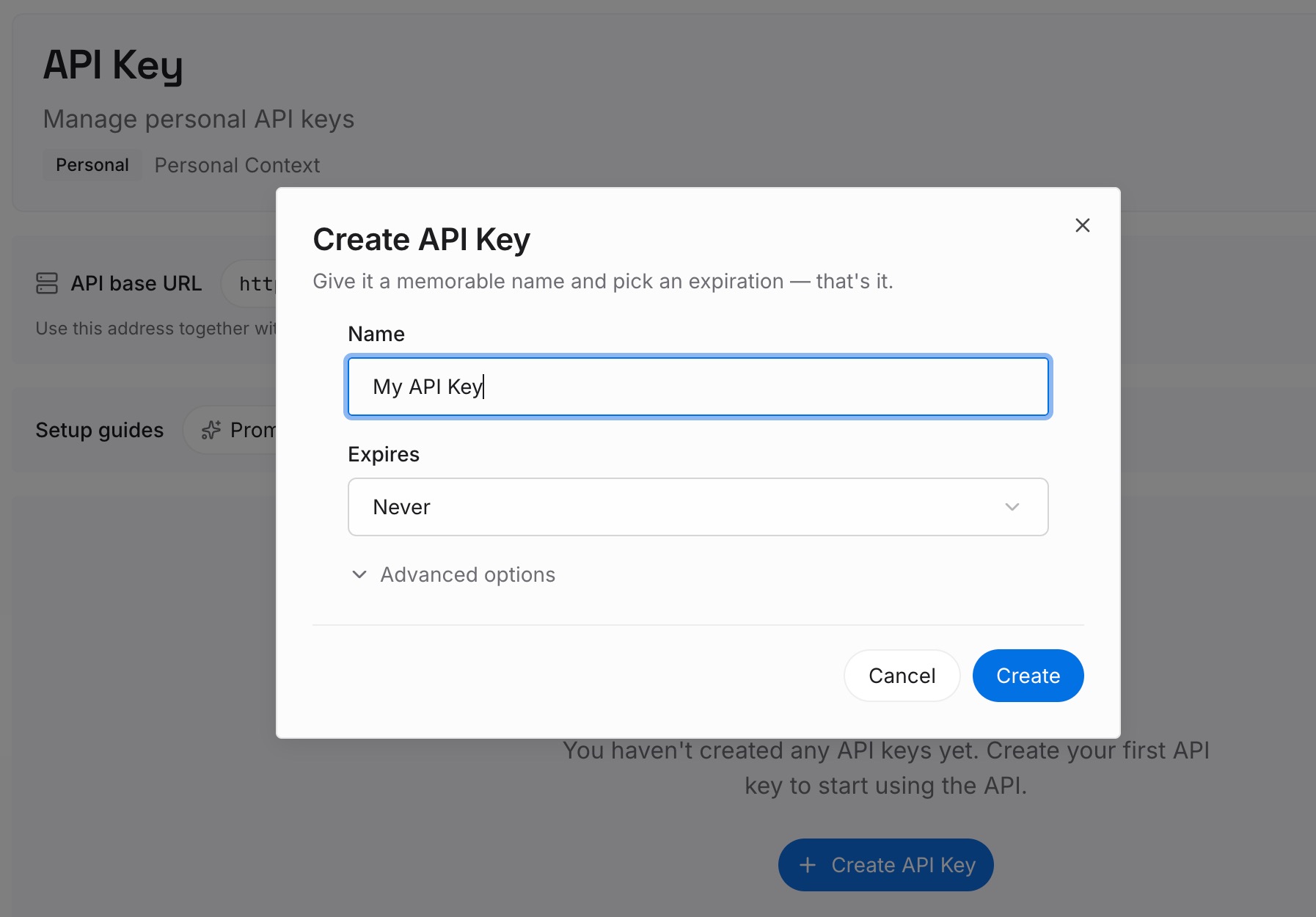
Step 1: Create an API key
Sign in and generate an API key from your dashboard. This is the credential your agent, harness, or backend uses to read and write memories, and it is independent of which Claude model the conversation is currently running on. That independence is the point: a fallback from Fable 5.1 to Opus changes what can read your thinking blocks, and changes nothing about what can read your memories.
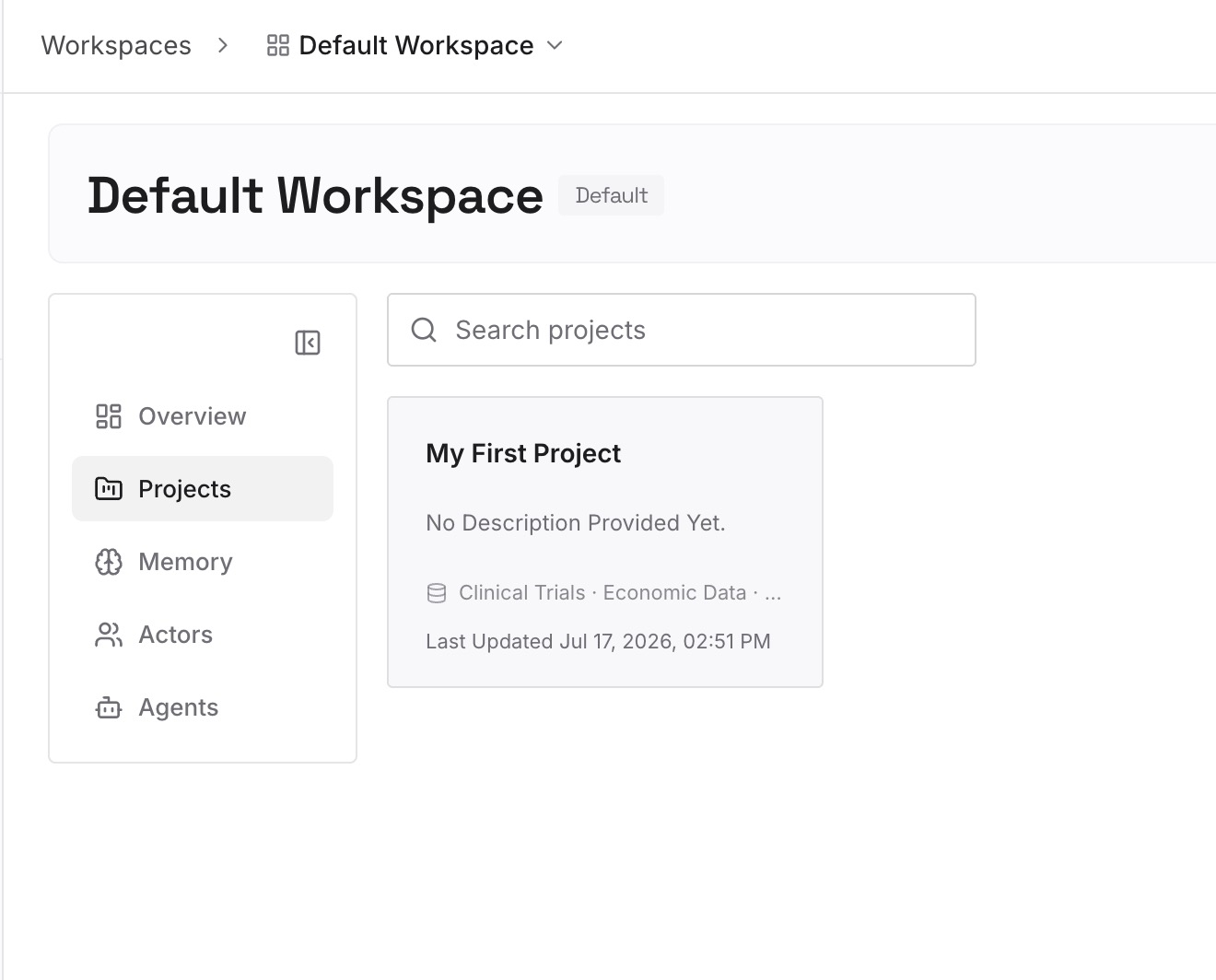
Step 2: Upload your first memories
Put the things you were tempted to inject into earlier turns here instead. House conventions. Decisions already made and the reasons behind them. Names, definitions, and the rules the agent kept relearning. If you have been maintaining a long system prompt that you rebuild whenever a project detail changes, that rebuild is now one of the four invalidating edits — move its volatile half into memory and leave the stable half in system.
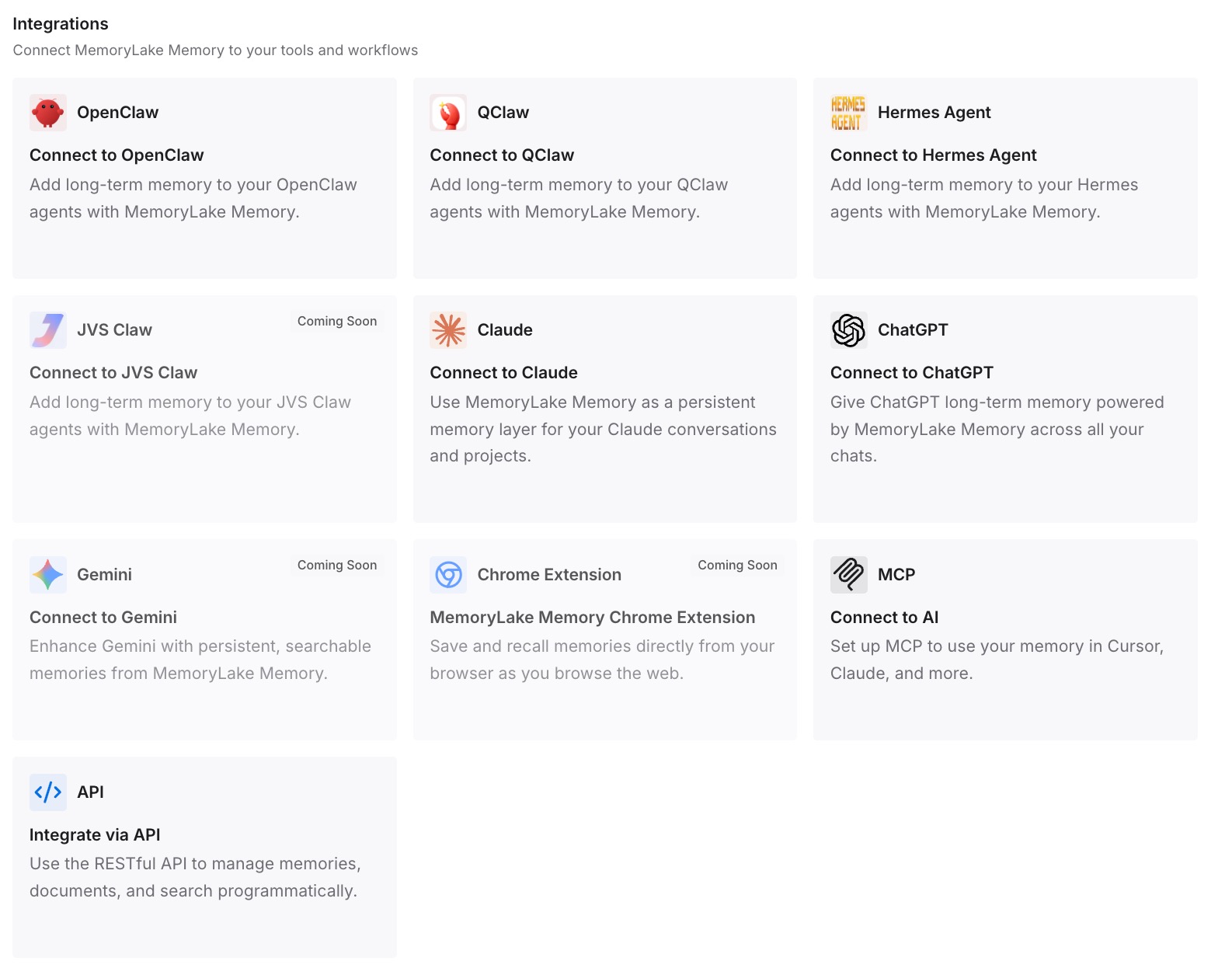
Step 3: Connect your AI & agents
Point your harness at the store, and the retrieval happens at the front of the turn rather than by rewriting the back of the history. Practically, this means your per-turn context is assembled from an external source and appended, instead of being patched into a message from six turns ago. That is the shape the signature check is asking for, and it is also the shape that keeps the prompt cache warm.
What this changes in practice
For a long agentic run, the immediate change is that steering has to move to the end of the conversation. Reminders become appended turns or turn-scoped system messages; tool changes go through the mid-conversation tool-change path rather than a rebuilt tools array; trimming goes to server-side compaction or context editing, which the check ignores by design.
For anything with a router in front of it, the change is that you need visibility. Sending the thinking-binding-controls-2026-08-01 beta header and logging input_transformations turns a silent drop into a line you can count. Anthropic's own detection recipe: run a normal multi-turn session with prefix_mismatch_behavior set to "drop_block" and read what comes back.
For everyone else — the people using Claude in a browser — the practical change is smaller and stranger. If a safety fallback moves your conversation to Opus, editing your earlier message is the documented way forward: "Editing your previous message before retrying often helps." That is the opposite of the API-side advice, and both are correct, because they are about different layers. "Don't edit history" is a rule about request bodies, not about how you use a chat window.
One cost note points the same direction: the patterns that invalidate thinking blocks are largely the patterns that invalidate the prompt cache. Fixing one fixes the other.
Best practices for long sessions on Fable 5.1
- Append assistant turns exactly as returned. Byte-for-byte, including empty thinking blocks and their signatures.
- Never patch an earlier turn. Per-turn reminders belong in a turn-scoped system message with
clear_at: "next_user_message", which stays inmessagesat no token cost and keeps later blocks valid. - Leave
systemandtoolsalone mid-conversation. Use mid-conversation system messages and the tool addition and removal path instead of rebuilding either array. - Trim on the server. Compaction and context editing do not count as edits. Client-side summarization of an earlier turn does.
- Reference files by ID. The check covers bytes, not URLs.
- Opt into visibility before you need it. Send the beta header and log
input_transformationsso a dropped block is a metric, not a mystery. - Test as a new account would. Your own key is probably on an older account, so set
prefix_mismatch_behaviorexplicitly. - Keep durable knowledge outside
messages. Anything you would have injected into history belongs in a memory layer, and what your agent actually reads is worth auditing while you are in there.
Conclusion
The headline change in Claude Fable 5.1 is not the price of a cache read. It is that the conversation you send has become a signed, model-bound, append-only object, and that four ordinary editing habits now cost you the model's reasoning — one of them silently.
The constraint is narrow, and the workarounds are all first-party features Anthropic shipped alongside it. The better news is that most of what people were smuggling into the message array never belonged there. Reasoning is bound to one conversation on purpose. Your project's knowledge does not have to be bound to anything at all.