
What SpaceXAI actually published
Five primitives, and the Bot won
The essay starts from vocabulary fatigue, which is a fair diagnosis: "Chats, sessions, models, context windows, memories, system prompts, projects, skills, connectors, agents, tools, sandboxes, permissions, and automations all describe real parts of these systems." Their conclusion: "exposing each one as a separate product concept asks users to understand more than they need to."
They kept five. Quoted as written:
- "Bots are persistent agents with their own identity, memory, runtime, and tools."
- "Chats are the conversational interface for working with a Bot."
- "Prompts give a Bot context or instructions. They can be used once, saved as Skills, or triggered automatically as Routines."
- "Tools let Bots access information and take action through software, APIs, connectors, the shell, or computer use."
- "Artifacts are the documents, designs, code, data, and other durable outputs that Bots create or modify."
Note where memory sits in that list. It is a property of a Bot, alongside identity and runtime. Not a property of you.
The chat history became a Bot roster
The interface consequence is stated plainly: "So the main objects in Grok Bot are Bots, not conversations. A Bot has a name. It has an avatar and a title. It remembers its conversations with you. It has its own computer and tools. When you come back tomorrow, you are coming back to the same Bot."
The sidebar lists Bots rather than threads, and the avatar carries identity while doubling as a status indicator — "A Bot may be idle, thinking, working, waiting, blocked, or done."
Each Bot also gets its own machine: "Each Bot has its own computer, which it can use to browse the web, work with files, and run software." Access comes in three levels, ending in "Takeover: when the Bot needs help, the user can open the computer full screen, take control, and then hand it back."
The split that matters: capabilities are shared, context is not
Here is the paragraph worth reading twice, and the reason this article exists:
"Capabilities and context therefore follow different boundaries in Grok Bot. Tools and Skills live at the account level because many Bots may need to browse the web, work with documents, or send email. Memory and Routines belong to the Bot because they reflect what that particular role knows and does over time. Put another way, capabilities can be shared broadly while context remains with the role that needs it."
Two different scopes, on purpose. And they give the reason:
"A legal Bot may need the history of an ongoing dispute, while a finance Bot may need years of financial records. Combining those histories into one large memory would make it harder to give each Bot the information relevant to its work."
That is an explicit argument against pooling memory, from a vendor that just rebuilt its product around persistence. It deserves to be taken seriously rather than waved at.
Work that starts without a prompt
One more piece, because persistence without initiation is only half the idea: "Most agent sessions begin when a user sends a prompt. That leaves even a persistent Bot waiting for someone to activate it." Routines are the answer — "a standing responsibility that runs on a schedule or in response to an event" — and they were promoted mid-design: "We initially treated Routines as secondary configuration. As they became more important to autonomous work, we moved them into the Bot's main interface."
Routines are scoped to the Bot, same as memory. Skills and Tools are not.
The enterprise page, same day
Alongside the essay, SpaceXAI made Grok Bot available for enterprises and described a Bot in worker terms: "A Bot is a worker you create inside Grok Bot for a specific job. Each Bot runs on its own computer in the cloud and can use every app and website the same way you do." On isolation: "Each user's work in Grok Bot runs in its own secure and isolated environment, separate from every other user. A Bot has no access by default and reaches only the accounts you sign it into."
The rollout note is that Grok and Cursor Enterprise customers get free usage "for the next two weeks" and can invite a whole organization, "including people without an existing seat."
What this does and doesn't change
It does move the unit of persistence off the session. That is real and it is the right direction. A named thing with its own state, tools, and standing responsibilities is a better container for accumulated knowledge than a conversation you scroll back through.
It does not make memory portable. A Bot's memory is a property of that Bot inside that product. Nothing in the essay suggests it travels — and per-role scoping makes travel harder, not easier, because the knowledge is now partitioned by role as well as by vendor.
It does not merge, and that is intentional. If you run a legal Bot and a finance Bot, neither knows what the other learned. SpaceXAI considers this a feature, and for retrieval quality inside one product they have a point.
They do acknowledge the shared-context problem. The essay does not pretend roles never overlap: "Group chats provide shared context for a project or team while allowing each Bot to retain its specialized memory." So a shared layer exists in their model too — it is a conversation, scoped to a project, rather than a store.
It does not remove the coordination question, it relocates it. Their answer emerged from usage: "Some made a Chief of Staff Bot responsible for coordinating several specialists." A Bot that routes work between Bots is a reasonable pattern, and it is also a Bot with its own separate memory of the routing.
What people will take from this, and shouldn't
"Per-Bot memory means memory is solved." Solved inside one product, for one role. The thing that was hard before — knowing your conventions when you switch tools — is untouched. It is the same distinction covered in what persistent memory actually is.
"One big memory is a mistake, then." This is the misreading worth correcting carefully, because SpaceXAI's argument is narrower than it sounds. They are arguing against merging role histories into one blob — dumping years of financial records and an active legal dispute into a single store and hoping retrieval sorts it out. That is a genuine retrieval problem and they are right about it.
What they are not arguing against is a shared source of durable facts — your architectural decisions, your domain vocabulary, your conventions. Those are not one role's history; they are the same for every role, and every Bot re-learning them separately is waste, not hygiene. Scoping histories and sharing facts are different moves, and only the first is what the essay defends.
"So I should give every Bot the same instructions." Copying the same context into five Bots is the workaround that looks like a solution for about a month. Then one copy gets a correction the others do not, and you have five specialists confidently disagreeing about your conventions — the failure mode described in multi-agent memory.
"Routines make it autonomous, so I can stop thinking about context." Routines decide when a Bot acts. They do not decide what it knows. A Routine that runs every morning on stale context runs wrong every morning.
"Takeover means I can supervise everything." The three access levels were designed specifically to avoid that: "The more prominent we made the computer, the more the product encouraged users to supervise it." Takeover is an exception path, not a workflow.
The Fix: Scope the Histories, Share the Facts
Step 1: Sort your context into history and facts
Take one Bot you actually use and read what it has accumulated. Sort every item into two piles.
History. What this role did, decided, and was told, in sequence. The dispute timeline. The receipts collected. The candidates sourced. This belongs to the Bot, and SpaceXAI is right that merging it across roles makes retrieval worse.
Facts. What is true about your organization regardless of who is asking. How your API is versioned and why. What your internal terms mean. Which team owns what. Your writing conventions. Your compliance constraints.
The second pile is the one that gets silently duplicated. Every Bot you create needs some of it, and per-role memory means every Bot learns it again from scratch — or does not, and gets it wrong.
Step 2: Decide where each Bot's shared context comes from, before you create the fifth one
Two Bots is manageable by hand. Five is where the copies drift.
Look at what SpaceXAI already scopes to the account: Tools and Skills, because "many Bots may need to browse the web, work with documents, or send email." That is precisely the reasoning that applies to facts. The capability boundary is drawn at "many Bots need this"; the same test applied to knowledge gives you the same answer.
Practically: for each Bot, write down which shared facts it needs and where it currently gets them. If the answer is "whatever I typed into its first conversation," that is the copy that will drift.
Group chats are worth using deliberately here. They "provide shared context for a project or team while allowing each Bot to retain its specialized memory," which is a good fit for project-specific overlap and a poor fit for standing conventions — a group chat is a conversation, and conventions should outlive it.
Step 3: Put the facts in a layer no Bot owns
The structural fix is the one the account-level Tools boundary already implies: things many Bots need should not live inside any one of them.
A memory layer outside the product does that for knowledge. Each Bot keeps its own history — scoped, specialized, exactly as SpaceXAI designed it — and reads shared facts from a store that is not any Bot's property. Creating a sixth specialist stops meaning a sixth explanation of your conventions, and a correction lands once instead of five times.
It also survives the thing per-Bot memory cannot: the tool you use next. MemoryLake sets up in three steps.
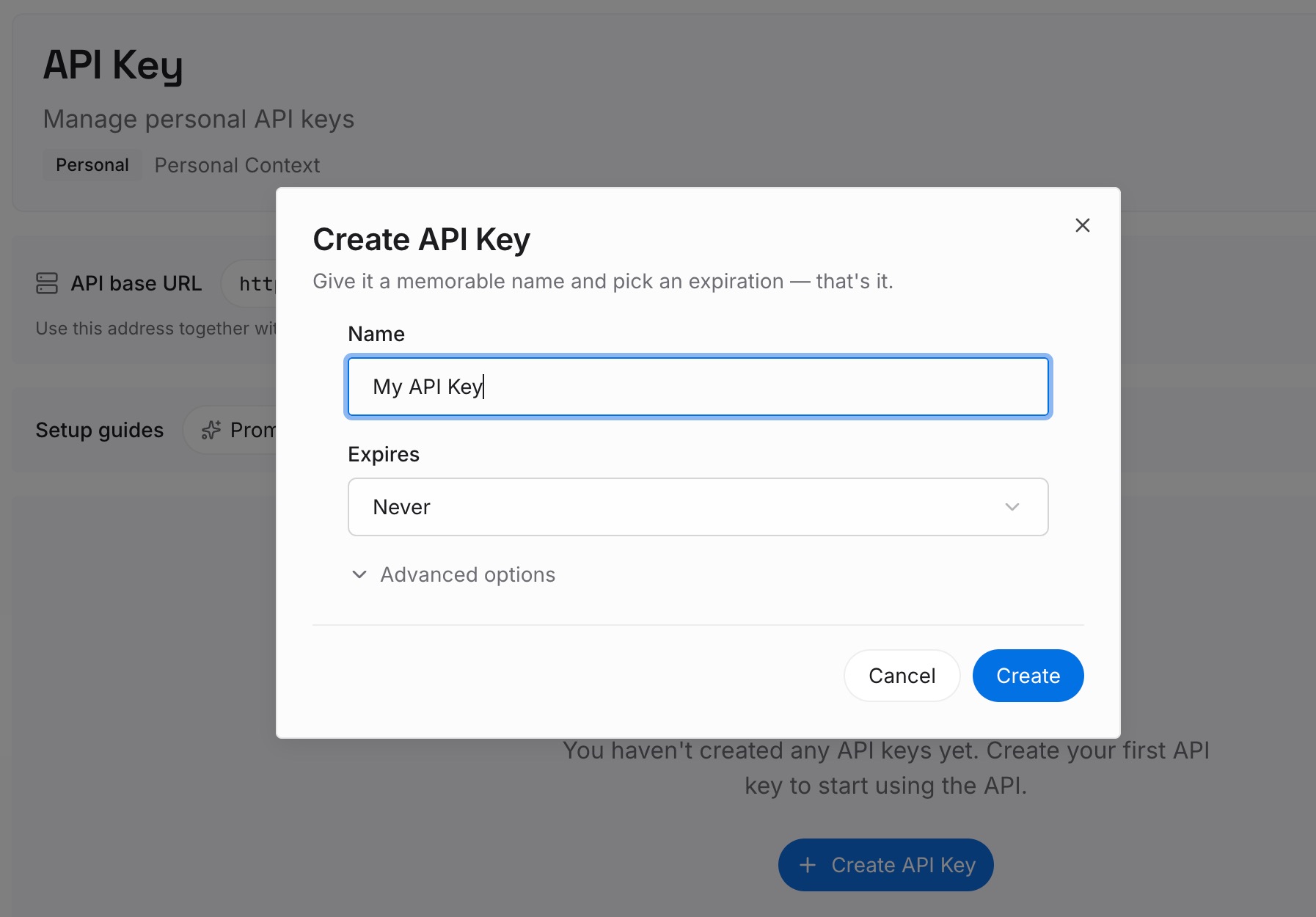
Step 1: Create an API key
Sign in and generate an API key from your dashboard. It belongs to you rather than to a Bot, an account, or a product, which is the property that matters when your roles are spread across more than one vendor.
Step 2: Upload your first memories
Put in the second pile from Step 1: architectural decisions and their reasons, domain vocabulary, service ownership, standing preferences, the constraints every role has to respect.
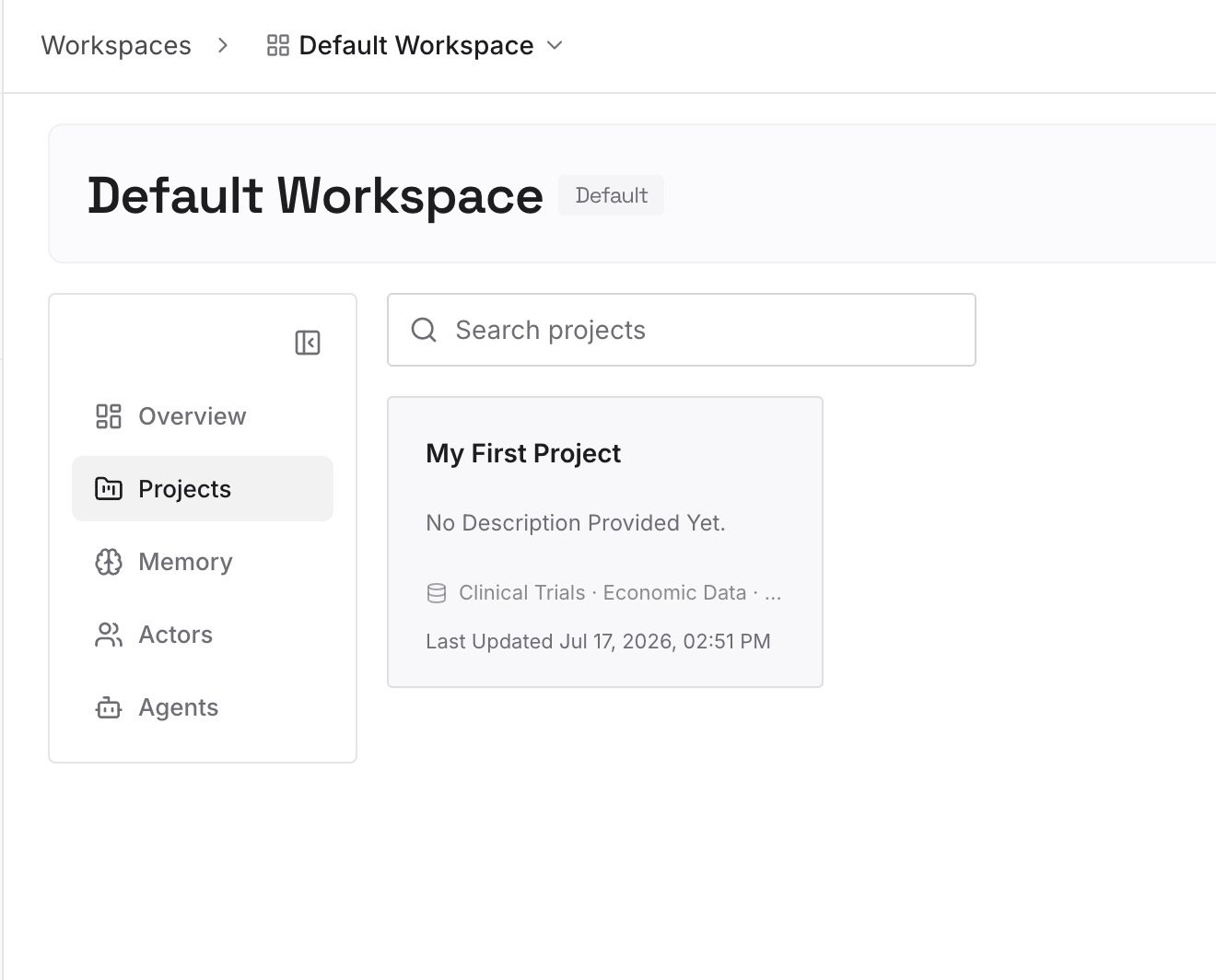
Leave the histories where they are. A Bot's record of its own work is exactly what should stay scoped to that Bot.
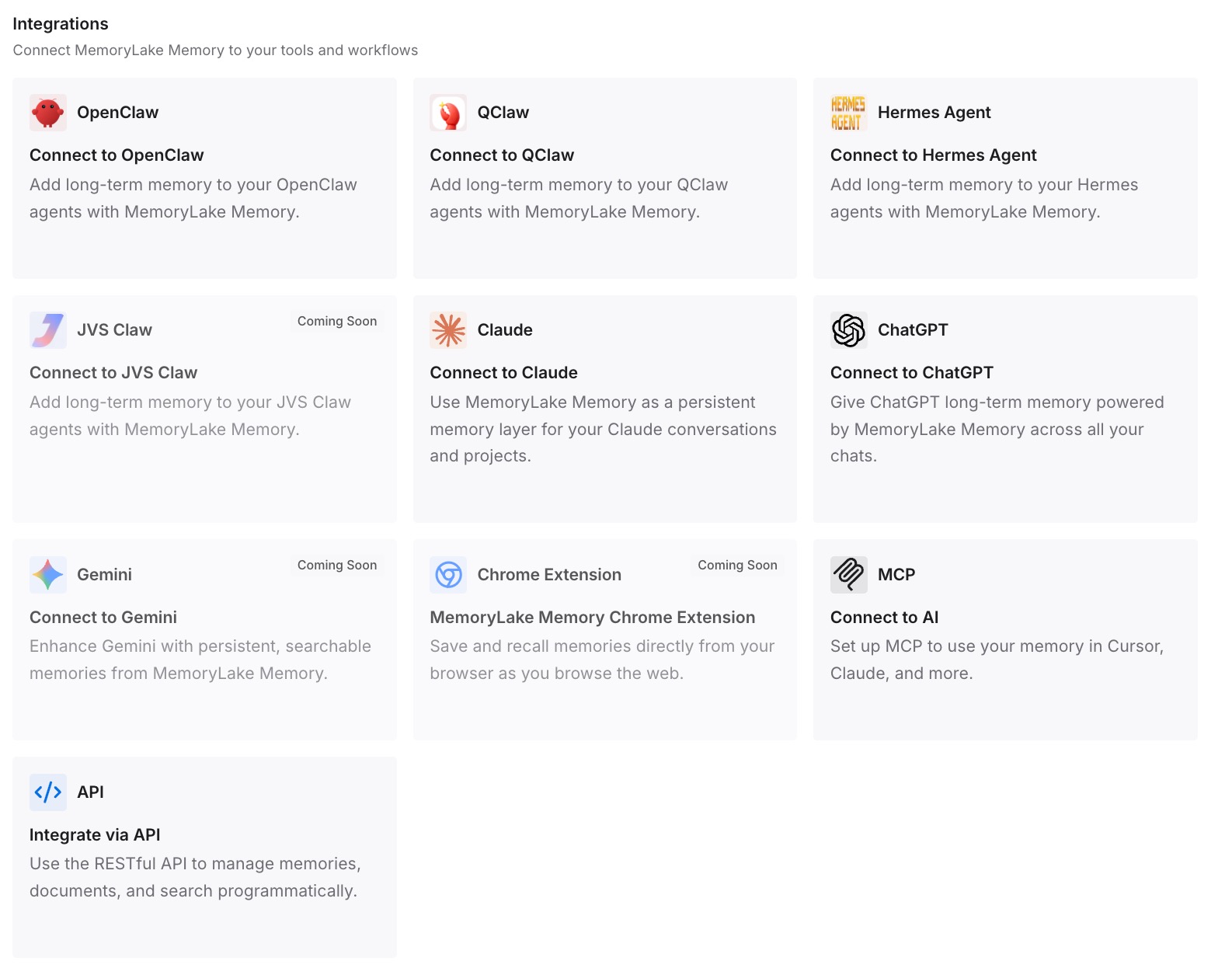
Step 3: Connect your AI & agents
Point your agents at the store. A new specialist starts from your organization's facts instead of from nothing, and the facts stay correct in one place — which is the point of syncing memory across your tools rather than per product.
What this changes in practice
The first change is that creating a specialist gets cheap. Right now the cost of a new Bot includes re-teaching it everything general, which quietly discourages the fine-grained roles the design is built for.
The second is that corrections stop being N-way. Fix a convention once and every role reads the fixed version, rather than the version it happened to be told.
The third is that role scoping becomes a real design choice instead of a constraint you route around. When shared facts come from a shared layer, keeping each Bot's history narrow costs you nothing — which is what SpaceXAI wanted in the first place, and the same argument behind keeping less in agent memory.
Best practices for per-role agent memory
- Separate history from facts before you scale. History belongs to the role; facts belong to everyone.
- Apply the Tools test to knowledge. If many Bots need it, it should not live inside one of them.
- Do not copy shared context into each Bot. That is the drift mechanism, and it fails silently.
- Use group chats for project overlap, not standing conventions. A conversation is the wrong home for something that must outlive it.
- Treat a coordinating Bot as a router, not a memory. Its own memory is about routing, not about your domain.
- Check what a Routine knows before you schedule it. Autonomy amplifies whatever context the Bot has, including the wrong context.
- Keep Takeover as an exception. The design deliberately discourages supervision; using it constantly means the Bot is under-informed.
- Re-check as it changes. Grok Bot is new, the enterprise offer is time-bound, and design decisions this fresh tend to move.
Conclusion
This is one of the more thoughtful pieces of product writing to come out of an AI vendor this year, and its central claim is one we agree with: the session was never the right unit for anything you wanted to keep.
Where it goes further than we would is in concluding that context should therefore live with the role. For histories, that is correct and well-argued. For the facts that every role needs, it turns one shared problem into one per Bot. Scope the histories the way SpaceXAI designed. Put the facts somewhere no Bot owns.