
The short answer
Gemini does not push memory to ChatGPT. You'll copy each Saved Info entry out of Gemini, transcribe each Gem's instructions, gather any Workspace files Gemini was reading from, then recreate them in ChatGPT as Custom Instructions, Memory entries, and Custom GPTs. Allow 20–45 minutes per workspace. Past chats don't transfer. A shared MCP-based memory layer like MemoryLake lets both tools read from the same source.
Why people switch from Gemini to ChatGPT
Common 2026 drivers:
- Custom GPT ecosystem. ChatGPT's GPT Store, Actions, and shared GPTs cover more end-user workflows than Gemini's Gems today.
- Voice and multimodal habits. Daily mobile users often prefer ChatGPT's voice mode and image generation flow.
- Established prompt libraries. Teams with existing ChatGPT prompt assets and Custom GPTs find consolidating onto one platform easier than maintaining both.
What "memory" means in Gemini vs ChatGPT
The mismatch between the two memory models is the main reason a direct copy never lands cleanly.
Gemini memory spans Saved Info (short text snippets stored to your Google account), Gems (custom personas with their own instructions, similar to Custom GPTs), and Past Chats / Activity (recent conversations Gemini may consult, governed by Activity controls).
ChatGPT memory spans Custom Instructions (a global pair of fields), Memory (saved facts pulled across all chats), and Custom GPTs (project-like containers with isolated instructions and Knowledge files).
A Saved Info entry usually becomes a Memory entry. A Gem usually becomes a Custom GPT. Workspace-resident files become uploaded Knowledge attachments.
Step 1: Export your Gemini memory
Gemini does not bundle memory in one export, so collect pieces manually.
- Copy each Saved Info entry. Open Gemini settings → Saved Info. Paste each entry into a text file, one per line.
- Transcribe each Gem. Open Gem Manager. For every Gem, copy its name, instructions, and the list of referenced files into a folder named after the Gem.
- Collect Workspace source files. If a Gem reads from Drive, Docs, Sheets, or Slides, download the originals (File → Download → choose a format ChatGPT accepts: PDF, DOCX, XLSX, or Markdown).
- Export Google Activity (optional). Google Takeout → My Activity → Gemini Apps. Useful as a chat archive only; it does not import into ChatGPT.
End state: a gemini-export/ folder containing saved-info.txt and one subfolder per Gem (instructions + downloaded files).
Step 2: Import into ChatGPT
ChatGPT has three sensible landing points.
- Promote each Gem to a Custom GPT. GPT Builder → Create. Paste Gem instructions into Instructions, attach the downloaded files as Knowledge, and save. This preserves the Gem's persona boundary.
- Drop Saved Info into Memory. Settings → Personalization → Memory. Add each entry as a single saved fact. Keep entries short — ChatGPT's Memory truncates and summarizes long inputs.
- Compress shared rules into Custom Instructions. Settings → Personalization → Custom Instructions. Paste any cross-Gem rules you want active everywhere into "How would you like ChatGPT to respond?"
- Validate. Open a chat with each new Custom GPT and ask a question that depends on a migrated file or fact.
ChatGPT does not replay Gemini chat history. The Takeout archive stays as cold storage.
What you'll still lose after migrating
- Native Workspace pull. ChatGPT cannot read your Google Drive in real time the way Gemini does — you uploaded snapshots, so live updates stop.
- Activity-derived memory. Gemini's Past Chats / Activity is opaque; you can't extract the exact contextual cues it was using.
- Gem-specific tools. Any tools or extensions bound to a Gem do not move to a Custom GPT.
- Ongoing sync. New Saved Info added to Gemini next week won't reach ChatGPT unless you redo the flow.
The better way: one memory layer, every AI
The pattern repeats every time you change AI: re-export, reshape, re-import. The fix is to stop holding memory inside each AI in the first place.
MemoryLake holds your context once and exposes it to any MCP-compatible AI. ChatGPT and Gemini can both read from the same MemoryLake Project through a single endpoint.
- One source of truth. Update a fact once; both sides see the change.
- Drop-in for new AIs. Adding Claude or a coding agent later is a config change, not a fresh migration.
- Originals stay intact. Files live in MemoryLake's Document Drive in their native formats.
Connect MemoryLake in 3 steps
Step 1: Create a project and load your context
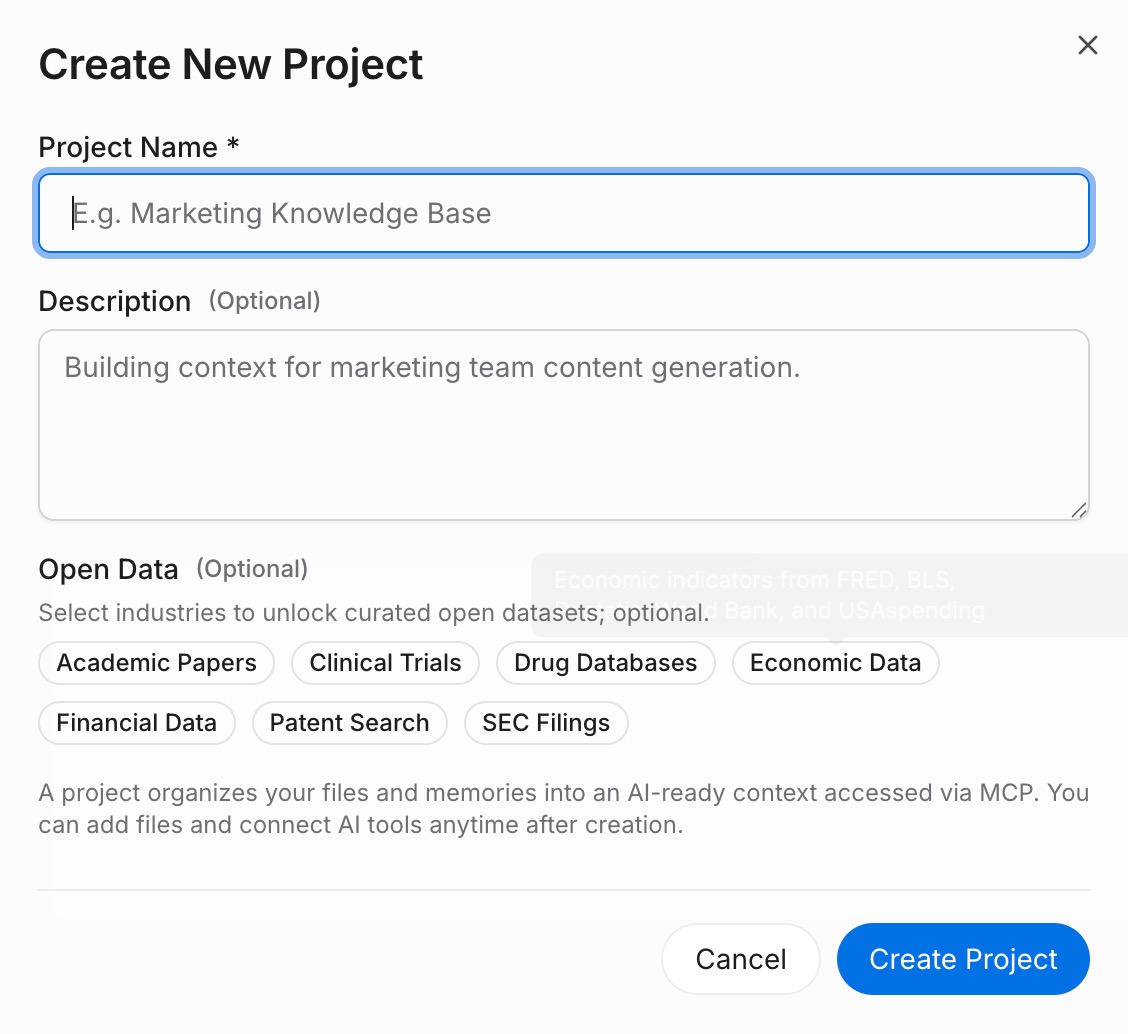
Sign in to MemoryLake, open Project Management, and click Create Project. Name it "Gemini ↔ ChatGPT shared context." Drag your downloaded Gemini files (PDF, Word, Excel, PowerPoint, Markdown, or images) into the Document Drive under My Space, then open the Documents Tab and click Add Documents. Paste each Gem's instructions and your Saved Info entries into the Memories Tab via Add Memory.
Step 2: Generate an MCP Server endpoint
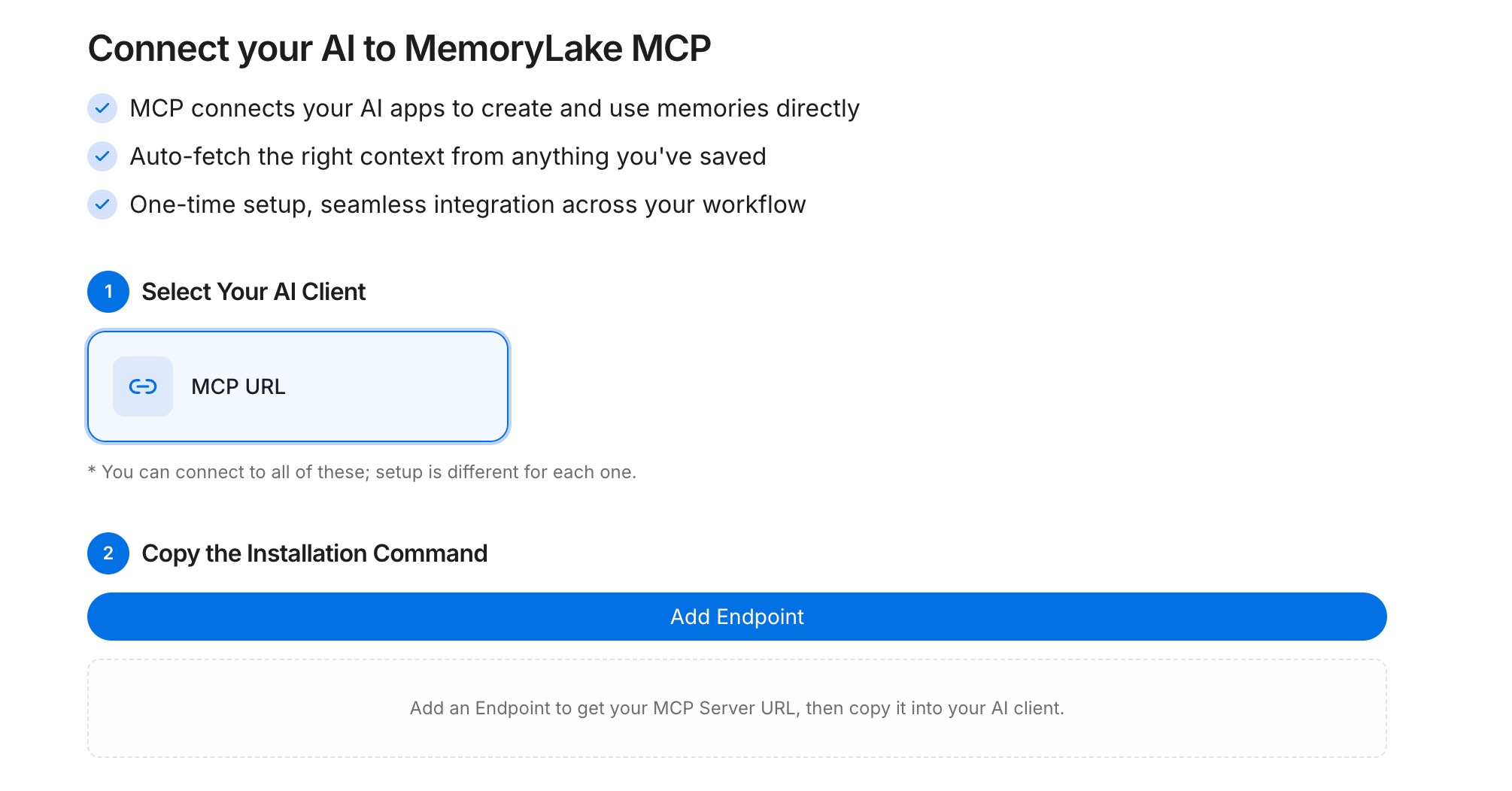
Open the MCP Servers Tab inside the project, click Add MCP Server, describe it (e.g., "ChatGPT + Gemini bridge"), and click Generate. MemoryLake returns a Key ID, a Secret, and an Endpoint URL. Copy the Secret immediately — it is shown only once.
Step 3: Point both tools at the endpoint
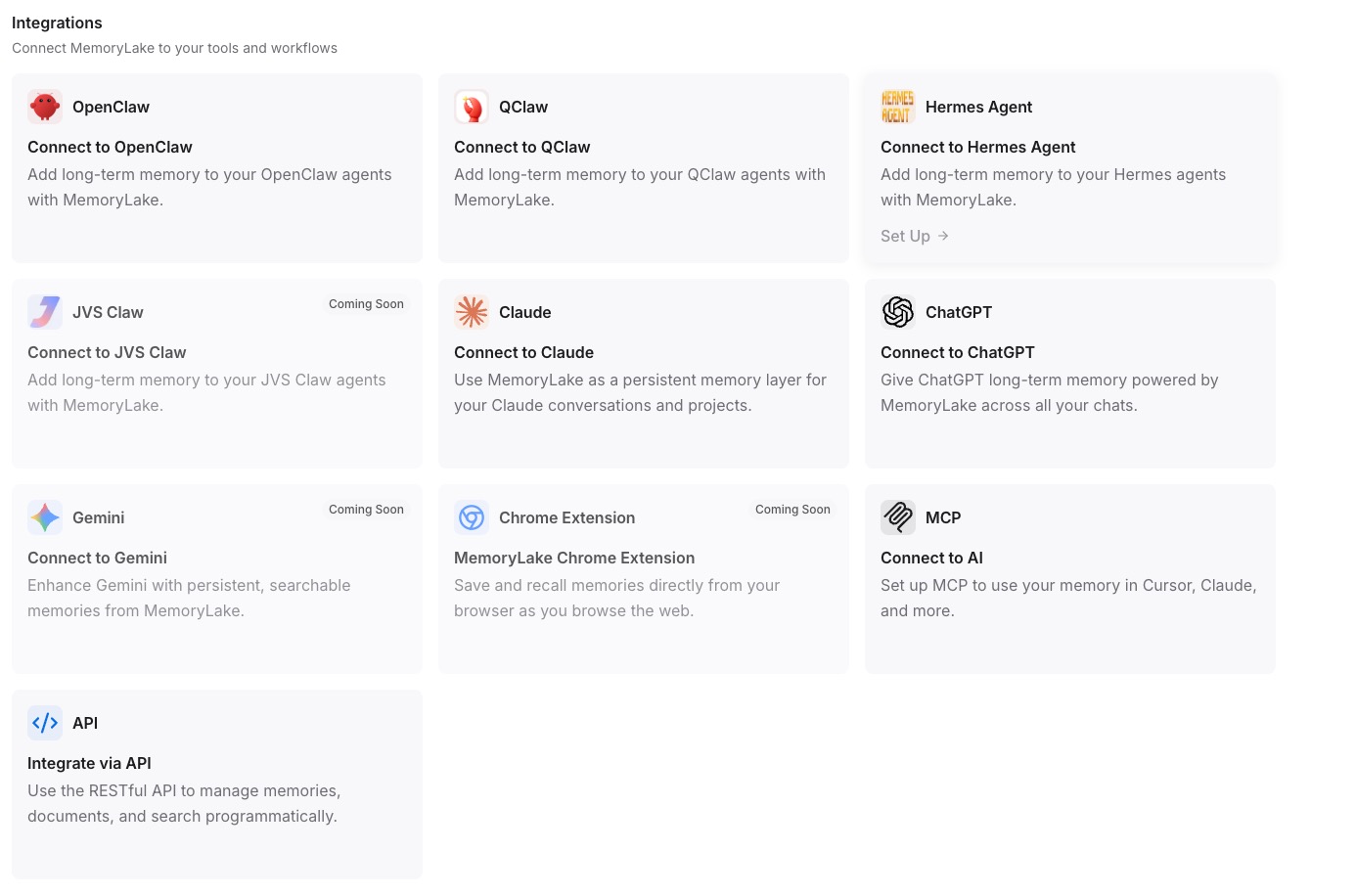
For ChatGPT, call the REST API with the Bearer token from a Custom GPT Action to pull project memory each chat. For Gemini, run a Workspace add-on or your own integration that calls the same REST endpoint with the Bearer token and feeds the returned context into a Gem's instructions or your prompt.
Native migration vs MemoryLake
| Dimension | Native Gemini → ChatGPT | MemoryLake bridge |
|---|---|---|
| Steps required | 9–12 manual | 3 one-time |
| Estimated time | 20–45 min per workspace | ~5 min setup |
| Preserves Gem boundary | Only via Custom GPT | Yes |
| Live Workspace pull | Lost (snapshots only) | Files stay in MemoryLake, both tools fetch live |
| Syncs ongoing changes | No | Yes |
| Works with a third AI later | No (rebuild) | Yes (add MCP) |